
Key Takeaways
-
Cloud systems require consistent upload bandwidth and can strain your internet during outages, while traditional CCTV records locally and keeps functioning when internet drops—check your current bandwidth capacity before switching to cloud.
-
Traditional CCTV has higher upfront costs ($24,000–$52,000 for 16 cameras over 5 years) but lower ongoing fees, while cloud costs less initially but charges $150–$400 per camera annually—choose based on your budget style and cash flow needs.
-
Cloud video security scales effortlessly across multiple locations through a single dashboard, while traditional CCTV requires new recorders and technician visits per site—critical advantage for franchises and growing companies.
-
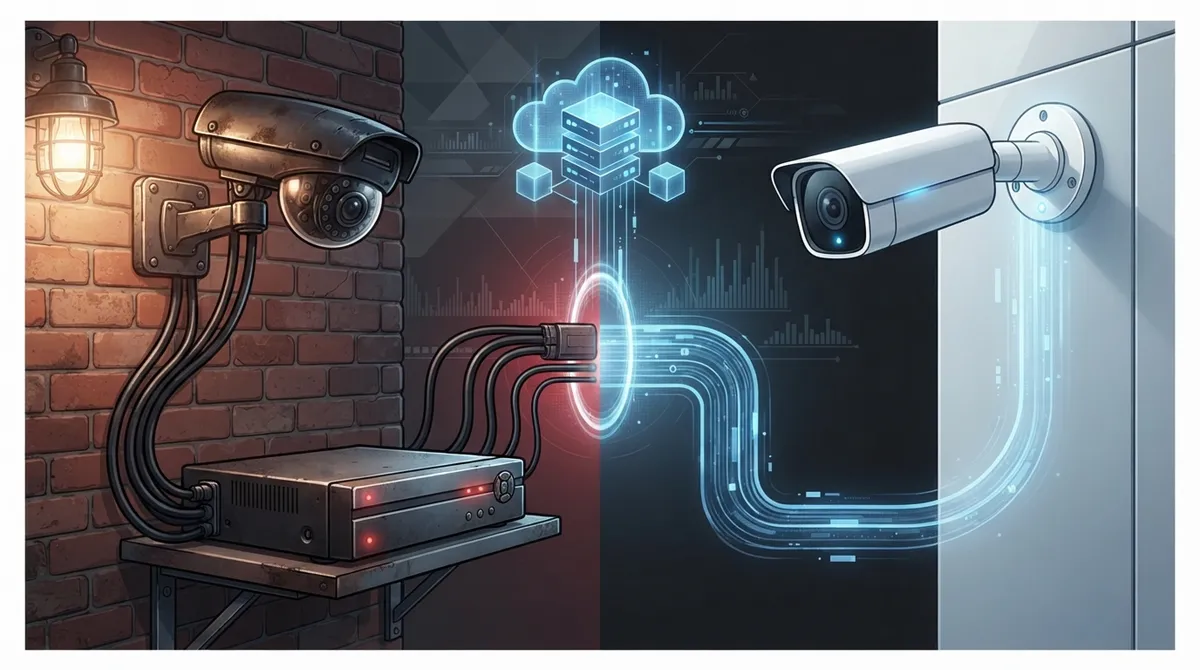
Hybrid setups combining local recording with cloud backup offer the best protection without starting from scratch, especially for businesses with unreliable internet, sensitive footage, or existing CCTV equipment investments.
Picking a security camera system used to be simple: buy a DVR, run some cables, and call it a day. But in 2026, Tampa business owners have a real choice to make, and it’s a bigger decision than it looks. The debate over cloud video security vs traditional CCTV touches your budget, your internet setup, and how you actually run your business day to day.
We work with business owners every single day who feel stuck between two worlds. One camp loves the idea of checking their cameras from a beach chair. The other camp wants full control and doesn’t trust the internet to always be there. Good news: you don’t have to guess. Let’s walk through the 11 facts that actually matter, so you can make a smart, confident choice for your business.
1. They Store Footage in Completely Different Places
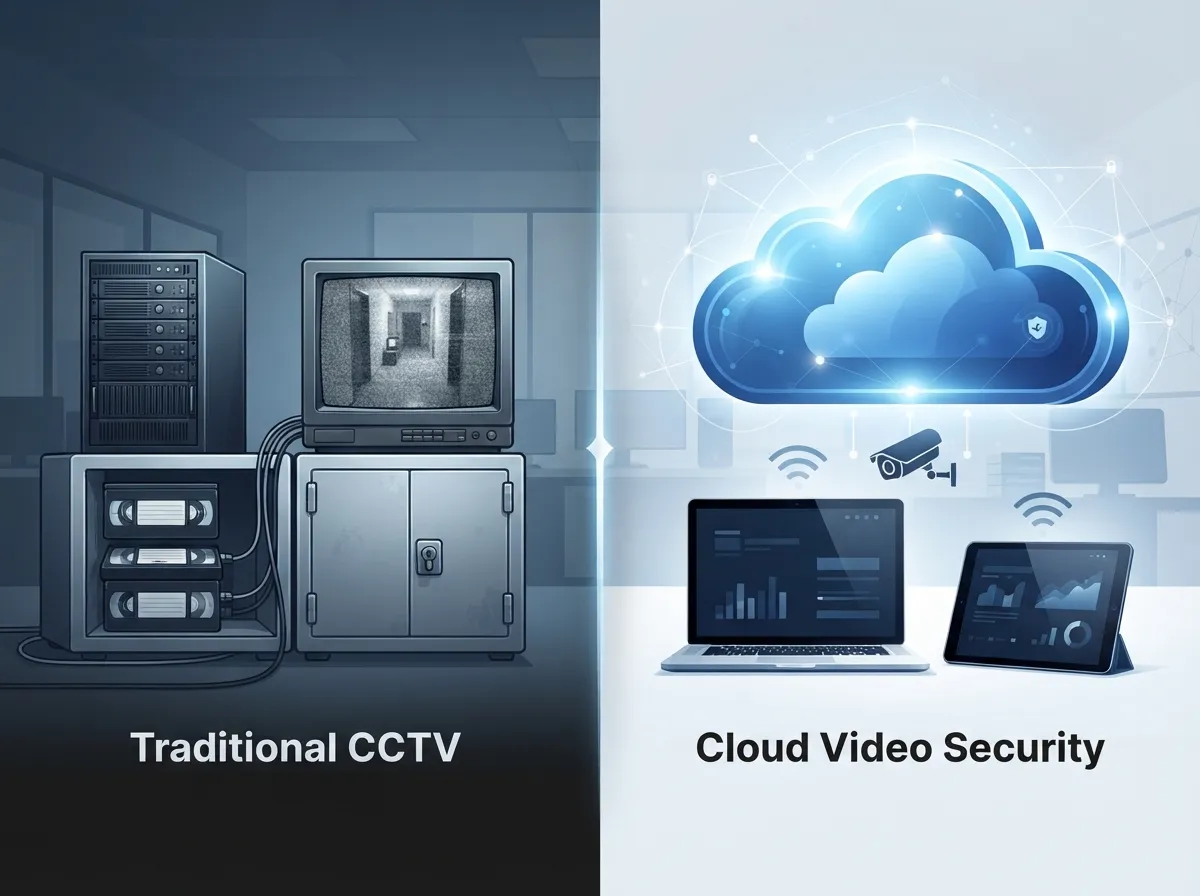
Traditional CCTV records straight to a box sitting in your building, usually a DVR or an NVR. You own it, you control it, and your footage never leaves the premises unless you copy it somewhere else.
Cloud video security works differently. Your cameras send footage up to a provider’s secure servers, often called Video Surveillance as a Service, or VSaaS. This means your recordings live off-site, managed and backed up by the provider instead of a box in your closet.
2. Remote Access Looks Very Different Too
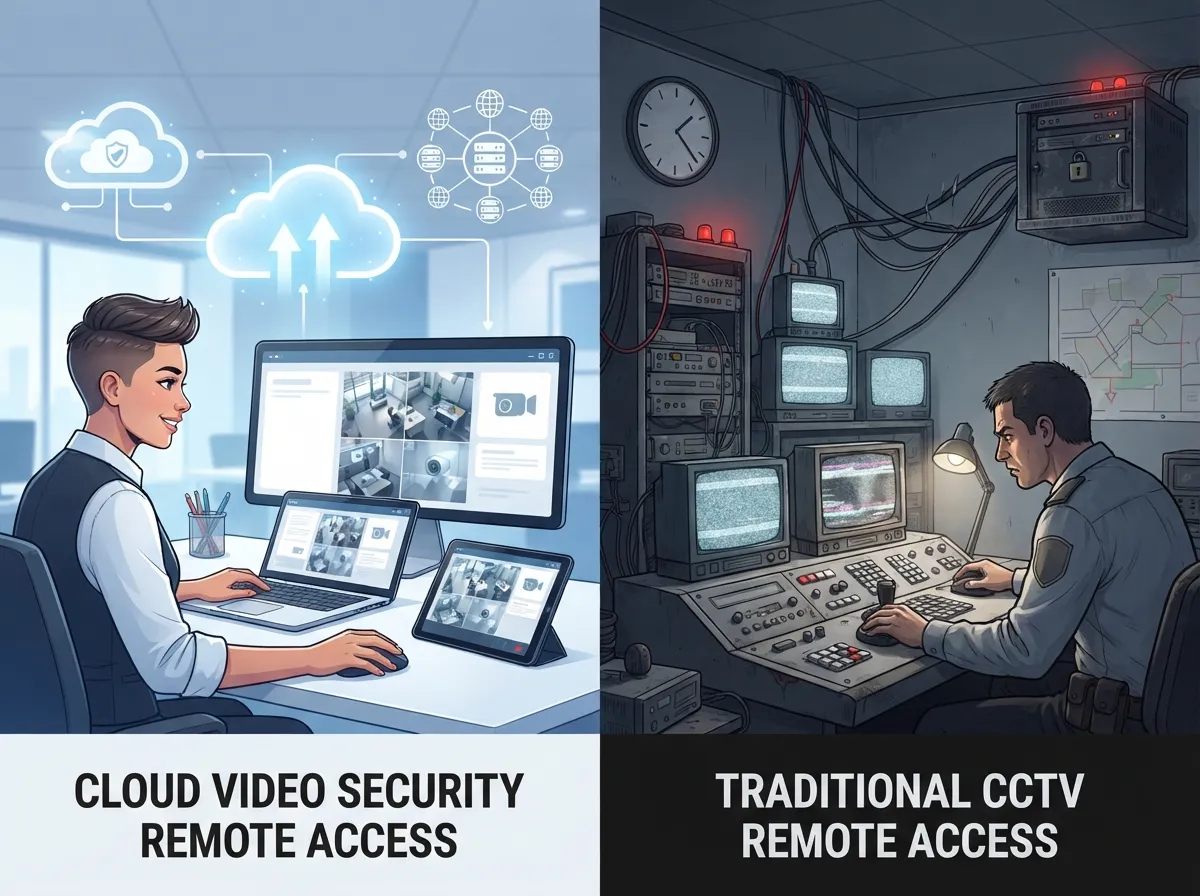
This is where most business owners start leaning one way or the other. Cloud systems let you pull up live footage from your phone, laptop, or tablet, from pretty much anywhere with internet.
Traditional CCTV can offer remote access too, but it’s more of a project. You’ll often need a VPN, some port setup, and extra software just to peek in from home. If you already have structured cabling services in place, adding either system tends to go more smoothly.
3. Upfront Costs vs Ongoing Costs Tell Two Different Stories
Here’s a simple way to picture it. Traditional CCTV is like buying a car outright. You pay a lot upfront for the recorder, storage, and cameras, but after that, your ongoing costs stay pretty low for years.
Cloud video security is more like leasing. You’ll spend less upfront, but you pay a subscription every month for storage, updates, and support. One published example, from Endpoint Wireless, put cloud subscriptions for a 16-camera setup at roughly $150 to $400 per camera each year.
A Quick Cost Comparison
| Cost Factor | Traditional CCTV | Cloud Video Security |
|---|---|---|
| Upfront Hardware | Higher (DVR/NVR, storage) | Lower |
| Monthly Fees | Usually none | Yes, per camera |
| 5-Year Estimate (16 cameras) | Varies by build | ~$24,000–$52,000* |
| Maintenance Labor | Business handles or hires out | Often included |
*Estimate from Endpoint Wireless; actual pricing depends on cameras, retention, and provider.
4. Internet Reliability Matters More Than You’d Think
If your internet goes down, what happens to your cameras? With traditional CCTV, recording usually keeps going since it’s all local. You just lose remote viewing until the connection comes back.
Cloud cameras depend on a steady connection to upload footage. Many modern systems now include onboard storage or edge recording, so they can keep recording for a while during an outage and catch up once you’re back online. If your building struggles with dropped connections, it’s worth reading up on how cloud cameras handle internet outages before you commit.
5. Scaling Across Multiple Locations Isn’t Even Close
Franchise owners and growing companies, this one’s for you. Cloud platforms make adding a new location almost painless. You license new cameras, connect them to the network, and they show up in your dashboard.
Traditional CCTV usually means buying another recorder, running more cabling, and sometimes sending a technician to each new site. If you’re managing several branches, that adds up fast in time and money.
6. Cybersecurity Depends on Setup, Not Just the System Type
Here’s something people often get wrong: neither option is automatically safer. It really comes down to how well the system is set up and maintained.
- Cloud providers often handle encryption, software updates, and multi-factor login automatically
- On-premises systems put that responsibility on you or your IT partner
- Weak passwords and outdated firmware cause most security problems, regardless of system type
- Working with a trusted telecom expert who gets results helps close these gaps either way
7. Market Data Shows Both Options Are Still Thriving
You might assume everyone’s rushing to the cloud, but the numbers tell a more balanced story. Global Market Insights reported the video surveillance market at about $63.1 billion in 2025, with on-premises systems still holding around 41.5% of that market.
Mordor Intelligence’s research paints an even stronger picture for traditional setups, estimating on-premises deployments at 63.74% of 2025 installations. Cloud adoption is growing fast, with Mordor projecting roughly 12.51% annual growth, but it hasn’t taken over yet.
Market Snapshot
| Research Source | Market Estimate (2025) | On-Premises Share | Cloud Growth Rate |
|---|---|---|---|
| Global Market Insights | $63.1 billion | ~41.5% | ~11.1% CAGR |
| Mordor Intelligence | $64.79 billion | ~63.74% | ~12.51% CAGR |
8. Small Businesses and Large Organizations Choose Differently
Mordor Intelligence found that large organizations made up about 57.28% of 2025 surveillance spending. Big companies often already have IT staff and infrastructure to manage on-site recorders.
Meanwhile, small and medium businesses are jumping into cloud VSaaS at a faster pace, growing around 12.76% according to the same report. If you’re a small business owner without a dedicated IT team, that trend probably makes sense to you already.
9. A Hybrid Setup Might Be Your Best Answer
You don’t actually have to pick just one. Plenty of businesses run a hybrid setup: cameras record locally for backup, while footage also syncs to the cloud for remote access and easy sharing.
This approach works especially well if you have sensitive footage, spotty internet, or you’ve already invested heavily in existing CCTV equipment. It gives you the best of both worlds without starting completely from scratch.
10. Bandwidth Needs Can Sneak Up On You
Cloud cameras need consistent upload bandwidth, and that requirement grows with each additional camera and higher resolution. If your office already struggles during video calls, adding a dozen cloud cameras could make things worse.
Before switching to cloud video security, it’s smart to check your current setup. Our article on high-speed internet tips that save money is a good place to start if you’re not sure your connection can handle it.
Steps to Check If Your Bandwidth Is Ready
- Count how many cameras you plan to install
- Check the recommended upload speed per camera from your provider
- Add up the total bandwidth needed during peak hours
- Compare that number to your current upload speed
- Talk to your internet provider or a telecom partner about upgrading if needed
11. The Right Choice Depends on Your Business, Not a Trend
There’s no universal winner here. It genuinely depends on your locations, your internet reliability, your budget style, and how hands-on you want to be with your footage.
- Choose traditional CCTV if you want full local control and stable long-term costs
- Choose cloud video security if you value remote access and easy multi-site scaling
- Choose a hybrid setup if you want backup recording plus cloud convenience
- Always match your choice to your actual internet speed and reliability
- Get a professional audit before buying anything, since guessing gets expensive fast
This is exactly the kind of decision where a knowledgeable partner saves you time, money, and headaches. Ideal Solutions Provider has spent over 24 years helping Tampa businesses and companies nationwide sort through options like these, comparing 35 vetted suppliers so you don’t have to. We’ve found that 9 out of 10 companies we audit are overpaying, underperforming, or both, and video security setups are no exception.
Putting It All Together
Whether you land on cloud, traditional, or a hybrid mix, the goal is the same: protecting your business without creating new headaches. Take a look at your building layout, your internet setup, and how many locations you’re running before you commit to anything.
- Small single-location shops often do fine with either option
- Multi-site franchises usually lean toward cloud for easier management
- Businesses with weak internet should consider hybrid or traditional setups
- Regulated industries may need to keep footage stored on-site
- Everyone benefits from working with an experienced installer
If you want to see real examples of how businesses use these systems, check out our YouTube channel or follow updates on Facebook and Instagram. And if cabling is part of your upgrade plan, understanding structured cabling basics helps you ask better questions before installation day.
Your internet connection plays a huge role in either system’s performance, so it’s worth confirming your setup with your Internet Service Provider before installation begins.
Ready to Choose the Right System for Your Business?
You don’t have to figure this out alone, and honestly, you shouldn’t have to. Our team reviews your current setup, compares real options across trusted suppliers, and recommends what actually fits your business, not just what’s trending. Contact us today for a free consultation, or call us to talk through your options with a real person who gets it.
FAQs
Q: What is the main difference between cloud video security and traditional CCTV?
A: Traditional CCTV stores footage locally on a DVR or NVR in your building, while cloud video security uploads footage to a provider’s secure servers. Think of it as owning a filing cabinet versus renting secure storage space that you can access from anywhere.
Q: Is cloud-based video surveillance better than an NVR system for a business?
A: It really depends on your business needs, and there’s no one-size-fits-all answer here. Cloud systems shine for multi-location businesses needing remote access, while NVR systems can be great for single locations with unreliable internet or strict data control needs.
Q: What happens to cloud camera recordings when the internet goes down?
A: Good news: many modern cloud cameras include onboard storage or edge recording, so they keep recording locally during an outage. Once your connection comes back, that footage typically uploads to the cloud automatically.
Q: How much does cloud CCTV cost compared with an on-premises system?
A: Cloud systems usually cost less upfront but add ongoing subscription fees, often $150 to $400 per camera annually based on published estimates. Traditional CCTV costs more upfront for hardware but typically has lower recurring costs afterward.
Q: When should a business choose a hybrid CCTV and cloud surveillance system?
A: A hybrid setup makes sense if you want local backup recording plus the convenience of remote cloud access. It’s especially smart for businesses with spotty internet, sensitive footage requirements, or existing CCTV equipment they don’t want to replace entirely.