Key Takeaways
-
Poor cabling infrastructure is a major but overlooked cause of communication problems; professional structured cabling provides a clean, organized backbone supporting VoIP, security cameras, and other networked systems.
-
Most Tampa businesses in 2026 should use Cat6 or Cat6A for horizontal runs with fiber optic for backbone connections between floors or buildings to handle cloud applications and remote work demands.
-
Professional installations include site survey, EIA/TIA-compliant design, proper termination, certified testing of every cable run, and documentation—ensuring easy troubleshooting and future scalability.
-
Structured cabling projects vary by scenario: new construction is most cost-effective, office renovations take days to weeks, and multi-site deployments require experienced project management for consistency.
-
Verify contractor licensing, BICSI/CommScope certifications, request references from Tampa commercial projects, and insist on certified test results and warranty coverage before hiring.
-
Bundling low-voltage services like CCTV, access control, and WAP cabling with structured cabling reduces coordination complexity and prevents conflicting installations during renovations.
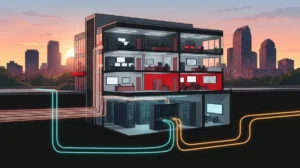
If your Tampa business is dealing with slow internet, dropped calls, or a tangled mess of cables behind your server rack, you’re not alone. Poor cabling infrastructure is one of the most overlooked causes of communication problems in commercial buildings. And the good news? It’s completely fixable. Professional structured cabling services give your business a clean, organized, and reliable physical network backbone that supports everything from VoIP phone systems to security cameras. In this guide, we’ll walk you through everything you need to know about structured cabling for Tampa businesses — what it is, why it matters, what types are available, and how to choose the right contractor for your needs.

What Is Structured Cabling for Businesses?
Structured cabling is a standardized system of cables, hardware, and management tools that form the physical foundation of your business communications network. Think of it as the roads and highways your data travels on. According to structured cabling standards, a properly designed system can support telephone, internet, video, security, and other networked systems — all from one unified infrastructure.
Unlike random point-to-point wiring (which grows messy and hard to manage over time), structured cabling follows industry standards like EIA/TIA to create a clean, scalable system. This makes it much easier to add new workstations, upgrade equipment, or troubleshoot problems when they arise.

Why Tampa Businesses Need Professional Cabling in 2026
Tampa’s business scene is growing fast. From Ybor City startups to large healthcare systems in New Tampa, companies of every size are upgrading their communications infrastructure. Here’s why professional structured cabling matters more than ever right now.
- VoIP phone systems require stable network infrastructure — if your cabling is inconsistent, your call quality will suffer
- Remote work and hybrid teams need faster, more reliable internal networks
- Cloud applications put more demand on your local area network than ever before
- Security cameras and access control run over the same cabling infrastructure
- Business growth is much easier when your cabling is designed to scale
If you’re running cloud-based phone systems or relying on business high-speed internet, your cabling must be able to handle those loads without bottlenecking performance.
Types of Structured Cabling Used in Tampa Commercial Buildings
Not all cabling is created equal. The right choice depends on your building size, the speed you need, and your budget. Here’s a quick breakdown of the most common options used in Tampa commercial installations.
| Cable Type | Max Speed | Max Distance | Best For |
|---|---|---|---|
| Cat5e | 1 Gbps | 100 meters | Small offices, basic voice/data |
| Cat6 | 10 Gbps (short runs) | 55 meters at 10G | Most commercial offices |
| Cat6A | 10 Gbps | 100 meters | Data centers, high-demand environments |
| Fiber Optic | 100+ Gbps | Several kilometers | Campus networks, long-distance backbone |
Most Tampa businesses in 2026 are opting for Cat6 or Cat6A for their horizontal runs, with fiber optic serving as the backbone between floors or buildings. Your cabling contractor should help you determine the best mix for your specific space and performance needs.

Industries That Commonly Use Structured Cabling in Tampa
Professional structured cabling services are used across a wide range of industries in the Tampa Bay area. Here’s a look at who benefits most and why.
| Industry | Common Cabling Needs |
|---|---|
| Healthcare / Medical Offices | EHR systems, VoIP, security, nurse call wiring |
| Retail & Restaurants | POS systems, Wi-Fi, surveillance cameras |
| Corporate Offices | Data networks, phone systems, conference rooms |
| Warehouses & Manufacturing | Inventory systems, access control, floor networks |
| Multi-Tenant Buildings | Per-floor cabling, shared backbone infrastructure |
| Government / Education | Compliance-grade infrastructure, secure networks |
Whether you’re running a doctor’s office in Brandon or managing a multi-floor office in downtown Tampa, structured cabling is the foundation that keeps everything connected. Companies like Ideal Solutions Provider bring over 24 years of experience to commercial cabling projects across multiple industries.
What’s Included in a Professional Structured Cabling Installation
When you hire a professional cabling contractor in Tampa, you’re getting a lot more than someone pulling wires through walls. Here’s what a full structured cabling project typically involves.
Step-by-Step: The Installation Process
- Site Survey and Assessment — A technician visits your location to measure distances, assess existing infrastructure, and understand your communication needs.
- Design and Planning — Engineers create a cabling layout that meets EIA/TIA standards and accommodates your current and future requirements.
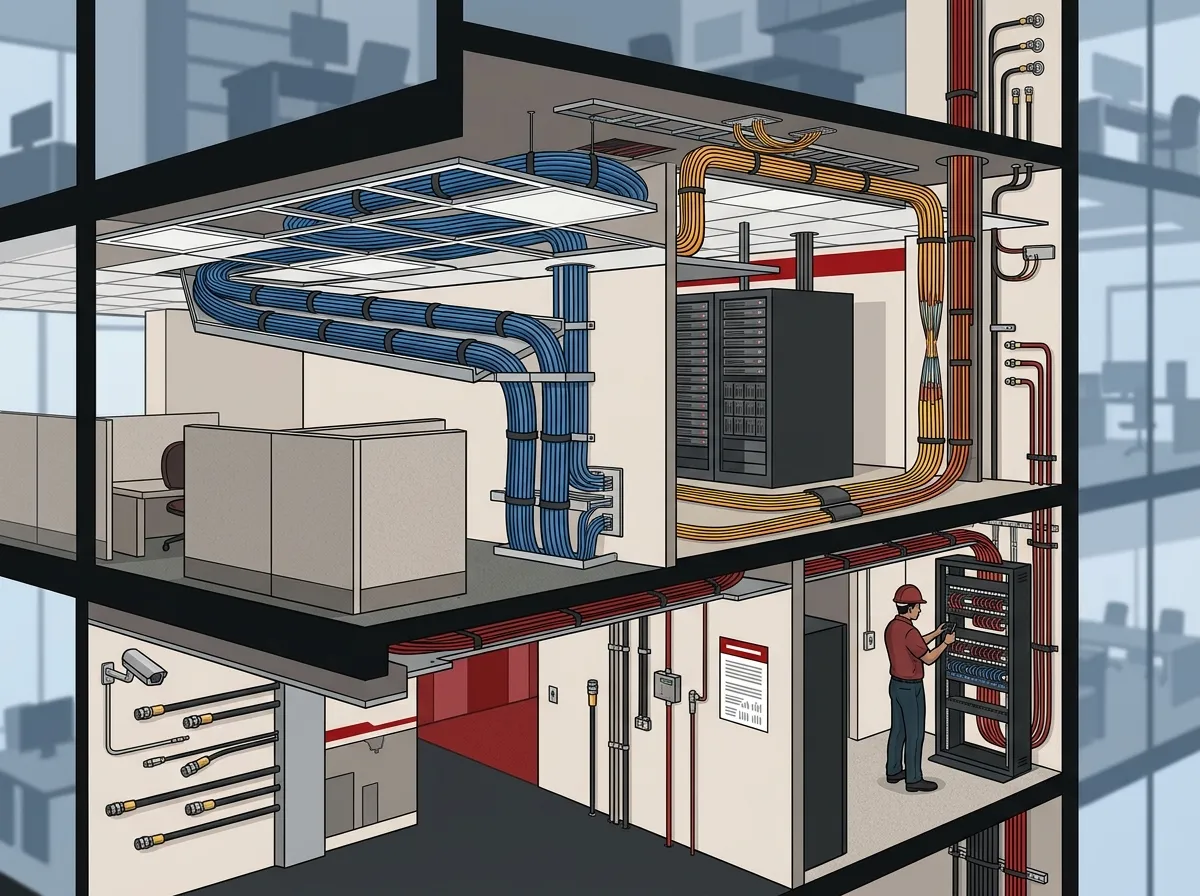
- Cable Installation — Cables are routed through walls, ceilings, conduits, and raised floors using proper techniques and materials.
- Termination and Labeling — Every cable end is terminated at patch panels, wall plates, or equipment racks, and each run is clearly labeled for easy management.
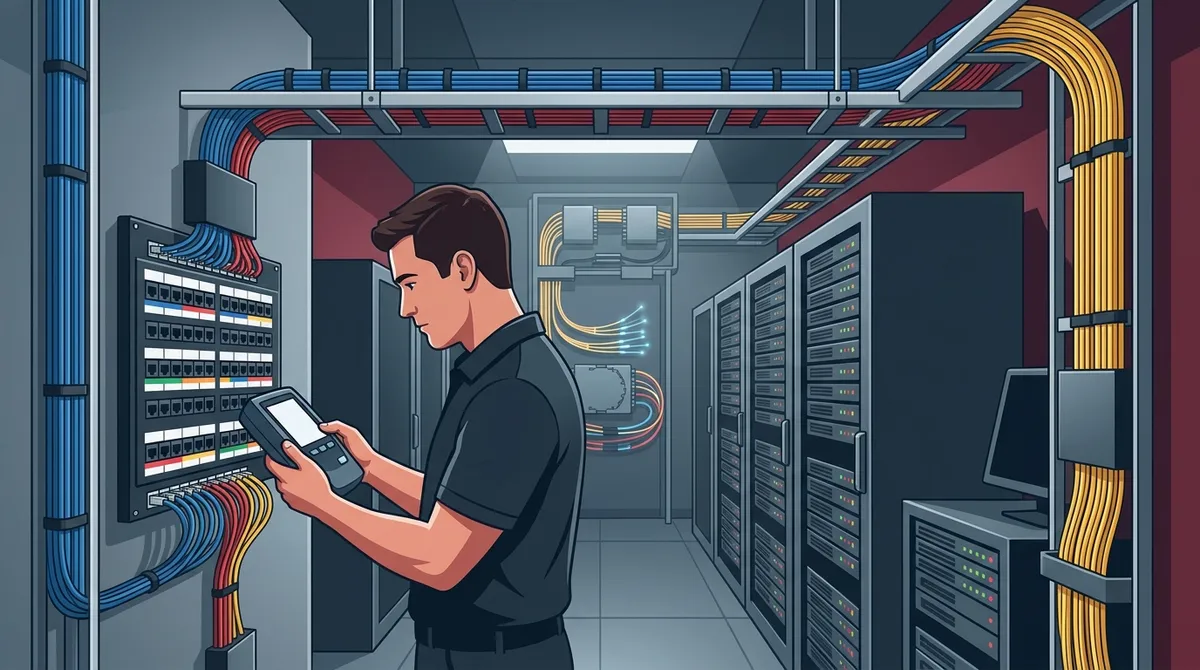
- Testing and Certification — Each cable run is tested with professional equipment to verify it meets performance specs. Results are documented for your records.
- Cleanup and Documentation — The job site is left clean, and you receive as-built drawings and test reports for future reference.
This process ensures your infrastructure is not just functional today, but also easy to manage and expand in the future. For businesses connecting their cabling to business network solutions, this documentation is invaluable when troubleshooting or scaling up.
Key Benefits of Professional Structured Cabling
You might be wondering if structured cabling is really worth the investment. Here are the top reasons businesses in Tampa are making the switch to professional installations.
- Cleaner, more organized infrastructure — no more cable chaos in your server room or telecom closet
- Easier moves, adds, and changes — adding a new workstation or phone takes minutes, not hours
- Faster troubleshooting — labeled, documented runs make it easy to isolate and fix problems quickly
- Reduced human error — standardized terminations and proper testing catch issues before they affect operations
- Scalability — a well-designed system grows with your business without requiring a complete overhaul
- Better performance — certified cabling delivers consistent speeds and reliability for all connected devices
These benefits apply whether you’re running a 10-person office in Clearwater or a 200-seat call center in Tampa’s Westshore district. And when your cabling is done right, your VoIP calls are cleaner, your cloud video security cameras stream without interruption, and your cloud-based access control systems work reliably every day.
Low-Voltage Services Often Bundled With Structured Cabling
Many Tampa cabling contractors offer additional low-voltage services alongside structured cabling installations. Bundling these services saves time, money, and coordination headaches. Common add-ons include:
- CCTV and IP camera cabling for security systems
- Access control wiring for keycard and keypad entry systems
- Wireless access point (WAP) cabling for Wi-Fi coverage
- Conference room audio/video infrastructure
- Paging and intercom system wiring
Having one contractor handle all of your low-voltage work simplifies your project and reduces the chances of conflicting installations. This is especially useful for businesses doing new construction or major office renovations in the Tampa area.
How to Choose the Right Structured Cabling Contractor in Tampa
Hiring the right contractor makes all the difference. A poor installation can create problems that are expensive and time-consuming to fix later. Here’s what to look for when evaluating Tampa cabling contractors.
Checklist for Evaluating a Tampa Cabling Contractor
- Verify licensing and certifications — look for low-voltage contractor licenses and manufacturer certifications (e.g., BICSI, CommScope, Panduit)
- Ask about EIA/TIA compliance — professional work should meet recognized industry standards
- Request references and project examples — a reputable contractor should have verifiable past work in Tampa commercial settings
- Confirm testing and documentation practices — insist on certified test results for every cable run
- Get a detailed written quote — avoid contractors who give vague estimates without a site visit
- Ask about warranty coverage — quality cabling installations often come with both labor and materials warranties
A free site survey is a great sign that a contractor takes your project seriously. It allows them to give you an accurate quote and design a system that fits your actual space. You can reach out to our team to schedule a free consultation and find out exactly what your Tampa business needs.
Structured Cabling for New Construction vs. Existing Buildings
Tampa is seeing a wave of new commercial construction alongside plenty of office renovations and tenant improvements. The approach to structured cabling differs depending on your situation.
| Scenario | Considerations | Typical Timeline |
|---|---|---|
| New Construction | Cabling installed before walls close; easiest and most cost-effective | Coordinated with general contractor schedule |
| Office Renovation / Fit-Out | May require fishing cables through existing walls; more labor involved | Days to weeks depending on scope |
| Existing Office Upgrade | Old cabling replaced or supplemented; minimal disruption preferred | Can often be phased to avoid downtime |
| Multi-Site / Franchise | Standardized design across locations; requires experienced project management | Varies by number of locations |
For franchise operators managing multiple Tampa Bay locations, working with a single experienced provider is especially valuable. Consistent cabling standards across every site make future upgrades, troubleshooting, and technology rollouts much smoother. If you’re curious about what options are available for your business, give us a call and we’ll walk you through the process from start to finish.
Structured Cabling and Your Broader Telecom Strategy
Structured cabling doesn’t exist in a vacuum. It’s the foundation that makes your entire business communications strategy work. Think about how cabling connects to every other piece of your telecom setup:
- VoIP phones run over your data network — poor cabling means poor call quality. Learn more about affordable VoIP phone services for Tampa businesses.
- High-speed internet enters your building and distributes over your internal cabling — bottlenecks in cabling limit your internet performance. See the best business high-speed internet services in Tampa FL.
- Security cameras and access control rely on reliable low-voltage cabling — missed connections mean coverage gaps and security vulnerabilities.
Getting your cabling right from the start means every system built on top of it performs at its best. If you’d like to see how other Tampa businesses have approached their communications infrastructure, check out our video resources for real-world examples and insights. You can also follow along on Facebook, Instagram, and YouTube for tips and updates from our team.
Conclusion: Invest in Your Business’s Communication Foundation
Professional structured cabling services for businesses in Tampa are more than just a wiring job — they’re a smart long-term investment in your company’s reliability, scalability, and performance. From Cat6A installations in Westshore offices to fiber optic backbone runs in Tampa’s growing tech corridors, the right cabling makes every other communication system work better.
Whether you’re a small business owner tired of network headaches, an IT manager planning a major upgrade, or a franchise operator rolling out locations across the Bay area, structured cabling is the place to start. Don’t leave your communications foundation to chance. Get in touch with our team at Ideal Solutions Provider today and let’s design a cabling solution that keeps your Tampa business connected, efficient, and ready to grow.
FAQs
Q: What is structured cabling for a business in Tampa?
A: Structured cabling is a standardized system of cables and hardware that forms the physical backbone of your business network. It supports everything from VoIP phones and internet connections to security cameras and access control systems — all organized and managed from a central point.
Q: What type of cabling is best for a Tampa commercial office — Cat6, Cat6A, or fiber?
A: Most Tampa offices in 2026 do great with Cat6 or Cat6A for desktop and workstation connections, while fiber optic is ideal for backbone runs between floors or buildings. A professional site survey will help determine the right mix for your specific space and performance needs.
Q: How long does a structured cabling installation take for a Tampa business?
A: The timeline depends on the size and complexity of your project. A small office installation might take one to two days, while a larger multi-floor project could take one to two weeks. New construction projects are typically scheduled around the general contractor’s build timeline.
Q: Why do Tampa businesses need structured cabling for VoIP and internet systems?
A: VoIP phone systems and high-speed internet both rely on your internal cabling to deliver consistent performance. If your cabling has poor connections, outdated standards, or inconsistent runs, you’ll experience dropped calls, slow speeds, and network instability. Professional cabling eliminates those issues at the source.
Q: What should I look for in a Tampa structured cabling contractor?
A: Look for contractors with proper low-voltage licensing, EIA/TIA standards compliance, certified testing on every cable run, and clear written quotes based on an actual site visit. Experience across multiple industries and a portfolio of local Tampa commercial projects is a great sign you’re working with a trusted professional.