
Key Takeaways
-
SMS messages have a 98% open rate compared to 20% for email, with average response times of 90 seconds versus 90 minutes for email, making it significantly more effective for time-sensitive business communications.
-
Scheduling and reminders are the leading use case at 63% of businesses, followed by customer service at 44%, with SMS also effective for alerts, internal communication, and marketing campaigns.
-
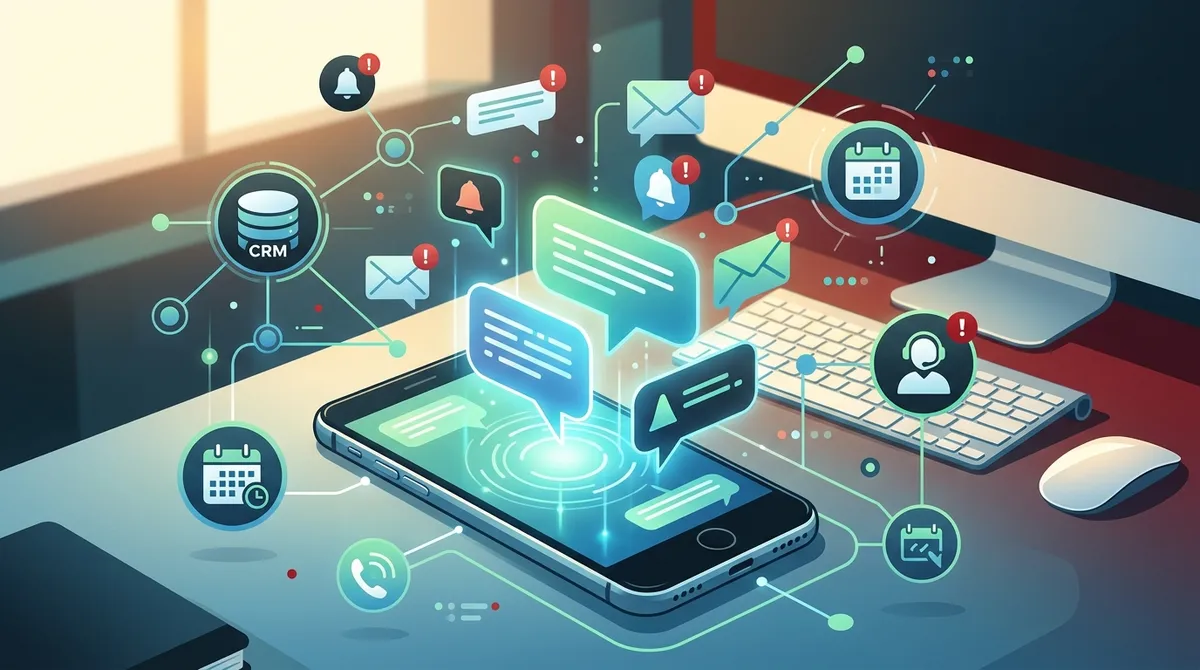
Business SMS platforms integrate seamlessly with CRM, helpdesk software, VoIP systems, and other business tools, creating a unified communications dashboard that tracks all customer interactions in one place.
-
SMS messaging can significantly reduce inbound call volume by allowing customers to text for status updates, appointment confirmations, and FAQs, freeing teams to focus on complex issues requiring human attention.
-
Key platform features to evaluate include two-way messaging, automation and workflows, CRM integration, analytics and reporting, compliance tools for opt-in/opt-out management, and multi-user access for team collaboration.
-
Businesses must collect customer consent before sending marketing texts; reputable SMS platforms include built-in opt-in and opt-out management tools to ensure compliance with regulations and maintain customer trust.
If you’ve ever sent a quick text to confirm an appointment or check on an order, you already know how powerful SMS can be. Now imagine that same speed and ease working for your entire business. That’s exactly what business SMS messaging delivers. It’s fast, friendly, and surprisingly effective for keeping customers engaged and operations running smoothly.
For businesses of all sizes, SMS messaging has become a core part of modern telecom solutions. Whether you’re a small business owner in Tampa, an IT manager juggling multiple locations, or a franchise operator coordinating across sites, business texting can save time and improve communication dramatically. And the numbers back it up — SMS messages have a reported 98% open rate, compared to just 20% for email. That’s a gap that’s hard to ignore.
In this guide, we’ll walk through four key benefits of business SMS messaging, how it works in a telecom environment, and what to look for when choosing a platform. Let’s dive in!

What Is Business SMS Messaging?
Business SMS messaging allows companies to send and receive text messages using a dedicated professional number rather than a personal mobile phone. In the telecom world, this is often delivered as A2P (application-to-person) messaging, where software or platforms send messages to customers at scale. Think of it as your business having its own texting line — just like your business has its own phone number.
Unlike personal texting, business SMS platforms come packed with features. You get automation, two-way conversations, CRM integrations, reporting, analytics, and compliance tools all in one place. It’s a professional-grade communication channel that fits neatly into your existing business communications strategy.
Many modern cloud-based phone systems now include SMS messaging as part of their feature set. This means you can manage calls, texts, and voicemail all from one dashboard. Pretty convenient, right?
How Business Texting Works in Telecom Solutions
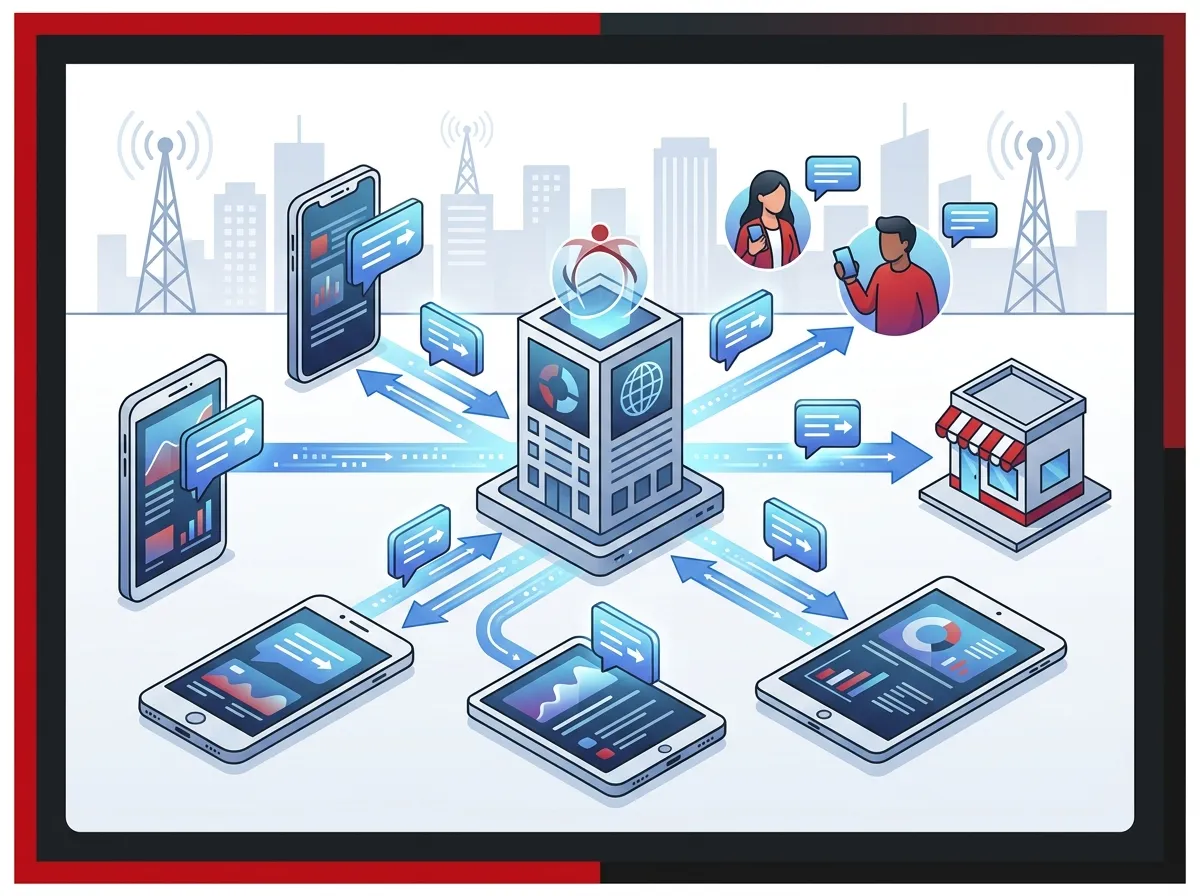
At its core, business SMS messaging connects to your existing telecom infrastructure. When a customer texts your business number, the message routes through your SMS platform and appears in a centralized inbox. From there, your team can respond, automate replies, or route messages to the right department.
Here’s a simple breakdown of how it flows:
- Customer sends a text to your business number.
- The message routes through your SMS platform or cloud phone system.
- Your team receives it in a shared or individual inbox.
- A response is sent manually or via automated workflow.
This setup works beautifully alongside VoIP phone system features and cloud communications tools. It’s part of a broader strategy to keep your team connected and your customers happy. If you’re curious about upgrading your phone system to include SMS, reach out to our team for a free consultation.
Business SMS Messaging Use Cases by Industry
One of the best things about business SMS messaging is how flexible it is. According to a 2021 state of texting report cited by Notifyre, here’s how businesses are actually using it:
| Use Case | Percentage of Businesses Using It |
|---|---|
| Scheduling and Reminders | 63% |
| Customer Service and Support | 44% |
| Alerts and Notifications | 38% |
| Internal Communication | 30% |
| Marketing and Promotions | 25% |
As you can see, scheduling and reminders lead the pack. That’s great news for service-based businesses, healthcare providers, and anyone who relies on appointments. But the versatility doesn’t stop there — SMS works just as well for internal team updates, payment reminders, and promotional campaigns.
4 Business SMS Messaging Benefits That Boost Results
Benefit 1: Lightning-Fast Response Times
Speed matters in business. When a customer has a question or a problem, they want an answer fast. SMS delivers. The average response time for a text message is about 90 seconds, compared to a whopping 90 minutes for email, according to TextUs. That’s not a small difference — that’s a game-changer.
For IT managers dealing with service alerts, or office managers confirming vendor deliveries, that 90-second window can make all the difference. Fast responses reduce frustration, build trust, and keep operations moving. Pair that with your modern business phone service, and you’ve got a seriously responsive communication stack.
- Instant delivery to any mobile device
- No app download required from the customer
- Works on any phone, anywhere
- Supports after-hours automated responses
Benefit 2: Higher Engagement Than Email or Phone Calls
Let’s be honest — how many emails sit unread in your inbox right now? SMS is a different story. With a 98% open rate, business SMS messaging is one of the highest-engagement channels available to businesses today. People see texts. They read them. And they act on them.
TextUs also reports that SMS marketing campaigns see response rates of 25% to 45%, depending on the industry. Compare that to typical email click-through rates and it’s clear: text messages get noticed. For franchise operators running location-specific promotions or mid-sized businesses sending out service updates, that engagement level is incredibly valuable.
Here’s a quick comparison of SMS vs. other communication channels:
| Channel | Open Rate | Average Response Time | Best Use Case |
|---|---|---|---|
| SMS | 98% | ~90 seconds | Reminders, alerts, support |
| 20% | ~90 minutes | Newsletters, detailed updates | |
| Phone Call | N/A | Immediate or voicemail | Complex issues, sales |
| Live Chat | N/A | ~2 minutes | Website visitor support |
Benefit 3: Reduced Inbound Call Volume
Here’s a benefit that IT managers and office managers will love: business SMS messaging can significantly reduce the number of inbound phone calls your team handles. When customers can text to check a status, confirm an appointment, or ask a quick question, many of them prefer it over calling.
Telecom providers have long used SMS solutions to reduce inbound voice call volume, improve response speed, and automate customer workflows. Fewer calls means less hold time, happier customers, and a less overwhelmed front desk. It’s a win all around.
Think about it — if your VoIP phone service is handling fewer routine calls, your team can focus on the conversations that actually need human attention. That’s the kind of efficiency every business is looking for in 2026.
- Automate appointment reminders to reduce no-call cancellations
- Send order or service status updates proactively
- Let customers text to request callbacks
- Handle FAQs through automated SMS responses
- Route urgent issues to the right team via text keywords
Benefit 4: Seamless Integration With Your Telecom Stack
Business SMS messaging doesn’t exist in isolation. The best platforms integrate directly with your CRM, helpdesk software, VoIP phone system, and other business tools. That means all your customer communication history — calls, texts, emails — lives in one place.
This is especially powerful for growing businesses that need visibility across teams. Your sales team can see that a customer texted about a billing issue. Your support team can see that the sales rep already followed up. Nobody drops the ball, and every customer gets a consistent experience.
If your business is exploring a cloud-based phone system provider, ask specifically about built-in SMS capabilities. Many cloud platforms now bundle texting alongside voice, video, and conferencing — giving you a truly unified communications experience. You can also follow Ideal Solutions Provider on Facebook for the latest telecom tips and updates.
What Features Should a Business SMS Platform Include?
Not all SMS platforms are created equal. When you’re evaluating options, here are the key features to look for:
| Feature | Why It Matters | Best For |
|---|---|---|
| Two-Way Messaging | Enables real conversations, not just blasts | Customer support, sales |
| Automation & Workflows | Saves time with scheduled or triggered messages | Reminders, onboarding |
| CRM Integration | Keeps all communication in one system | Sales teams, IT managers |
| Analytics & Reporting | Tracks open rates, responses, and performance | Marketing, operations |
| Compliance Tools | Manages opt-ins, opt-outs, and legal requirements | All businesses |
| Multi-User Access | Lets teams share inboxes and collaborate | Larger teams, franchises |
Compliance is especially important. Businesses must have customer consent before sending marketing texts. Most reputable SMS platforms include built-in opt-in and opt-out management tools to keep you compliant with regulations. Always check that your provider handles this clearly and transparently.
A2P vs. P2P SMS: What’s the Difference?
You may have heard the term A2P SMS and wondered what it means. Here’s a simple explanation:
- P2P (Person-to-Person) — This is regular texting between two individuals, like texting a friend.
- A2P (Application-to-Person) — This is when software or a business platform sends messages to people. Business SMS messaging is typically A2P.
A2P messaging supports higher sending volumes, automation, and reporting features that P2P simply can’t offer. It’s the backbone of any serious business texting strategy. When you see SMS described as part of a telecom solution, it’s almost always A2P. For more context on how modern telecom tools work together, check out our post on 14 business communications solutions every company needs.
Getting Started With Business SMS Messaging
Ready to add SMS messaging to your business communications setup? Here’s a simple step-by-step process to get started:
- Audit your current telecom setup. Understand what phone system and communication tools you already have. Many cloud phone systems already include SMS features you’re not using.
- Identify your top use cases. Are you focused on appointment reminders? Customer support? Marketing? Start with one use case and expand from there.
- Choose a platform with the right features. Look for two-way messaging, automation, compliance tools, and CRM integration. Make sure it works with your existing VoIP solution.
- Collect customer consent. Add opt-in language to your website, intake forms, and checkout pages. Never send texts to people who haven’t given permission.
- Test and optimize. Send a few campaigns, track response rates, and refine your messaging. Use your platform’s analytics tools to improve over time.
If you’re not sure where to start, Ideal Solutions Provider can help. With over 24 years of experience and partnerships with 35+ vetted telecom suppliers, they make it easy to find the right solution for your business. You can also follow their tutorials and guides on YouTube for practical advice on upgrading your business communications.
Business SMS Messaging for Multi-Location and Franchise Businesses
If you manage multiple locations, business SMS messaging becomes even more valuable. Each location can have its own dedicated number while still feeding into a centralized management platform. That means corporate can monitor performance across all sites, and individual locations can handle their own customer conversations.
This kind of scalability is a big deal for franchise operators. Imagine running consistent appointment reminder campaigns across 20 locations — all from one dashboard. It keeps your brand messaging consistent while letting each location maintain a local feel. Pair that with a reliable network solution for multi-location businesses and you’ve got a communications setup that truly scales.
- Assign dedicated numbers to each location
- Centralize reporting and analytics at the corporate level
- Push consistent campaign templates to all locations
- Enable local managers to respond to location-specific messages
For more ways to stay ahead in business communications, check out our Instagram page where we share quick tips and updates regularly.
Conclusion: Why Business SMS Messaging Belongs in Your Telecom Strategy
Business SMS messaging is no longer a “nice to have” — it’s a powerful tool that belongs in every modern telecom strategy. With a 98% open rate, 90-second response times, and the ability to automate and scale, it’s one of the most efficient communication channels available today.
Whether you’re a small business owner looking to reduce phone traffic, an IT manager seeking better workflow tools, or a franchise operator wanting consistency across locations, SMS messaging delivers real results. And when it’s integrated with a strong cloud phone system and reliable internet connection, the impact is even greater.
Ready to explore how business SMS messaging fits into your telecom setup? Give us a call at 813-388-4935 or contact our team online to schedule your free consultation today. We’d love to help you find the right solution!
FAQs
Q: What is business SMS messaging?
A: Business SMS messaging lets companies send and receive text messages using a dedicated professional number — not a personal phone. It’s typically delivered through A2P (application-to-person) platforms that support two-way conversations, automation, and integrations with your existing telecom tools. Think of it as giving your business its own texting line!
Q: Do businesses need customer consent to send SMS messages?
A: Yes, absolutely — and it’s important! Businesses must have customer permission before sending marketing or promotional texts. Most reputable SMS platforms include built-in opt-in and opt-out tools to keep you compliant and your customers happy. It’s always good practice to collect consent through your website forms, checkout pages, or intake processes.
Q: How does business SMS messaging integrate with VoIP phone systems?
A: Many modern cloud-based VoIP phone systems include built-in SMS messaging as part of their feature set. This means you can manage calls, texts, and voicemails all from one dashboard — no juggling multiple platforms. If your current phone system doesn’t support SMS, it may be time to explore an upgrade!
Q: What are the best use cases for business SMS messaging?
A: The most common use cases include appointment reminders, customer support, order updates, payment notices, internal team alerts, and marketing promotions. Scheduling and reminders top the list at 63% of businesses, followed by customer service at 44%. It’s a super versatile tool that fits nearly every industry!
Q: How is A2P SMS different from regular person-to-person texting?
A: A2P (application-to-person) SMS is when a software platform or business system sends texts to customers at scale, while P2P (person-to-person) is just regular texting between two individuals. A2P supports higher message volumes, automation, reporting, and compliance tools that make it ideal for business use. It’s the professional version of texting, built to grow with your business!