
Key Takeaways
-
Tampa has 35+ business fiber providers competing in 2026, giving businesses real choices to avoid overpaying for service that doesn’t match their actual needs.
-
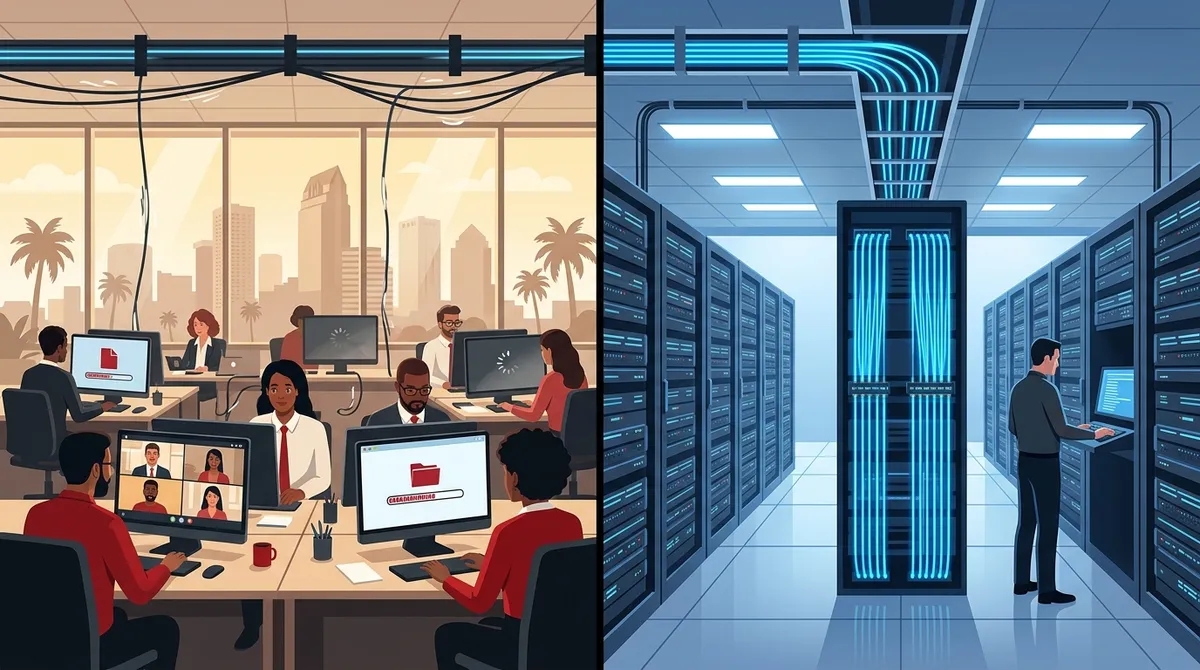
Dedicated fiber costs $300-$2,000+/month but eliminates peak-hour slowdowns with guaranteed uptime SLAs, making it essential for businesses that can’t afford downtime like finance, healthcare, and VoIP-dependent operations.
-
Shared fiber ($60-$300/month) works well for small businesses under 20 employees with basic email and cloud tool usage, but speeds drop during peak hours when neighbors use bandwidth simultaneously.
-
Installation timelines differ significantly: shared fiber takes 5-15 business days while dedicated fiber requires 30-90 days, so plan ahead to avoid service gaps during your transition.
-
Internal structured cabling is critical to fiber performance—even the fastest fiber connection underperforms with outdated internal wiring, making network audits and proper cabling setup foundational investments.
-
On-site surveys are essential before signing contracts as building conditions affect fiber availability and installation costs, and dedicated fiber requires proper SLA guarantees in writing to protect against outages.
If you run a business in Tampa, you already know how much reliable internet matters. Slow connections cost you time, money, and customers. That’s why so many Tampa businesses are making the switch to fiber optic internet. But here’s where it gets interesting — not all fiber is the same.
When it comes to business fiber optic internet installation in Tampa, you have two main paths: dedicated fiber or shared fiber. Choosing the right one can mean the difference between seamless operations and frustrating slowdowns. In this article, we’ll break down both options in plain language so you can make a smart decision for your business.
Whether you’re a small business owner tired of buffering video calls, an IT manager juggling multiple sites, or a franchise operator scaling across Tampa Bay, this guide is for you. Let’s dive in and find the best fit for your needs.

What Is Fiber Optic Internet for Businesses?
Fiber optic internet uses thin glass or plastic cables to transmit data as pulses of light. This is very different from older copper-based connections. Because light travels incredibly fast, fiber delivers speeds and reliability that copper simply can’t match.
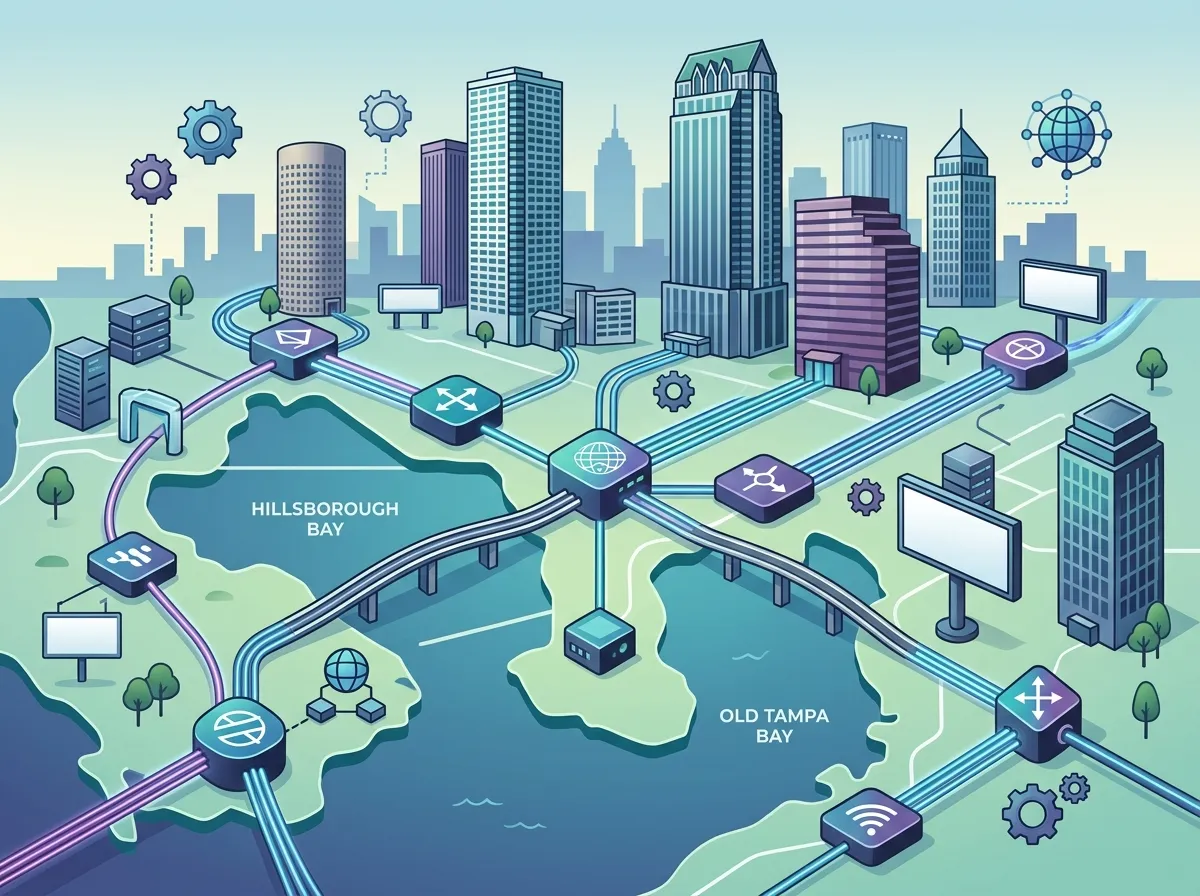
According to Internet Service Provider data, Tampa now has an estimated 35 business fiber internet providers operating in the market. That’s great news for local businesses. You have real choices — and a knowledgeable partner can help you find the best deal.
For businesses running cloud applications, cloud-based phone systems, video conferencing, and data-heavy workflows, fiber is no longer a luxury. It’s a necessity.
Dedicated Fiber vs. Shared Fiber: The Core Difference
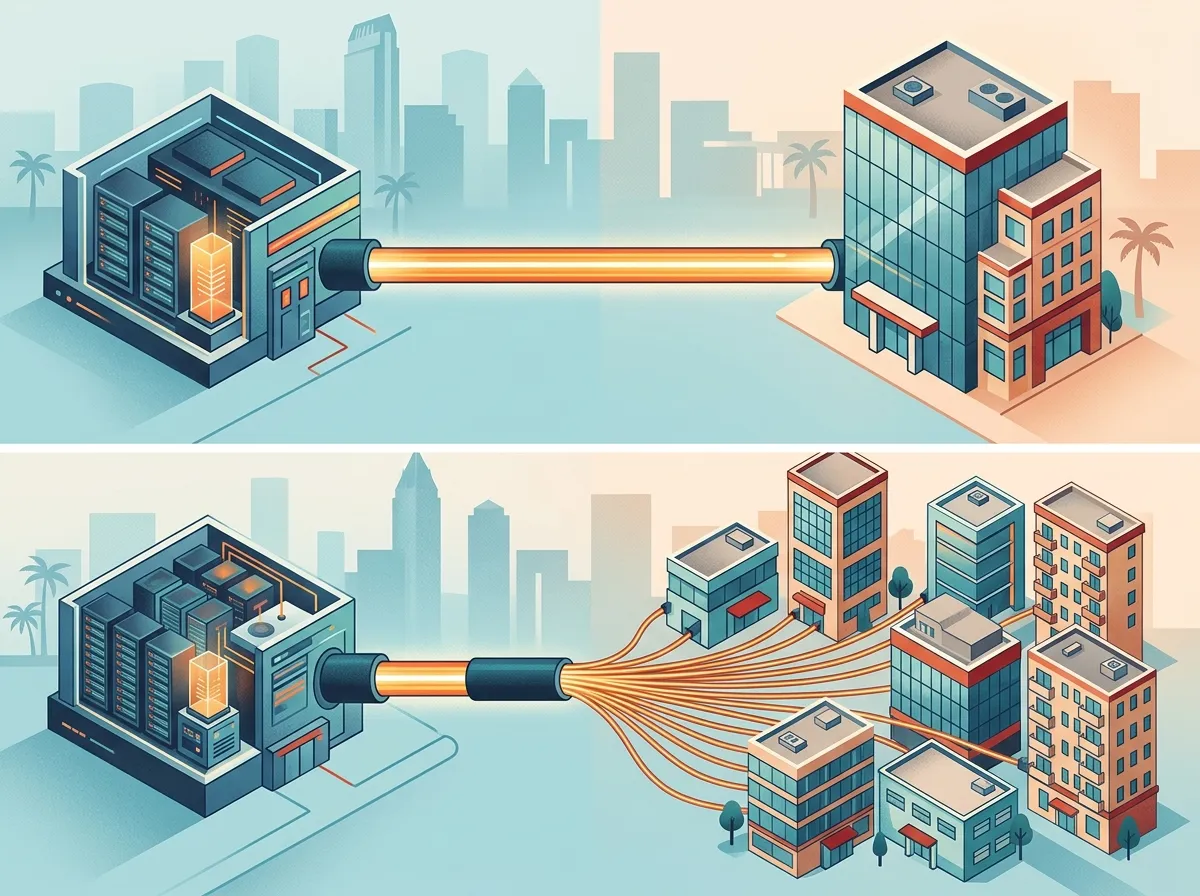
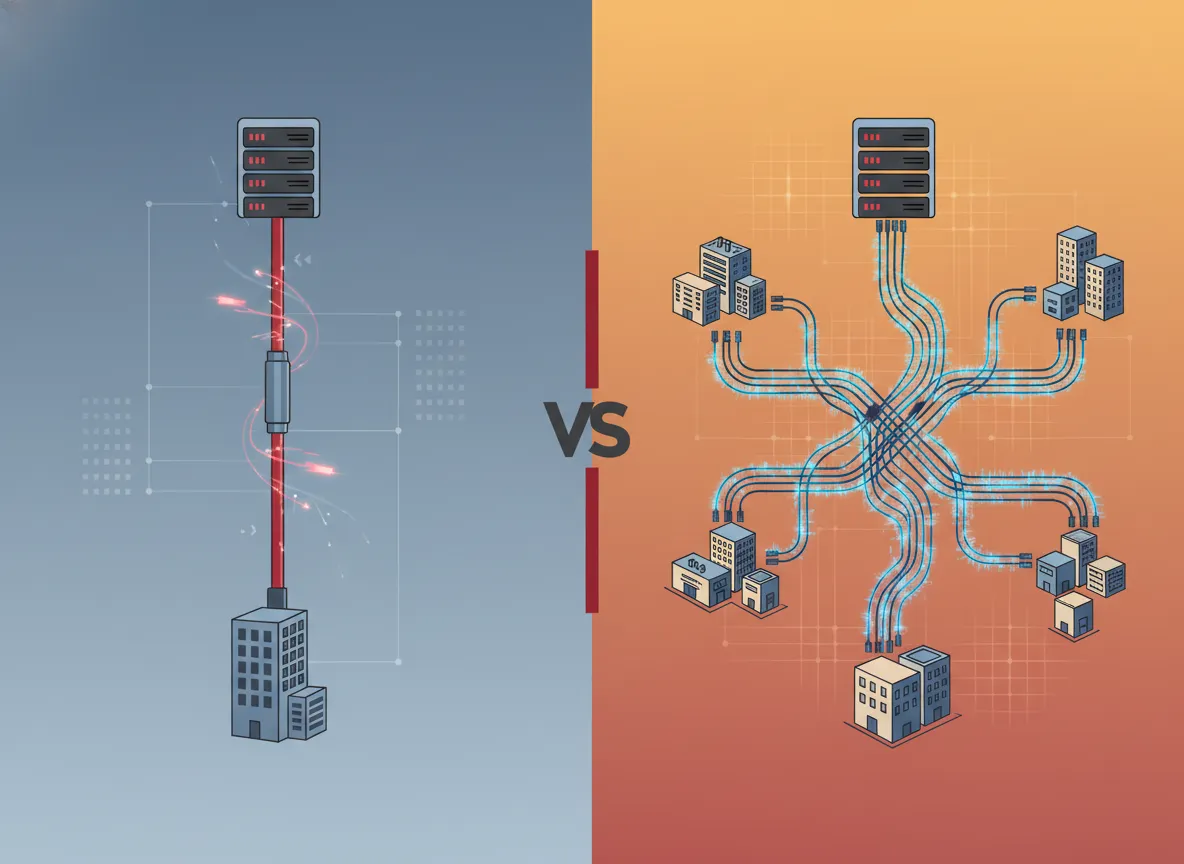
Here’s the simplest way to think about it. Shared fiber is like a highway that you share with other drivers. During rush hour, traffic slows everyone down. Dedicated fiber is like having your own private road. You get the full speed, all the time, no matter what.
Both options use fiber optic cables. But the way bandwidth is allocated — and who else uses it — is very different. Let’s look at each one more closely.
What Is Shared Business Fiber?
Shared fiber, often called broadband fiber, splits bandwidth among multiple businesses or users in a neighborhood or building. It’s the more affordable option and works well for businesses with lighter internet needs. Providers like Frontier Business offer plans with unlimited data and speeds that work well for most everyday tasks.
The tradeoff? During peak hours, speeds can drop. If your neighbor’s office is streaming large files at the same time you’re on a critical video call, you may notice a slowdown. For many small businesses, this is totally acceptable. For others, it’s a dealbreaker.
What Is Dedicated Fiber Internet?
Dedicated fiber — also called Dedicated Internet Access (DIA) — gives your business its own exclusive bandwidth. Nobody else shares your connection. Speeds are symmetrical, meaning your upload and download speeds are equal. And you get a Service Level Agreement (SLA) that guarantees uptime and performance.
Providers like Spectrum Enterprise offer dedicated fiber in Tampa that can scale up to 100 Gbps. That’s enterprise-level power designed for businesses that simply cannot afford downtime. You can learn more about why this matters by reading why Tampa businesses need dedicated fiber internet.
Side-by-Side Comparison: Dedicated vs. Shared Fiber
| Feature | Shared Fiber | Dedicated Fiber |
|---|---|---|
| Bandwidth | Shared with others | Exclusively yours |
| Speed Consistency | Can vary during peak hours | Consistent 24/7 |
| Upload/Download Symmetry | Often asymmetric | Fully symmetric |
| SLA Guarantee | Rarely included | Standard inclusion |
| Cost | Lower monthly cost | Higher monthly cost |
| Best For | Small to mid-size businesses | Enterprises and data-heavy operations |
| Scalability | Limited | Highly scalable |
| Installation Timeline | Faster | May require longer lead time |
Tampa Business Fiber Providers at a Glance
Tampa has a strong fiber market with multiple providers to choose from. Here’s a quick look at what some of the major players offer in 2026. Keep in mind that working with a telecom expert can help you compare these options side by side without the hassle.
| Provider | Max Speed Advertised | Key Feature | Type |
|---|---|---|---|
| AT&T Business Fiber | Up to 5 Gbps | Symmetric speeds, consistent performance | Shared/Dedicated options |
| Spectrum Enterprise | Up to 100 Gbps | Ultra-reliable, low latency | Dedicated Enterprise |
| Frontier Business | Varies by plan | 99.9% reliability, Wi-Fi 7 router included | Shared Broadband Fiber |
For a deeper look at your options, check out the 7 best business high-speed internet services in Tampa FL and see how the local market stacks up.
How Business Fiber Optic Internet Installation Works in Tampa
Getting fiber installed at your Tampa business involves several steps. Knowing what to expect makes the whole process less stressful. Here’s a general overview of what happens from start to finish.
Step-by-Step Installation Process
- Site Survey: A technician visits your location to assess the building’s infrastructure and fiber availability in your area.
- Provider Selection: You choose the provider and plan that fits your speed, budget, and reliability needs.
- Contract and Provisioning: You sign the service agreement and the provider begins provisioning your connection.
- Physical Installation: Technicians run fiber cable to your building, install the ONT (Optical Network Terminal), and connect your network equipment.
- Testing and Activation: The connection is tested for speed and stability before going live.
- Internal Cabling Setup: Your internal network — including structured cabling — is connected to distribute the fiber signal throughout your office.
That last step is often overlooked. Even the fastest fiber connection won’t perform well if your internal cabling is outdated. This is where structured cabling services become critical. Proper internal cabling ensures every workstation, phone, and device gets the speeds it needs. You can also learn more about structured cabling and why it’s a foundational part of any business network.
Which Industries in Tampa Benefit Most?
Tampa’s business community is incredibly diverse. Fiber optic internet has become essential across many sectors. Here are the industries that benefit most from a strong fiber connection:
- Finance and Banking: Secure, high-speed data transfer for transactions and compliance
- Healthcare: Reliable connections for patient records, telemedicine, and imaging
- Hospitality and Tourism: Guest Wi-Fi, POS systems, and reservation platforms
- Manufacturing and Port Operations: Real-time logistics, equipment monitoring, and supply chain management
- Professional Services: Cloud software, video conferencing, and remote work tools
- Education: Distance learning, student databases, and administrative systems
No matter what industry you’re in, slow internet costs you money. The good news is that Tampa’s fiber infrastructure is strong and growing fast in 2026.
Shared Fiber: When It Makes Sense
Shared fiber is a smart choice for many Tampa businesses. Here are the situations where it works best:
- You have fewer than 20 employees
- Your team mostly uses email, web browsing, and basic cloud tools
- Your budget is tight and you need a cost-effective solution
- You don’t have strict uptime requirements in your contracts
- Your location is in a building or area where dedicated fiber isn’t yet available
For small business owners looking to keep costs down while still getting great speeds, shared business fiber is often the sweet spot. You can also explore tips to save money in our guide on 13 high-speed internet tips for business that save money.
Dedicated Fiber: When You Need It
Dedicated fiber is the right choice when your business simply can’t tolerate slowdowns or outages. Here are the signs you need to upgrade:
- Your team experiences frequent slowdowns during peak hours
- You host your own servers or use VoIP systems that demand consistent upload speeds
- Your business handles sensitive data that requires secure, private connections
- You operate multiple locations and need reliable, scalable bandwidth
- Your SLA agreements with clients require guaranteed uptime
Mid-sized enterprises and IT managers often find that dedicated fiber pays for itself quickly when you calculate the cost of downtime. A single hour of lost connectivity can cost thousands of dollars in lost productivity and missed business.
Fiber and Your Overall Business Network
Fiber optic internet doesn’t work in isolation. It’s the foundation of your entire business network. Getting the right fiber connection also means making sure your internal network can handle the speed. That includes your routers, switches, and cabling.
At Ideal Solutions Provider, the team specializes in making sure every piece of your network works together. With over 24 years of experience and partnerships with 35+ vetted suppliers, they compare options across providers and recommend what actually fits your needs — not what earns the highest commission. Their business network solutions and business high-speed internet services are designed to be a complete package.
Many Tampa businesses also pair their fiber installation with cloud video security and cloud-based access control systems that rely on fast, reliable internet to function properly.
Cost Comparison: What to Expect
| Plan Type | Typical Monthly Range | Speed Range | Contract Length |
|---|---|---|---|
| Shared Business Fiber | $60–$300/month | 100 Mbps – 5 Gbps | Month-to-month or 1–2 years |
| Dedicated Fiber (DIA) | $300–$2,000+/month | 10 Mbps – 100 Gbps | Typically 2–3 years |
Pricing varies widely based on your location, building type, and speed requirements. Getting multiple quotes is always a smart move. A telecom consultant can do this work for you at no extra cost. For more help comparing providers, visit our guide on how to compare business internet providers in Tampa Florida.
Tips for a Smooth Fiber Installation
- Plan ahead. Dedicated fiber installations can take 30–90 days. Start the process before you actually need it.
- Get an on-site survey. Always ask for a site assessment before signing a contract. Building conditions can affect availability and cost.
- Audit your internal network. Make sure your cabling and hardware can handle the new speeds you’re paying for.
- Ask about SLAs. If uptime is critical, demand a written service level agreement before you commit.
- Work with a neutral advisor. A telecom consultant who isn’t tied to one provider can find you better deals and avoid pitfalls.
For more guidance, the team at working with a telecom expert who gets results is a great place to start. You can also follow Ideal Solutions Provider on Facebook and Instagram for tips and updates on the latest in Tampa business telecom.
Making the Final Call: Which Fiber Is Right for You?
Here’s a simple summary to help you decide:
- Choose shared fiber if you’re a small business with basic needs and a tight budget
- Choose dedicated fiber if you need consistent speeds, guaranteed uptime, and symmetric bandwidth
- Talk to a neutral expert if you’re unsure — they can assess your needs and find the best deal across multiple providers
You can also explore our high-speed internet solutions for Tampa companies in 2026 for a broader look at what’s available in the market today. Or check out our videos to see how Tampa businesses are upgrading their networks and what the process looks like in action.
Conclusion
Business fiber optic internet installation in Tampa is one of the best investments you can make for your company’s future. Whether you go with shared fiber for budget-friendly performance or dedicated fiber for enterprise-grade reliability, you’re upgrading to a faster, more dependable connection that powers everything from VoIP calls to cloud applications.
The key is choosing the right type for your specific needs — and not overpaying for something that doesn’t fit. Tampa’s fiber market in 2026 is competitive, and that’s great news for businesses like yours. You can also watch helpful walkthroughs on the Ideal Solutions Provider YouTube channel to learn more about telecom upgrades and what to expect during the process.
Ready to explore your fiber options and stop overpaying for underperforming internet? Reach out to our team today for a free consultation and let us compare the best business fiber options in Tampa for you — no pressure, no obligation, just honest guidance from people who know the Tampa telecom market inside and out.
FAQs
Q: How long does business fiber optic internet installation take in Tampa?
A: Shared fiber installations in Tampa are typically completed in 5 to 15 business days. Dedicated fiber installations take longer — usually 30 to 90 days — because they require more engineering and infrastructure work. Planning ahead is always a great idea so your business isn’t left without service during the transition!
Q: Do Tampa businesses need an on-site survey before fiber installation?
A: Yes, most providers will require or strongly recommend an on-site survey before installation. The survey checks whether your building already has fiber infrastructure, confirms the best entry points for the cables, and helps the provider give you an accurate quote. Think of it as a quick checkup before the big upgrade — totally worth it!
Q: What speeds are available for business fiber internet in Tampa in 2026?
A: Tampa businesses have access to a wide range of fiber speeds in 2026. Shared fiber plans typically offer speeds from 100 Mbps up to 5 Gbps, while enterprise dedicated fiber can scale up to 100 Gbps depending on your provider. With an estimated 35 providers in the market, you have plenty of great options to find the right fit.
Q: Is dedicated fiber really worth the higher cost for a small business?
A: For most small businesses, shared fiber delivers plenty of speed at a lower monthly cost. However, if your business relies heavily on VoIP calls, video conferencing, or cloud-based systems that need consistent upload speeds, dedicated fiber can be well worth the investment. The best way to decide is to do a quick audit of your current usage — a telecom advisor can help you figure this out for free!
Q: What is the difference between fiber optic internet and regular broadband for businesses?
A: Fiber optic internet transmits data as pulses of light through glass or plastic cables, making it significantly faster and more reliable than traditional copper-based broadband. Business fiber also offers symmetric upload and download speeds, which is a game changer for cloud applications and VoIP. If your business runs on modern cloud tools, fiber is the smarter long-term choice.