Key Takeaways
-
Strong network infrastructure is critical for cloud access control success; reliable Wi-Fi, proper cabling, network segmentation, and backup power are as important as the locks themselves.
-
Cloud access control integrated with PMS eliminates manual credential management—guests automatically receive mobile keys at check-in and lose access at checkout, reducing front desk workload significantly.
-
Multi-property hotel groups can enforce consistent security policies across locations from one dashboard, enabling instant credential deactivation and remote troubleshooting without on-site visits.
-
Modern systems maintain offline resilience by storing recent access permissions locally, allowing doors to function during brief outages if backup internet and battery power are properly configured.
-
Total implementation costs range from $800-$8,000 per room depending on property type, plus $5-$20 monthly per controlled door, so conduct thorough network assessments before choosing hardware.
-
Verify cybersecurity practices before deployment by asking vendors about multi-factor authentication, data hosting locations, API integrations, uptime guarantees, and security patch frequency.
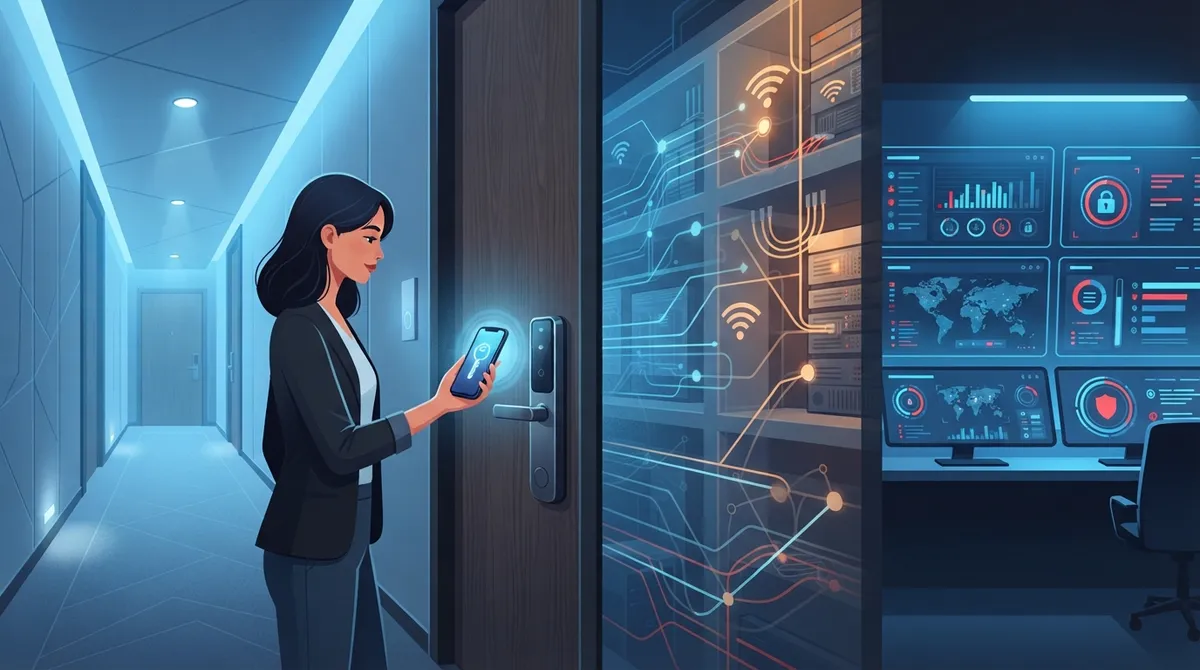
Picture this: a guest checks into your hotel at midnight, taps their phone against the door, and walks right in. No plastic key card. No trip to the front desk if it stops working. That’s the promise of cloud access control hospitality solutions, and more hotels are making the switch every year. But here’s the thing nobody tells you upfront: none of it works without a solid network behind it.
At Ideal Solutions Provider, we’ve spent over 24 years helping businesses build the telecom backbone that makes technology like this actually reliable. Hotels, resorts, and multi-property groups need more than good door locks. They need dependable internet, smart network design, and backup systems that keep guests moving even when something goes wrong. Let’s walk through what cloud access control really means for hospitality, and what it takes to make it work every single day.
What Is Cloud Access Control in Hospitality?
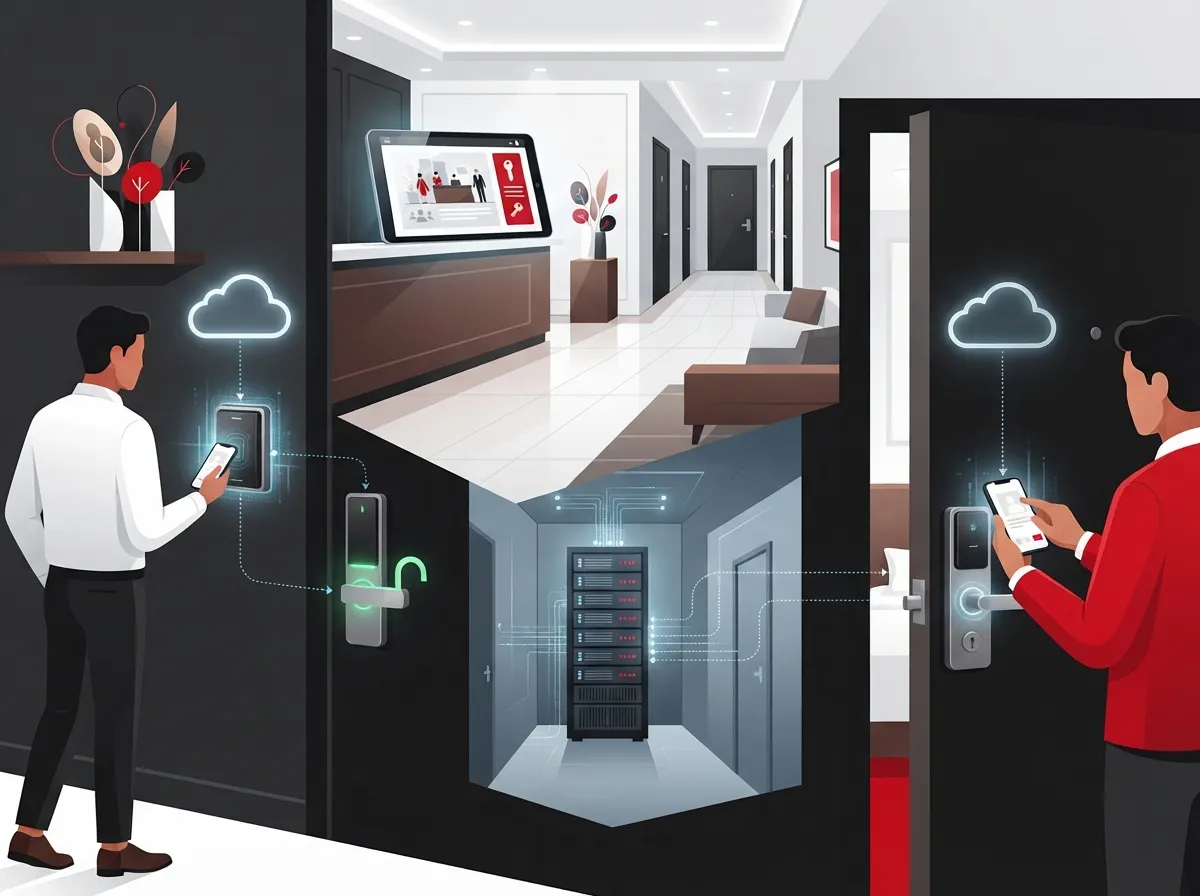
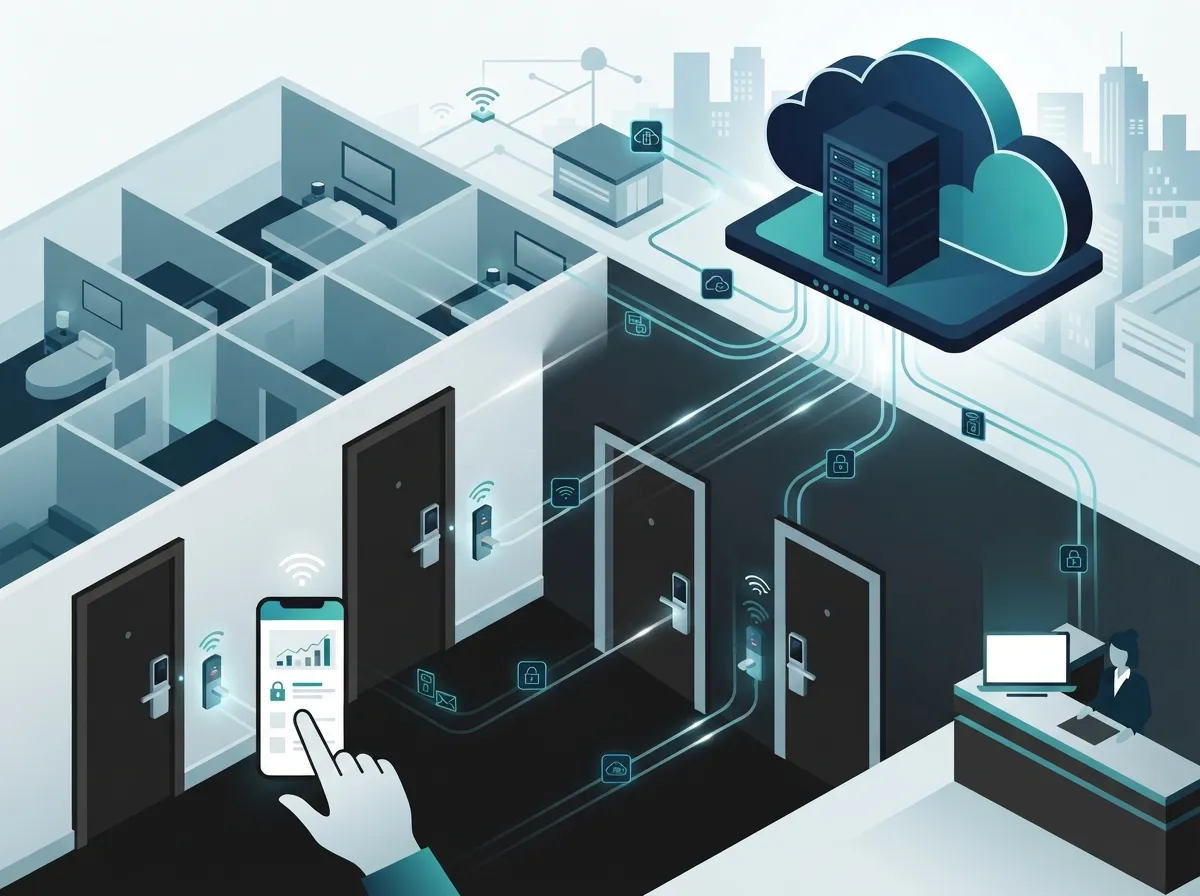
Cloud access control is a security system that manages who can enter guest rooms, staff areas, parking lots, and other spaces. Instead of storing all the data on a box in a back closet, everything lives in the cloud. Managers can check activity, add new staff, or unlock a door from a laptop or phone, anywhere they are.
For hotels, this usually means electronic locks, mobile keys, and smart readers connected through the property’s internet and network. It ties into other hotel systems too, like the property management system (PMS), video cameras, and elevators. When it’s set up right, everything talks to everything else.
Why Hotels Are Making the Switch
Hotels deal with constant guest turnover. Physical keys get lost, cloned, or forgotten. Staff badges change hands often. Cloud-based systems solve a lot of these headaches by automating credential issuing and revoking access instantly.
- Guests get room access at check-in and lose it automatically at checkout
- Staff permissions update the moment someone changes roles or shifts
- Lost phones or cards can be deactivated in seconds, not hours
- Managers can review who entered a door and when, from any location
- Multiple properties can be managed from one central dashboard
The Network Behind the Locks
Here’s what a lot of hospitality groups miss: cloud access control lives and dies by the network it runs on. Readers and controllers need steady power and steady connectivity. If your Wi-Fi drops or your internet goes down during a busy weekend, you don’t want guests locked out of their rooms.
This is where structured cabling and thoughtful network design come into play. A hotel’s back-of-house network needs enough bandwidth, the right cabling, and proper segmentation to keep security traffic separate from guest Wi-Fi. That way, someone streaming a movie in room 214 won’t slow down the door lock system.
Key Network Requirements for Hotel Access Control
- Reliable wired Ethernet or Power over Ethernet (PoE) to each controller
- Segmented networks that separate security traffic from guest internet
- Backup connectivity, like cellular failover, in case the main line drops
- Battery or generator backup power for controllers and readers
- Ongoing monitoring to catch outages before guests notice
- Strong Wi-Fi coverage in hallways and common areas for mobile keys
Getting these pieces right takes planning. Our team at Ideal Solutions Provider often starts by reviewing a property’s existing cabling and network setup before recommending any access control hardware. A weak network foundation will sink even the best door hardware.
How Cloud Access Control Connects to Your Hotel PMS
One of the biggest wins for hospitality is PMS integration. When your access control system talks directly to your property management software, a lot of manual work disappears.
Here’s how it typically works, step by step:
- Guest books a room and provides identification at check-in
- The PMS sends a signal to the access control platform
- A mobile key or card credential activates for that specific room and dates
- Staff members with proper clearance receive access to needed areas
- At checkout, the PMS automatically revokes the guest’s credential
- The system logs every entry attempt for later review
This kind of automation reduces front desk workload and cuts down on the awkward moment when a guest’s key card just stops working. It also gives management a clear audit trail, which matters for insurance and liability reasons.
Mobile Keys: Are They Actually Reliable?
Mobile credentials use Bluetooth Low Energy (BLE) or Near Field Communication (NFC) to unlock doors through a smartphone app. Most guests find them convenient, but hotel operators sometimes worry about reliability.
The good news is that mobile keys have matured a lot. When the underlying network and app infrastructure are solid, they tend to work smoothly. Problems usually come from weak Wi-Fi coverage, outdated hardware, or a poorly configured network rather than the credential technology itself.
- Mobile keys reduce the cost of replacing lost or demagnetized cards
- One credential can unlock rooms, elevators, gyms, and parking areas
- Guests appreciate not waiting in line for a replacement key
- Staff can issue keys remotely before a guest even arrives
Managing Multiple Properties from One Dashboard
Franchise operators and multi-location hotel groups face a unique challenge. Keeping security policies consistent across five, ten, or fifty properties is tough without centralized tools.
Cloud access control platforms let corporate security teams set standard rules once and apply them everywhere. They can review access logs, manage staff permissions, and respond to incidents without visiting each site in person.
Benefits for Multi-Property Portfolios
| Challenge | How Cloud Access Control Helps |
|---|---|
| Inconsistent security policies across sites | Standardized rules applied from one dashboard |
| Slow response to lost credentials | Instant remote deactivation |
| Limited visibility into staff activity | Centralized access logs and reporting |
| Expensive on-site IT visits | Remote troubleshooting and updates |
| Scaling to new locations | Cloud platform grows without new servers |
If your hotel group is scaling fast, this kind of centralized control saves real time and money. It’s one reason franchise operators lean toward scalable access control systems built for growth from day one.
What Happens If the Internet Goes Down?
This is probably the most common question hotel owners ask. Nobody wants guests stuck outside their rooms because the internet blinked out.
Good cloud access control systems are built with offline resilience in mind. Locks typically store recent access permissions locally, so doors keep working even during a short outage. Once connectivity returns, the system syncs events and updates automatically.
Still, this only works well if your network has proper backup plans in place. That’s why we recommend:
- Cellular backup connections that kick in during a main line outage
- Battery backup for door controllers and network switches
- Regular testing of failover systems, not just installing and forgetting
- Clear staff procedures for manual overrides during extended outages
A reliable Internet Service Provider connection paired with backup options gives hotels peace of mind. We help properties design this kind of redundancy so a single outage doesn’t turn into a guest relations disaster.
What Does Cloud Access Control Cost for a Hotel?
Costs vary a lot depending on property size, service level, and existing infrastructure. Industry estimates give a general range, though actual numbers depend on your specific property.
| Property Type | Estimated Cost Per Room |
|---|---|
| Limited-service hotels | $800 – $2,000 |
| Full-service properties | $1,500 – $4,000 |
| Luxury or resort properties | $3,000 – $8,000+ |
On top of installation, hotels usually pay recurring software licensing fees, often somewhere between $5 and $20 per controlled door each month. Electronic lock hardware itself can run $300 to $800 per door, not counting labor or wiring updates. These figures are general guidelines, so always get a property-specific quote before budgeting.
Cybersecurity: Don’t Skip This Part
Hotels handle sensitive guest data every single day. A cloud access control breach isn’t just embarrassing, it can be dangerous and costly. Before choosing a platform, ask hard questions about how it protects your property.
Questions to Ask Your Access Control Provider
- Does the platform support multi-factor authentication for admin accounts?
- Where is guest and employee data physically hosted?
- What happens to access logs during a disconnection?
- Are there open APIs for integrating with our PMS and other systems?
- What is the guaranteed uptime, and what support is available if something breaks?
- How often does the vendor release security patches?
A vendor that can’t answer these clearly probably isn’t ready for hospitality-grade deployment. We always encourage hotel IT managers to treat this like any other major network purchase and dig into the details.
Integrating Access Control with Other Hotel Systems
Cloud access control shouldn’t operate in isolation. The real value comes from connecting it with other systems hotels already run.
- Property management systems for automated check-in and checkout
- Video surveillance for verifying access events visually
- Elevator controls to restrict floor access by room or credential
- Parking systems for guest and staff vehicle access
- Visitor management for vendors, contractors, and event guests
- Staff safety devices for emergency response coordination
This is where having a single telecom and IT partner really pays off. Rather than juggling five different vendors who don’t talk to each other, hotels can work with one team that understands how security cameras, access control, and networking all fit together.
Market Growth and Industry Trends
The travel access control software market is growing fast. One market research estimate places the global market around $1.2 billion in 2024, with projections reaching roughly $4.5 billion by 2033. That’s a significant growth rate, though these figures come from secondary research sources and should be treated as directional rather than exact.
The same research suggests cloud-based solutions already make up a majority share of the market, with hotels and resorts contributing a large portion of total revenue. Some vendor reports also claim big gains in operational efficiency and fewer security incidents after switching to cloud platforms. These numbers sound promising, but we always recommend hotels verify vendor claims independently rather than taking marketing figures at face value.
Steps to Plan a Cloud Access Control Rollout
If you’re considering this upgrade for your property, here’s a practical path forward:
- Assess your current network, including Wi-Fi coverage and cabling condition
- Identify every door, gate, and area that needs controlled access
- Decide which systems need integration, like PMS or video security
- Choose a platform with strong offline resilience and clear cybersecurity practices
- Plan for backup power and internet redundancy at each property
- Test the system thoroughly before a full property-wide rollout
- Train staff on daily operations and emergency override procedures
Skipping any of these steps often leads to frustrating gaps later. A thorough network cabling installation plan up front saves a lot of headaches during and after deployment.
Why Work With a Telecom Partner Instead of Going It Alone
Hotels often try to handle access control as a standalone IT project. The problem is that access control, networking, internet, and security cameras are deeply connected. A weak link anywhere can cause the whole system to underperform.
At Ideal Solutions Provider, we act as a single point of contact for hospitality groups nationwide. We work with over 35 vetted suppliers to compare options, audit existing setups, and design a complete solution that includes the network, connectivity, and security systems your property actually needs. We’ve found that many properties are either overpaying for services they don’t use or missing critical redundancy that leaves them vulnerable during outages.
You can also follow us on Facebook, check out project photos on Instagram, or watch real installation walkthroughs on YouTube to see how these systems come together in real properties.
Bringing It All Together
Cloud access control hospitality solutions offer real benefits for hotels ready to modernize guest experience and security. But the technology only works as well as the network supporting it. Reliable internet, proper cabling, network segmentation, and backup power are just as important as the locks themselves.
Whether you’re running a single boutique hotel or managing a multi-property franchise, getting the infrastructure right from the start saves money and headaches down the road. Our team has spent over two decades helping businesses build telecom systems that actually hold up under real-world pressure.
Ready to see what a properly designed network could do for your property’s access control system? Reach out to our team today for a free consultation, or give us a call to talk through your hotel’s specific needs.
FAQs
Q: What is cloud access control in hospitality?
A: It’s a security system that manages hotel door locks, mobile keys, and access permissions through the cloud instead of an on-site server. Hotels can grant or remove access remotely, which makes check-in and checkout much smoother for everyone involved.
Q: How does cloud access control integrate with a hotel PMS?
A: When connected properly, the property management system automatically triggers credential activation at check-in and revokes it at checkout. This saves front desk staff a ton of manual work and keeps guest access accurate without any extra steps.
Q: What happens to hotel door access if the internet goes down?
A: Most modern systems store recent permissions locally, so doors keep working during short outages. That said, having backup internet and battery power in place is still important for longer disruptions, and we always recommend testing your failover setup regularly.
Q: Are mobile room keys secure and reliable for hotels?
A: Yes, when the underlying network and Wi-Fi coverage are solid, mobile keys tend to work great. Most reliability issues actually trace back to weak network infrastructure rather than the mobile key technology itself, which is why network planning matters so much.
Q: How much does cloud access control cost per hotel room?
A: Costs vary widely, but industry estimates range from about $800 per room for limited-service hotels up to $8,000 or more per room for luxury resorts. Recurring software fees typically add another $5 to $20 per door each month, so it’s smart to get a property-specific quote.