Key Takeaways
-
Cloud access control eliminates manual key management and enables instant offboarding—revoke employee access immediately when someone leaves without rekeying locks or tracking physical keys.
-
Manage all retail locations from a single dashboard with role-based permissions and time-based access scheduling, reducing security risks and administrative overhead across single or multi-location operations.
-
Integration with cloud video systems links door events to matching footage, providing clear audit trails and supporting PCI DSS compliance documentation for restricted areas.
-
Cloud access control typically delivers 20-30% total security cost savings by eliminating outdated store-by-store systems, reducing guard labor, and simplifying multi-site standardization.
-
Reliable telecom infrastructure (high-speed internet, secure Wi-Fi, cellular failover) is critical to system performance; paired telecom and access control solutions prevent doors from going offline during outages.
-
Mobile credentials on employee smartphones eliminate lost keys and badges while time-based access windows for part-time staff and delivery drivers reduce after-hours theft and unauthorized entry risks.
Running a retail store means juggling a hundred things at once. Employees come and go. Deliveries show up at odd hours. Stockrooms, cash offices, and server closets all need protecting. If you’re still handing out metal keys or wondering who has access to what, you’re not alone. Many retail owners feel this same headache every single day.
Here’s the good news: cloud access control retail stores solutions can fix this problem for good. Instead of chasing down keys or rekeying locks every time someone leaves, you manage everything from your phone or laptop. And because this all runs on your internet connection, having a strong telecom foundation matters just as much as the access control hardware itself. That’s where a partner like Ideal Solutions Provider comes in, helping you connect the dots between reliable high-speed internet, secure networking, and smart access control.
In this article, we’ll walk through 11 real wins that cloud access control brings to retail businesses. Whether you run one boutique or fifty franchise locations, you’ll find something useful here.
What Is Cloud Access Control for Retail Stores?
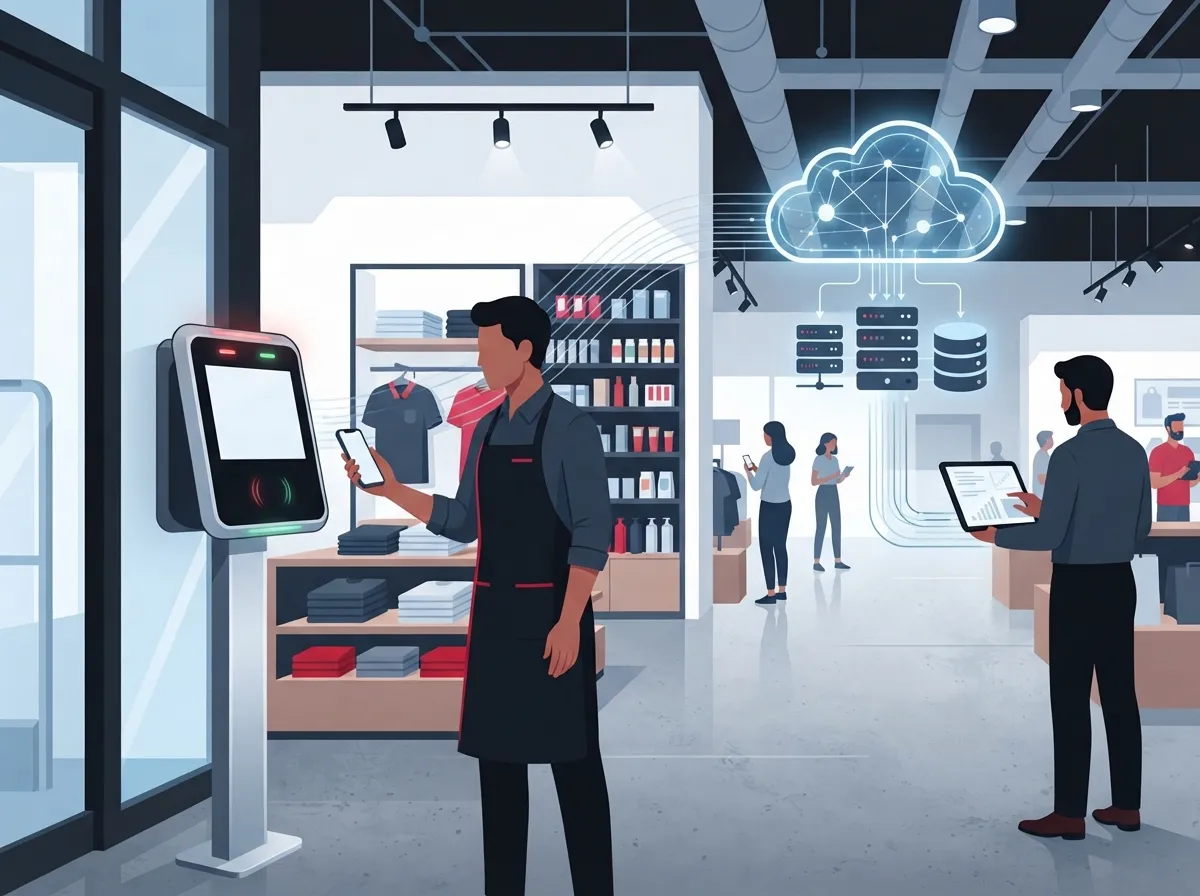
Cloud access control uses internet-connected door readers, locks, and controllers tied to software in the cloud. Instead of managing access at each store separately, you control everything from one dashboard. You can add a new hire in seconds. You can shut off access for someone who just quit, from anywhere, at any time.
This system typically protects the doors that matter most in retail: employee entrances, stockrooms, receiving docks, cash offices, pharmacies, and network or server rooms. Customer-facing doors usually stay open during business hours, so the real value shows up in these restricted areas.
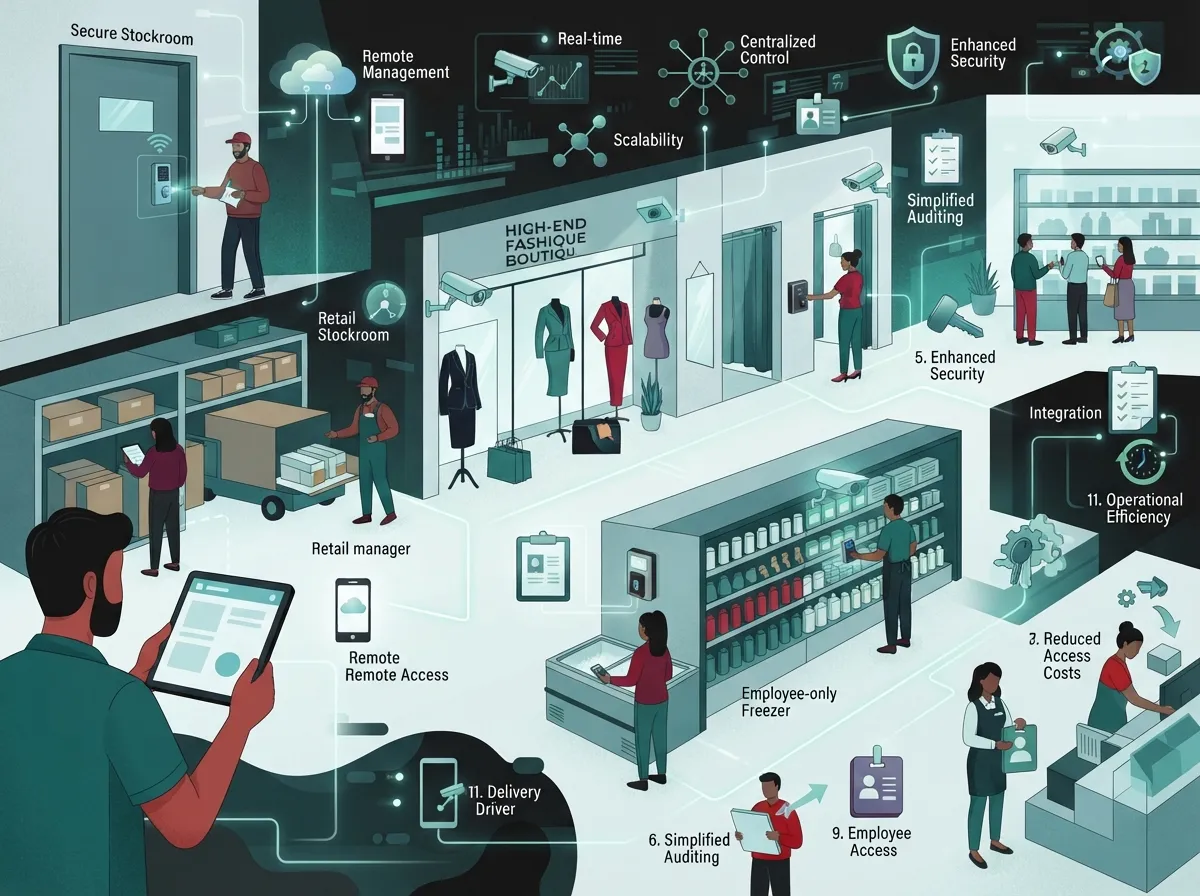
11 Reasons Retail Stores Are Switching to Cloud Access Control
1. Manage Every Location From One Screen
If you own a single shop or a chain of 30, you shouldn’t need to drive to each site to grant or remove access. Cloud platforms let your management team assign permissions by location and by time, all from a browser or app. This is a game-changer for franchise operators managing scattered Tampa Bay locations or nationwide sites.
2. Instant Offboarding Keeps Former Employees Out
Retail has high turnover. When someone leaves, quits, or gets let go, you can’t afford to wait days to change the locks. With cloud access control, you revoke their credentials the moment they walk out the door. No more worrying about who still has an old key floating around.
3. Time-Based Access Cuts Down on After-Hours Risk
Not every employee needs 24-hour access. You can set schedules so part-time staff can only enter during their shifts. Delivery drivers can get temporary access windows tied to expected drop-off times. This alone can prevent a lot of after-hours theft and confusion.
4. Mobile Credentials Replace Lost Keys and Badges
Physical keys get lost. Badges get forgotten at home. Mobile credentials solve both problems by turning employee smartphones into the access method. That said, a good system should still offer PINs or keycards for staff without compatible phones, so nobody gets left out.
5. Real Cost Savings Add Up Fast
According to a cloud-based physical-security industry report from Genetec, businesses that move relevant security infrastructure to the cloud typically save between 20% and 30% on total security costs. Savings depend on your hardware, connectivity, monitoring, and subscription fees, but the trend is clear: cloud beats maintaining scattered, outdated systems store by store.
6. Integration With Cameras Gives You the Full Picture
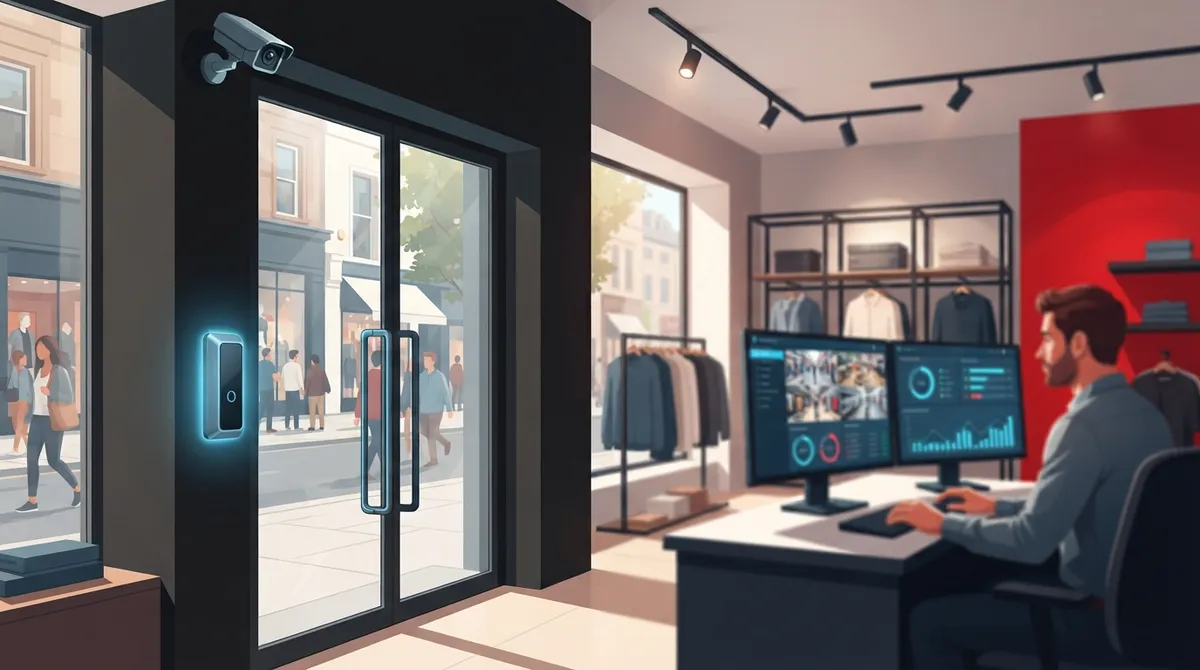
When a door opens at 2 a.m., wouldn’t you want to see who opened it? Cloud access control can integrate with cloud video security systems so every door event links to matching footage. This context turns a confusing alert into a clear answer, fast.
7. PCI DSS Compliance Gets Easier
If your store processes card payments, you already know about PCI DSS requirements. Requirement 9 specifically covers restricting physical access to areas where cardholder data lives. Cloud access control helps you document who entered sensitive areas and when, supporting your compliance efforts. Still, always confirm your specific validation needs with a qualified assessor or the PCI Security Standards Council.
8. Multi-Site Standardization Simplifies Training
When every store uses the same system, training new managers becomes much simpler. Nobody has to learn five different lock brands or software platforms. This consistency saves time and reduces mistakes, especially helpful for growing franchise operations expanding across new markets.
9. Guard and Staffing Costs Can Drop
A 2025 multi-site security playbook from AGS Protect estimates that some businesses using cloud access control alongside monitoring tools cut guard spending by 20% to 40%. This is a vendor-specific estimate rather than an industry-wide number, but it shows real potential for retailers looking to control labor costs without sacrificing security.
10. Growing Market Adoption Signals Long-Term Value
A 2025 retail security outlook from SiteOwl projects cloud-based access control adoption growing by 38%. That’s a market projection, not a guaranteed rate, but it tells you where the industry is heading. Retailers who adopt early often gain a smoother transition and better vendor support.
11. Reliable Telecom Infrastructure Keeps Everything Running
Here’s something people often overlook: cloud access control is only as good as your internet connection. Without dependable broadband, secure Wi-Fi, and backup connectivity, your doors could stop responding at the worst possible time. This is exactly why pairing access control with strong business network setup matters so much for retail chains.
What Telecom Infrastructure Does Cloud Access Control Need?
Before installing any cloud access control system, it helps to check your telecom setup first. Here’s what typically needs attention:
- Reliable, high-speed internet at each retail location
- Secure Wi-Fi or wired Ethernet connections for door controllers
- Cellular failover in case your main internet connection drops
- Network segmentation to keep access control traffic separate and secure
- Battery backup or power protection for continuous operation
- Properly run structured cabling to support devices without signal loss
Skipping these steps often leads to spotty performance, laggy app response, or devices going offline during storms or outages. A trusted telecom partner can help you plan this out properly from day one.
Common Areas Retail Stores Protect With Access Control
Contrary to what many assume, cloud access control usually isn’t about locking customers out of the sales floor. It’s about protecting the spaces where risk is highest. Here are the areas retailers commonly secure:
- Employee-only entrances and break rooms
- Stockrooms and inventory storage areas
- Cash offices and safes
- Pharmacy counters and controlled substance storage
- Receiving and loading docks
- Server rooms and network closets
- Manager offices with sensitive paperwork
Protecting these spaces reduces internal theft, keeps compliance auditors happy, and gives you peace of mind when you’re not on-site.
Cloud Access Control vs. Traditional Locks: A Quick Comparison
| Feature | Traditional Locks | Cloud Access Control |
|---|---|---|
| Remote management | No | Yes, from phone or browser |
| Instant offboarding | Requires rekeying | Immediate, one click |
| Multi-location control | Site-by-site only | Centralized dashboard |
| Audit trail | None | Full activity logs |
| Integration with cameras | Not possible | Yes, event-linked footage |
| Backup access during outage | Always works (mechanical) | Depends on failover setup |
Steps to Roll Out Cloud Access Control at Your Retail Stores
Ready to make the switch? Here’s a simple path forward:
- Audit your current locks, keys, and telecom setup at each store
- Identify which doors and areas need protection most
- Choose a cloud access control platform with strong support and API options
- Confirm your internet and network can support the new devices
- Add cellular backup for locations prone to outages
- Train store managers on the mobile app and dashboard
- Set role-based permissions so only the right people can make changes
- Test integrations with cameras, alarms, or POS systems
- Review audit logs monthly to catch unusual activity early
Following these steps in order helps avoid the common mistakes that trip up first-time deployments, especially when multiple locations are involved.
Questions to Ask Before Choosing a Provider
Not all cloud access control systems are built the same. Before signing a contract, ask these questions:
- How does the system handle a power or internet outage?
- What is the vendor’s data security and privacy policy?
- Can I set role-based permissions for different managers?
- Does it integrate with my existing cameras and alarms?
- How long are audit logs retained?
- What service-level guarantees does the provider offer?
Getting clear answers here saves you from surprises down the road, especially once you’re managing several stores at once.
Why Telecom Reliability Matters More Than You Think
It’s easy to focus on the access control hardware and forget about the network behind it. But if your internet goes down, your doors could stop syncing with the cloud. Many systems offer local fallback modes, but performance and features vary quite a bit between providers.
This is exactly why pairing your access control rollout with dependable business network solutions and proper structured cabling services makes such a big difference. A single point of contact who understands both telecom and physical security can save you countless headaches and phone calls to different vendors.
Ideal Solutions Provider has spent over 24 years helping Tampa businesses and companies nationwide connect the dots between internet, networking, and security. With partnerships across 35+ vetted suppliers, they help retail chains build access control systems that actually stay online when it matters most. You can follow their work and see real client stories on Facebook, Instagram, and YouTube.
Bringing It All Together
Cloud access control retail stores solutions offer a smarter, faster, and more flexible way to manage security across one location or a hundred. From instant offboarding to PCI DSS support to real cost savings, the benefits stack up quickly. But none of it works well without a solid internet and networking foundation behind it.
If you’re ready to explore what cloud access control could look like for your retail business, our team is happy to walk through your current setup and find the right fit. Contact us today, or feel free to call us to talk through your options. We’re here to make this process simple, honest, and genuinely helpful for your business.
FAQs
Q: What is cloud access control for retail stores?
A: It’s a system that uses internet-connected locks, readers, and controllers managed through cloud software. Store owners and managers can grant or remove employee access from a phone or browser, no matter where they are. It’s a much simpler way to handle security across one shop or a whole chain.
Q: Can retail managers manage door access remotely from a phone or browser?
A: Yes, that’s actually one of the best parts! Most cloud access control platforms come with a mobile app and web dashboard, so you can add employees, adjust schedules, or lock down a door from wherever you happen to be.
Q: What happens if the internet connection goes down at a retail store?
A: This depends on the system you choose. Many cloud access control platforms offer local fallback modes or cellular backup, so doors keep working even during an outage. It’s worth asking your provider exactly how their system handles this before you commit.
Q: How does cloud access control help retailers meet PCI DSS physical-security requirements?
A: Cloud access control creates detailed audit logs showing who entered restricted areas and when, which supports PCI DSS Requirement 9. That said, always double-check your specific compliance needs with a qualified assessor, since requirements can vary by business.
Q: How much does cloud-based access control cost for a retail chain?
A: Costs vary based on the number of doors, locations, and features you need. Many retailers see overall security savings of 20% to 30% after switching to cloud-based systems, according to industry reports. The best way to get an accurate number is through a personalized consultation.