

Key Takeaways
-
MPLS uses labeled, pre-defined paths instead of standard IP routing, enabling businesses to achieve consistent speeds, low latency, and reliable performance for critical applications like VoIP and video conferencing.
-
MPLS connectivity costs $300-$1,500+ per location monthly plus setup fees, but working with independent telecom brokers can help secure competitive pricing and prevent overpaying for services.
-
Multi-location businesses, franchise operators, healthcare organizations, and financial services firms benefit most from MPLS because it provides centralized management, traffic prioritization, and enhanced security for sensitive data.
-
Businesses can combine MPLS with SD-WAN in hybrid models to gain both the reliability and quality-of-service of MPLS for critical traffic plus the flexibility and cost-efficiency of SD-WAN for cloud applications.
-
Clear signs your business needs MPLS include poor VoIP call quality, laggy video meetings, slow cloud app access across locations, and handling of sensitive data requiring a private network path.
-
Implementation requires assessing network needs, identifying traffic priorities, selecting a multi-provider partner, designing network topology (hub-and-spoke or full mesh), and planning phased migration to minimize downtime.
If you’ve ever dealt with slow file transfers between offices, dropped VoIP calls, or laggy video meetings, you know how frustrating a weak network can be. For businesses managing multiple locations or heavy data traffic, these problems aren’t just annoying — they cost real money. That’s where MPLS connectivity comes in. MPLS, or Multiprotocol Label Switching, is a powerful networking technology that helps businesses move data faster, more reliably, and with better quality control. Whether you’re a small business owner in Tampa, an IT manager juggling multiple sites, or a franchise operator trying to keep everything connected, understanding MPLS connectivity can genuinely change how your network performs. In this guide, we’ll walk you through exactly what MPLS is, how it works, and how to use it effectively for your business — in plain, simple language.

What Is MPLS Connectivity?
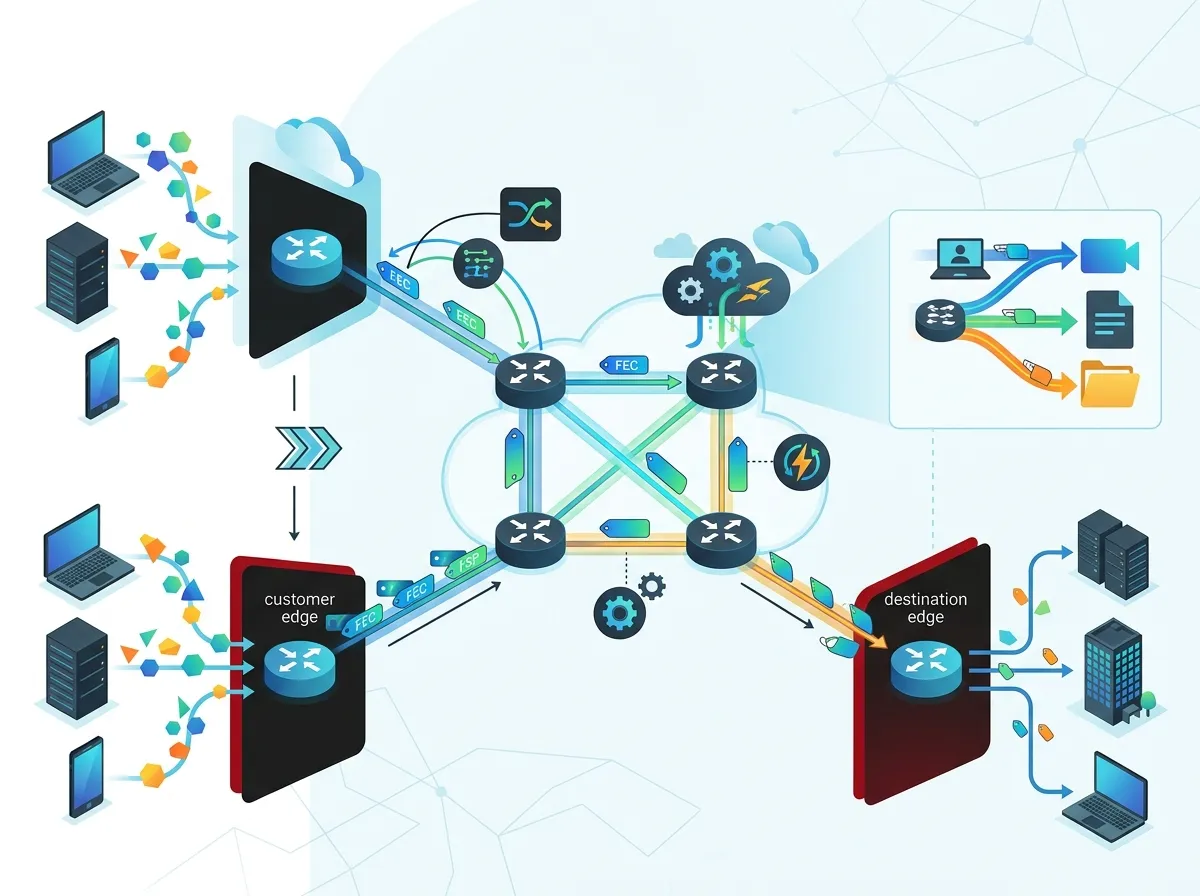
MPLS connectivity is a method of directing data across a network using short path labels instead of long network addresses. Think of it like a highway system with express lanes. Instead of every car (data packet) stopping at each intersection to figure out where to go, MPLS assigns each packet a label at the start of its journey and sends it along a pre-defined path. This makes data travel faster and more efficiently.
Traditional internet routing can be unpredictable. Data packets take different routes and can arrive out of order or get delayed. MPLS solves this by creating a private, dedicated network path between your business locations. This gives you consistent speeds, low latency, and reliable performance — all things that matter a lot when you’re running a business. You can learn more about which MPLS network provider is right for Tampa businesses to get a head start on your options.
How MPLS Connectivity Works Step by Step
Understanding the basics of how MPLS works helps you make smarter decisions. Here’s a simple breakdown of the process:
- Data enters the MPLS network: When a data packet enters the network, a router called an ingress Label Edge Router (LER) assigns it a label based on its destination and priority.
- The packet travels along a Label Switched Path (LSP): Routers in the middle of the network (called Label Switch Routers or LSRs) read the label and forward the packet along a pre-determined path without needing to look up the full IP address each time.
- Quality of Service (QoS) is applied: High-priority traffic like VoIP calls or video conferencing gets sent along faster, more reliable paths. Less urgent data takes a different route.
- The packet exits the MPLS network: An egress LER removes the label and delivers the packet to its final destination.
- Your applications perform consistently: Because data takes predictable, optimized paths, your business apps — phone systems, cloud software, file sharing — all work smoothly.
This intelligent routing is what makes MPLS connectivity so valuable for businesses that rely on real-time communication tools. If you use VoIP phone services, for example, MPLS can dramatically improve call quality.
Key Benefits of MPLS Connectivity for Businesses
So why should your business seriously consider MPLS? Here are the biggest advantages:
- Consistent performance: MPLS uses dedicated paths, so your network doesn’t compete with general internet traffic.
- Low latency: Data moves faster because it follows a pre-defined route, which is critical for voice and video applications.
- Traffic prioritization: You can set rules so that business-critical traffic always gets the bandwidth it needs first.
- High reliability: MPLS networks typically come with strong uptime guarantees, making them great for mission-critical applications.
- Scalability: Adding new locations to an MPLS network is straightforward, making it ideal for growing businesses and franchise operators.
- Enhanced security: Since MPLS runs on a private network, your data is isolated from the public internet, reducing exposure to threats.
These benefits make MPLS a popular choice for businesses that need rock-solid network performance. For more on how networking solutions can serve your business, check out these 8 MPLS network benefits every Tampa business should know.
MPLS vs. Other Network Options
It helps to understand how MPLS connectivity stacks up against other common business networking options. Here’s a quick comparison:
| Feature | MPLS | SD-WAN | Dedicated Fiber | Standard Broadband |
|---|---|---|---|---|
| Traffic Prioritization (QoS) | Excellent | Excellent | Good | Limited |
| Reliability | Very High | High | Very High | Moderate |
| Latency | Low | Low | Low | Variable |
| Security | High (Private) | Moderate (Encrypted) | High | Low |
| Cost | Higher | Moderate | Higher | Low |
| Best For | Multi-location enterprises | Flexible cloud-heavy businesses | Single-site high-bandwidth | Basic small business use |
MPLS and SD-WAN are often compared directly because they serve similar purposes. If you want a deeper dive, check out this guide on SD-WAN vs. MPLS: what Tampa businesses need to know. Each option has its strengths, and sometimes businesses use both together.
Who Benefits Most from MPLS Connectivity?
MPLS connectivity isn’t one-size-fits-all, but it’s a great fit for many types of businesses. Here’s a breakdown:
| Business Type | Why MPLS Helps | Key Use Case |
|---|---|---|
| Multi-location businesses | Connects all sites on one private network | Centralized file access and communication |
| Franchise operators | Scalable and consistent across all locations | Unified POS, phone, and security systems |
| Healthcare organizations | High security for sensitive patient data | EMR access across multiple clinics |
| Financial services firms | Reliable, low-latency connections for transactions | Real-time data and secure client communications |
| IT-managed enterprises | Centralized network management with QoS controls | Voice, video, and data on one optimized network |
If your business fits any of these profiles, it’s worth having a conversation about MPLS. You might also want to explore reliable network solutions for multi-location Tampa businesses to see what combination of services fits best.
How to Set Up MPLS Connectivity for Your Business
Ready to get started? Here’s a practical, step-by-step approach to implementing MPLS connectivity the right way:
- Assess your current network needs: Start by mapping out how many locations you have, what applications you run, and how much bandwidth each site uses. This helps you define your requirements clearly.
- Identify your traffic priorities: Determine which types of traffic are most critical — VoIP calls, video conferencing, cloud apps, or database access. These will need the highest QoS priority settings in your MPLS configuration.
- Choose the right MPLS provider: Not all providers offer the same quality, coverage, or pricing. Work with a telecom partner who can compare multiple providers on your behalf. Ideal Solutions Provider, for example, works with 35+ vetted suppliers to find the best MPLS connectivity options for your specific business needs.
- Design your network topology: Decide whether you need a hub-and-spoke model (all traffic routed through a central hub) or a full mesh (all sites directly connected). Your provider can help recommend the right structure.
- Plan your transition carefully: If you’re switching from a different network solution, plan the migration to minimize downtime. A phased rollout — one location at a time — often works best.
- Test before going live: Before you fully cut over, test each site’s connectivity, call quality, and application performance to catch any issues early.
- Monitor and optimize regularly: Once MPLS is live, use monitoring tools to track performance and make adjustments as your business grows or your needs change.
Getting professional help with this process makes a big difference. If you’re unsure where to start, learning how to work with a telecom expert who gets results is a great first step.
Common MPLS Connectivity Use Cases
Wondering how MPLS actually gets used in the real world? Here are some of the most common applications businesses rely on:
- VoIP phone systems: MPLS ensures crystal-clear call quality by giving voice traffic top priority on the network. This is one of the most popular reasons businesses choose MPLS. You can explore more about VoIP phone system features every business needs in 2026.
- Video conferencing: Smooth, lag-free video calls require consistent bandwidth and low latency — exactly what MPLS delivers.
- Cloud application access: Businesses using cloud-based tools benefit from MPLS’s reliable, fast connections to data centers.
- Connecting remote offices: MPLS creates a seamless private network that links all your offices as if they were in the same building.
- Data backup and disaster recovery: Fast, reliable links between sites make it easier to back up critical data and recover quickly from disruptions.
Pairing MPLS with the right internet solution also helps. Check out options for dedicated fiber internet for Tampa businesses to complement your MPLS setup.
MPLS Connectivity Costs: What to Expect
One of the most common questions businesses ask is: how much does MPLS connectivity cost? Here’s a general overview of cost factors to consider:
| Cost Factor | Details | Typical Range |
|---|---|---|
| Circuit pricing | Per-location monthly cost for the MPLS circuit | $300–$1,500+ per location/month |
| Bandwidth tier | Higher speeds cost more; plan based on actual usage | Varies by speed (10Mbps to 10Gbps) |
| Number of sites | More locations mean higher overall costs, but may unlock volume pricing | Scales with your network |
| Setup and installation | One-time fees for equipment and professional installation | $500–$3,000+ |
| Managed service fees | Optional ongoing monitoring and management support | $100–$500/month |
Costs vary widely based on your location, provider, and specific configuration. Working with an independent telecom broker helps you get competitive pricing without the hassle of calling dozens of providers yourself. For general budgeting tips, this guide on how to budget for managed network services in Tampa is a helpful resource. You should also check if your business might be overpaying for telecom services right now.
MPLS and SD-WAN: Can You Use Both?
Many businesses in 2026 are moving toward hybrid network models that combine MPLS connectivity with SD-WAN. This approach gives you the best of both worlds — the reliability and QoS of MPLS for critical traffic, plus the flexibility and cost-efficiency of SD-WAN for cloud-based applications and internet traffic.
A hybrid model works well for growing businesses that need scalability without sacrificing performance. You can learn more about the 6 SD-WAN benefits every business owner should know and how they complement MPLS connectivity. The right mix depends on your applications, locations, and budget.
If you’re unsure which path is right for you, talking to a telecom expert is the fastest way to get clarity. Reach out to our team for a free consultation and let us help you compare your options side by side.
Signs Your Business Needs MPLS Connectivity Now
Not sure if MPLS is the right move for your business? Here are some clear signs it’s time to consider it:
- You have two or more business locations that need to share data or phone systems.
- Your VoIP call quality is poor, with frequent dropped calls or echo.
- Video meetings are laggy or unstable, hurting productivity.
- Your team regularly experiences slow access to cloud apps or shared files.
- You’ve outgrown your current internet setup and need more control over traffic.
- Your business handles sensitive data that needs a private, secure network path.
If any of these sound familiar, it might also be worth checking 7 signs your Tampa business network needs an upgrade. You can also explore how to choose SD-WAN solutions for Tampa Bay businesses if MPLS feels like too much for your current stage. Understanding how an Internet Service Provider structures business connectivity options can also give you useful background knowledge.
Finding the Right MPLS Connectivity Partner
Choosing the right provider for MPLS connectivity is just as important as the technology itself. Here’s what to look for when evaluating your options:
- Multiple provider options: The best telecom partners work with several carriers, so you get unbiased recommendations and competitive pricing.
- Proven experience: Look for a partner with a track record in enterprise networking — ideally one that has handled multi-location deployments similar to yours.
- End-to-end support: From design and installation to ongoing monitoring, you want a single point of contact who handles everything.
- Transparent pricing: Make sure you understand all costs upfront — circuit fees, setup charges, and any ongoing management fees.
- Scalability planning: Your provider should help you think ahead so your MPLS network can grow with your business without costly overhauls.
At Ideal Solutions Provider, we help businesses across Tampa and nationwide evaluate, design, and deploy MPLS connectivity solutions. With over 24 years of experience and partnerships with 35+ vetted suppliers, we make the process straightforward and stress-free. Learn more about why having one telecom partner in Tampa FL makes a huge difference. You’re also welcome to follow us on Facebook and Instagram for the latest telecom tips and business networking insights, or catch our video guides on YouTube.
Wrapping Up: Is MPLS Connectivity Right for Your Business?
MPLS connectivity is one of the most reliable tools available for businesses that need consistent, high-performance networking across multiple locations. It prioritizes critical traffic, reduces latency, and provides a private, secure network environment that standard internet connections simply can’t match. Whether you’re running a growing enterprise, managing a franchise network, or just trying to stop your VoIP calls from dropping, MPLS is worth a serious look.
The key is to start with a clear picture of your current network needs and work with a trusted partner who can guide you through your options without pushing you toward solutions that don’t fit. Remember, MPLS works great on its own and even better when combined with the right internet and cloud communication strategy. If you’re ready to take the next step, explore the enterprise network infrastructure services available in Tampa to see how everything fits together.
Ready to find out if MPLS connectivity is the right fit for your business? Give us a call at 813-388-4935 for a free, no-pressure consultation. Our team will review your current setup, identify gaps, and walk you through solutions that actually match your goals — all with zero obligation.
FAQs
Q: What is MPLS connectivity and how does it differ from regular internet?
A: MPLS connectivity is a private networking technology that routes your data along pre-defined, optimized paths using labels instead of standard IP addresses. Unlike regular internet, MPLS doesn’t share bandwidth with the general public, giving your business more consistent speeds, lower latency, and far better reliability — especially for VoIP and video applications.
Q: Is MPLS connectivity still worth it in 2026 with SD-WAN available?
A: Absolutely — MPLS is still a fantastic choice for businesses that need rock-solid performance, especially for voice traffic and sensitive data. Many businesses in 2026 are actually using both MPLS and SD-WAN together in a hybrid model to get the best of both worlds: MPLS for critical traffic and SD-WAN for flexible, cost-effective cloud access.
Q: How many locations do I need before MPLS connectivity makes sense?
A: Generally, MPLS starts making the most sense when you have two or more business locations that need to share data, phone systems, or cloud applications. Even a business with just two sites can see big improvements in call quality, network reliability, and data security with a properly configured MPLS setup.
Q: Can MPLS connectivity improve my VoIP phone call quality?
A: Yes — this is actually one of the biggest reasons businesses choose MPLS! Because MPLS lets you prioritize voice traffic on the network, your VoIP calls get the bandwidth and low latency they need to sound crystal clear. If your team deals with dropped calls or poor audio quality, MPLS could be the solution you’ve been looking for.
Q: How long does it take to set up MPLS connectivity for a business?
A: The setup timeline depends on the number of locations, your chosen provider, and whether new circuits need to be installed. In general, you can expect the process to take anywhere from 30 to 90 days from the time the order is placed. Working with an experienced telecom partner who manages the entire process can make things go much more smoothly!