
Key Takeaways
-
Managed security services (MSS) offer 24/7 monitoring and rapid threat response at a monthly cost, making them more affordable than in-house IT teams for most small and mid-sized businesses.
-
Choose a telecom provider that bundles data security with your core connectivity services to get integrated protection across internet, voice, and cloud systems with one point of contact.
-
Before selecting a security service, conduct a vulnerability assessment and identify your specific risks by industry type to focus your budget on what matters most for your business.
-
Modern data security must protect cloud-based systems, remote workers, IoT devices, and 5G connectivity—not just office networks—since cyberattacks now target multiple entry points across your infrastructure.
-
Verify that your security provider supports your industry’s compliance requirements (HIPAA, PCI-DSS, SOC 2, GDPR) and can help you maintain ongoing regulatory compliance as standards evolve.
-
Avoid choosing the cheapest security option without verifying 24/7 coverage, response times, and vulnerability assessment capabilities, as cost-cutting often means significant gaps in threat protection.
Your business runs on data. Every phone call, email, cloud file, and internet connection carries information that needs protection. But here is the thing — most business owners do not think about data security until something goes wrong. A data breach, a ransomware attack, or a compromised phone system can cost thousands of dollars and weeks of downtime. That is not a fun situation for anyone.
The good news? Choosing the right data security service for your business telecom setup does not have to be complicated. Whether you run a small Tampa office or manage multiple locations nationwide, there is a solution that fits your needs and your budget. This guide walks you through exactly how to pick the right one — step by step, without the technical headache.
Why Data Security Matters for Business Telecom
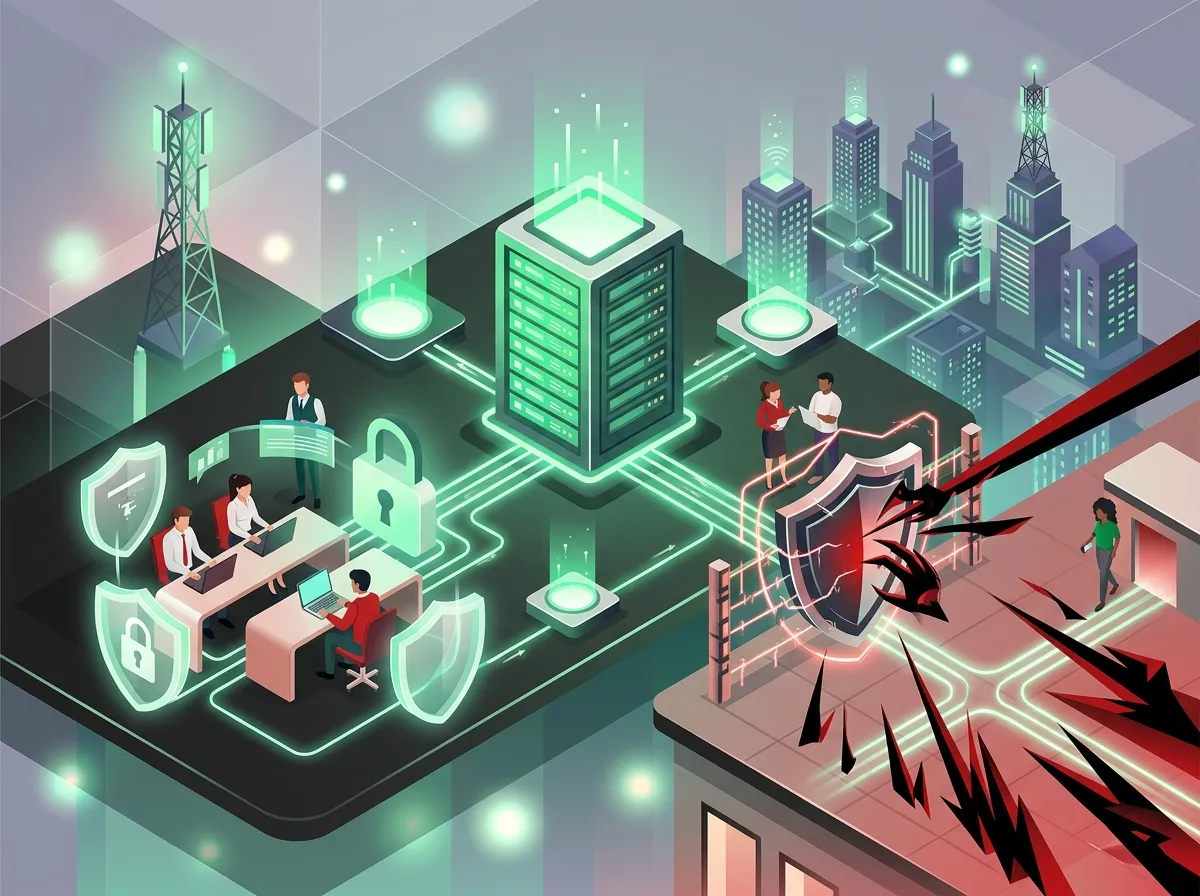
Business telecom is no longer just phone calls. Today, your telecom infrastructure carries high-speed internet traffic, VoIP calls, cloud application data, video surveillance footage, and access control signals. That is a lot of sensitive information moving through your network every single day.
Cybercriminals know this. Telecom networks are a prime target because they connect so many systems at once. A single vulnerability can expose customer records, financial data, and private communications. According to industry research, security services are one of the fastest-growing revenue categories for communications providers — with the cybersecurity market estimated at around $150 billion and growing at roughly 8% annually.
For businesses adopting cloud phones, SD-WAN, IoT devices, and SaaS platforms, the security stakes are even higher. More connected systems mean more entry points for attackers. The right data security service closes those gaps before they become costly problems.
What Does a Telecom Data Security Service Include?
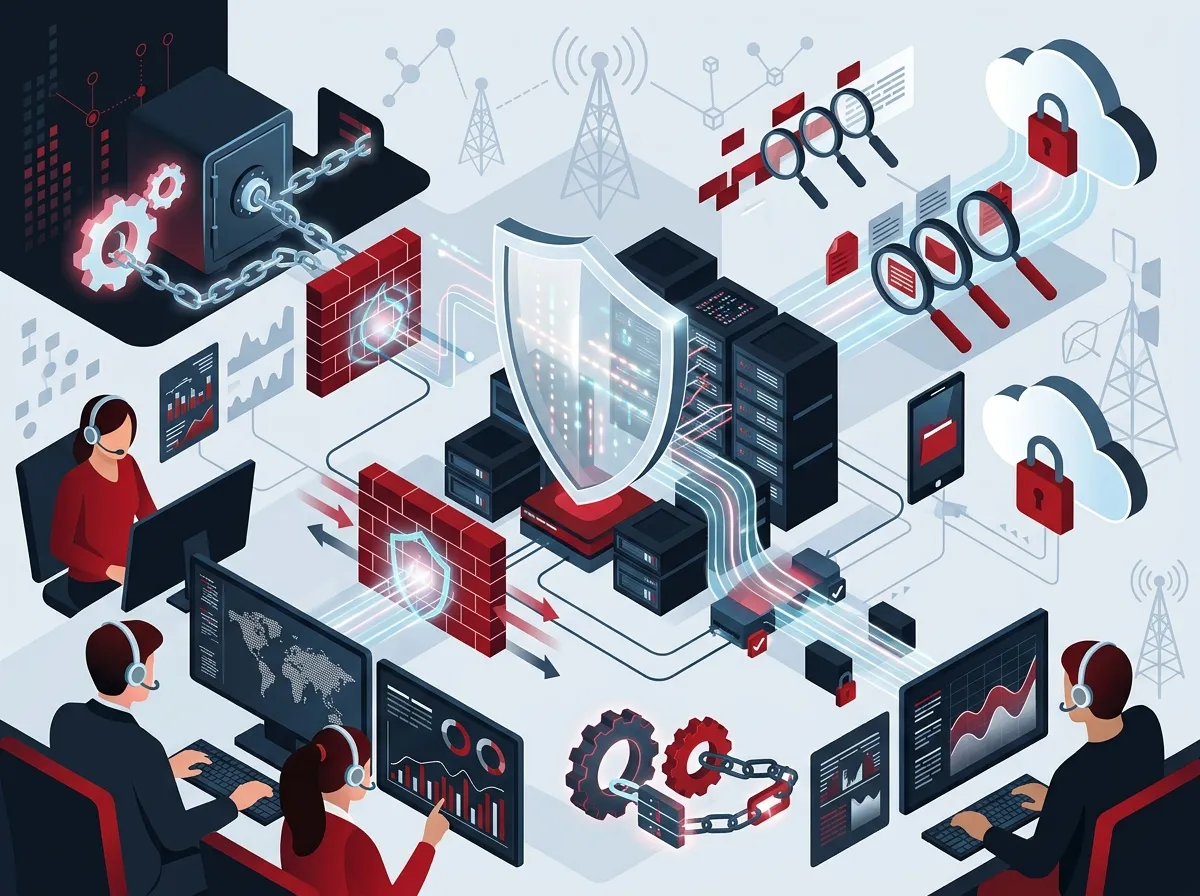
Not all security services are the same. In the business telecom world, a solid data security service typically covers several key areas. Here is what to look for:
- Network traffic monitoring — Watching data moving across your internet and voice connections in real time
- Encryption — Scrambling data so it cannot be read if intercepted
- Threat detection and response — Identifying attacks quickly and stopping them before damage is done
- Vulnerability assessments — Regular scans to find weaknesses in your telecom setup
- Compliance management — Helping your business meet industry regulations like HIPAA, PCI-DSS, or SOC 2
- 24/7 monitoring — Round-the-clock protection so threats are caught at any hour
- Secure call recording and storage — Protecting sensitive voice communications and keeping records compliant
- Access control integration — Limiting who can access what within your network and physical spaces
When you are exploring managed service providers for your telecom needs, ask specifically which of these features are included in their security package.
Managed Security Services vs. Traditional IT Security
One of the most common questions business owners ask is: what is the difference between managed security services and regular IT security? Great question! Here is a simple breakdown:
| Feature | Traditional IT Security | Managed Security Services (MSS) |
|---|---|---|
| Management | In-house IT team | Third-party provider |
| Monitoring | Business hours only | 24/7/365 |
| Cost model | Large upfront investment | Monthly subscription |
| Expertise | Limited to your internal team | Specialized security professionals |
| Scalability | Requires hiring more staff | Scales with your business |
| Response time | Varies based on staff availability | Rapid automated and human response |
For most small and mid-sized businesses, managed security services (MSS) are the smarter choice. They offer enterprise-level protection without the enterprise-level price tag. Many telecom providers now bundle data security services with managed network services to give you a complete, all-in-one solution.
Step-by-Step: How to Choose the Right Data Security Service
Ready to pick the right solution for your business? Follow these steps to make a confident, informed decision.
Step 1: Assess Your Current Telecom Setup
Before you can protect your network, you need to understand what is on it. Take stock of every connected system — your cloud phone system, internet connections, security cameras, access control devices, and any cloud applications your team uses daily.
Many businesses are surprised to discover how many devices and connections they actually have. A professional telecom audit is a great place to start. At Ideal Solutions Provider, nine out of ten businesses they audit are either overpaying, underperforming, or both — and security gaps are often part of the problem.
Step 2: Identify Your Biggest Security Risks
Different businesses face different threats. Here are the most common telecom security risks by business type:
| Business Type | Common Security Risk | Recommended Protection |
|---|---|---|
| Healthcare offices | Patient data exposure via VoIP | Encrypted calls + HIPAA-compliant storage |
| Retail businesses | Payment data interception | PCI-DSS compliant network security |
| Multi-location franchises | Unsecured remote access points | SD-WAN with built-in security + access control |
| Professional services | Confidential client communications | Encrypted VoIP + secure call recording |
| Manufacturing | IoT device vulnerabilities | Network segmentation + 24/7 monitoring |
Knowing your risks helps you focus your security budget on what matters most. If you are unsure where your vulnerabilities lie, a vulnerability assessment from a trusted telecommunications provider can shine a light on the problem areas.
Step 3: Decide Between Fully Managed and Co-Managed Security
Once you know your risks, decide how much control you want to keep in-house. There are two main options:
- Fully managed security — The provider handles everything. Monitoring, alerts, incident response, and reporting are all done for you. This is ideal for businesses without a dedicated IT team.
- Co-managed security — You share responsibilities with the provider. Your in-house team handles some tasks while the provider covers specialized monitoring and response. This works well for businesses with an existing IT department that wants extra support.
If you are a small business owner or office manager without a dedicated IT staff member, fully managed is usually the better fit. It takes the burden off your plate completely.
Step 4: Look for Security Bundled with Telecom Services
One of the smartest moves you can make is choosing a telecom partner that bundles data security services with your core connectivity solutions. This approach gives you several advantages:
- One bill instead of multiple vendor invoices
- Integrated protection across internet, voice, and cloud services
- A single point of contact for troubleshooting
- Better coordination between your network and security layers
- Potential cost savings through bundled pricing
Learn more about how bundling works in our guide on how to bundle your business phone and internet service. It is a real game-changer for businesses tired of juggling multiple vendors.
Step 5: Evaluate Compliance Support
Does your business operate in a regulated industry? If so, compliance is not optional — it is required. Your data security service should help you meet applicable regulations. Here are some common ones to consider:
- HIPAA — For healthcare providers handling patient information
- PCI-DSS — For businesses accepting credit card payments
- SOC 2 — For technology and service companies handling client data
- GDPR — For businesses with European customers or data subjects
- FCC regulations — Specific telecom data privacy rules for communications providers
Ask any potential security provider exactly which compliance frameworks they support and how they help you stay current as regulations change. This is especially important if you are working with sensitive industries like healthcare, government, or finance.
Step 6: Check for 5G and Cloud Compatibility
In 2026, businesses are increasingly relying on cloud platforms, edge computing, and 5G connectivity. Each of these technologies expands your network’s potential — and its attack surface. Your data security service needs to be compatible with modern infrastructure.
Make sure the service you choose can protect:
- Cloud-based VoIP and phone systems
- SaaS applications your team uses daily
- IoT devices like smart sensors or connected equipment
- Remote workers connecting via mobile or home networks
- Multi-location networks tied together through SD-WAN solutions
Security that only covers your office walls is simply not enough anymore. Modern protection needs to follow your data wherever it goes — and that means cloud, mobile, and beyond. You can also explore how cloud security compares to traditional network security to help you decide what approach fits your infrastructure best.
Step 7: Ask the Right Questions Before Signing Up
Before you commit to a data security service provider, ask these questions to make sure they are the right fit:
- Do you offer 24/7 monitoring and incident response?
- How quickly do you respond to a detected threat?
- Can you provide a vulnerability assessment before we start?
- Do you support compliance requirements for my industry?
- How does your service integrate with my existing telecom setup?
- What reporting and visibility do I get as a customer?
- Is this service fully managed, co-managed, or self-managed?
A great provider will answer these confidently and clearly. If they struggle to explain their service in simple terms, that is a red flag worth noticing. You can also give us a call at Ideal Solutions Provider to get straight answers about what data security options make sense for your business.
Key Security Features to Prioritize
Not sure which features matter most? Here is a quick reference to help you prioritize based on your business size:
| Security Feature | Small Business | Mid-Sized Enterprise | Multi-Location Franchise |
|---|---|---|---|
| Encrypted VoIP calls | ✅ Essential | ✅ Essential | ✅ Essential |
| 24/7 network monitoring | ✅ High priority | ✅ Essential | ✅ Essential |
| Vulnerability assessments | ✅ Recommended | ✅ Essential | ✅ Essential |
| Compliance management | Depends on industry | ✅ High priority | ✅ High priority |
| Cloud and SaaS protection | ✅ Recommended | ✅ Essential | ✅ Essential |
| Access control integration | Optional | ✅ Recommended | ✅ Essential |
For franchise operators managing multiple locations, scalable access control systems integrated with your data security service are a must. Physical and digital security work best when they are connected. And if your business uses cloud video surveillance, check out how security cameras add an extra layer of protection to your overall security posture.
The Role of Your Telecom Partner in Data Security
Your telecom provider is not just the company that sets up your phones and internet. In 2026, the best telecom partners act as full-scale security allies. They understand your network inside and out — which puts them in a great position to layer security directly into your communications infrastructure.
Working with a single point of contact for both telecom and security services simplifies everything. You get consistent protection across your internet, voice, and cloud systems without gaps caused by different vendors using incompatible tools. For a deeper look at how this works, explore the benefits of using one telecom partner for all your business communication needs.
The Ideal Solutions Provider Facebook page regularly shares tips and updates about telecom security trends — a great resource if you want to stay current without spending hours researching on your own.
Common Mistakes to Avoid When Choosing Data Security Services
Before you make your final decision, watch out for these common pitfalls that businesses fall into:
- Choosing the cheapest option without checking coverage — Low prices often mean limited monitoring or slow response times
- Ignoring mobile and remote security — Remote workers are a major vulnerability if not included in your plan
- Skipping the vulnerability assessment — You cannot fix problems you do not know about
- Assuming your internet provider handles security — Basic ISP service rarely includes advanced threat protection
- Neglecting physical access security — Digital security without cloud-based access control leaves physical gaps wide open
You can also check out our in-depth look at in-house IT vs. telecom consultants to understand which approach gives your business the best security coverage for the money. Additionally, follow Ideal Solutions Provider on Instagram for quick tips on business telecom and security best practices.
Bringing It All Together
Choosing a data security service for your business telecom does not need to feel overwhelming. When you break it down into clear steps — assessing your setup, identifying risks, picking the right management model, and bundling smartly — the right decision becomes much easier to see.
Security is not a one-time purchase. It is an ongoing service that grows and adapts alongside your business. The best data security service is one that is proactive, fully integrated with your telecom infrastructure, and supported by a team that knows your network inside and out. For more helpful resources on running a secure, efficient business telecom setup, check out our YouTube channel for video guides and expert insights.
Whether you are a small business owner in Tampa, an IT manager overseeing a corporate network, or a franchise operator with locations nationwide, there is a data security service that fits your situation. The key is knowing what to look for — and now you do.
Ready to strengthen your business telecom security? Reach out to our team at Ideal Solutions Provider for a free consultation and we will help you find the right protection for your network, your budget, and your peace of mind.
FAQs
Q: What is a data security service in business telecom?
A: A data security service in business telecom protects your network traffic, voice communications, and connected devices from cyber threats. It typically includes encryption, 24/7 monitoring, threat detection, and compliance support — all designed to keep your business communications safe and running smoothly.
Q: How does a telecom provider help protect my business data?
A: A good telecom provider layers security directly into your internet, VoIP, and cloud services so protection is built in from the start. They can monitor your network around the clock, respond to threats quickly, and help you stay compliant with industry regulations — without you having to manage it all yourself. Pretty great, right?
Q: What is the difference between managed security services and traditional IT security?
A: Traditional IT security relies on your in-house team and is usually limited to business hours. Managed security services (MSS) are handled by a third-party provider with specialized expertise, 24/7 monitoring, and faster response times — often at a more affordable monthly cost than building out an internal security team.
Q: Does my business need a data security service if I already have antivirus software?
A: Antivirus software alone is not enough to protect your modern telecom infrastructure. Business networks now carry VoIP calls, cloud data, IoT devices, and SaaS traffic — all of which need more advanced protection like network monitoring, encryption, and threat response that antivirus tools simply do not provide.
Q: How does 5G affect telecom data security for my business?
A: 5G increases connection speeds and enables more connected devices, but it also expands the number of potential entry points for cyber threats. A solid data security service in 2026 should be built to protect 5G-connected devices, cloud platforms, and edge computing environments so your business stays safe as technology evolves.