

Key Takeaways
-
Cloud access control laboratories are controlled testing environments where telecom providers validate security setups before live deployment, catching problems like mobile credential failures or unauthorized contractor access before they affect operations.
-
Zero Trust framework requires verifying every access request by checking user identity, device security, request location, and resource type—regardless of network location—making it essential for protecting remote teams and contractors in modern telecom networks.
-
Thorough labs must test role-based access, multifactor authentication, contractor access revocation, machine-to-machine authentication, and failover behavior to prevent security gaps that only appear after deployment.
-
Key performance metrics like authentication speed, policy-decision time, false denial rates, and logging completeness prove system reliability; providers should track these numbers rather than rely on theoretical security claims.
-
The cloud access control market is growing 13-17% annually and projected to reach $47-49 billion by 2034, indicating rising demand for tested, standardized solutions across industries and business sizes.
-
Partnering with experienced providers who follow structured testing processes and NIST standards protects businesses from rollout surprises, compliance issues, and inconsistent security across multi-location operations.
Picture this: you’re about to roll out a brand-new access control system across five office locations. Exciting, right? But also a little scary. What if the mobile credentials fail? What if a contractor gets access they shouldn’t have? This is exactly why cloud access control laboratories exist, and honestly, they might be the unsung heroes of modern business telecom.
In simple terms, a cloud access control laboratory is a safe testing ground. It’s where telecom teams try out new security setups before they ever touch your real network. Think of it like a dress rehearsal before opening night. Nothing goes live until it’s tested, tweaked, and proven to work.
For small business owners, IT managers, and franchise operators alike, understanding this concept helps you ask better questions when choosing a provider. It also helps you feel confident that your building access, your network, and your data are protected the right way. Let’s walk through what these labs actually do and why they matter so much in 2026.

What Exactly Is a Cloud Access Control Laboratory?
A cloud access control laboratory is a controlled environment used to design, test, and validate access-control solutions before they go live. It’s not a room full of test tubes. It’s more like a sandbox network that mimics your real systems.
These labs recreate the technology your business actually uses. That includes cloud platforms, SD-WAN connections, VPNs, identity systems, and even the devices your team carries around daily. Everything gets tested safely, away from your live operations.
Here’s what a typical lab might simulate:
- Multiple cloud platforms working together at once
- Remote office connections through SD-WAN or VPN
- Identity provider logins and multifactor authentication
- Mobile credential access for doors and secure areas
- API connections between apps and services
- IoT devices like sensors, cameras, and access panels
This matters because your business likely relies on more than one system. A lab lets providers catch problems before they ever affect your team’s daily work.
Why Zero Trust Is the Foundation of Modern Access Control
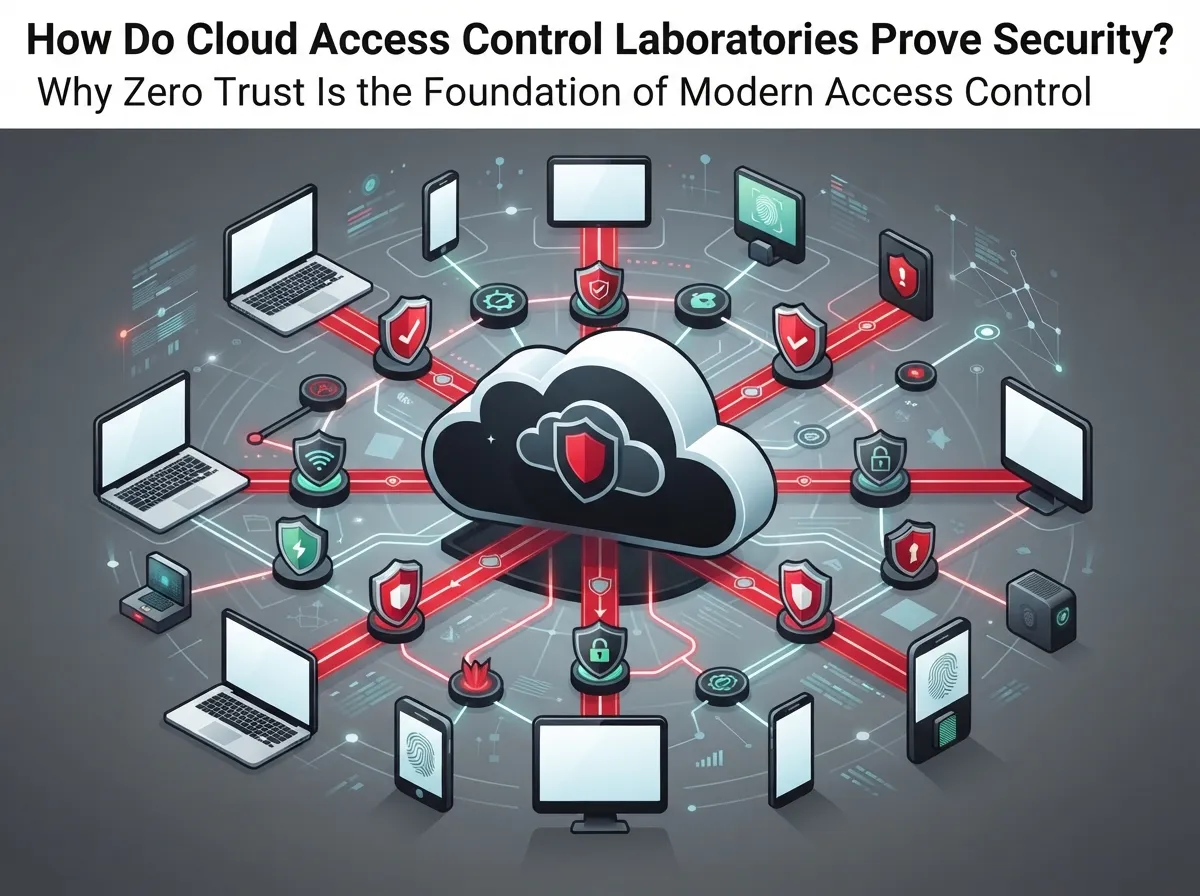
You may have heard the term “zero trust” tossed around. It sounds intense, but the idea is actually pretty simple. Nobody gets automatic trust just because they’re inside the network. Every single request gets checked, every time.
The National Institute of Standards and Technology (NIST) published detailed guidance on this approach in September 2023, known as SP 800-207A. It focuses on verifying identity, checking device health, and confirming that every access request makes sense before granting entry.
Zero trust checks typically look at:
- Who is asking for access (the user’s identity)
- What device they’re using and whether it’s secure
- Where the request is coming from
- What resource they’re trying to reach
- Whether the request looks risky or unusual
This approach fits perfectly with telecom networks, where remote teams, contractors, and cloud apps constantly connect from different places. A cloud access control laboratory is where these zero-trust rules get built and tested before they touch your actual business.
How Telecom Providers Test Access Control Policies
Testing isn’t just clicking a few buttons and hoping for the best. Good labs follow a structured process. Here’s a simplified version of the steps most providers follow:
- Build an isolated test environment that mirrors your real setup
- Load in synthetic or anonymized data, never real customer information
- Apply access rules, like role-based or attribute-based permissions
- Run test scenarios, including logins, failed attempts, and revoked access
- Measure results like speed, accuracy, and system stability
- Document findings and adjust settings as needed
- Repeat tests until everything performs consistently
This process protects your business from surprises. Nobody wants a security update that accidentally locks out the entire sales team on a Monday morning.
Key Test Cases Every Lab Should Cover
Not all testing is created equal. A thorough cloud access control laboratory should check a wide range of situations, not just the easy ones.
| Test Case | Why It Matters |
|---|---|
| Role-based access control | Ensures employees only see what their job requires |
| Multifactor authentication | Adds a second layer of proof beyond just a password |
| Contractor and guest access | Confirms temporary users get limited, time-based permissions |
| Machine-to-machine authentication | Checks that devices and software talk securely to each other |
| Session revocation | Tests how fast access can be cut off when needed |
| Network segmentation | Keeps one compromised area from spreading problems |
| Failover behavior | Confirms access still works during an outage |
If a provider skips these steps, you could be left with gaps you won’t discover until something goes wrong. This is one reason working with an experienced partner matters so much. If you’re curious how these systems actually work day to day, this guide on how cloud access control works for business telecom breaks it down further.
Cloud Access Control vs. Physical Access Control
These two terms sound similar, but they do very different jobs. It helps to know the difference so you don’t get confused when shopping for solutions.
- Physical access control manages who can open doors, enter buildings, or access secure rooms
- Cloud access control manages who can log into networks, apps, data, and management systems
- Many businesses now combine both for full-building protection
- Mobile credentials often bridge the two, unlocking doors and verifying digital identity together
- A single dashboard can sometimes manage both physical and digital access
Many Tampa businesses are combining these systems for a smoother experience. You can read more about how this works in this piece on why Tampa businesses love cloud access control in 2026.
Metrics That Prove a System Actually Works
Testing is only useful if you measure the right things. A credible lab tracks real numbers, not just gut feelings.
Here are some of the top metrics worth watching:
- Authentication speed, or how fast a login gets approved
- Policy-decision time, meaning how quickly access rules get applied
- System uptime during an identity-provider outage
- False denial rates, when legitimate users get blocked by mistake
- Logging completeness, so every action gets recorded properly
- Configuration drift, or unwanted changes creeping into settings over time
These numbers help providers prove their system is dependable, not just theoretically secure. It’s a bit like test-driving a car before buying it. You want proof it runs smoothly, not just a nice brochure.
Market Growth Shows Rising Demand
Cloud access control isn’t a niche trend anymore. It’s becoming standard practice across many industries, and the numbers back that up.
| Source | 2025 Market Value | Projected Value | Growth Rate |
|---|---|---|---|
| Market Intelo (Report 1) | $12.4 billion | $47.8 billion by 2034 | 14.8% CAGR |
| Market Intelo (Report 2) | $12.8 billion | $49.2 billion by 2034 | 17.2% CAGR |
| Wise Guy Reports | $4.25 billion | ~$15 billion by 2035 | 13.4% CAGR |
These numbers vary because each report defines the market a little differently. Still, the message is clear: businesses everywhere are investing more in cloud-based access solutions. If you want to dig deeper into the numbers, this breakdown of cloud access control benefits every business should know is a great next read.
How This Applies to Your Business Right Now
You might be thinking, “This all sounds great, but how does it affect me?” Fair question. Whether you run a small shop or manage IT for a growing company, the testing behind these systems protects your daily operations.
Consider these real benefits:
- Fewer surprises during rollout, since problems get caught early
- Stronger protection for remote workers and traveling staff
- Better control over contractor and vendor access
- Smoother performance across multiple office locations
- Clear documentation for compliance and audits
If you’re managing multiple franchise locations, this kind of testing becomes even more important. Scaling access control across sites without proper testing can lead to messy, inconsistent security. Learn more in this guide on scalable access control systems for multi-location Tampa businesses.
Standards That Guide Trustworthy Access Control
You don’t need to become a cybersecurity expert overnight. But it helps to know which standards matter. NIST’s zero-trust framework remains the gold standard for identity and access verification. Google Cloud’s own architecture guidance echoes similar principles, emphasizing explicit verification, least privilege, and centralized monitoring.
These frameworks help ensure that whatever provider you choose is following proven, tested practices rather than guessing. It also gives your business a paper trail if you ever need to prove compliance to regulators or clients.
Choosing a Partner Who Tests Before They Deploy
Not every telecom provider runs a proper lab environment before deployment. Some just install and hope for the best. That’s a risky approach when your building security and network access are on the line.
Ideal Solutions Provider works differently. With over 24 years of experience and partnerships with 35+ vetted suppliers, the team compares options, tests configurations, and recommends solutions built around your actual needs, not a one-size-fits-all package. Whether you need cloud based access control, structured cabling, or a full network overhaul, having one trusted point of contact saves time and headaches.
If you’re also exploring related upgrades, structured cabling remains a critical piece of any secure network. You can learn more about structured cabling and how it supports everything from phones to cameras to access panels.
Bringing It All Together
Cloud access control laboratories might sound technical, but the concept is simple. They’re proving grounds. Places where security gets tested thoroughly before it ever touches your business. That testing protects your team, your data, and your peace of mind.
As more companies move toward cloud-based systems, working with a knowledgeable Internet Service Provider and telecom partner becomes even more valuable. You want someone who tests, documents, and verifies rather than just installing and walking away.
Ready to see how proper testing and planning can protect your business? Contact us today for a free consultation, or call us to talk through your current setup. You can also follow along on Facebook, Instagram, and YouTube for more tips on keeping your business connected and secure.
FAQs
Q: What is a cloud access control laboratory in business telecom?
A: It’s basically a safe testing space where telecom teams try out access control systems before rolling them out to real customers. Think of it as a rehearsal space where mistakes get caught early, long before they could affect your business.
Q: How do telecom companies test cloud access-control policies?
A: They build a mirror version of your setup, using fake or anonymized data, then run through different login scenarios, permission levels, and failure situations. It’s a careful, step-by-step process designed to catch problems before you ever notice them.
Q: What is the difference between cloud access control and physical access control?
A: Physical access control handles doors, buildings, and secure rooms, while cloud access control manages who can log into your networks, apps, and data. Many businesses now blend both for a more complete security picture, and honestly, that combo just makes sense.
Q: How does zero trust apply to telecom networks and cloud services?
A: Zero trust means nobody gets automatic access just because they’re already inside the network. Every login, every device, and every request gets checked, which keeps your systems much safer from unwanted surprises.
Q: How much does it cost to build or outsource a cloud access-control laboratory?
A: Costs vary widely depending on the size of your network and how much testing you need. The good news is most businesses don’t need to build their own lab. Partnering with an experienced provider like Ideal Solutions Provider means you get the benefits of proper testing without the heavy upfront investment.