

Key Takeaways
-
Cloud access control analytics monitors identity, device, location, and behavior across VoIP, internet, networking, and physical access systems to catch unauthorized access patterns before damage occurs.
-
Centralize log data from multiple sources (identity providers, MFA platforms, firewalls, SD-WAN, telecom portals) into one system, as 75% of organizations manage multiple identity providers and fragmentation creates dangerous visibility gaps.
-
Implement zero trust principles with continuous verification of every access request based on identity and device health, paired with analytics to provide the ongoing evidence needed for effective continuous monitoring.
-
Build access control programs step-by-step starting with MFA/SSO enablement, log centralization, automated alerts for unusual logins, and quarterly access reviews rather than attempting overnight overhauls.
-
Track actionable metrics including dormant accounts removed quarterly, average time to revoke access after employee departure, MFA adoption percentage, and investigation time for high-risk alerts.
-
Consider engaging a trusted IT partner if you lack in-house security expertise, especially if you cannot easily list employee system access, have not performed formal access reviews, or operate multiple locations needing tenant data isolation.
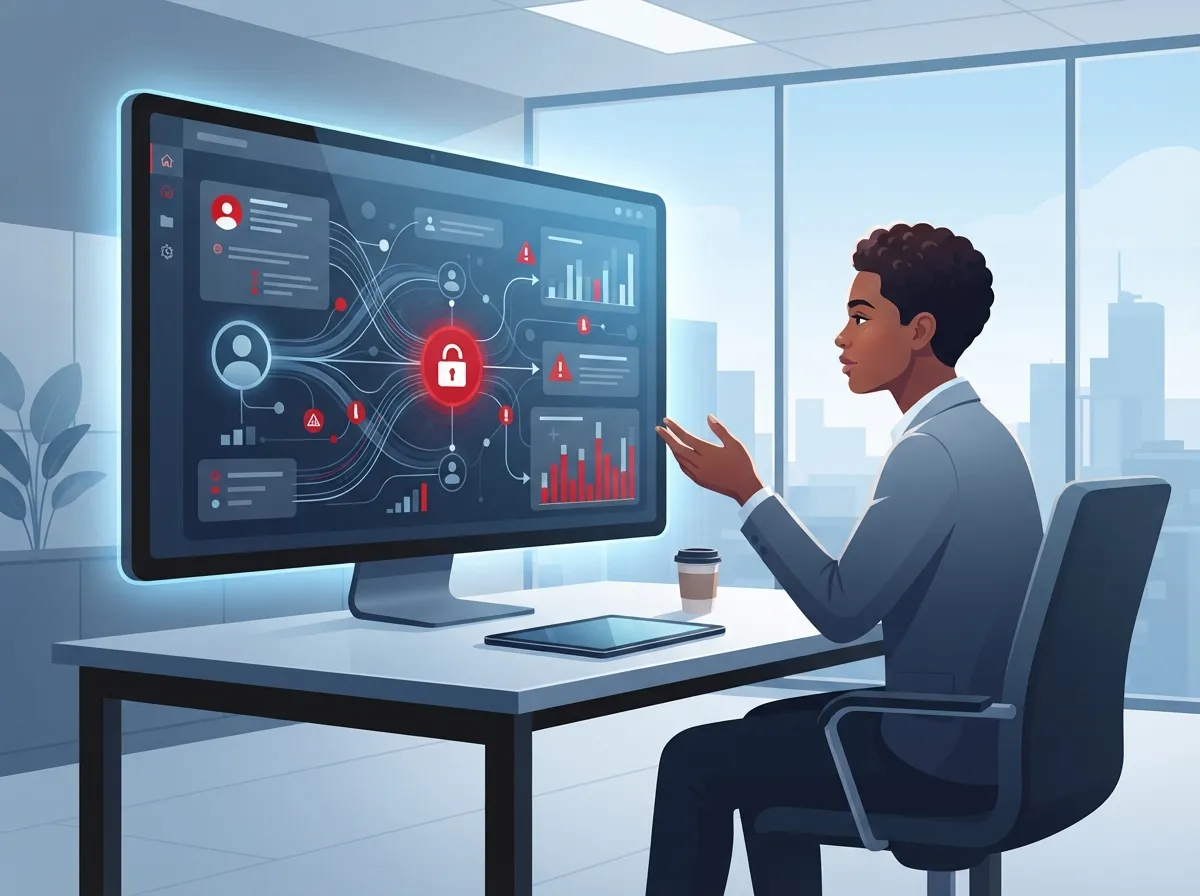
If you run a business, you already know the front door is not the only door you need to worry about. Your VoIP phones, your Wi-Fi network, your customer portal, and your building’s access control system all have digital doors too. Cloud access control analytics is the friendly watchdog that keeps an eye on every single one of those doors, day and night. It quietly tracks who is coming and going across your cloud systems, then flags anything that looks off before it turns into a real problem.
At Ideal Solutions Provider, we talk to Tampa business owners every week who never thought twice about access analytics until something went wrong. The good news? You do not need a giant IT department to get this right. You just need to understand what cloud access control analytics does, why it matters, and how to put a few smart habits in place. Grab a coffee, and let’s walk through it together, step by step, in plain language.
1. Understand What Cloud Access Control Analytics Actually Means
Cloud access control analytics is the ongoing collection and review of data about who accesses your systems, from where, on what device, and when. For a telecom-driven business, that covers your UCaaS platform, SIP trunks, contact center software, SD-WAN controllers, VPNs, mobile devices, and your cloud based access control system for the building itself.
Think of it as a security camera for your logins instead of your hallways. It does not just record activity, it studies patterns and tells you when something breaks the pattern. That is a big shift from the old days of just checking a login list once a month.
- Tracks identity, device, location, and behavior together
- Turns raw log data into scores, alerts, and reports
- Works across VoIP, internet, networking, and physical access systems
- Helps you spot problems before customers or employees notice

2. See Why This Matters So Much for VoIP and UCaaS Platforms
Your phone system is not just a phone system anymore. It is a cloud application with admin portals, call routing rules, voicemail, and billing settings that someone could quietly change if they got the wrong access. Analytics helps you catch unusual changes to call forwarding, new admin accounts, or odd login times before a bill spikes or calls get rerouted.
This is especially important if you have already made the leap and adopted a cloud-based phone system for your Tampa business. The more your phone system does, the more valuable it becomes to a bad actor, and the more valuable analytics becomes to you.
Common Suspicious Signals Analytics Can Catch
- A login from a country your business never operates in
- An admin account active at 3 a.m. on a Sunday
- Multiple failed login attempts followed by a success
- Sudden changes to call forwarding or voicemail greetings
- A dormant account suddenly making system changes
3. Know the Data Sources That Feed Good Analytics
Analytics is only as good as the data you feed it. Most Business Telecom Solutions environments pull from a mix of sources, and stitching them together is where a lot of businesses get stuck.
| Data Source | What It Tells You |
|---|---|
| Identity providers and SSO | Who logged in, when, and from what device |
| MFA platforms | Whether a second identity check passed or failed |
| Telecom admin portals | Changes to routing, voicemail, and call policies |
| Firewalls and VPN concentrators | Remote connection attempts and locations |
| SD-WAN controllers | Traffic patterns across office locations |
| Cloud access control panels | Door unlock events and badge or mobile credential use |
According to the Cloud Security Alliance, 75% of organizations manage two or more identity providers, and 11% manage five or more. That fragmentation is exactly why pulling this data into one place matters so much for visibility.
4. Get Familiar With Core Analytics Capabilities
Good cloud access control analytics does more than log events. It actively looks for patterns that suggest risk. Here are the capabilities worth asking about when you evaluate a system or a provider.
- Unusual login detection based on time, device, or location
- Impossible travel alerts, like a login from Tampa and Tokyo an hour apart
- Dormant account discovery for former employees or unused vendor logins
- Excessive permission analysis to flag over-privileged accounts
- Privileged access monitoring for admins and IT staff
- Failed authentication tracking to catch brute force attempts
CSA also found that 40% of organizations had inadequate visibility into user behavior, while 53% named better identity analytics a top priority going into 2025. That trend has only grown stronger heading into 2026.
5. Connect the Dots With Zero Trust Thinking
Zero Trust simply means you never assume someone is safe just because they are already inside your network. Every request gets checked based on identity, device health, location, and behavior, every single time.
This mindset pairs perfectly with cloud access control analytics because analytics gives you the ongoing evidence Zero Trust needs. Instead of trusting a device forever after one login, you are continuously verifying it makes sense. This matters just as much for your business network solutions as it does for your phone system or your front door.
Three Pillars That Support Zero Trust Access
- Multi-factor authentication on every sensitive login
- Role-based access so people only see what they need
- Continuous monitoring instead of one-time checks
6. Protect Tenant Data if You Manage Multiple Locations or Clients
Franchise operators and multi-location businesses face a unique challenge. You need to keep each location’s data separate while still having central oversight. This is where delegated administration and tenant isolation come into play.
Analytics helps you confirm that a manager at one location cannot accidentally, or intentionally, peek into another location’s call recordings, camera feeds, or access control logs. If you are scaling across Tampa Bay and beyond, this kind of separation is not optional anymore, it is expected by customers and often required by industry regulations.
- Separate login credentials per location or department
- Clear audit trails showing who viewed what and when
- Automated alerts when someone tries to access another tenant’s data
- Regular access reviews to confirm permissions still make sense
7. Watch Out for These Common Implementation Challenges
Nobody said this would be perfectly smooth, and that is okay. Knowing the common bumps in the road ahead of time makes them much easier to handle.
| Challenge | Why It Happens |
|---|---|
| Legacy telecom apps | Older PBX or contact center tools do not support modern authentication |
| Inconsistent logging | Different platforms record events in different formats |
| Too many machine identities | APIs, bots, and integrations all need their own credentials |
| False positives | Legitimate travel or remote work can look suspicious |
CSA reported that 57% of organizations found it moderately or highly difficult to onboard on-premises applications to a cloud identity provider. If you still have older PBX or contact-center systems, this challenge probably sounds familiar.
8. Build a Practical Analytics Program in Simple Steps
You do not need to overhaul everything overnight. A steady, step-by-step approach works better anyway, and it is much less overwhelming for your team.
- Inventory every cloud system your business relies on, from VoIP to access control
- Turn on MFA and single sign-on wherever possible
- Centralize logs from telecom, network, and access control platforms
- Set up alerts for unusual logins and permission changes
- Schedule quarterly access reviews to remove old or unused accounts
- Automate offboarding so former employees lose access immediately
- Document an incident response plan before you need it
A 2025 CSA survey found that insecure identities and risky permissions ranked as the top cloud security risk. Among businesses that experienced a cloud breach, excessive permissions caused 31% of incidents, inconsistent access controls caused 27%, and weak identity hygiene caused another 27%. Those numbers make a strong case for the step-by-step approach above.
9. Track the Metrics That Actually Matter
It is easy to drown in data. Focus on a handful of metrics that tell you whether your program is working, rather than trying to review everything at once.
- Number of dormant accounts discovered and removed each quarter
- Average time to revoke access after an employee leaves
- Percentage of accounts using MFA
- Number of high-risk alerts investigated versus dismissed
- Time between an alert and a resolved incident
These metrics give you a clear, honest picture of how your access control analytics program is performing. They also make it much easier to explain progress to leadership, because the numbers speak for themselves.
10. Know When to Bring in a Telecom and IT Partner
Here is the honest truth. Most small and mid-sized businesses do not have a full-time security analyst on staff, and that is completely normal. The cloud identity and access management software market was estimated at roughly USD 9.13 billion in 2025 and is projected to reach USD 26.58 billion by 2031, according to Mordor Intelligence. IT and telecommunications businesses represent about 25.38% of that market, which tells you this space is only getting more important.
A trusted partner can help you connect your VoIP, internet, cabling, networking, and cloud based access control systems into one coordinated, monitored setup. This is exactly the kind of work Ideal Solutions Provider handles for businesses across Tampa Bay and nationwide, working with 35+ vetted suppliers so you get one point of contact instead of juggling five different vendors. If stolen credentials showing up in 22% of non-error breaches according to Verizon’s 2025 Data Breach Investigations Report worries you even a little, that is a good sign it is time to get expert eyes on your setup.
Signs It Is Time to Call in Help
- You cannot easily list every system your employees can access
- You have never done a formal access review
- Former employees might still have working logins somewhere
- Your phone system and access control system do not talk to each other
- You want peace of mind without hiring a full security team
You can also follow our team’s updates and behind-the-scenes tips on Facebook, Instagram, and YouTube for more practical advice on securing your business communications.
Bringing It All Together
Cloud access control analytics does not have to feel intimidating. At its heart, it is simply about knowing who is using your systems, making sure that access makes sense, and catching the rare bad actor before real damage happens. Whether you are managing one office or ten franchise locations, a little visibility goes a long way toward protecting your team, your customers, and your reputation.
If your current phone, internet, network, or cloud based phone system setup feels like a patchwork of logins nobody fully understands anymore, you are not alone, and you do not have to sort it out by yourself. Our team would love to sit down, review what you have, and show you exactly where the gaps are. Reach out to our team today for a free consultation, or give us a call to start the conversation. We are here, we are friendly, and we genuinely want to help your business feel secure.
FAQs
Q: What is cloud access control analytics for telecom and communications businesses?
A: It is the ongoing process of reviewing who accesses your cloud phone, network, and building systems, then flagging anything unusual. Think of it as a friendly watchdog checking logins, devices, and behavior around the clock so you can catch problems early.
Q: How does access analytics secure VoIP, UCaaS, SIP, and contact-center platforms?
A: It watches for odd admin logins, sudden changes to call routing, and unusual voicemail or billing edits. That way you find out about a problem the same day it happens, not weeks later when the bill arrives.
Q: What is the difference between cloud access control analytics, IAM, and a CASB?
A: IAM manages who gets access and to what, a CASB monitors traffic between your business and cloud apps, and analytics is the layer that studies all that activity for risk. They work best together, like three friends covering different parts of the same job.
Q: How can telecom providers protect tenant data and delegated administrator access in the cloud?
A: By keeping each customer or location’s data separate, logging every access attempt, and reviewing permissions regularly. This keeps one location’s manager from ever accidentally seeing another location’s private information.
Q: Which metrics should businesses use to measure cloud access-control effectiveness?
A: Start simple: track how fast you remove access after someone leaves, how many accounts use MFA, and how many alerts turn into real incidents. These few numbers tell you almost everything you need to know.