

Key Takeaways
-
Cloud video security eliminates the risk of losing footage to hardware failure or theft by storing footage on secure remote servers instead of on-site DVRs, providing automatic protection without manual intervention.
-
Multi-location businesses can manage all cameras from a single dashboard and phone app, eliminating the need to visit sites or manage separate logins for each location.
-
Cloud systems reduce upfront costs with subscription-based pricing instead of expensive hardware purchases, making enterprise-grade surveillance affordable for small businesses starting at $50-$150 monthly.
-
Pairing cloud video security with reliable internet, structured cabling, and a single telecom provider eliminates vendor juggling and ensures seamless integration across your phones, network, and access control systems.
-
Automatic software updates and managed service delivery through your telecom partner eliminate manual maintenance tasks and reduce the need for dedicated IT resources to maintain video infrastructure.
-
Cloud video security scales easily by adding cameras and locations without requiring new hardware installation, unlike traditional DVR systems that need equipment replacement with each expansion.
Picture this: you own a growing business with two or three locations across Tampa Bay. Something happens at one site, and you need to see footage right now. If you’re stuck with an old-school DVR system, you’re driving across town, digging through cables, and praying the hard drive didn’t fail. That’s the moment most business owners realize they need something better. Enterprise cloud video security has become the go-to answer, and it’s easy to see why.
This guide breaks down what enterprise cloud video security really means for your business, how it stacks up against traditional systems, and why so many companies are making the switch. Whether you’re a small business owner juggling one office or a franchise operator managing sites across the country, you’ll walk away knowing exactly what fits your needs. Let’s get into it.
What Is Enterprise Cloud Video Security, Really?
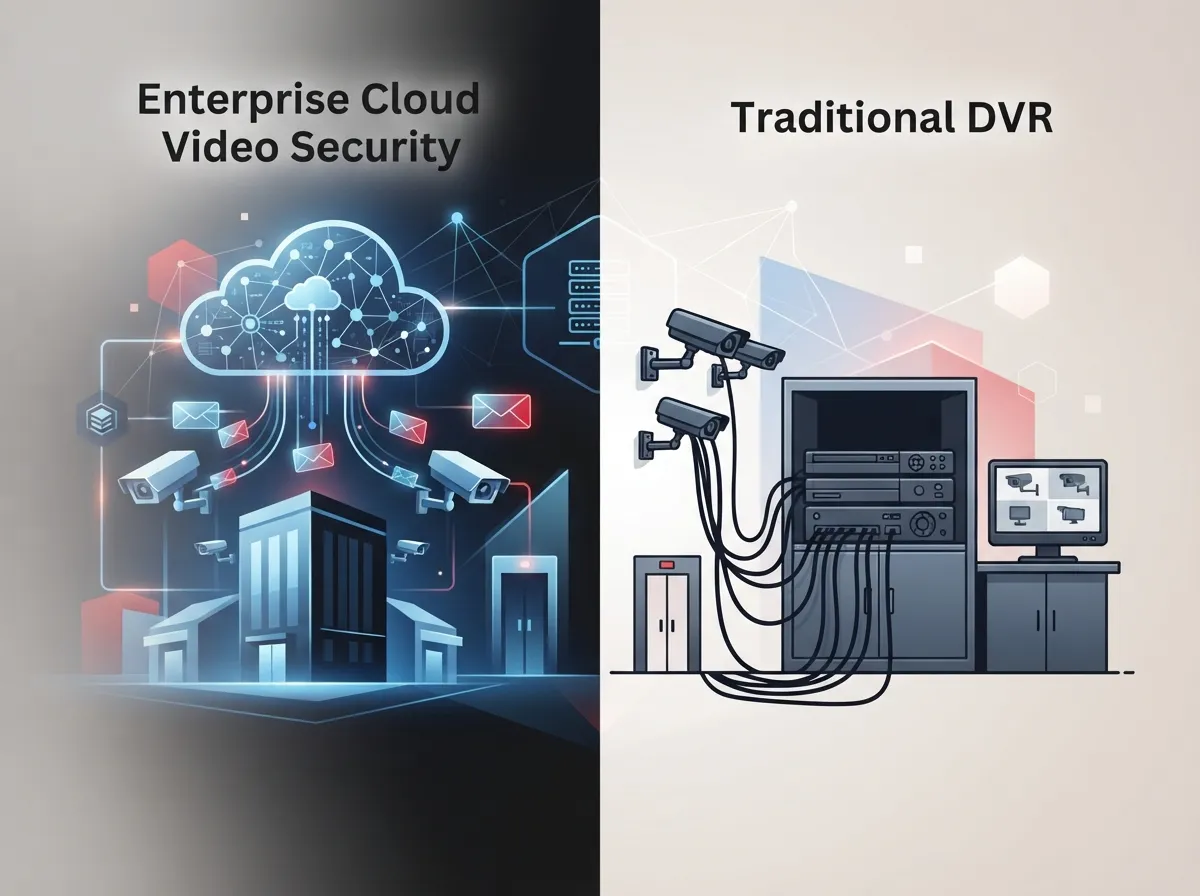
Enterprise cloud video security is a video surveillance system built for businesses with bigger needs. Instead of storing footage on a box sitting in a closet, your video lives safely in the cloud. You can pull up any camera, at any site, from your phone or laptop, anywhere you have internet access.
For businesses managing multiple locations, this is a game changer. IT managers no longer need to visit each site to check on hardware. Office managers can glance at their phone during a meeting to confirm the front door is locked. It’s surveillance that actually works the way modern business works.
This type of system is often delivered as a managed service by a telecom partner, bundled together with your internet, phone lines, and network setup. That’s exactly the kind of one-stop approach companies like Ideal Solutions Provider bring to the table, handling everything from installation to ongoing support so you don’t have to juggle five different vendors.
Enterprise Cloud Video Security vs. Traditional DVR Systems
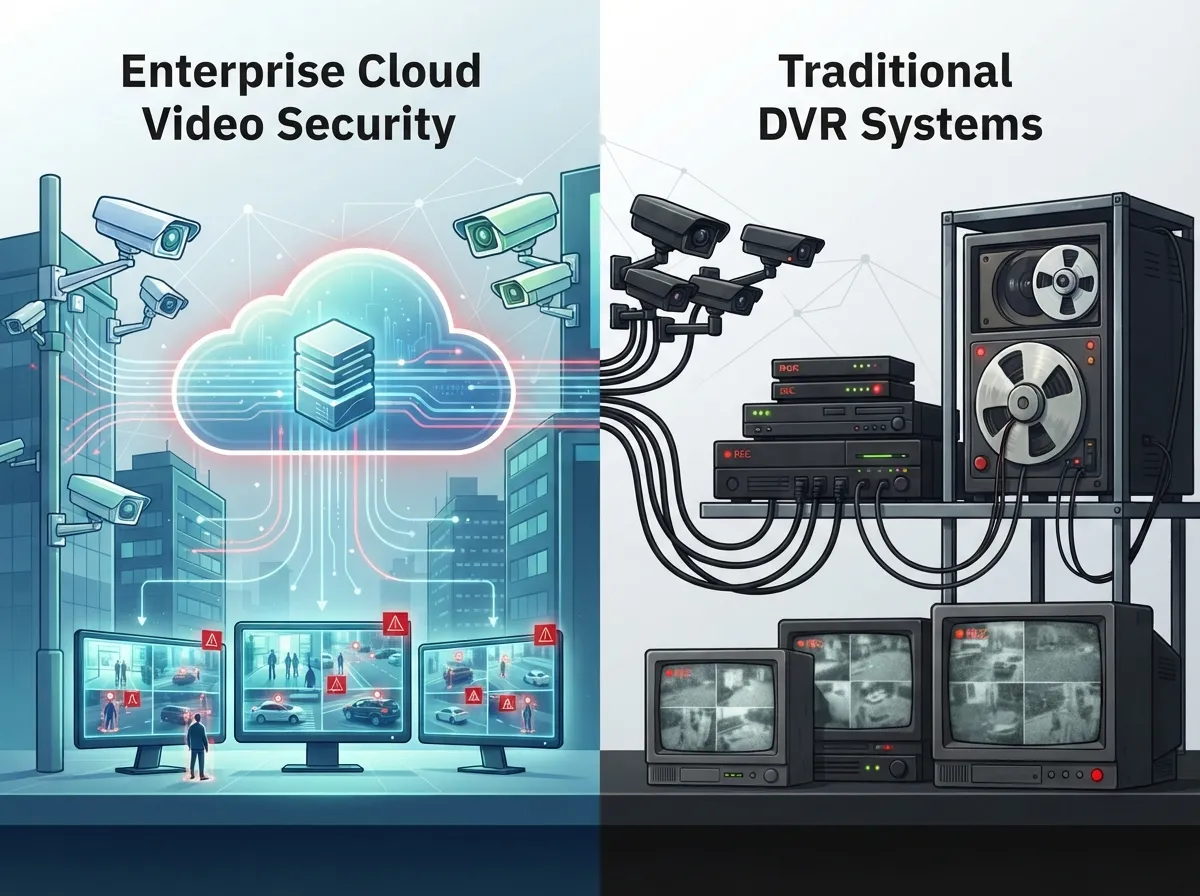
Let’s put these two side by side. Traditional DVR (Digital Video Recorder) systems have been around for decades. They work, but they come with real limitations, especially as your business grows.
| Feature | Enterprise Cloud Video Security | Traditional DVR |
|---|---|---|
| Storage Location | Secure cloud servers | On-site hard drive |
| Remote Access | Yes, from any device | Limited or none |
| Multi-Site Management | Single dashboard for all locations | Separate system per site |
| Scalability | Add cameras and sites easily | Requires new hardware each time |
| Data Loss Risk | Low, protected in the cloud | High, if hardware fails or is stolen |
| Software Updates | Automatic | Manual, often skipped |
| Upfront Cost | Lower, subscription-based | Higher, hardware-heavy |
As you can see, the biggest wins for cloud systems are flexibility and peace of mind. If a break-in happens and someone smashes the DVR box, that footage is gone forever. With cloud storage, your footage is already safe somewhere else.
Why Growing Businesses Are Making the Switch
More companies are moving to cloud-based video every year. Here’s why this shift keeps picking up speed:
- Business owners want to check on their location without driving there
- Multi-site companies need one dashboard, not five different logins
- Insurance companies often favor businesses with modern, reliable surveillance
- Cloud systems reduce the risk of losing footage during theft or fire
- IT teams want fewer physical servers to maintain and troubleshoot
- Franchise brands need consistency across every single location
If you’re already curious about what these systems can actually do day-to-day, our article on what security cameras really do for your business is a great next read.
Key Benefits by Business Type
For Small Business Owners
You don’t need an IT department to run a cloud video system. Everything is managed through an app or web portal. It’s simple enough to check in on your shop during your lunch break, and it won’t blow your monthly budget.
For Mid-Sized Enterprises
As your company grows, so does your need for centralized control. Cloud video security lets you monitor every location from one place, spot patterns across sites, and add cameras as you expand without ripping out old equipment.
For IT Managers
You already have enough vendors to manage. A cloud video system that plugs into your existing network infrastructure means fewer headaches, easier updates, and a system that just works alongside your other tools.
For Office Managers
You’re the one who gets the call when something goes wrong. Cloud systems give you instant access to footage, so you can solve small issues before they become big problems, without waiting on IT support.
For Franchise Operators
Consistency matters across every location. Cloud-based systems let you set the same standards, check compliance, and roll out updates across all your sites at once, whether you have three locations or thirty.
How Enterprise Cloud Video Security Works Step by Step
- Cameras are installed at each business location, wired or wireless depending on your setup
- Footage is encrypted and sent securely to cloud storage servers
- You access footage through a secure app or web dashboard
- Alerts are sent to your phone for motion, unusual activity, or specific triggers
- Footage is stored for a set period based on your plan, then automatically archived or deleted
- Your telecom provider handles maintenance, updates, and technical support behind the scenes
This process depends heavily on having reliable internet at each site. That’s why pairing your video security with strong high-speed internet for business matters so much. Weak internet means choppy footage or delayed alerts, and nobody wants that during an emergency.
What to Look for in an Enterprise Cloud Video Security Provider
Not every provider offers the same level of service. Here’s what separates the good ones from the rest:
- Ability to manage cameras across multiple sites from one login
- Strong encryption and data protection standards
- Local support combined with nationwide installation capability
- Flexible storage plans that scale with your business
- Integration with access control and other security tools
- Transparent pricing without hidden fees
Companies that partner with dozens of vetted suppliers, rather than pushing one brand, tend to give you better options. That’s the model behind Ideal Solutions Provider’s approach, comparing across 35+ suppliers to find the setup that actually fits your budget and goals.
Common Mistakes Businesses Make with Video Security
- Choosing cheap cameras that produce blurry, unusable footage
- Skipping professional installation and ending up with blind spots
- Ignoring internet speed requirements needed for smooth streaming
- Not setting up proper user permissions, so too many people have access
- Forgetting to plan for long-term storage costs as camera count grows
Avoiding these mistakes early saves you money and stress down the road. A quick consultation with a telecom partner can catch these issues before they become expensive problems.
Cloud Video Security and Your Broader Telecom Setup
Here’s something a lot of business owners don’t realize right away: your video security system doesn’t operate alone. It relies on the same network backbone as your phones, internet, and access control systems. That’s why bundling these services with one provider makes so much sense.
If your structured cabling is outdated, your cameras may struggle to keep up, especially with high-definition footage running around the clock. Good structured cabling forms the foundation that everything else, including video security, depends on.
Pairing your cameras with a solid cloud-based access control system also gives you a fuller security picture. You’ll know who’s coming and going, and you’ll have the footage to back it up.
Cost Comparison: What Businesses Typically See
| Business Size | Typical Camera Count | Monthly Range (Estimate) |
|---|---|---|
| Small business, single site | 4-8 cameras | $50-$150 |
| Mid-sized business | 10-25 cameras | $150-$500 |
| Multi-location enterprise | 25+ cameras across sites | $500+ (varies by scope) |
These numbers vary quite a bit depending on storage length, camera quality, and whether analytics features are included. A free consultation is usually the fastest way to get an accurate number for your specific setup.
Why a Single Point of Contact Makes a Difference
Managing telecom and security separately from different vendors is exhausting. One company handles your phones, another handles internet, a third handles cameras. When something breaks, you’re stuck playing phone tag trying to figure out whose fault it is.
Working with one experienced partner who oversees your VoIP, internet, cabling, networking, and video security means one call fixes everything. It’s simpler, faster, and honestly just less stressful. If you want to see how this approach can simplify your operations, feel free to get in touch with our team for a free consultation.
You can also learn more about the company’s approach and values by checking out their Facebook page or watching real client stories on their YouTube channel.
Is Enterprise Cloud Video Security Right for Your Business?
If you manage more than one location, worry about liability, or simply want peace of mind while you’re away from the office, the answer is almost always yes. Small businesses benefit from the affordability and simplicity. Larger enterprises benefit from the centralized control and scalability.
Here’s a quick checklist to know if you’re ready to upgrade:
- You currently rely on an aging DVR system that’s hard to access remotely
- You manage multiple locations and want one dashboard for everything
- You’ve experienced lost footage due to hardware failure or theft
- Your internet connection can support reliable, continuous streaming
- You want to reduce the number of vendors you manage
If most of these sound familiar, it’s time to explore your options seriously.
Final Thoughts on Enterprise Cloud Video Security
Enterprise cloud video security isn’t just a fancy upgrade, it’s quickly becoming the standard for businesses that want reliable, flexible, and accessible surveillance. Whether you’re running a single storefront or managing a franchise network across the country, the benefits of moving to the cloud are hard to ignore.
The best part? You don’t have to figure this out alone. A trusted telecom partner can walk you through your options, compare providers, and build a system that actually fits your business, not the other way around. Ready to see what a modern video security setup could look like for your company? Call us today and let’s talk through your options together.
FAQs
Q: What makes enterprise cloud video security different from regular security cameras?
A: Enterprise cloud video security is built for businesses managing multiple locations or larger teams. Instead of storing footage on a single hard drive, everything lives safely in the cloud, so you can check any camera at any site from your phone. It’s really about scale, flexibility, and not losing your footage if hardware gets damaged.
Q: Is enterprise cloud video security affordable for small businesses?
A: Yes, and this often surprises people. Because it’s subscription-based instead of requiring expensive hardware upfront, small businesses can get started for a reasonable monthly cost. You get enterprise-level features without needing an enterprise-sized budget.
Q: Can cloud video security work with my existing internet connection?
A: It depends on your internet speed and reliability. Cloud video systems need a stable connection to stream and store footage smoothly. If your current setup is shaky, it’s worth having your internet checked first so your cameras perform the way they should.
Q: How long is footage typically stored in the cloud?
A: Storage length varies by provider and plan, ranging anywhere from a week to several months. Most businesses choose a plan based on their industry needs and any compliance requirements they must follow. It’s always good to ask your provider about customizing this to fit your situation.
Q: Do I need a big IT team to manage a cloud video security system?
A: Not at all, that’s one of the best parts. Most systems are designed to be simple enough for office managers or business owners to use without technical training. Your telecom partner typically handles the backend maintenance, so you just focus on running your business.