
Key Takeaways
-
Ask potential cabling companies for BICSI certifications (INSTC, INSTF, or RCDD) and verify the actual team members hold these credentials, not just the company overall.
-
Require a detailed proposal that includes site survey results, cable type specifications, installation details, testing procedures, labeling plans, and realistic schedules to avoid surprise costs.
-
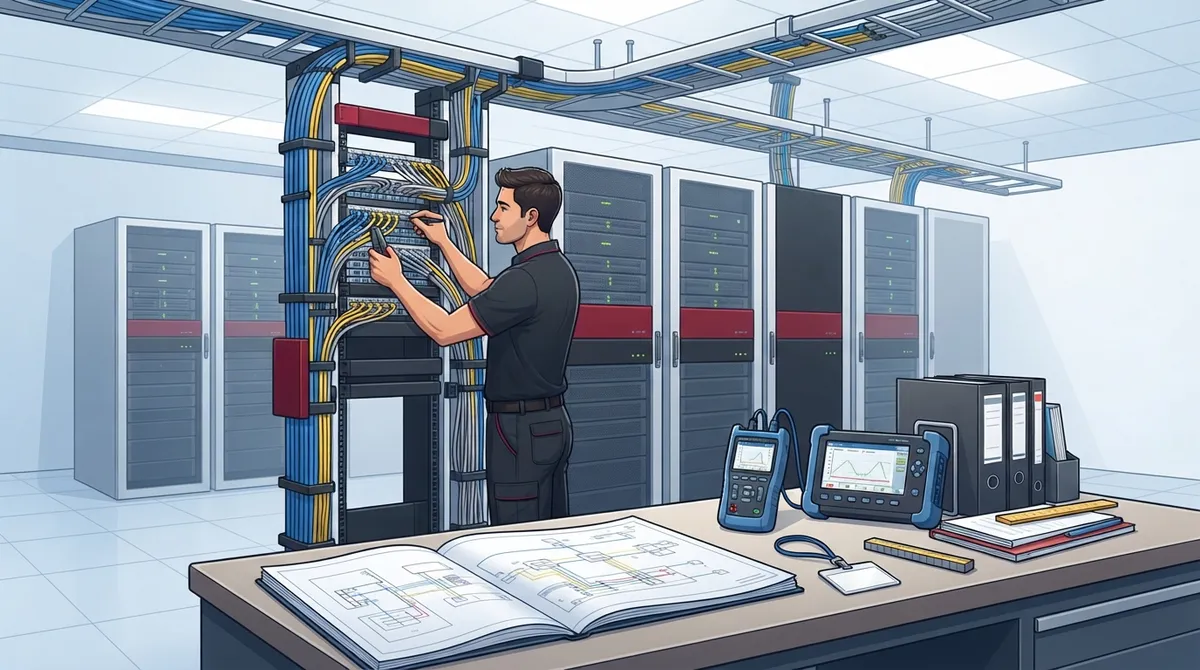
Demand complete documentation after installation: test results, as-built drawings, cable schedules, and labeling records—these prevent future troubleshooting headaches and support business growth.
-
Plan cabling for future expansion by discussing device capacity, Wi-Fi access points, fiber needs, and office growth with your contractor before work begins.
-
Confirm the contractor follows current ANSI/TIA-568 standards and holds proper low-voltage licensing and insurance for your state to protect your investment legally.
-
Red flags include vague proposals lacking specifics, no mention of post-installation testing, reluctant references sharing, and pressure to sign quickly without full scope review.
Picking a cabling installer feels a lot like picking a contractor for your house. You want someone who shows up on time, does clean work, and doesn’t leave you with a mess of loose wires and unanswered questions. Whether you’re setting up a brand-new Tampa office or upgrading an outdated network, the company you choose to run your cables will shape how well your phones, Wi-Fi, security cameras, and internet work for years to come.
This guide walks you through exactly what to look for, in plain and simple terms. No confusing tech-speak, no sales pressure. Just the honest facts you need to make a smart choice for your business. By the end, you’ll know how to spot a great cabling partner and avoid the headaches that come with a bad one.
Why Structured Cabling Matters More Than You Think
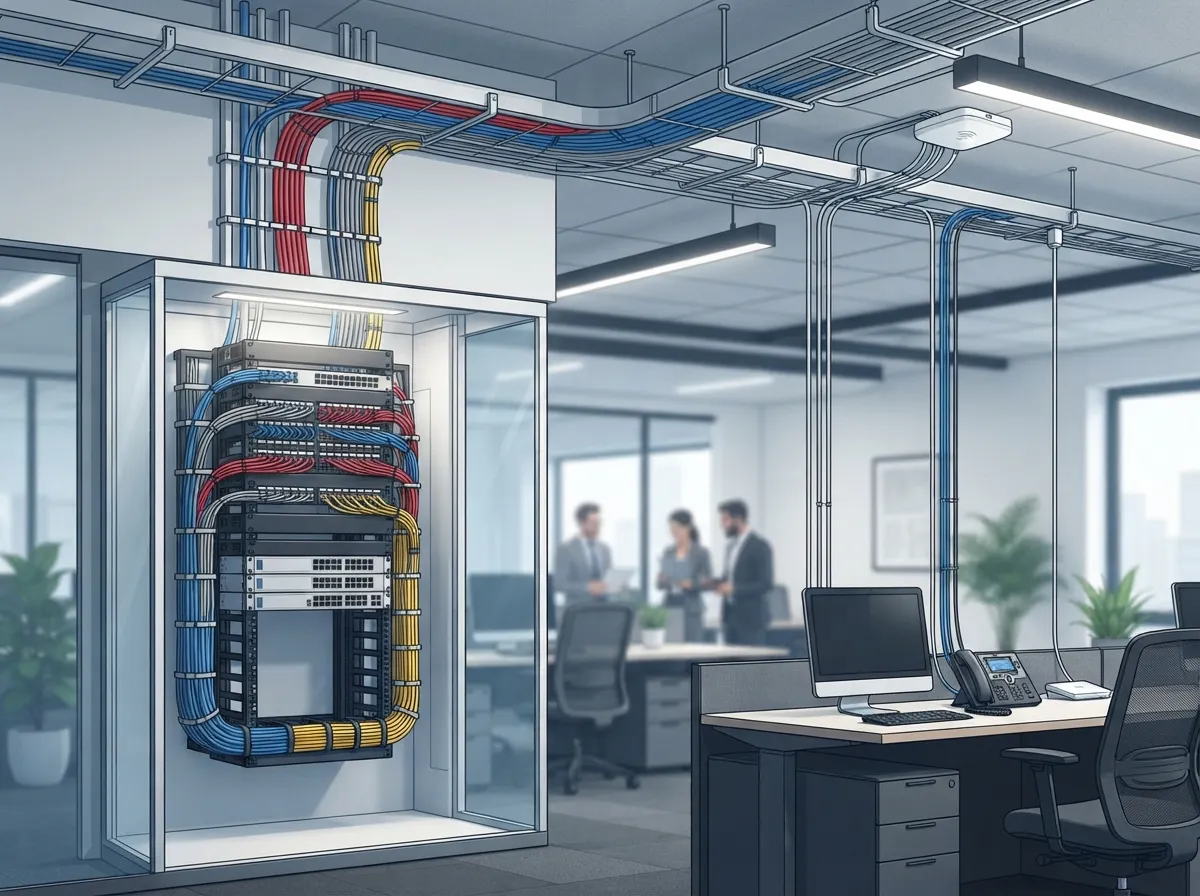
Your business network runs on cables, even if you never see them. Every phone call, every Wi-Fi connection, every security camera feed travels through wires hidden behind your walls and ceilings. This system is called structured cabling, and it’s the backbone of your entire office setup.
A good cabling job supports more than just computers. It connects your VoIP phones, your Wi-Fi access points, your security cameras, and your door access control systems. Think of it as the plumbing of your building, except instead of water, it carries data. If the plumbing is bad, everything downstream suffers.
That’s why choosing the best cabling installation company isn’t just a small decision. It affects your daily operations, your growth plans, and your budget for years to come. If you want to learn more about how this all fits together, check out What Is Structured Cabling for Your Business Network?

What Makes a Cabling Company Truly the Best
Not all cabling companies are created equal. Some just run wires and call it a day. Others plan ahead, test everything, and hand you paperwork that makes future upgrades easy. Here’s what separates the great ones from the rest.
Real Commercial Experience
You want a company that has worked on business projects like yours, not just small home jobs. Ask about similar projects they’ve completed. A company with 24 years in the business, like Ideal Solutions Provider, has likely seen every kind of office layout and challenge you can imagine.
Trained and Certified Staff
Look for technicians with real credentials. BICSI is a well-known organization that certifies cabling professionals. Two credentials worth asking about are Installer 2, Copper (INSTC) and Installer 2, Optical Fiber (INSTF). These confirm the person doing the work actually knows what they’re doing.
There’s also a design credential called RCDD, which stands for Registered Communications Distribution Designer. This is different from an installer certification. An RCDD plans the system, while an installer builds it. Ask which credentials the actual team on your project holds, not just what the company claims overall.
Proper Licensing and Insurance
Many states require a low-voltage license for cabling work. Ask your contractor if this applies in your area, and get proof they carry it. Also confirm they have insurance in case something goes wrong during installation.
Clear, Detailed Proposals
A good proposal spells out everything. It should include:
- A full site survey of your space
- The type of cable and pathway design they’ll use
- Installation and termination details
- Testing procedures and standards
- Labeling and cleanup plans
- What’s included and what’s excluded from the price
- A realistic schedule and how they’ll handle changes
If a proposal is vague or skips these details, that’s a red flag. Ask questions until you fully understand what you’re paying for.
Standards Every Cabling Job Should Follow
Cabling isn’t a guessing game. There are industry standards that guide how it should be done. The ANSI/TIA-568 family of standards covers cabling performance and commercial building setups. TIA-569 covers pathways and spaces, TIA-606 covers labeling, and TIA-607 covers grounding and bonding.
These standards change over time. For example, ANSI/TIA-568.2-E, which covers balanced twisted-pair cabling, was published in October 2024. A quality contractor should name which standards apply to your project and confirm the current edition before work begins. Don’t be afraid to ask them directly which standards they follow and why.
Testing and Documentation You Should Receive
Once the cables are installed, the job isn’t done. You should receive proof that everything works and clear records for future use. Here’s what a complete handover package should include:
- Test results matching the cable type and performance class installed
- As-built drawings showing exactly where cables run
- Cable and port schedules listing every connection
- Labeling records so your IT team can find anything quickly
- Warranty documentation explaining what’s covered and for how long
These documents matter more than people realize. When you need to add a new employee’s desk or move an office around, your IT team will thank you for having clear records. Without them, every small change becomes a guessing game.
Comparing Cabling Company Qualities at a Glance
Here’s a simple table to help you compare potential cabling partners side by side.
| What to Check | Why It Matters | Good Sign |
|---|---|---|
| Commercial Experience | Shows they handle business-scale jobs | Multiple similar projects, references available |
| Staff Certifications | Confirms real skill, not guesswork | BICSI INSTC, INSTF, or RCDD on the team |
| Licensing & Insurance | Protects you legally and financially | Valid low-voltage license, active insurance |
| Proposal Detail | Prevents surprise costs or scope gaps | Clear scope, exclusions, and schedule listed |
| Testing & Documentation | Supports future troubleshooting and growth | Test reports, as-built drawings, labeling records |
| Manufacturer Authorization | Keeps warranty valid | Authorized installer status in writing |
Planning for Growth, Not Just Today
Here’s something a lot of business owners miss. Your cabling shouldn’t just handle what you need right now. It should be ready for what’s coming next. Think about:
- How many devices will need power over the network (like phones and cameras)
- Where you’ll want Wi-Fi access points in the future
- Whether you’ll need fiber connections between floors or buildings
- How much spare capacity you want built into the design
- Likely office moves or expansions down the road
A skilled cabling partner will ask these questions before they touch a single wire. They’ll help you pick the right cable category and fiber type based on your building, your budget, and your goals. For a deeper look at the choices between cable types, check out 7 Key Differences Between CAT5e and CAT6 Cabling for Tampa Businesses.
How Cabling Supports Your Whole Telecom System
It’s easy to think of cabling as just wires in the wall. But it actually connects everything your business relies on. Your VoIP phone system needs solid cabling to avoid dropped calls. Your security cameras need it to stream clear footage without lag. Your access control system needs it to unlock doors instantly and safely.
If you’re also thinking about upgrading your phone system alongside your cabling project, it helps to plan both together. Learn more in Which Cloud-Based Phone System Is Best for Tampa Businesses? And if security cameras are on your radar too, this article breaks it down well: What Do Security Cameras Really Do for Your Business?
Questions to Ask Before You Sign a Contract
Before committing to any cabling company, ask these questions:
- Can you show me examples of similar business projects you’ve completed?
- What certifications does the actual team working on my project hold?
- Are you licensed for low-voltage work in my state?
- What standards will you follow, and can you confirm the current edition?
- What testing and documentation will I receive after the job is done?
- Are you an authorized installer for the cable manufacturer’s warranty program?
- How will you minimize disruption to my daily operations during installation?
A confident, experienced company will answer these questions clearly and without hesitation. If you get vague answers or pushback, that’s worth noting.
The Cost Factor: What Affects Your Price
Cabling costs vary widely depending on a few key factors. Building size and layout play a big role, as does the number of drops (cable connections) you need. Cable type matters too. Fiber costs more than copper but supports higher speeds and longer distances. Labor rates differ by region, and so does the complexity of your building’s existing infrastructure.
The global structured cabling market grew 21% in 2025, reaching $9.08 billion, according to industry data. Much of that growth came from data centers, which now account for more than 41% of cabling installed worldwide. While this is a broader market trend rather than a direct measure of office project costs, it shows how much demand exists for skilled cabling professionals right now.
Getting a detailed proposal upfront helps you avoid surprise costs later. Ask for a breakdown so you understand exactly what you’re paying for, from labor to materials to testing.
Why Working With One Trusted Partner Makes Life Easier
Juggling separate vendors for cabling, phones, internet, and security cameras can turn into a full-time job nobody asked for. That’s why many Tampa businesses choose to work with a single telecom partner who handles it all. Ideal Solutions Provider has spent over 24 years helping businesses across Tampa Bay and nationwide simplify their telecom setups, working with 35+ vetted suppliers to find the right fit for each client’s needs and budget.
This kind of partnership means you get one point of contact instead of five different companies pointing fingers at each other when something goes wrong. It also means your cabling, phone system, internet, and security all work together smoothly from day one. Follow along on Facebook or YouTube to see real examples of completed projects and helpful tips.
Red Flags to Watch For
A few warning signs can save you from a bad hire. Watch out for these:
- Vague proposals that don’t list specific standards or deliverables
- No mention of testing or documentation after the job
- Reluctance to share references from past business clients
- Unclear answers about licensing or certifications
- Pressure to sign quickly without reviewing the full scope
Trust your gut here. A company that’s proud of its work will happily answer every question you throw at them.
Bringing It All Together
Finding the best cabling installation company doesn’t have to feel overwhelming. Focus on real experience, trained staff, clear proposals, proper testing, and a plan for future growth. These five things will guide you toward a partner who does the job right the first time.
Your business deserves a network that works quietly in the background, supporting your phones, internet, cameras, and access control without a hitch. That starts with choosing the right cabling partner from day one. If you’re ready to get expert guidance on your next cabling project, feel free to reach out to our team for a free consultation, or simply give us a call to talk through your options. We’re here to make the process easy and stress-free, every step of the way.
FAQs
Q: How do I choose the best commercial structured cabling installation company?
A: Look for a company with real business project experience, certified technicians, and a proposal that spells out every detail. Ask for references and make sure they explain their testing and documentation process clearly. A little research upfront saves you a lot of frustration later!
Q: What certifications should a business cabling contractor have?
A: Keep an eye out for BICSI credentials like Installer 2, Copper (INSTC) and Installer 2, Optical Fiber (INSTF), which confirm hands-on skill. If design work is involved, an RCDD credential shows planning expertise too. Always ask about the actual team working on your project, not just the company’s overall reputation.
Q: What standards should a commercial cabling installation meet?
A: Commercial cabling typically follows the ANSI/TIA-568 family for performance, TIA-569 for pathways, TIA-606 for labeling, and TIA-607 for grounding. A good contractor will name these standards in their proposal and confirm the current edition applies to your project. This keeps everything consistent and future-proof.
Q: What testing and documentation should I receive after cabling installation?
A: You should get test results matching your cable type, plus as-built drawings, port schedules, and labeling records. Warranty information should be included too, so you know exactly what’s covered. These documents make life so much easier when it’s time to troubleshoot or expand later.
Q: How much does business structured cabling installation cost, and what affects the price?
A: Costs depend on building size, number of connections, cable type, and labor rates in your area. Fiber generally costs more than copper but offers better speed and distance. Getting a detailed, itemized proposal helps you understand exactly where your money is going.