Key Takeaways
-
Cloud access control costs split into two categories: one-time upfront costs ($1,500-$3,500 per door for hardware and installation) and recurring monthly subscriptions ($5-$25 per door depending on platform tier).
-
Request itemized quotes that separately list hardware, installation, subscription, and support costs; lumped-together pricing is a red flag that may hide unexpected charges or contract escalators.
-
Volume discounts and tiered pricing significantly reduce per-door costs for larger deployments, so compare quotes across multiple vendors rather than accepting the first proposal.
-
Cloud systems require reliable internet connectivity and proper network infrastructure to function; confirm your current internet bandwidth and cabling can support multiple cloud-connected doors before committing.
-
Bundling cloud access control with internet, Wi-Fi, and video security through a single telecom provider can simplify billing and lower total costs compared to managing separate vendors.
-
Security and uptime matter as much as price; always ask about offline credential caching, backup power, cellular failover, encryption standards, and service-level agreements before signing.
If you have ever tried to price out a cloud access control system for your office doors, you know the feeling. One website says $5 a month. Another says $25. A third throws around a big number for hardware and installation, and suddenly you are not sure what you actually need to budget. You are not alone, and honestly, this confusion is completely normal in our industry.
At Ideal Solutions Provider, we talk with Tampa business owners every week who just want a straight answer about cloud access control cost. So let’s walk through this together, step by step, in plain language. By the end, you will know exactly what goes into the price tag and how to plan for it without any surprise bills later.
What Cloud Access Control Actually Means for Your Business
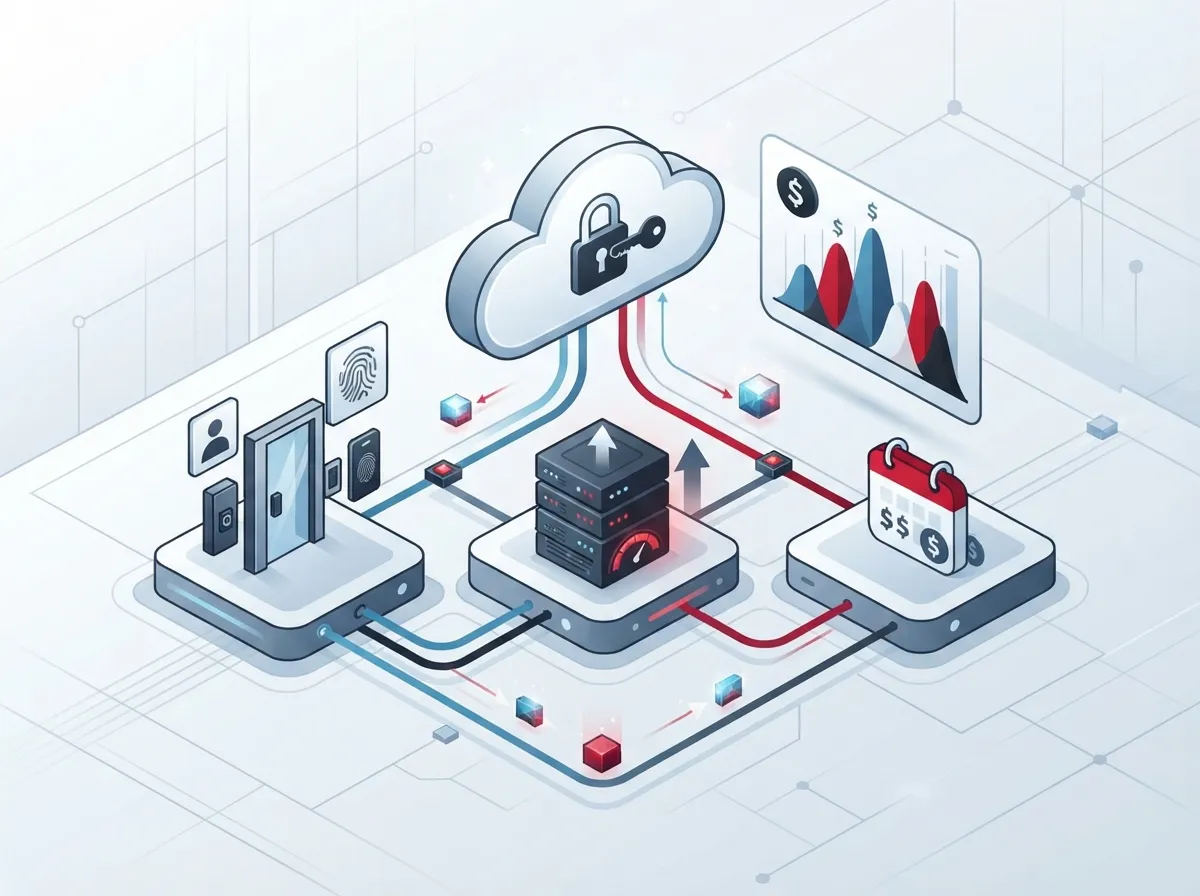
Before we talk numbers, let’s get on the same page about what we are pricing. In the business telecom world, cloud access control refers to smart door locks, card or mobile readers, and controllers that are all managed through a cloud-based software platform instead of an on-site server. It is different from purely digital identity management systems, though the two sometimes overlap for larger companies.
Think of it this way: instead of a physical keypad box sitting in a closet that only your IT guy can touch, your access control lives online. You can lock a door, add a new employee, or check who entered the building last night, all from your phone or laptop. This pairs naturally with other cloud tools your business already uses, like cloud-based phone systems and cloud video security cameras.
Why This Matters for Tampa Businesses and Beyond
Cloud systems make life easier for franchise operators and multi-location businesses especially. You can manage door access for five locations from one dashboard instead of driving to each site. That convenience does come with a recurring cost, though, which is exactly what we are going to break down next.
The Two Buckets of Cloud Access Control Cost
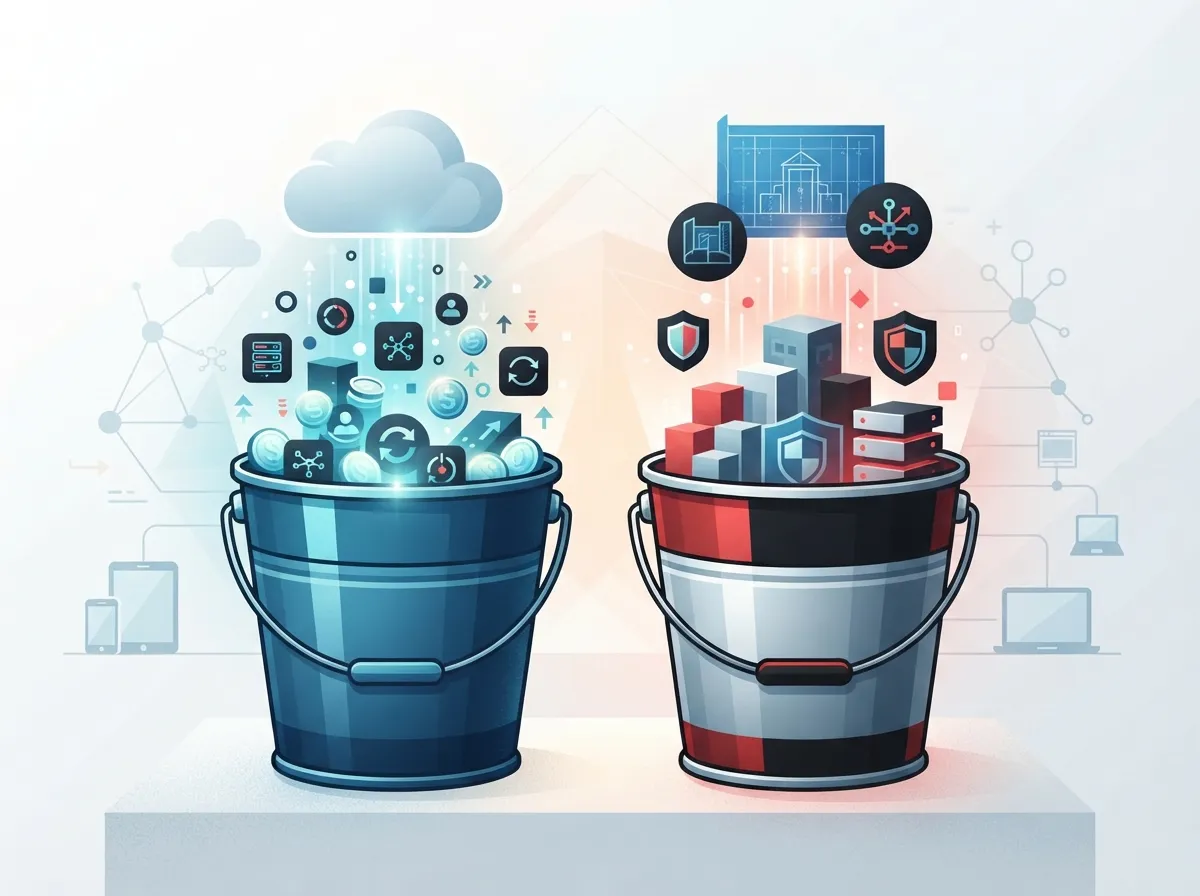
Every cloud access control quote you get should fall into two categories. Understanding this split will help you compare quotes apples to apples.
- One-time upfront costs – hardware, wiring, and installation labor
- Recurring monthly costs – the cloud software subscription, credentials, and support
A trustworthy provider will always separate these two numbers for you. If a quote lumps everything together into one mysterious total, that is a red flag worth asking about.
Upfront Hardware and Installation Costs
Even though the software lives in the cloud, you still need physical equipment at every door. Here is what typically goes into that upfront number, based on published 2026 market pricing guides.
- Cloud-connected card or mobile readers: roughly $300 to $1,500 per door
- Door controllers: approximately $500 to $2,000
- Electronic locks or strikes: about $150 to $600
- Professional installation labor: around $200 to $500 per door
- Cabling, power supplies, and network upgrades as needed
Adding it all up, a fully installed commercial system generally runs between $1,500 and $3,500 per door for small and mid-sized deployments. Simple wireless setups can come in lower, while complex enterprise installs with biometrics or turnstiles can push costs higher.
Recurring Cloud Subscription Costs
This is the part most business owners want to understand best, since it hits your budget every single month. Cloud access control software subscriptions are usually priced per door, per month.
| Pricing Tier | Typical Monthly Cost Per Door | Best Fit For |
|---|---|---|
| Budget-friendly platforms | $5 – $7.50 | Very small offices, single location |
| Standard SMB platforms | $7.50 – $13.50 | Most small and mid-sized businesses |
| Advanced/enterprise tiers | $14 – $25+ | Multi-site companies, video integrations, analytics |
One published pricing example from a well-known vendor, Brivo, lists $13.50 per month for the first two doors, then $7.50 per month for doors three through ten, dropping to $3.50 for additional doors. That kind of tiered, volume-based pricing is common, so always ask how the per-door rate changes as you add doors.
Real-World Cost Examples You Can Actually Use
Numbers feel more useful when you can picture your own business in them. Let’s run through a few quick scenarios.
Small Office With 10 Doors
At $7.50 to $20 per door per month, a 10-door office would pay roughly $900 to $2,400 per year just in software subscriptions. Add in the one-time hardware and installation cost of $1,500 to $3,500 per door, and your first-year total could land somewhere between $16,500 and $37,400 depending on hardware choices and negotiated rates.
Multi-Location Franchise With 20 Doors
One published market guide estimated a five-year cloud-based deployment across 20 doors at approximately $20,000 to $45,000 total, including hardware, installation, and ongoing subscriptions. Compare that to an on-premises system for the same footprint, estimated at $40,000 to $80,000 over five years, and you can see why cloud options appeal to growing franchise operators.
Mobile Credentials Add-On
If you want employees to unlock doors with their phones instead of key cards, budget an extra $1 to $5 per user per month where this is billed separately. It is a small line item, but it adds up across a larger staff.
7 Factors That Drive Your Cloud Access Control Cost
No two businesses pay the exact same price, and that is because pricing depends on several variables. Here are the biggest ones we see affecting quotes.
- Number of doors – more controlled entry points means more hardware and higher subscription totals
- Number of sites – multi-location businesses often qualify for volume discounts but need reliable connectivity at every site
- Credential type – key cards, fobs, mobile credentials, or biometrics all carry different costs
- User volume – larger staff counts can increase per-user licensing fees
- Installation complexity – older buildings or unusual door types raise labor costs
- Integration needs – linking access control to video security or HR systems adds cost
- Support and contract length – longer contracts sometimes lower the monthly rate but reduce flexibility
Larger deployments generally see a lower effective per-door price because vendors offer volume discounts. This is one reason it pays to compare your options with a partner who works across many suppliers rather than settling for the first quote you receive.
Cloud vs. On-Premises: A Quick Cost Comparison
Many office managers ask us whether cloud is actually cheaper than a traditional on-site system. The honest answer is that it depends on your time horizon and how much you value convenience.
| Cost Factor | Cloud Access Control | On-Premises Access Control |
|---|---|---|
| Upfront server costs | None or minimal | Dedicated server hardware required |
| Software maintenance | Handled by provider | Managed in-house, often needs IT staff time |
| Recurring fees | Monthly subscription per door | Occasional software updates or license renewals |
| Multi-site management | Simple, single dashboard | Often requires separate systems per site |
| Internet dependency | Higher, needs stable connectivity | Lower, can run mostly offline |
Cloud systems tend to lower your upfront capital spending since you skip the dedicated server and much of the ongoing IT maintenance. But you do need to budget for that recurring subscription and make sure your internet connection can support it, which is where solid business internet planning becomes just as important as the access control system itself.
How to Build an Accurate Cloud Access Control Budget in 5 Steps
Ready to put together your own numbers? Follow these steps to avoid budget surprises down the road.
- Count your doors and sites. Walk your building or buildings and note every entry point that needs controlled access.
- Decide on credential type. Mobile credentials cost more per user but reduce lost-card headaches.
- Request itemized quotes. Make sure hardware, installation, subscription, and support are all listed separately.
- Ask about contract length and escalators. Some contracts increase pricing after year one, so read the fine print.
- Confirm network requirements. Cloud systems need dependable internet, so check whether your current connection and structured cabling setup can support it.
A proper quote should always tell you whether it includes software updates, technical support, mobile credentials, warranty coverage, cloud storage, integrations, taxes, and emergency service. If any of these are missing from a proposal, ask before you sign.
Questions to Ask Before You Sign a Contract
Price is important, but it is not the only thing that matters. Security and reliability deserve equal attention, especially for businesses handling sensitive client information or regulated data.
- Does the system work if the internet goes down?
- Is there local credential caching for offline entry?
- What backup power options are available?
- Is cellular failover offered for critical sites?
- How is data encrypted, and where are audit logs stored?
- What is the provider’s service-level agreement for uptime?
These questions matter just as much as the sticker price. A cheap system that goes down during an outage can cost you far more in lost productivity and security risk than you saved on the subscription.
How Bundling Can Lower Your Total Telecom Cost
Here is something a lot of business owners do not realize: cloud access control rarely lives in a vacuum. It works best alongside reliable internet, managed Wi-Fi, and often cloud video security cameras. Bundling these services with one business telecom provider can simplify billing and sometimes reduce your overall spend.
This is exactly the role Ideal Solutions Provider plays for businesses across Tampa Bay and nationwide. Instead of juggling separate vendors for phones, internet, cabling, cameras, and access control, our team compares options across 35+ vetted suppliers and puts together a plan that fits your budget and your building. We have seen firsthand that 9 out of 10 companies we audit are overpaying, underperforming, or both when it comes to their telecom setup, and access control is often part of that picture.
If you are also exploring cloud-based access control systems for your business, it makes sense to review your internet and cabling infrastructure at the same time. That way you avoid paying for a cloud system your network cannot fully support.
Common Cost Mistakes to Avoid
We see the same handful of mistakes trip up business owners again and again. Here is what to watch for.
- Comparing a subscription-only quote to a quote that includes hardware and installation
- Forgetting to budget for mobile credential fees per user
- Skipping questions about contract price increases after year one
- Underestimating internet bandwidth needs for multiple cloud-connected doors
- Not asking about volume discounts for larger door counts
Avoiding these pitfalls is much easier when you work with a partner who has installed dozens of these systems and knows where the hidden costs tend to hide.
Wrapping Up Your Cloud Access Control Cost Plan
At the end of the day, cloud access control cost is not one single number. It is a combination of upfront hardware, installation labor, and a recurring monthly subscription that scales with your doors and users. Most businesses land somewhere between $5 and $25 per door per month for software, plus $1,500 to $3,500 per door for the physical installation, though your exact numbers will depend on your building, credential choice, and contract terms.
The good news is you do not have to figure this out alone. Whether you are a small Tampa business securing your first office or a franchise operator scaling access control across multiple sites, getting expert guidance can save you real money and a lot of guesswork. You can learn more about our approach on Facebook or check out installation walkthroughs on YouTube, and follow project photos on Instagram. When you are ready to get a clear, itemized quote built around your actual building and budget, reach out to our team for a free consultation, or simply call us at 813-388-4935 to talk through your options today.
FAQs
Q: How much does cloud access control cost per door?
A: Most businesses pay between $5 and $25 per door per month for the software subscription, with many small business platforms landing around $7.50 to $13.50 per door per month. On top of that, you’ll usually see a one-time hardware and installation cost per door as well.
Q: Is cloud access control cheaper than an on-premises system?
A: It really depends on your timeline. Cloud systems often save you money upfront since you skip the dedicated server, but you do pay a recurring subscription, so it’s worth comparing total costs over three to five years rather than just the first invoice.
Q: What hardware and installation costs are included in cloud access control pricing?
A: You’ll typically budget for readers, controllers, electronic locks, cabling, and professional installation labor, which together run roughly $1,500 to $3,500 per door for most small and mid-sized offices. Simple wireless setups can cost less, while complex builds may run higher.
Q: Do cloud access control providers charge per door, per user, or a flat monthly fee?
A: Great question, and the honest answer is: it varies! Most vendors use per-door pricing, but some offer flat monthly plans or per-user licensing instead, so always ask for a clear breakdown before you compare quotes.
Q: Can a telecom provider bundle cloud access control with internet or security services?
A: Yes, and this is actually one of the smartest ways to save money and simplify your billing. Bundling access control with your internet, Wi-Fi, and video security through one trusted partner means fewer vendors to manage and often better overall pricing.