Key Takeaways
-
Cloud access control systems enable remote management via mobile apps and web dashboards, allowing you to lock doors, add employees, or check access logs from anywhere without on-site servers.
-
Subscription-based pricing (ACaaS) eliminates large upfront capital costs compared to traditional systems, making it more affordable for businesses to implement across multiple locations.
-
These systems integrate seamlessly with video surveillance, alarms, and visitor management tools, automatically triggering recordings and notifications when access events occur.
-
Cloud-based systems scale effortlessly across single or hundreds of locations with centralized credential management, ideal for franchise operators and multi-site businesses managing consistent security policies.
-
Real-time audit trails provide detailed records of who accessed critical infrastructure like telecom closets and server rooms, essential for compliance and security investigations.
-
Automatic updates, minimal IT maintenance, and professional installation eliminate the operational headaches and downtime associated with legacy on-premise server systems.
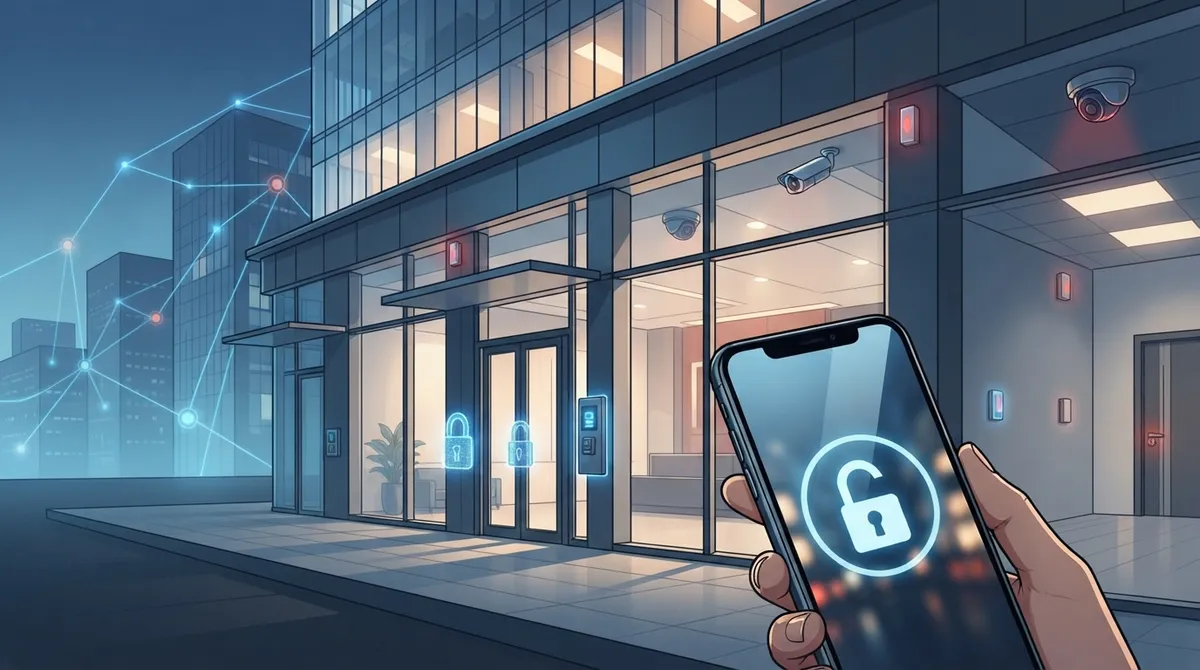
Picture this: you’re on vacation, sipping something cold, and you get a text. Someone forgot to lock the back door of your Tampa office. With an old-school system, that means panicked calls, maybe a drive back to the building, and a whole lot of stress. But with cloud access control systems, you just pull out your phone, tap a few buttons, and lock that door from your beach chair. That’s the kind of peace of mind we’re talking about today.
Cloud access control systems are changing how businesses manage security. Instead of a clunky server sitting in a closet, everything lives online. You get real-time updates, remote management, and a lot less headache. Whether you run one office in Tampa or a dozen locations across the country, this technology can make your life a lot easier. Let’s walk through exactly how it works, why it matters, and how to choose the right setup for your business.
What Are Cloud Access Control Systems, Really?
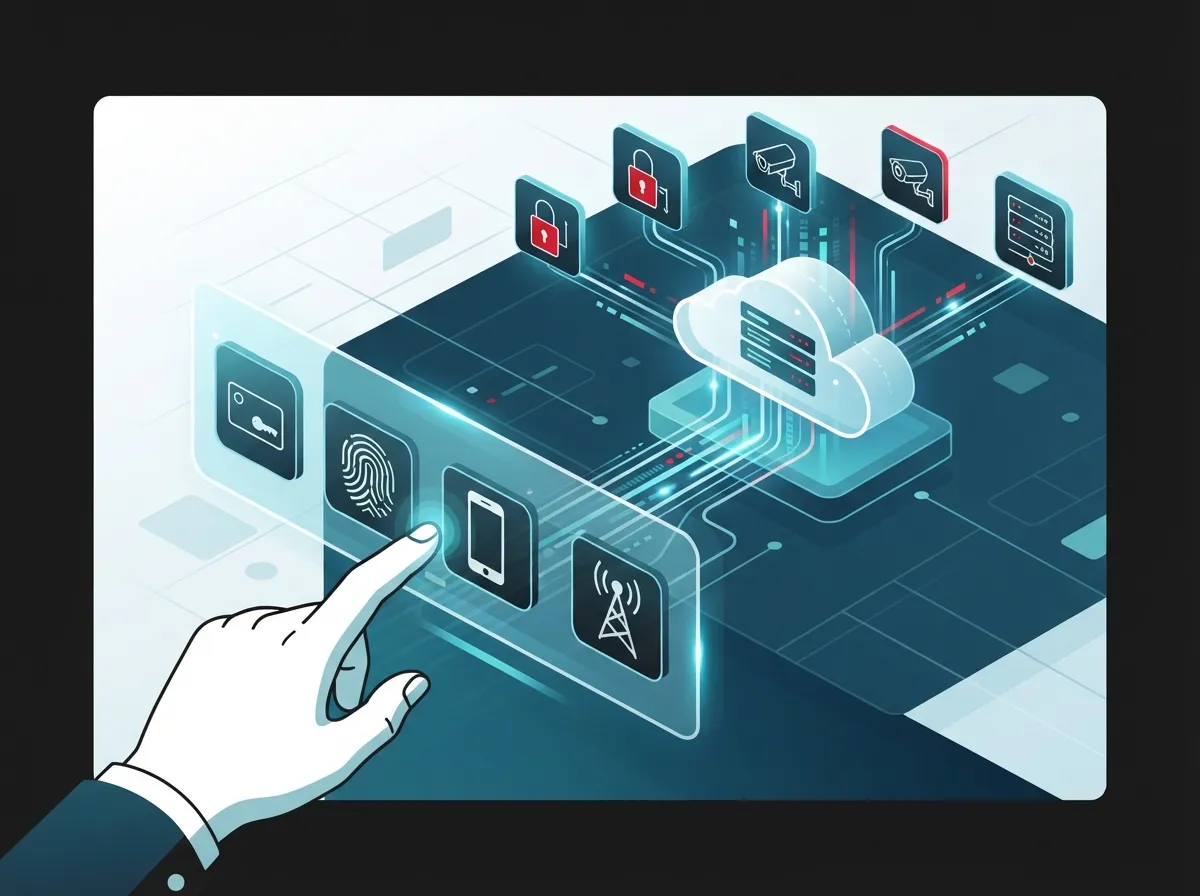
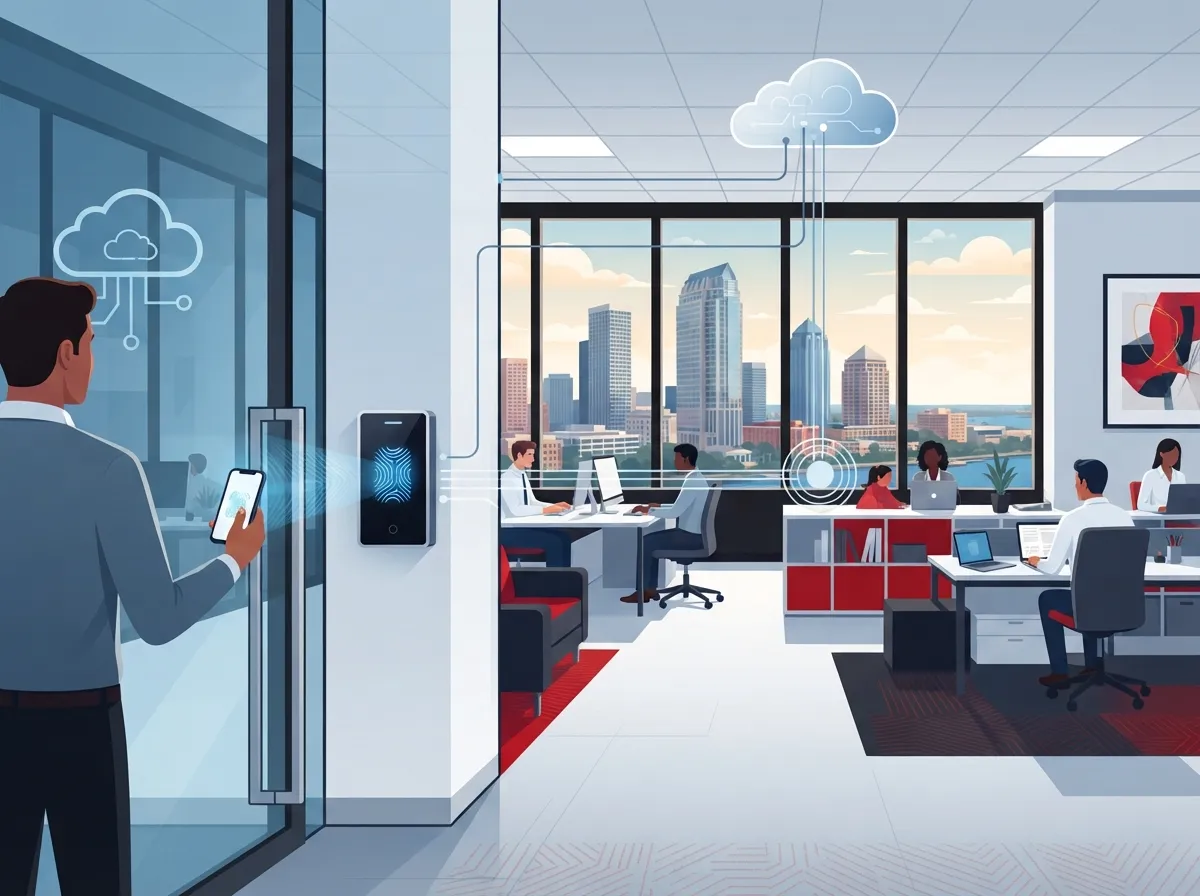
Simply put, cloud access control systems let you manage who can enter your building using an online dashboard instead of an on-site server. The door readers and controllers still sit at your building. But the brain of the system lives in the cloud, not in a back room.
This means you can add new employees, remove old ones, or check who came in at 2 a.m. from your laptop, tablet, or phone. No need to be physically present at the building. This flexibility is a huge win for busy office managers and multi-location business owners alike.
How This Differs From Old-School Access Control
Traditional access control systems rely on a physical server on-site. If that server crashes, you’re stuck. Updates require someone to physically visit the location. It’s clunky, slow, and honestly, a bit outdated in 2026.
Cloud-based systems flip that model. You get real-time updates and remote management without needing on-site servers, which is a key difference from legacy systems. It’s like comparing an old flip phone to a smartphone. Both make calls, but only one gives you the tools to actually run your business efficiently.
Why Tampa Businesses Are Making the Switch
We’ve talked with a lot of business owners here in Tampa Bay, and the story is usually the same. They’re tired of juggling multiple vendors, worrying about outdated hardware, and dealing with slow support when something breaks. Cloud access control systems solve a lot of these pain points at once.
Here are some of the biggest reasons businesses are jumping on board:
- Lower upfront costs since there’s no big server purchase required
- Easier scalability when you open new locations or add more doors
- Reduced IT maintenance because updates happen automatically in the cloud
- Faster provisioning, so new employees get access on day one
- Better oversight for franchise operators managing multiple sites
- Real-time alerts that let you respond to issues immediately
If you’ve read our piece on what security cameras really do for your business, you already know how much peace of mind comes from real-time monitoring. Access control works the same way, just for your doors instead of your hallways.
Key Features to Look for in a Cloud Access Control Platform
Not all cloud access control systems are created equal. Some are basic, and some are packed with features that make your life a whole lot easier. Here’s what we recommend looking for.
Must-Have Features
- Mobile app access so admins can manage credentials from anywhere
- Real-time activity logs for compliance and peace of mind
- Remote lock and unlock capabilities for emergencies
- Flexible scheduling for employees, contractors, and visitors
- Integration options with video surveillance and alarm systems
- Scalable architecture that grows with your business
These features aren’t just nice-to-haves. They’re the difference between a system that actually helps you and one that just sits there collecting dust. Telecom-specific use cases include securing critical telecom infrastructure and enabling real-time control of site access through mobile app workflows and cloud dashboards, which matters a lot if you’re protecting server rooms or telecom closets.
Integration Matters More Than You Think
One of the best parts of modern cloud access control is how well it plays with other systems. Vendors are positioning cloud access control to work alongside video surveillance, visitor management, alarms, and biometrics. That means your door locks, cameras, and alarm system can all talk to each other.
Think of it like a well-run team where everyone communicates. If a door opens after hours, your camera system can automatically pull up footage. Your alarm can trigger. And you get a notification on your phone, all without lifting a finger.
Comparing Cloud Access Control to Traditional Systems
Sometimes it helps to see things side by side. Here’s a simple breakdown to help you understand the differences.
| Feature | Cloud Access Control | Traditional On-Premise Systems |
|---|---|---|
| Management Location | Remote, via web dashboard or app | On-site server required |
| Updates | Automatic and real-time | Manual, often requires a technician visit |
| Scalability | Easy to add doors or locations | Often requires new hardware and setup |
| Upfront Cost | Lower, subscription-based | Higher, large capital purchase |
| Maintenance | Minimal, handled by provider | Ongoing IT staff time needed |
| Multi-Site Management | Centralized from one dashboard | Separate management per location |
As you can see, the cloud model wins in almost every category for businesses that want flexibility. That said, some organizations with very specific compliance needs may still lean on hybrid setups. We can walk you through both options during a consultation.
How Much Does Cloud Access Control Cost?
This is usually one of the first questions we get, and it’s a fair one. Pricing for cloud access control typically depends on a few factors.
| Cost Factor | What It Affects |
|---|---|
| Number of doors | More doors mean more readers and controllers needed |
| Building size | Larger buildings may need more access points |
| Selected features | Advanced features like mobile credentials can add cost |
| Subscription tier | Monthly or annual plans vary based on service level |
| Integration needs | Connecting cameras or alarms may add setup fees |
Many cloud access control offerings use a subscription model instead of one giant upfront payment. This is often called Access Control as a Service, or ACaaS for short. It’s a lot like how you pay monthly for cloud-based phone systems instead of buying expensive PBX hardware.
Steps to Set Up Cloud Access Control for Your Business
Ready to make the switch? Here’s a simple roadmap to help you get started without feeling overwhelmed.
- Audit your current setup and identify which doors need controlled access
- Decide which locations need priority, such as telecom closets or data rooms
- Choose a provider that offers real-time updates and mobile management
- Plan for integration with existing cameras or alarm systems
- Schedule professional installation to avoid wiring or configuration issues
- Train your team on how to issue and revoke credentials
- Test the system thoroughly before going fully live
- Set up ongoing support so small issues get fixed quickly
This process works whether you’re securing a single Tampa office or rolling out access control across dozens of franchise locations. If you’re managing multiple sites, our guide on reliable network solutions for multi-location businesses pairs nicely with this planning stage.
Special Considerations for Telecom and Critical Infrastructure
If your business relies on telecom closets, server rooms, or other sensitive infrastructure, access control isn’t just a nice feature. It’s essential. Telecom security providers emphasize control over employees, contractors, and stakeholders from one cloud platform, which is especially important for organizations with high turnover or lots of field workers.
Think about how many people touch your network cabling, phone systems, or server equipment. Electricians, IT contractors, cleaning crews. Every one of them is a potential access point if you’re not careful. Cloud access control gives you a clear audit trail of who went where and when, which is priceless if something ever goes wrong.
We’ve seen this firsthand while helping businesses set up structured cabling and network infrastructure. Protecting that investment with proper access control just makes sense.
Scalability: Perfect for Growing Businesses and Franchises
One of the coolest things about cloud-based systems is how easily they scale. Cloud-based systems can manage access across one location or hundreds of sites, according to vendor product descriptions. That’s a massive advantage if you’re a franchise operator expanding across Tampa Bay or beyond.
Instead of managing separate systems for each location, you get one dashboard that shows everything. Need to grant temporary access to a regional manager visiting three different stores? Done in seconds. Need to revoke access for an employee who just left? Also done in seconds, from anywhere.
Benefits for Multi-Site Businesses
- Centralized credential management across all locations
- Consistent security policies applied company-wide
- Easier onboarding for new franchise locations
- Simplified compliance reporting for audits
- Reduced need for on-site IT staff at every location
This is exactly the kind of scalable, low-maintenance solution we help set up for clients through our cloud based access control services. We work with you to design a system that fits your footprint today and grows with you tomorrow.
Common Mistakes to Avoid
We’ve seen a few businesses stumble when setting up cloud access control. Here’s what to watch for.
- Choosing a system without checking integration options for cameras and alarms
- Skipping professional installation to save money upfront
- Failing to train staff on how to properly issue credentials
- Ignoring mobile app capabilities that save time later
- Not planning for future growth or additional locations
Avoiding these mistakes upfront saves a lot of frustration down the road. It’s similar to some of the pitfalls we outline in our article about cloud phone system mistakes. A little planning goes a long way.
Why Work With a Trusted Telecom Partner
Setting up cloud access control isn’t something you want to DIY, especially if you’re protecting sensitive telecom infrastructure or managing multiple business locations. That’s where working with an experienced partner really pays off.
At Ideal Solutions Provider, we’ve spent over 24 years helping Tampa businesses and companies nationwide navigate telecom and IT decisions. We work with more than 35 vetted suppliers, so you get an honest comparison instead of a one-size-fits-all pitch. We handle everything from the initial consultation to installation and ongoing support, so you’re never left figuring things out alone.
You can also check out our YouTube channel or follow us on Facebook and Instagram for more tips on business communications and security.
Bringing It All Together
Cloud access control systems aren’t just a trendy upgrade. They’re a practical, scalable way to protect your business, your people, and your infrastructure. Whether you’re a small business owner tired of juggling physical keys or a franchise operator managing sites across the country, this technology gives you control right from your phone.
We know making a switch like this can feel like a big decision. That’s exactly why we’re here to help make it simple. If you’re ready to explore what cloud access control could look like for your business, get in touch with our team for a friendly, no-pressure consultation. Or if you’d rather talk it through right away, feel free to call us and we’ll walk you through your options together.
FAQs
Q: What is a cloud access control system in business security?
A: It’s a security setup where door readers and controllers stay at your building, but the management happens through an online dashboard or app. You can add users, check activity, and lock or unlock doors from anywhere with internet access. It’s a much simpler way to manage building security compared to old-school server-based systems.
Q: How does cloud-based access control work for multi-site businesses?
A: You get one central dashboard that manages every location, so you’re not juggling separate systems for each site. This is especially handy for franchise operators or growing companies with several Tampa Bay or nationwide locations. Everything from credentials to activity logs stays organized in one place.
Q: Is cloud access control secure enough for critical infrastructure and telecom sites?
A: Absolutely, and it’s actually a great fit for these environments. You get detailed audit trails showing exactly who accessed telecom closets or server rooms and when. This level of oversight is tough to match with older, on-premise systems.
Q: How much does cloud-based access control typically cost for businesses?
A: Pricing usually depends on the number of doors, building size, and which features you choose. Most providers use a subscription model instead of one big upfront payment, which keeps costs more predictable. We’re happy to walk through pricing details based on your specific setup during a free consultation.
Q: Can cloud access control integrate with video surveillance and visitor management?
A: Yes, and this is one of the best parts of modern systems. Your door access can trigger camera recordings, alert your team, and even coordinate with visitor check-in tools. It creates a more complete security picture instead of separate systems working in isolation.