
Key Takeaways
-
On-premises access control keeps full physical control and runs during internet outages, but requires upfront hardware investment and in-house expertise to maintain and patch regularly.
-
Hybrid access control blends on-premises and cloud services, letting you keep legacy systems working while gaining modern conveniences—the most practical choice for businesses running mixed SIP and cloud infrastructure.
-
Zero-trust network access checks every single request regardless of source, using identity, device health, location, and behavior patterns; NIST guidance supports deploying components on-premises, cloud, or both.
-
Hosted or managed access control reduces internal IT burden by outsourcing daily operations to a provider while retaining customization—ideal for growing companies lacking large IT departments.
-
Software-defined perimeter and SASE give identity-based access to specific resources only, cutting risk exposure for remote teams, contractors, and multi-branch offices without exposing entire networks.
-
Most strong telecom security designs layer multiple tools together (NAC, VPN, firewalls, IAM, PAM, MFA, microsegmentation) rather than relying on a single alternative solution.
If you have ever typed “cloud access control alternatives” into a search bar late at night, you are not alone. Maybe your building has grown past a simple lock and key. Maybe your IT manager is worried about relying on one system for everything. Or maybe you just want options before you commit. Whatever brought you here, grab a coffee and let’s talk this through together, friend to friend.
Here at Ideal Solutions Provider, we have spent over 24 years helping Tampa businesses (and companies nationwide) sort out their telecom and security choices. We know that a fully cloud-hosted access control system is not always the right fit for every business. Some companies need something more flexible. Some need extra local control. Some just need a mix of both. This guide walks through five solid alternatives, backed by real guidance from the National Institute of Standards and Technology (NIST), so you can make a confident, informed choice.
Why Businesses Look Beyond Fully Cloud-Based Access Control
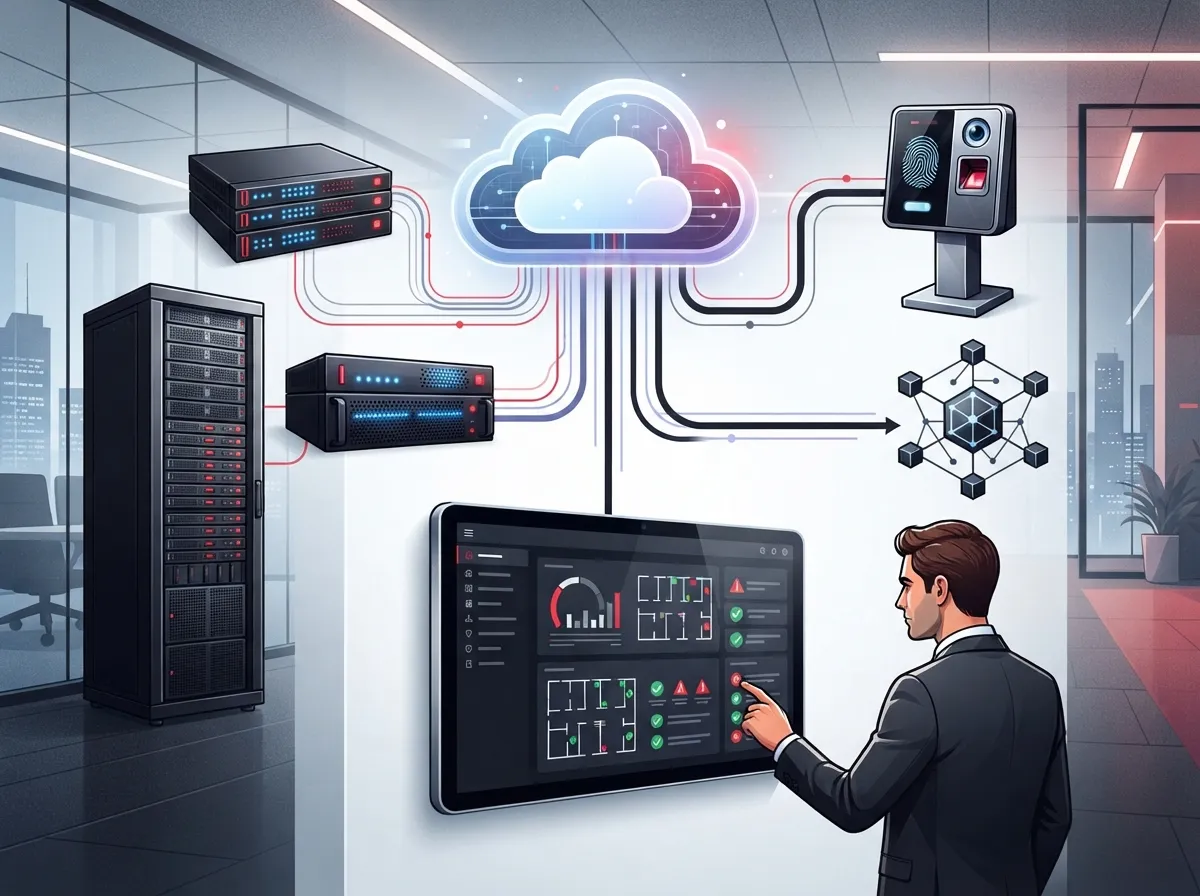
Cloud access control has plenty of fans, and for good reason. But it is not the only way to manage who gets into your building, your network, your VoIP system, or your business applications. Some companies operate legacy PBX systems alongside newer platforms. Others have branch offices with spotty internet. Still others have strict compliance rules about where data lives.
The good news? You have real, proven options. According to NIST Special Publication 1800-35, published in June 2025, there are at least 19 documented ways to build secure access architectures using commercially available technology. That project involved 24 technology vendors working together, which tells you this is not a niche idea. It is a mainstream, well-supported approach to protecting your business.

5 Cloud Access Control Alternatives for Business Telecom Systems
Let’s walk through the top five alternatives, one at a time, so you can see which one feels right for your business.
1. On-Premises Access Control
This is the classic approach. Your identity systems, authentication tools, and enforcement hardware all live inside your own building or private data center. Nothing depends on an outside cloud connection to function day to day.
- Keeps full physical control over your servers and data
- Can support strict local compliance requirements
- Continues running during many internet outages
- Requires upfront hardware investment and in-house expertise
- Needs regular maintenance, patching, and eventual upgrades
This option works well for businesses with dedicated IT staff, a single main location, or industries with tight data-residency rules. If your team already manages structured cabling and network hardware in-house, on-premises access control may feel like a natural extension of what you already do.
2. Hybrid Access Control
Hybrid setups blend on-premises systems with cloud-based services. Think of it as the best of both worlds. Your core identity and policy data might stay local, while remote monitoring, updates, or mobile credentials run through the cloud.
This is often the most practical choice for telecom customers running legacy SIP infrastructure, private WAN connections, and newer cloud communications tools side by side. You get modern conveniences without abandoning systems that still work well for you. Many mid-sized companies choosing between cloud and on-premise access control end up landing somewhere in the middle, and that is perfectly okay.
3. Hosted or Managed Access Control
With this option, a telecom or managed-services provider operates your access control system in a dedicated or shared environment. You are not buying and maintaining the hardware yourself, but you also are not locked into a one-size-fits-all multitenant platform.
- A provider assesses your current setup and business needs
- They recommend a hosted environment that fits your budget and compliance goals
- Installation and configuration happen with minimal disruption to your team
- Ongoing support and monitoring are handled by the provider
- You retain more customization than a typical off-the-shelf cloud product
This alternative reduces the daily burden on your internal team while still giving you a voice in how things are configured. It is a great fit for growing companies that want professional support without a massive internal IT department. Our team can walk you through the details if you reach out for a free consultation.
4. Zero-Trust Network Access
Zero trust flips the old idea of “trust but verify” on its head. Instead, nothing is trusted automatically, no matter where the request comes from. NIST Special Publication 800-207, the foundational zero-trust guidance issued in 2020, explains that access should never be granted just because someone is on the company network or using a company device.
Every request gets checked. Every time. This includes identity, device health, location, and even unusual behavior patterns. NIST’s architecture breaks zero trust into three core parts:
- Policy engines that decide whether access should be granted
- Policy administrators that carry out those decisions
- Policy enforcement points that apply the rules at the access moment
Here is the best part for telecom users: zero-trust components can run on-premises, in the cloud, or both. NIST Special Publication 800-207A, published in 2023, specifically addresses multicloud environments and identity-based policies. This makes zero trust a smart, flexible alternative for businesses protecting VoIP systems, session border controllers, remote access tools, and legacy telecom equipment all at once.
5. Software-Defined Perimeter and Secure Access Service Edge
These approaches give people identity-based access to exactly the resources they need, without exposing your entire network. Think of it like handing someone a key to one specific room instead of the master key to the whole building.
This matters a lot for businesses with remote employees, contractors, multiple branch offices, or a mix of cloud applications and traditional voice systems. If your team is spread across Tampa Bay and beyond, this kind of targeted access can seriously cut down your risk exposure. It pairs nicely with SD-WAN solutions many growing companies already use to connect multiple locations.
Comparing the Five Alternatives
Sometimes a side-by-side view makes everything click. Here is how these five options stack up on the things that matter most.
| Alternative | Best For | Internet Dependency | Maintenance Load |
|---|---|---|---|
| On-Premises | Single site, strict compliance needs | Low | High (in-house) |
| Hybrid | Mixed legacy and modern systems | Moderate | Moderate |
| Hosted/Managed | Growing companies wanting support | Moderate | Low (outsourced) |
| Zero-Trust Network Access | Remote teams, distributed offices | Varies by design | Moderate |
| SDP / SASE | Branch offices, contractors, cloud apps | Moderate to High | Low to Moderate |
Complementary Tools Worth Knowing About
Here is something important to remember: these technologies are not an either-or choice. Most strong telecom security designs combine several tools together, kind of like a good recipe uses more than one ingredient.
- Network access control for managing device entry points
- Virtual private networks for encrypted remote connections
- Firewalls to filter unwanted traffic
- Identity and access management for user permissions
- Privileged access management for sensitive admin accounts
- Multifactor authentication to add a second layer of proof
- Microsegmentation to isolate parts of your network from each other
A well-designed business telecom setup might use three or four of these together, layered around your VoIP and networking infrastructure. If you want to see how this looks in practice, check out our guide on how to choose access control systems for Tampa businesses.
What to Evaluate for Telecom-Specific Security
Business telecom environments have their own quirks. Before picking an alternative, walk through this checklist:
- SIP and VoIP security settings and call encryption
- Administrative access controls for routers and switches
- Session border controller protection
- Device posture checks before granting network access
- Network segmentation between voice, data, and guest traffic
- Emergency call reliability during outages or failover events
- Quality of service settings to protect call clarity
- Logging and integration with your existing directories or ticketing tools
- Support for legacy phone or PBX equipment still in use
Skipping any of these can leave gaps, especially for businesses juggling old and new equipment side by side. If your VoIP setup needs a security refresh, our article on VoIP provider mistakes to avoid is a helpful next read.
How to Choose the Right Fit for Your Business
There is no universal winner here. The right alternative depends on a handful of honest questions:
- How many locations does your business operate?
- Do you have staff who can manage hardware and updates in-house?
- What are your industry’s compliance or data-residency rules?
- How much downtime can you tolerate if the internet goes out?
- Is your workforce mostly on-site, remote, or a mix of both?
- Do you want to own operations or outsource them to a trusted partner?
Small businesses often lean toward hosted or hybrid setups because they want support without giving up flexibility. Larger, multi-site companies frequently move toward zero-trust or SASE models because they need consistent policies across many locations. Franchise operators, in particular, benefit from scalable systems that grow with each new site. Our piece on scalable access control for multi-location businesses digs deeper into this exact challenge.
Real-World Support Makes All the Difference
Choosing between these five alternatives can feel overwhelming, and honestly, that is completely normal. Telecom decisions touch your phones, your internet, your cameras, and now your access control, too. That is a lot to juggle alone.
This is exactly why Ideal Solutions Provider exists. With partnerships across 35+ vetted suppliers, we act as your single point of contact from consultation through installation and ongoing support. We have found that 9 out of 10 businesses we audit are either overpaying, underperforming, or both, so a fresh set of eyes on your setup rarely hurts. You can see examples of our work and client stories on our Facebook page or our YouTube channel.
A Quick Word on Zero Trust and NIST Guidance
We mentioned NIST a few times, and for good reason. Their zero-trust research is some of the most trusted, vendor-neutral guidance available. NIST evaluates factors like identity, role, device health, geolocation, and resource sensitivity when building access decisions. This kind of framework works for businesses of any size, whether you are running one office in Brandon or fifteen locations across the country. You can read more about their ongoing zero-trust research through the NIST Zero Trust Networks program.
Bringing It All Together
Cloud access control is a great tool, but it is not the only tool. On-premises systems, hybrid setups, hosted and managed platforms, zero-trust architectures, and software-defined perimeter approaches all offer real, proven paths forward. The right choice depends on your business size, your compliance needs, your workforce, and how much you want to manage yourself versus hand off to a trusted partner.
We know telecom decisions can feel like a maze, but you do not have to walk through it alone. Our team has spent over two decades helping businesses like yours find the setup that actually fits, not just the one that sounds impressive on paper. If you are ready to talk through your options, reach out to our team today or give us a call for a friendly, no-pressure conversation about what your business really needs.
FAQs
Q: What are the best alternatives to cloud-based access control for business telecom systems?
A: Great question, and one we get a lot! The top alternatives are on-premises systems, hybrid setups, hosted or managed platforms, zero-trust network access, and software-defined perimeter approaches. Most businesses end up mixing a couple of these together for the best results.
Q: Is on-premises access control more secure than cloud access control for VoIP and business networks?
A: It really depends on your setup rather than one being automatically safer. On-premises gives you direct physical control and can keep running during some internet outages, but it also means your team handles all the maintenance and updates. Cloud and hybrid options often include built-in monitoring that can catch threats faster.
Q: Can zero-trust network access replace a VPN for remote employees and telecom administrators?
A: In many cases, yes! Zero trust checks every single access request instead of trusting anyone just because they are on the network, which many businesses find more secure than a traditional VPN. NIST’s guidance actually supports blending zero trust with existing tools rather than ripping everything out overnight.
Q: What access-control architecture works best for a company with branch offices and a hybrid workforce?
A: For multi-location businesses, zero-trust network access or a software-defined perimeter setup tends to work beautifully. These approaches give each employee or contractor access only to what they need, no matter where they are logging in from, which keeps things secure across every site.
Q: How much does on-premises versus managed access control cost for a business telecom deployment?
A: Honestly, it varies quite a bit based on your business size, number of locations, and existing equipment. On-premises usually means a bigger upfront investment in hardware, while managed or hosted options spread costs out over time with predictable monthly fees. The friendly team at Ideal Solutions Provider can run the numbers with you during a free consultation.