Key Takeaways
-
Cloud access control lets you manage physical doors and digital system access from any device via web dashboard or mobile app, eliminating the need for on-site servers and emergency technician visits.
-
Multi-location businesses get centralized management across dozens or hundreds of sites from a single dashboard, with real-time alerts and instant credential updates, dramatically reducing local IT dependency.
-
Cloud access control implements zero trust security by continuously verifying every user and device for both physical and digital access, rather than assuming anyone inside your network is automatically safe.
-
The platform automatically handles updates and security patches while reducing hardware and maintenance costs compared to traditional on-premise systems that require manual updates and technician visits.
-
Cloud access control integrates with broader telecom security packages including SD-WAN, CASB, and identity management tools, creating comprehensive protection that's stronger than standalone solutions.
-
Must-have features include mobile app credentials, real-time alerts for suspicious activity, remote administration, integration with existing security systems, and scalability to support business growth without added complexity.
Ever tried tracking down a lost office key at 9 p.m. on a Friday? Or worse, wondered who still has access to your building after an employee leaves? You’re not alone. Business owners across Tampa Bay and beyond deal with this headache every single day. That’s exactly where cloud access control steps in, and once you understand it, you’ll wonder how you ever managed security without it.
So, what is cloud access control? In simple terms, it’s a way to manage who can get into your building, network, or business systems, all from an app or web browser. No more clunky on-site servers. No more calling a technician every time you need to add a new employee. Cloud access control puts the power in your hands, wherever you are.
In this article, we’ll break down exactly what cloud access control means for growing businesses, how it fits into the bigger picture of telecom and IT security, and why so many companies are making the switch. Grab a coffee, and let’s walk through this together.

1. Cloud Access Control Means Managing Access From Anywhere
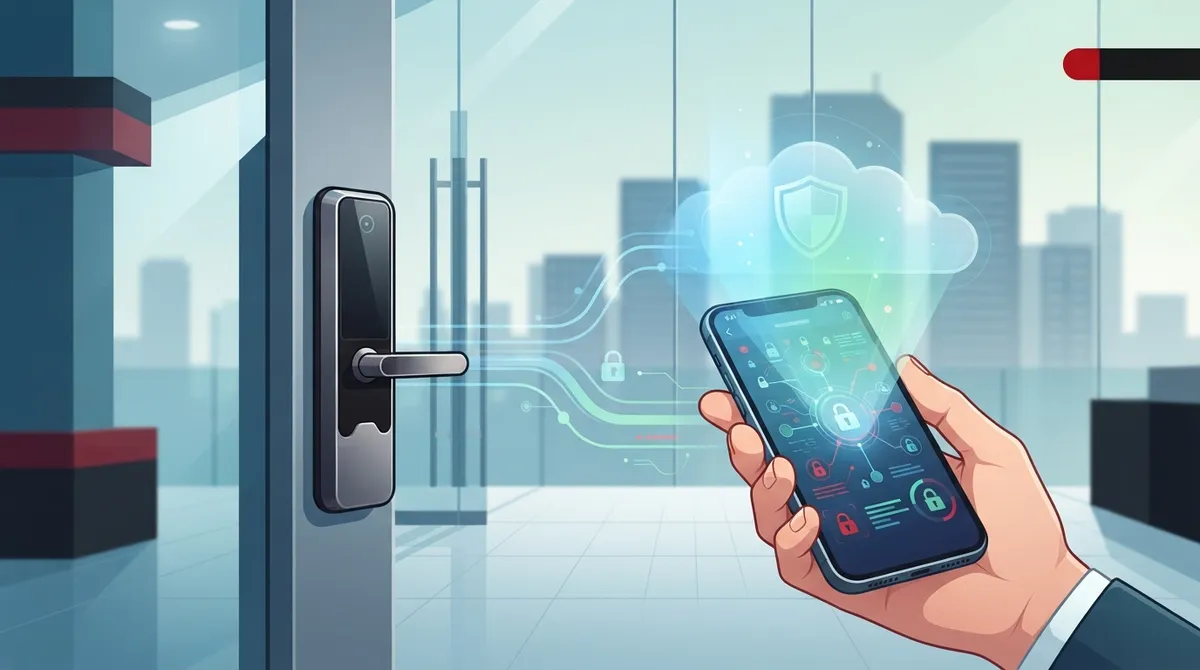
At its core, cloud access control lets you manage who enters your building or systems using an internet connection instead of a physical control panel sitting in a closet. Think of it like managing your Netflix account instead of programming a VCR. Everything lives online, and you can make changes instantly.
For business owners, this means you can lock a door, grant a contractor temporary access, or revoke an ex-employee’s credentials from your phone. You don’t need to be onsite. You don’t need a technician standing by. This kind of flexibility is a game-changer for busy office managers juggling a hundred things at once.
Physical Access vs. Digital Access
Cloud access control actually covers two related ideas, and it helps to understand both:
- Physical access control: managing doors, gates, and building entry points through cloud-based apps and credentials
- Digital access control: managing who can log into your business apps, cloud storage, and network resources
- Both types rely on centralized, cloud-hosted platforms instead of local hardware alone
- Many modern businesses use both together for complete protection
- Telecom providers often bundle these solutions with networking and security packages
If you’re curious how this pairs with other security tools, check out our guide on what security cameras really do for your business. Cameras and access control work hand-in-hand to keep your business safe.
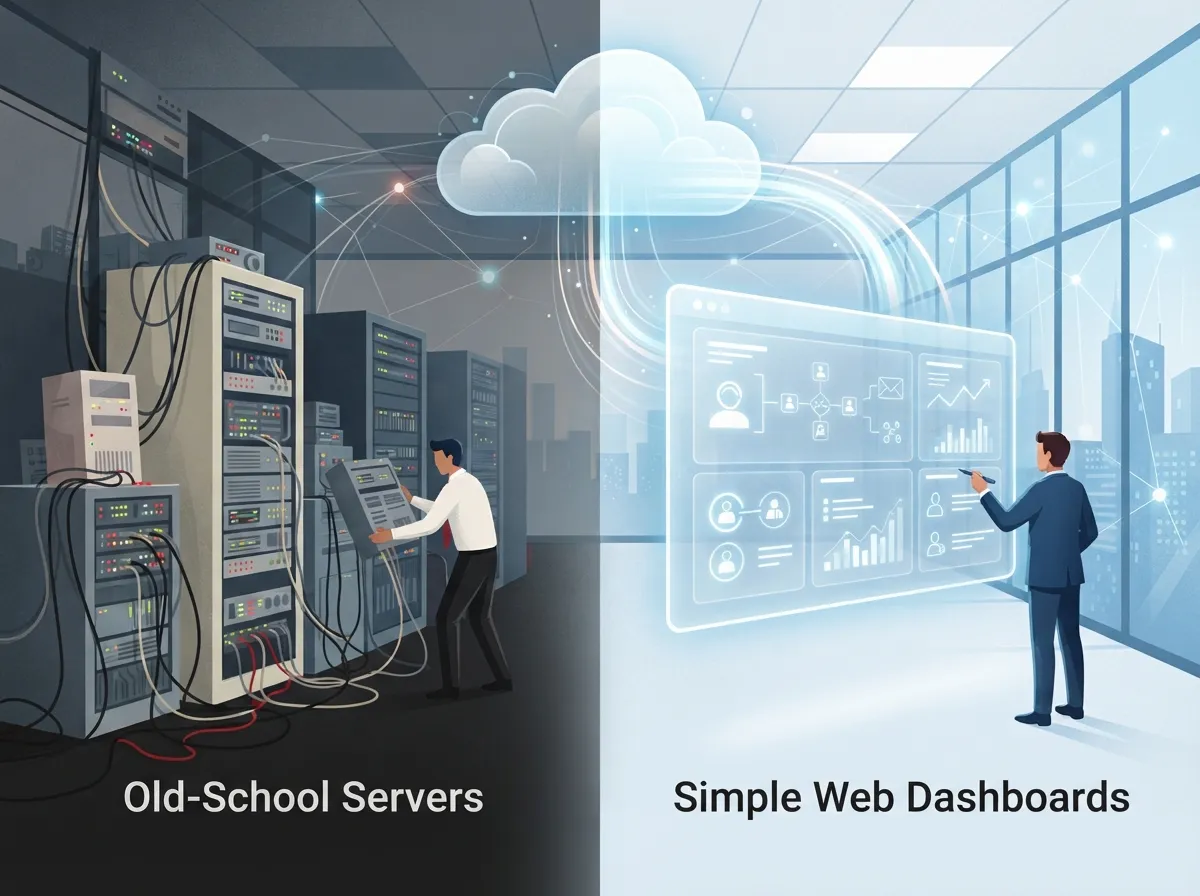
2. It Replaces Old-School Servers With Simple Web Dashboards
Remember the days of a bulky server sitting in a back office, controlling every door badge and keycard? Cloud access control gets rid of that. Everything runs through a secure web interface or mobile app instead.
This matters a lot if you run a franchise or have multiple office locations. Instead of managing separate systems at each site, you can control every door, at every location, from one single dashboard. That’s a huge relief for franchise operators who don’t have time to babysit five different security setups.
Why This Matters for Growing Companies
- You save money by skipping expensive on-site hardware and maintenance contracts
- Your IT team spends less time troubleshooting local servers
- Updates and security patches happen automatically in the cloud
- You can scale up easily as you add new locations or employees
- Remote administration means fewer emergency site visits
Companies looking to expand their network setup often pair access control upgrades with better scalable access control systems for multi-location businesses. It’s a smart way to keep everything consistent as you grow.
3. Cloud Access Control Supports Zero Trust Security
You’ve probably heard the term “zero trust” floating around lately. It’s a security approach that says: trust no one automatically, verify everyone every time. Cloud access control is a big piece of making zero trust actually work.
Instead of assuming that anyone inside your office network is automatically safe, cloud access control checks credentials continuously. This applies to both physical doors and digital systems like your business apps and cloud storage.
How Zero Trust and SASE Fit Together
In telecom security circles, cloud access control often shows up as part of something called SASE, which stands for Secure Access Service Edge. This combines several tools into one system:
- Secure SD-WAN for reliable, protected network connections
- CASB (Cloud Access Security Broker) for monitoring cloud app usage
- ZTNA (Zero Trust Network Access) for verifying every user and device
- Identity and Access Management (IAM) for controlling logins and permissions
This combo creates consistent security policies for your employees, remote workers, and even personal devices connecting to your network. If you’re rethinking your entire network setup, our article on how to choose SD-WAN solutions for Tampa Bay businesses is a great next read.
4. It’s Different From Basic IAM, But Closely Related
A lot of people confuse cloud access control with identity and access management (IAM). They’re related, but not exactly the same thing. Let’s clear that up.
| Feature | Cloud Access Control | IAM |
|---|---|---|
| Primary Focus | Physical doors and network resource access | User identities and login permissions |
| Common Use | Office buildings, data centers, multi-site facilities | Business apps, cloud platforms, SaaS tools |
| Management Style | Web dashboard or mobile app | Centralized identity directory |
| Typical Users | Office managers, facility teams | IT managers, security admins |
| Works Best With | Cloud video security, structured cabling | ZTNA, CASB, SSO tools |
Think of IAM as the gatekeeper for your digital world, while cloud access control often handles both digital and physical entry points. Many businesses use both together for a complete security picture.
5. Multi-Site Businesses Get the Biggest Benefits
If you’re running a franchise or a company with several offices, cloud access control might be the single most useful upgrade you make this year. Instead of juggling separate systems at each site, everything lives under one roof, digitally speaking.
Picture this: you own three coffee shops across Tampa Bay. With cloud access control, you can unlock the back door for your morning baker before you’ve even had your first cup of coffee, all from your phone. No driving across town. No spare key hidden under a flowerpot.
Key Benefits for Multi-Location Businesses
- Centralized management from a single web interface across dozens or even hundreds of sites
- Real-time alerts when a door is propped open or an unauthorized attempt occurs
- Instant credential updates when staff change locations or leave the company
- Reduced reliance on local IT support at every single site
- Easier compliance reporting for businesses in regulated industries
Franchise operators looking to standardize security across locations should also look into reliable network solutions for multi-location Tampa businesses. A strong network backbone makes cloud access control run even smoother.
6. Telecom Providers Bundle It With Broader Cloud Security
Here’s something a lot of business owners don’t realize: cloud access control rarely stands alone. It usually gets bundled with other cloud security tools as part of a bigger telecom and IT package.
For telecom and cloud service providers, protecting customer data and privileged accounts is priority number one. Cloud access control adds an extra layer of defense alongside encryption, threat detection, and continuous monitoring.
What a Complete Package Often Includes
- Cloud-based video security cameras with remote viewing
- VoIP phone systems with encrypted call routing
- Structured cabling to support reliable, high-speed connections
- Managed network services for ongoing monitoring and support
- Cloud access control for both buildings and digital resources
This is exactly the kind of comprehensive approach that Ideal Solutions Provider brings to Tampa-area businesses and companies nationwide. Instead of juggling five different vendors, you get one team handling it all, from consultation to installation to ongoing support.
7. Choosing the Right Features Makes All the Difference
Not every cloud access control platform is created equal. When you’re shopping around, it helps to know what actually matters versus what’s just marketing fluff.
Must-Have Features for Business Telecom Buyers
- Mobile app credentials so employees can use their smartphones instead of physical badges
- Real-time alerts for suspicious activity or forced entry attempts
- Remote administration so you can manage access from anywhere
- Integration with existing security systems, including cameras and networking
- Scalability to support new locations as your business grows
- Detailed audit logs for compliance and peace of mind
- Reliable customer support from a provider who actually answers the phone
According to cloud security research from ACRE Security, top-performing cloud-based access control platforms are built to scale from a single location to hundreds of sites without adding complexity. That scalability is exactly what growing businesses need.
It’s also worth reading up on general cloud security fundamentals through a resource like Internet Service Provider standards, since your access control system is only as strong as the network connection behind it. And if you’re building or renovating an office, don’t skip the basics of structured cabling, since a solid physical network is the foundation everything else runs on.
Quick Comparison: Cloud Access Control vs. Traditional Systems
| Factor | Cloud Access Control | Traditional On-Premise Systems |
|---|---|---|
| Setup Cost | Lower upfront investment | Higher hardware and installation costs |
| Maintenance | Automatic cloud updates | Manual updates and technician visits |
| Multi-Site Management | Single dashboard for all locations | Separate systems per location |
| Remote Access | Yes, from any device | Limited or none |
| Scalability | Easy to add new sites | Requires additional hardware |
Getting Started With Cloud Access Control
Making the switch doesn’t have to feel overwhelming. Here’s a simple path forward that works well for most businesses:
- Audit your current access control setup to see what’s working and what isn’t
- Identify which locations or systems need the most urgent upgrades
- Compare providers based on features, pricing, and support quality
- Plan installation around your business hours to minimize disruption
- Train your team on the new mobile app or dashboard
- Set up alerts and reporting so you stay informed automatically
If this feels like a lot to figure out on your own, that’s completely normal. Many business owners find it helpful to work with a partner who already knows the ropes. Our friends who wrote how to set up cloud access control systems that work break down the process even further, step by step.
Why Businesses Trust a Single Telecom Partner
Juggling separate vendors for internet, phones, security cameras, and access control is exhausting. It’s like hiring five different contractors to build one house. Things get lost in translation, and nobody takes full responsibility when something breaks.
That’s why so many Tampa Bay businesses, mid-sized enterprises, and franchise operators lean on a single point of contact instead. With over 24 years of experience and partnerships with 35 vetted suppliers, a comprehensive telecom partner can handle everything from consultation to installation to ongoing support. You get one phone number to call, one team to trust, and one less thing to worry about.
Curious how this fits with your existing phone system? Take a look at which cloud-based phone system is best for Tampa businesses to see how VoIP and access control often work together on the same network.
Bringing It All Together
So, what is cloud access control, really? It’s the modern, flexible way to manage who gets into your building and your business systems, all without the headaches of old-school hardware. It supports zero trust security, scales easily across multiple locations, and gives you peace of mind whether you’re at your desk or halfway across the country.
Whether you’re a small business owner tired of juggling spare keys, an IT manager looking to simplify vendor relationships, or a franchise operator managing several locations, cloud access control offers real, practical benefits. It’s not just a trend. It’s quickly becoming the standard for smart, secure businesses.
Ready to see how cloud access control could work for your business? Our team would love to walk you through it, answer your questions, and build a plan that fits your budget and your goals. Get in touch with our team today, or simply give us a call to start the conversation. We’re here, we’re friendly, and we genuinely want to help you feel secure and supported.
You can also follow along with helpful tips and behind-the-scenes updates on our Facebook page, check out real installations on YouTube, or see our latest projects on Instagram. We’re building a community here, and we’d love for you to be part of it.
FAQs
Q: What is cloud access control in simple terms?
A: Cloud access control is a way to manage who can enter your building or access your business systems, all through a web dashboard or app. Instead of relying on old servers, everything is managed online, so you can make changes anytime, from anywhere. It’s like swapping a clunky filing cabinet for a smart, searchable app.
Q: How does cloud access control work for telecom businesses?
A: For telecom businesses, cloud access control often works alongside broader security tools like SD-WAN, CASB, and zero trust systems. It helps protect customer data, privileged accounts, and cloud-hosted infrastructure while keeping physical locations secure too. Think of it as one more layer of protection in a well-rounded security stack.
Q: Is cloud access control the same as cloud-based physical access control?
A: Not exactly, but they’re closely related! Cloud access control can refer to securing digital systems, physical building access, or both, depending on the context. Many businesses use it as an umbrella term for managing entry to both doors and networks through one cloud platform.
Q: What are the benefits of cloud access control for multi-site businesses?
A: Multi-site businesses love cloud access control because it lets them manage every location from a single dashboard. You get real-time alerts, instant credential updates, and way less reliance on local IT support at each site. It genuinely makes life easier for franchise owners and growing companies.
Q: How secure is cloud-based access control for enterprise environments?
A: Cloud-based access control is designed with strong security in mind, often including encryption, continuous monitoring, and zero trust principles. It’s a standard part of modern cloud security architectures used by enterprises today. As always, choosing a trusted provider with a solid track record makes all the difference.