

Key Takeaways
-
Cloud phone systems cost $20-$150 per user monthly with subscription pricing, eliminating large upfront hardware investments compared to on-premises PBX systems that require significant capital expenditure.
-
Cloud systems require only about 100 kbps bandwidth per concurrent call, meaning most modern business internet plans support cloud calling without upgrades; prioritize Quality of Service (QoS) settings on your router.
-
Key features like auto attendant, voicemail-to-email, call recording, CRM integrations, and video meetings are often included at no extra charge, transforming basic calling into full business communications platforms.
-
Cloud phone systems enable remote work flexibility with mobile apps and browser access, allowing teams to take calls from anywhere—office, home, or the road—without extra setup required.
-
Reputable providers offer 99.999% uptime with end-to-end encryption, secure data centers, multi-factor authentication, and automatic updates, making cloud systems as secure as on-premises systems for regulated industries.
-
Common switching mistakes include skipping internet audits, choosing based on price alone, forgetting to port existing numbers, and not training staff—working with experienced telecom partners prevents these costly errors.
If you’ve been wondering whether it’s time to upgrade your business phone setup, you’re not alone. Thousands of business owners across the country are asking the same question: What exactly is a cloud-based phone system, and is it right for me? The good news is that the answer is simpler than you might think — and the benefits are hard to ignore. Whether you’re running a small Tampa storefront or managing multiple office locations nationwide, this guide will walk you through everything you need to know in plain, friendly language.
By the end of this article, you’ll understand how cloud phone systems work, what features they include, how much they cost, and whether switching makes sense for your business. Let’s dive in!

What Is a Cloud-Based Phone System?
A cloud-based phone system is a business phone service that uses the internet to make and receive calls — instead of old-fashioned copper phone lines or bulky on-site hardware. Think of it as your entire phone system living “in the cloud,” managed by a provider in a secure data center far away from your office.
These systems use a technology called Voice over Internet Protocol (VoIP). Basically, your voice gets converted into digital data, sent over the internet, and then converted back into sound on the other end. It’s the same concept behind video calls you already use every day — just optimized for business phone calls.
You may also hear these systems called cloud PBX or hosted PBX systems. That’s because the call-control hardware (what used to be a big PBX box in your supply closet) is now hosted off-site by your provider. To explore how this compares to traditional setups, check out 6 Key Differences Between VoIP and Traditional Phone Systems.
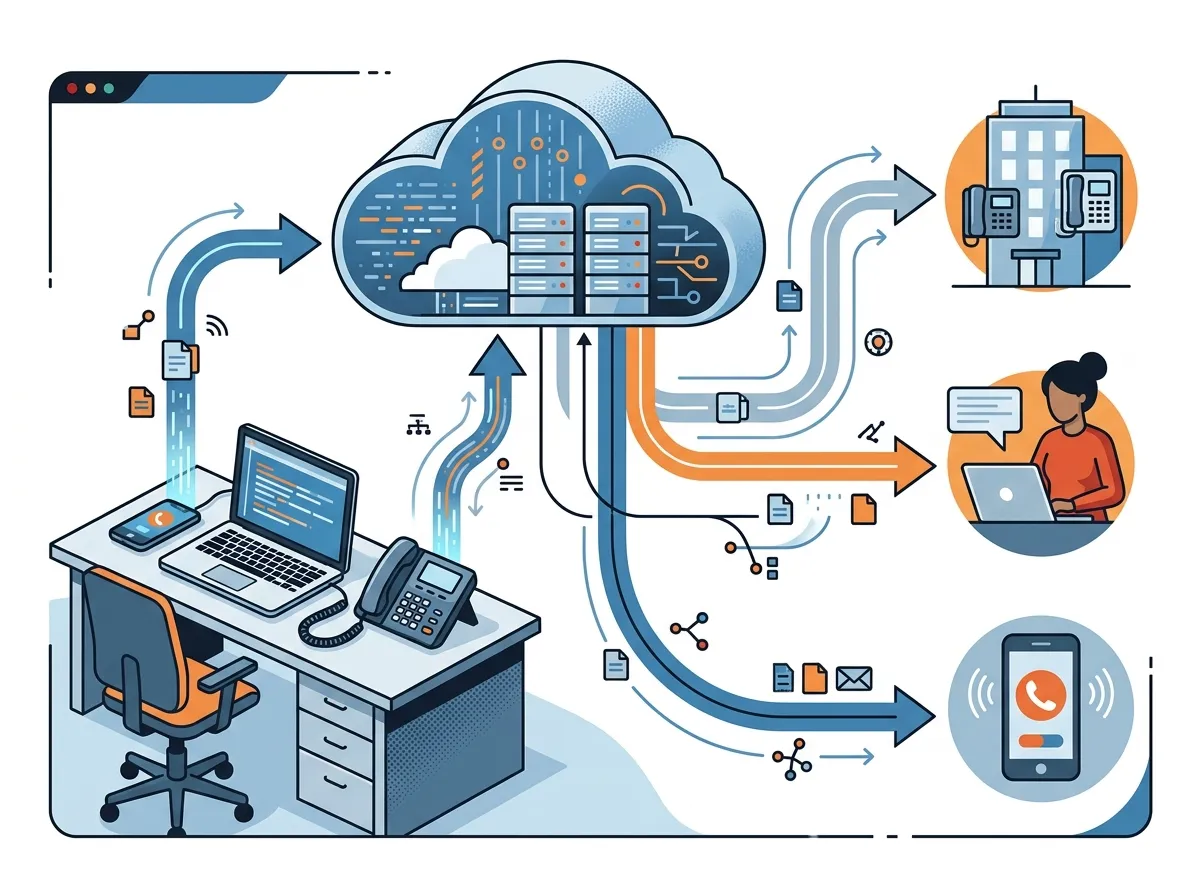
How Does It Work?
Cloud phone systems are surprisingly easy to use once they’re set up. Here’s a simple breakdown of how the process works:
- Your voice is captured by an internet-connected device — a desk phone, laptop app, mobile phone, or even a browser-based softphone.
- The audio is converted into small digital data packets using VoIP technology.
- The data travels over your internet connection to the cloud provider’s servers.
- The provider routes the call to the right destination — another phone, a mobile device, or a traditional landline.
- The recipient hears your voice in real time, just like any normal phone call.
Because everything runs through the internet, your team can take calls from anywhere — the office, home, or on the road. That flexibility is one of the biggest reasons businesses are making the switch. You can learn more about the transition process in this guide: 5 Steps to Switch Your Business Phone to the Cloud in Tampa.
Cloud-Based vs. On-Premises Phone Systems
Still on the fence? Let’s compare the two options side by side so you can see the difference clearly.
| Feature | Cloud-Based Phone System | On-Premises PBX |
|---|---|---|
| Hardware Required | Minimal (IP phones optional) | Significant upfront hardware |
| Maintenance | Provider-managed | In-house IT team required |
| Scalability | Add users in minutes | Requires hardware upgrades |
| Upfront Cost | Low (subscription-based) | High capital investment |
| Remote Access | Works from anywhere | Limited without extra setup |
| Updates | Automatic by provider | Manual updates needed |
As you can see, cloud systems shift costs from large, upfront equipment purchases to manageable, recurring operating expenses. That’s a huge win for small businesses and growing companies alike. For a deeper look, read VoIP vs. Traditional Phone: Which Wins for Tampa Businesses?.
Key Features of a Business Cloud Phone System
One of the most exciting things about cloud phone systems is how many features you get — often at no extra charge. These aren’t just basic calling tools. They’re full-featured business communications platforms.
Here are the most valuable features you can expect:
- Auto Attendant: A virtual receptionist that greets callers and routes them to the right department.
- Voicemail to Email: Get voicemail messages delivered straight to your inbox as audio files or transcriptions.
- Call Recording: Record calls for training, compliance, or quality assurance purposes.
- SMS and Business Texting: Send and receive text messages from your business number.
- Mobile App: Use your business phone system from any smartphone, anywhere in the world.
- Video Meetings: Many platforms bundle in video conferencing for seamless team collaboration.
- CRM Integrations: Connect with tools like Salesforce, HubSpot, Zendesk, and Microsoft apps.
- Call Analytics: Track call volume, wait times, and agent performance from a simple dashboard.
Many providers also bundle these features into broader UCaaS (Unified Communications as a Service) platforms, combining voice, messaging, and video in one place. To see a full breakdown, check out 15 Cloud Phone System Features That Transform Your Business.
How Much Does a Cloud Phone System Cost?
Pricing varies depending on the provider and the features you need. But here’s a general idea of what businesses pay in 2026:
| Plan Tier | Estimated Cost Per User/Month | Best For |
|---|---|---|
| Basic | $20 – $35 | Small teams, startups |
| Standard | $35 – $75 | Growing mid-sized businesses |
| Advanced / Enterprise | $75 – $150+ | Large teams, complex needs |
Industry estimates suggest most cloud phone systems range from about $20 to $150 per user per month, depending on the features included. The subscription model means you avoid big upfront hardware costs and only pay for what you need. For a detailed cost breakdown specific to Tampa businesses, visit How Much Does a VoIP Phone System Cost for a Business in Tampa?.
What Internet Speed Do You Need?
A common concern for business owners is whether their internet connection can handle cloud calling. The short answer is: probably yes — but let’s look at the numbers.
A practical rule of thumb is about 100 kbps per concurrent call. So if your office makes 10 calls at the same time, you’d need roughly 1 Mbps of dedicated bandwidth for voice. Most modern business internet plans far exceed this. However, there are a few things to keep in mind:
- Make sure your router supports Quality of Service (QoS) to prioritize voice traffic.
- Avoid shared consumer-grade internet for heavy business calling environments.
- Consider a dedicated fiber connection for the best call quality.
- Work with your telecom partner to test your connection before going live.
Not sure what internet speed your business needs? This article can help: What Internet Speed Do I Need for VoIP in Tampa?. Also, check out these 13 High-Speed Internet for Business Tips That Save Money to make sure your internet setup is optimized.
Is a Cloud Phone System Secure?
Security is a top priority for any business, and it’s a fair question to ask. The good news is that reputable cloud phone providers invest heavily in security. Here’s what you can typically expect:
- End-to-end encryption on voice and data transmissions to prevent eavesdropping.
- Secure data centers with redundant backups and physical security measures.
- Multi-factor authentication to protect admin accounts from unauthorized access.
- Regular software updates and security patches applied automatically by the provider.
- Compliance support for industries like healthcare and finance that have strict data regulations.
Top providers advertise strong reliability guarantees, too. For example, some cloud phone platforms advertise uptime reliability as high as 99.999% — which means virtually no downtime for your business communications.
Who Benefits Most from a Cloud Phone System?
Honestly, most businesses benefit from making the switch. But these groups tend to see the biggest wins:
| Business Type | Key Benefit |
|---|---|
| Small Business Owners | Affordable, no big hardware investment needed |
| Mid-Sized Companies | Scalable as teams grow, easy to add users |
| IT Managers | Less maintenance, provider handles updates |
| Office Managers | Simple setup, reliable performance, easy support |
| Franchise Operators | Consistent system across all locations nationwide |
Franchise operators and multi-location businesses especially love how easy it is to maintain one unified phone system across every site. If that sounds like you, explore Which Cloud-Based Phone System Is Best for Tampa Businesses? to find the right fit. You can also follow us on Facebook for the latest tips and telecom updates.
Common Mistakes to Avoid When Switching
Switching to a cloud-based phone system is exciting, but a few missteps can cause unnecessary headaches. Here’s what to watch out for:
- Skipping the internet audit: Always check your bandwidth and QoS settings before going live.
- Choosing based on price alone: The cheapest plan may lack features your business actually needs.
- Forgetting to port your numbers: Make sure your existing business phone numbers transfer over smoothly. This guide helps: How to Keep Your Phone Number When Switching to VoIP in Tampa.
- Not training your team: A great system is only as good as the people using it.
- Going it alone: Working with an experienced telecom partner saves time and prevents costly errors.
For a full list of pitfalls to dodge, read 15 Cloud Phone System Mistakes Tampa Small Businesses Make. You can also watch helpful telecom videos on our YouTube channel.
How Ideal Solutions Provider Can Help
Not sure where to start? That’s exactly where Ideal Solutions Provider comes in. As a Tampa-based telecom and IT partner with over 24 years of experience, they work with 35+ vetted suppliers — including leading cloud phone platforms — to find the right fit for your business. They act as your single point of contact, handling everything from consultation and setup to ongoing support.
In fact, 9 out of 10 businesses they audit are either overpaying or underperforming on their current telecom setup. A free consultation could uncover savings and improvements you didn’t even know were possible. Learn more about what makes a great partner in this article: How to Work With a Telecom Expert Who Gets Results. You can also follow along on Instagram for business telecom tips and updates.
If you’re ready to explore your options, check out How to Choose Cloud Based Phone System Providers in Tampa FL as your next step.
Ready to Make the Switch?
A cloud-based phone system is one of the smartest investments you can make for your business communications in 2026. It saves money, adds powerful features, scales with your team, and frees your IT staff from managing old hardware. Whether you’re a small business owner, an office manager, or an IT professional, there’s a cloud phone solution out there that’s a perfect fit.
The best part? You don’t have to figure it all out on your own. Reach out to our team today for a free consultation and let’s find the perfect cloud phone system for your business — together!
FAQs
Q: What is a cloud-based phone system for business?
A: A cloud-based phone system is a business phone service that routes calls over the internet using VoIP technology instead of traditional copper phone lines or on-site PBX hardware. It’s hosted off-site by a provider, so you get all the features of a full phone system without the big upfront equipment costs. It’s a smart, flexible solution that works great for businesses of all sizes!
Q: How much does a cloud phone system cost per user?
A: Most cloud phone systems range from about $20 to $150 per user per month in 2026, depending on the features and plan tier you choose. Basic plans are great for small teams, while advanced enterprise plans include more powerful features like CRM integrations and call analytics. The good news is that pricing is subscription-based, so there’s no huge upfront hardware investment to worry about.
Q: What is the difference between cloud PBX, hosted PBX, and UCaaS?
A: Cloud PBX and hosted PBX are basically the same thing — both refer to a phone system where the call-control hardware is managed off-site by a provider instead of sitting in your office. UCaaS (Unified Communications as a Service) is a broader platform that bundles cloud phone calling together with messaging, video meetings, and team collaboration tools. Think of UCaaS as the all-in-one upgrade to a basic cloud phone system!
Q: What internet speed do I need to run a cloud phone system?
A: A practical rule of thumb is about 100 kbps of bandwidth per concurrent call, so most modern business internet plans handle cloud calling just fine. You’ll also want to make sure your router supports Quality of Service (QoS) settings to prioritize voice traffic over other internet activity. If you’re unsure, a quick network audit from a trusted telecom partner can confirm your setup is ready to go.
Q: Is a cloud-based phone system secure for business use?
A: Absolutely — reputable cloud phone providers invest heavily in security, including end-to-end encryption, secure data centers, multi-factor authentication, and automatic software updates. Many top platforms also advertise uptime reliability as high as 99.999%, which means your calls stay connected even during high-demand periods. Just make sure you choose a vetted provider with a strong security track record!