
Key Takeaways
-
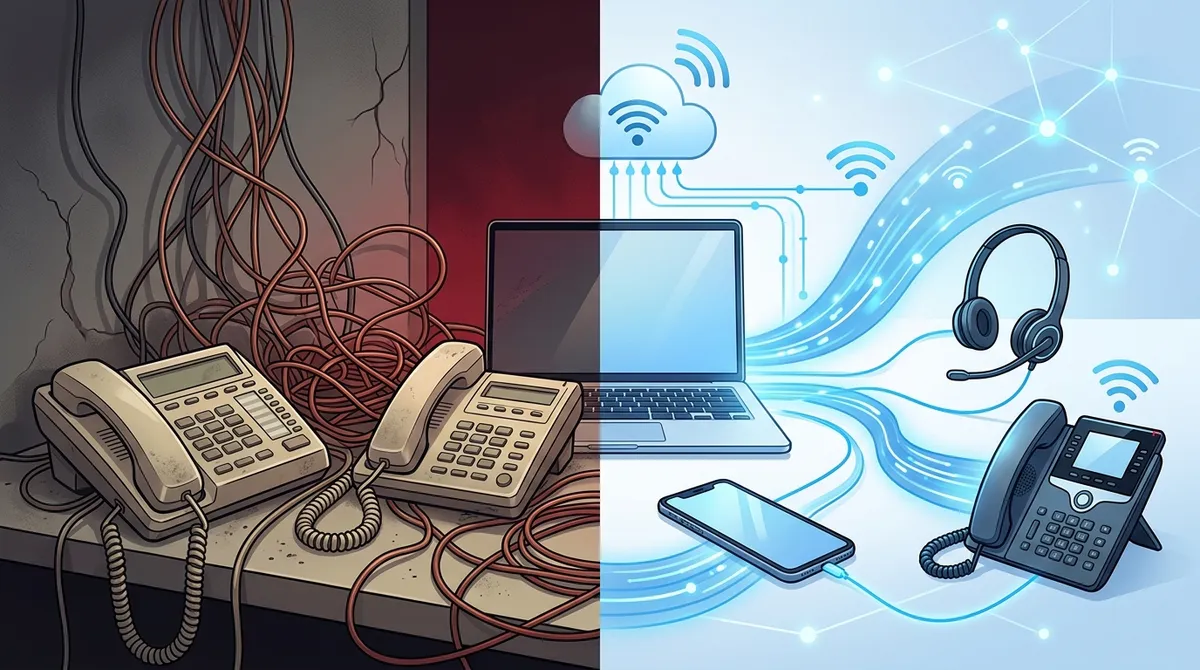
VoIP systems cost 40-60% less than traditional phones monthly, with per-user fees of $15-35 versus $35+ per line, plus minimal hardware investment and included long-distance calling.
-
VoIP offers advanced built-in features like call recording, voicemail-to-email, CRM integration, and mobile apps, while traditional systems charge extra for basic add-ons and lack modern functionality.
-
VoIP scales instantly by adding user accounts in minutes versus traditional systems requiring weeks of carrier installation, new wiring, and thousands in equipment costs for growth.
-
VoIP enables work-from-anywhere flexibility with mobile access and cloud-based management, whereas traditional systems restrict users to desk phones in fixed office locations.
-
VoIP reliability depends on internet quality but modern connections deliver 99.9% uptime comparable to landlines, while setup takes 1-5 days versus 2-4 weeks for traditional systems.
-
Traditional systems remain viable only for areas with poor internet reliability or businesses with minimal phone needs, as most Tampa businesses benefit from VoIP’s cost savings and features.
Choosing the right phone system for your business can feel overwhelming. Should you stick with traditional landlines or make the switch to VoIP? Understanding the difference between VoIP and a traditional phone system is the first step toward making a smart decision that saves you money and improves how your team communicates.
Traditional phone systems have been around for decades, using copper wires and analog signals to connect calls. VoIP (Voice over Internet Protocol) is the modern alternative that sends calls over your internet connection. Both get the job done, but they work in completely different ways and offer very different benefits for your business.
In this guide, we’ll walk you through the six biggest differences between these two technologies. You’ll learn how they work, what they cost, and which features matter most for your Tampa business. By the end, you’ll know exactly which option fits your needs.
1. How Each Technology Actually Works
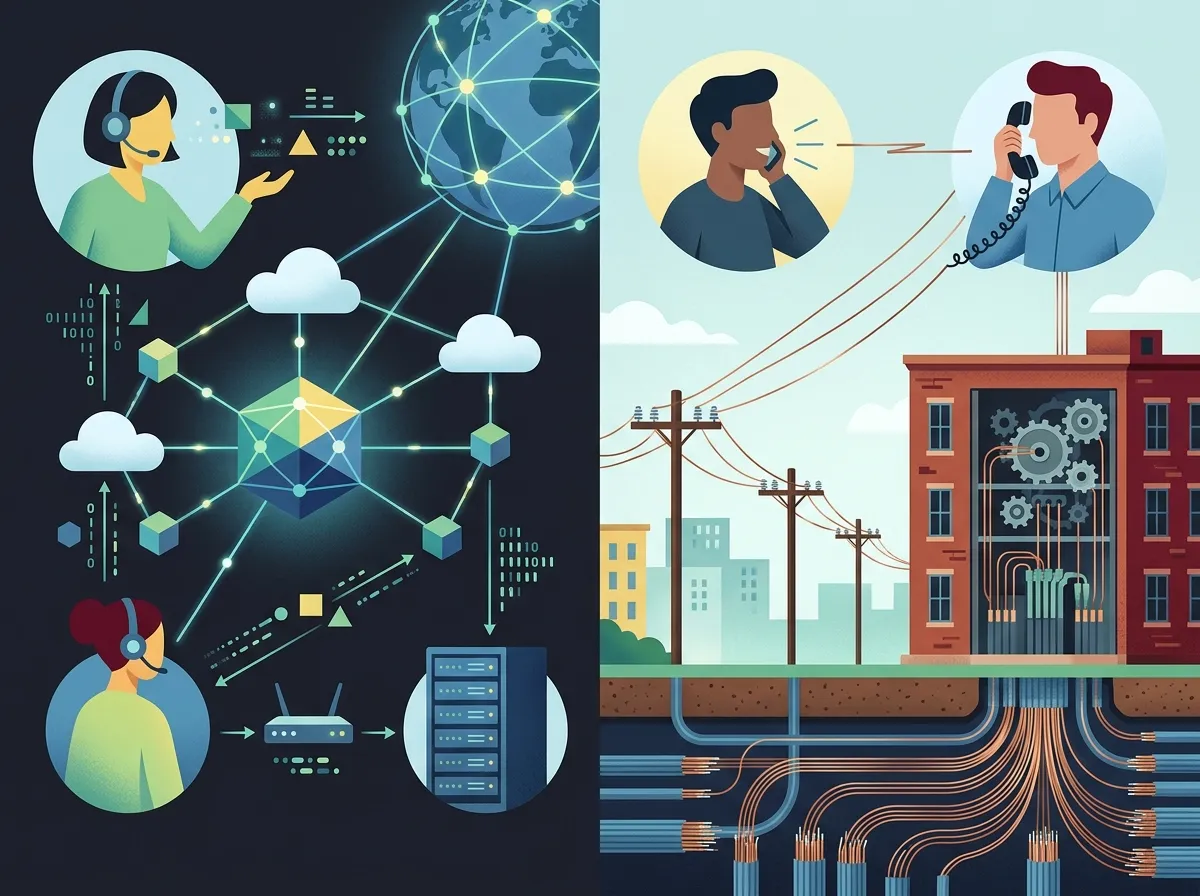
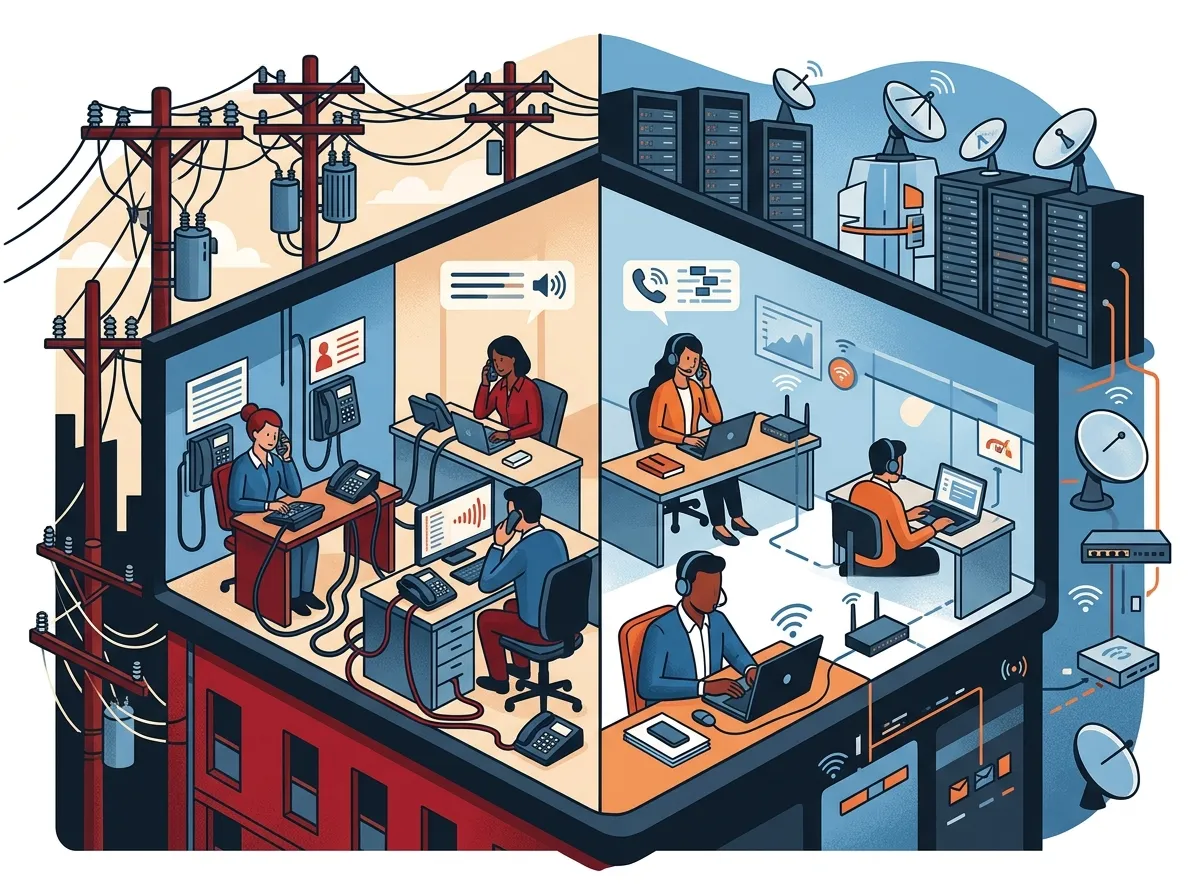
The biggest difference between VoIP and a traditional phone system lies in how they transmit your voice. Traditional phone systems use the Public Switched Telephone Network (PSTN), which relies on copper telephone lines to carry analog voice signals. When you speak into a traditional desk phone, your voice travels as electrical signals through physical wires to reach the person on the other end.
VoIP works completely differently. It converts your voice into digital data packets and sends them over the internet. Think of it like sending an email, but instead of text, you’re sending your voice. The person on the other end receives these data packets, which their device instantly converts back into sound. This happens so fast that conversations feel natural and real-time.
Here’s what makes this technical difference matter for your business:
- Traditional systems require physical phone lines installed by your carrier
- VoIP works over your existing internet connection
- Traditional phones need to stay in one location
- VoIP phones can work from anywhere with internet access
- Traditional systems use dedicated hardware for each line
- VoIP can run on computers, tablets, and smartphones
Understanding these fundamental differences helps explain why VoIP systems offer more flexibility for modern businesses. If you’re curious about which system works best for Tampa companies, check out our guide on choosing the best cloud-based phone system for Tampa businesses.
| Feature | Traditional Phone System | VoIP System |
|---|---|---|
| Signal Type | Analog voice signals | Digital data packets |
| Infrastructure | Copper telephone lines (PSTN) | Internet connection |
| Device Options | Desk phones only | Desk phones, computers, tablets, smartphones |
| Location Flexibility | Fixed to physical location | Work from anywhere |
| Setup Requirements | Carrier installation, on-site wiring | Cloud-based, minimal hardware |
2. Cost Differences That Impact Your Bottom Line
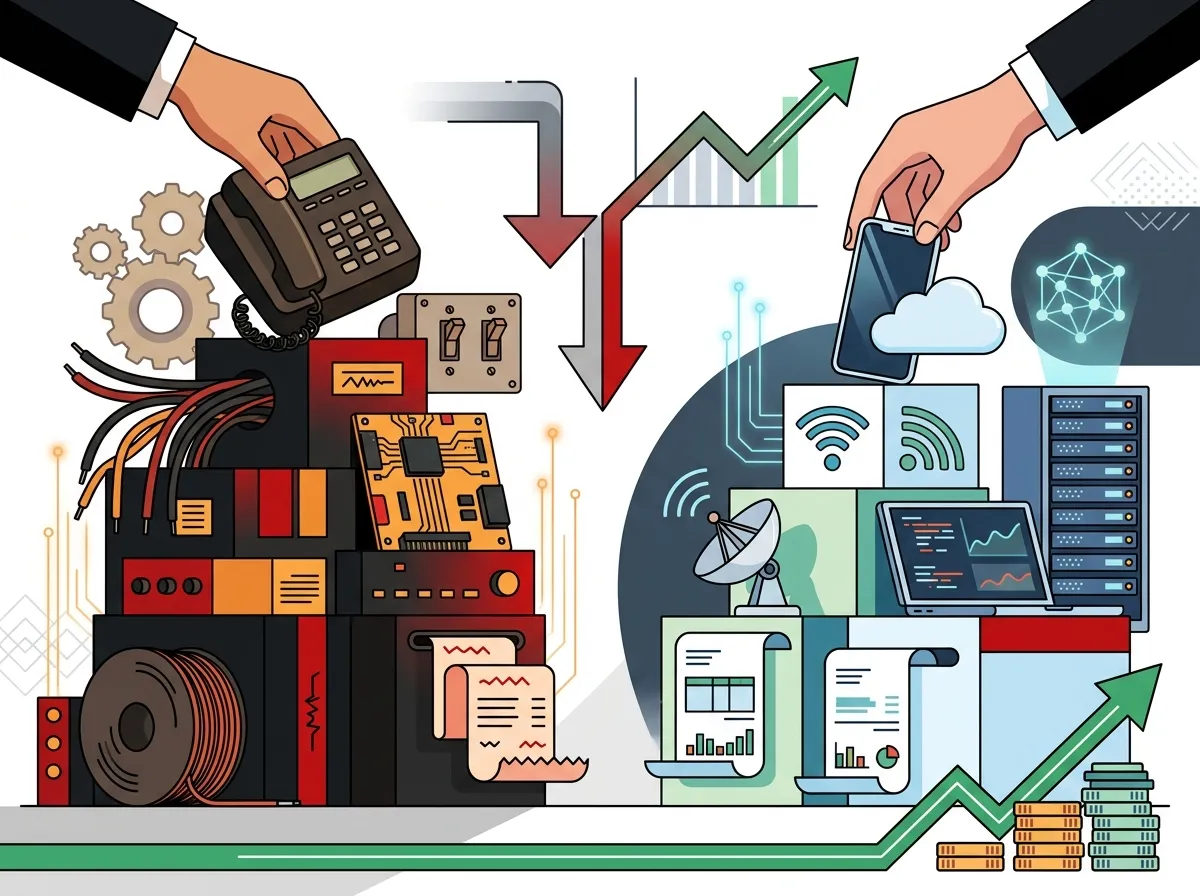
When comparing VoIP and traditional phone systems, the cost difference can be significant for businesses. Traditional business phone lines typically cost around $35 per line each month, while VoIP services range from $15 to $35 per user. That might not sound like much, but when you have a team of 10 people, you could save $200 or more every month.
The savings don’t stop at monthly fees. Traditional phone systems require expensive hardware, on-site installation, and maintenance. You’ll need physical phones, wiring throughout your office, and often a PBX (Private Branch Exchange) system to manage multiple lines. These upfront costs can run into thousands of dollars before you even make your first call.
VoIP systems flip this model completely. Most providers offer cloud-based solutions that need minimal equipment. Many businesses report saving 40% to 60% on their monthly phone bills after switching from traditional service to VoIP. Here’s where those savings come from:
- Lower monthly per-user costs compared to traditional lines
- Minimal hardware investment since VoIP works on existing devices
- Free or drastically cheaper long-distance and international calling
- No need for expensive on-site PBX equipment
- Reduced maintenance costs with cloud-based management
- Easy scaling without installing new physical lines
Long-distance calling makes a huge difference too. Traditional systems charge per minute for calls outside your local area, and international calls can get expensive fast. VoIP providers often include unlimited long-distance calling in the United States, and international rates are typically much lower than traditional carriers charge.
For Tampa businesses with multiple locations or remote teams, these cost differences add up quickly. Learn more about VoIP pricing for Tampa businesses to see exactly what you might pay.
3. Features and Functionality Comparison
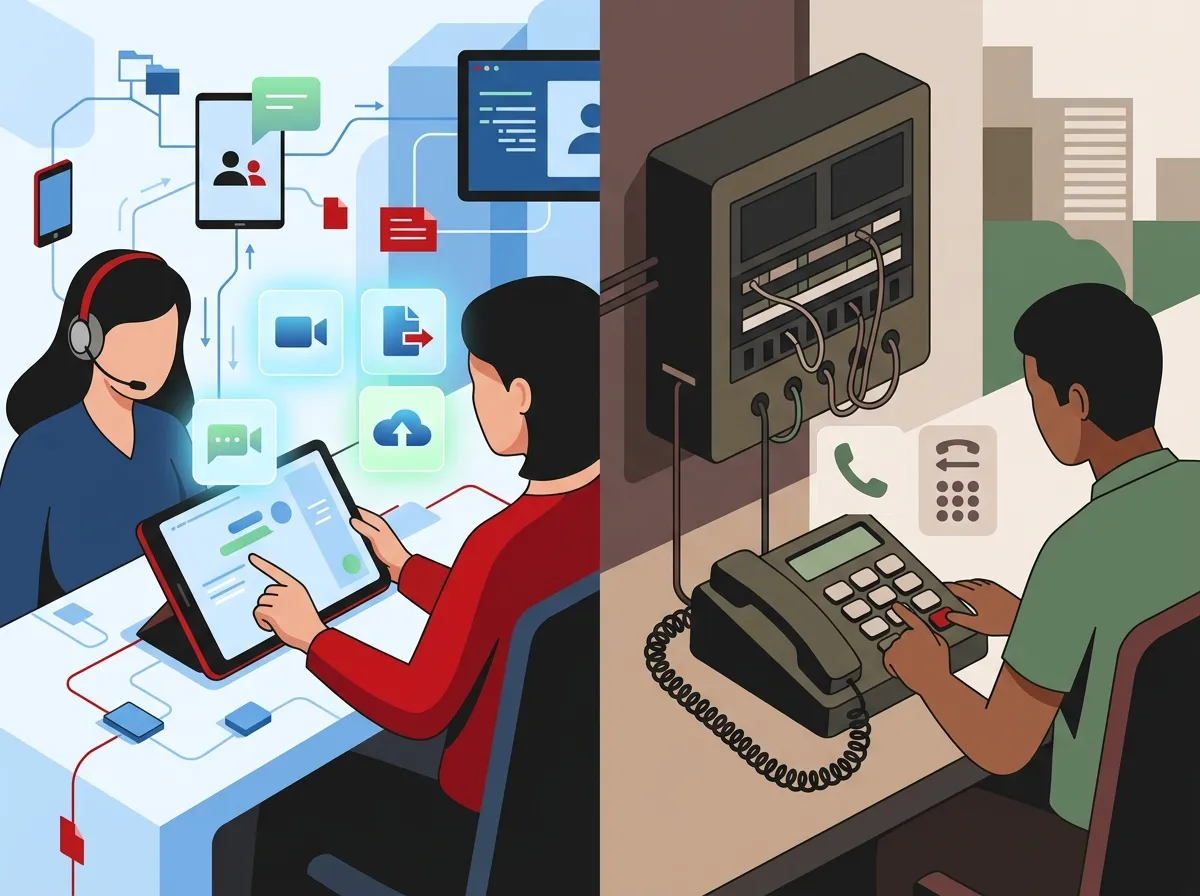
The difference between VoIP and a traditional phone system becomes crystal clear when you look at available features. Traditional phone systems do one thing well: make and receive calls. If you want advanced features like call forwarding or voicemail, you’ll usually pay extra for each add-on. Even then, options remain limited compared to what modern businesses need.
VoIP platforms pack dozens of business features into their standard packages. Most providers include auto-attendants, call queues, call recording, voicemail-to-email, and SMS messaging right out of the box. These aren’t expensive add-ons; they’re built into the system from day one.
Here’s what you typically get with each system:
| Feature Category | Traditional System | VoIP System |
|---|---|---|
| Auto-Attendant | Extra cost, limited options | Included, fully customizable |
| Call Forwarding | Basic forwarding available | Advanced rules, simultaneous ring |
| Voicemail | Basic voicemail box | Voicemail-to-email, transcription |
| Call Recording | Requires extra equipment | Cloud-based, searchable archive |
| Mobile Integration | Not available | Full mobile app functionality |
| CRM Integration | Not possible | Connects with Salesforce, HubSpot, etc. |
| Video Conferencing | Not available | Often included or easily added |
| Team Messaging | Not available | Built-in chat and collaboration |
VoIP systems also integrate with other business tools you already use. Connect your phone system to your CRM, and customer information pops up automatically when they call. Link it to your help desk software, and support tickets get created from phone conversations. Traditional systems simply can’t do this because they weren’t designed for the digital workplace.
The mobile capabilities alone make VoIP worth considering. Your team can use the same business number on their smartphones, answer calls from anywhere, and access all system features through mobile apps. Traditional systems lock you to your desk phone, which doesn’t work for today’s flexible work environment.
For businesses that need these modern features, exploring cloud-based phone systems reveals how much more productive your team can be with the right tools.
4. Reliability and Call Quality Considerations
One common concern when comparing VoIP and traditional phone systems is reliability. Traditional landlines have a well-earned reputation for dependability. They work during power outages if you have old-style phones that draw power from the line itself. They don’t depend on internet speed or network performance. When you pick up a landline, you expect a dial tone, and you almost always get one.
VoIP reliability depends entirely on your internet connection. If your internet goes down, your phone system goes down too. This worries some business owners, and it’s a valid concern. However, the reality in 2026 is that business internet connections have become incredibly reliable, especially in urban areas like Tampa Bay.
Call quality on VoIP systems depends on your internet bandwidth and network performance. Most experts recommend at least 100 Kbps of bandwidth per active call, though actual needs vary based on your voice codec and call volume. If your internet connection gets overloaded, you might experience choppy audio, delays, or dropped calls.
Here’s how to ensure reliable VoIP service:
- Use a dedicated internet connection or quality of service (QoS) settings
- Ensure sufficient bandwidth for your expected call volume
- Work with a reliable internet service provider
- Consider a backup internet connection for critical business needs
- Choose VoIP providers with 99.9% or better uptime guarantees
- Keep a backup option like mobile hotspot for emergencies
Many Tampa businesses solve the reliability question by using a hybrid approach. They run VoIP for daily operations and keep one traditional line or mobile backup for emergencies. This gives you the benefits of modern VoIP features while maintaining a safety net for critical calls.
The good news is that VoIP technology has matured significantly. Major providers deliver call quality that matches or exceeds traditional landlines when you have a solid internet connection. Most businesses find that reliability concerns are overblown once they actually make the switch and experience modern VoIP performance.
If you’re concerned about reliability, talk to business VoIP providers in Tampa about their uptime guarantees and redundancy options.
5. Scalability and Flexibility for Growing Businesses
The difference between VoIP and a traditional phone system becomes obvious when your business needs to grow or change. Traditional systems require physical installation for every new line. Adding employees means calling your phone carrier, scheduling installation, running new wiring, and waiting for technicians. The process takes days or weeks and costs money for each new connection.
VoIP systems scale as easily as creating a new user account. Need to add five new employees next week? Just log into your admin portal, create their accounts, and send them login credentials. They can start making calls within minutes using desk phones, computers, or their smartphones. No installation visits, no new wiring, no waiting around.
This flexibility extends beyond just adding users. Here’s what makes VoIP systems so adaptable:
- Add or remove users instantly through your online portal
- Change call routing and auto-attendant settings in real-time
- Support remote workers anywhere with internet access
- Open new office locations without major infrastructure costs
- Scale up during busy seasons and back down afterward
- Move employees between locations without changing phone numbers
Consider a Tampa business that grows from 10 to 25 employees in a year. With a traditional system, you’d need carrier visits, new equipment, additional wiring, and potentially a larger PBX system. Total costs could run several thousand dollars, and the process might take weeks to complete fully.
That same business with VoIP simply adds 15 new user accounts, ships desk phones if needed, and has everyone connected within days. The cost difference is dramatic, and the time savings let you focus on running your business instead of managing phone installations.
Remote and hybrid work arrangements also favor VoIP systems. Traditional desk phones tie employees to their physical desks in your office. VoIP lets team members work from home, coffee shops, or client sites while staying fully connected to your business phone system. They keep the same business number and access all features from anywhere.
For franchise operators or multi-location businesses, VoIP eliminates the nightmare of managing separate phone systems at each site. One cloud-based system can handle all your locations, with centralized management and reporting. Learn more about why Tampa businesses switch to cloud phone systems for this kind of flexibility.
6. Setup, Installation, and Ongoing Management
Getting a traditional phone system up and running requires significant time and effort. Your phone carrier needs to install physical lines to your building. Technicians must run wiring throughout your office to each desk location. You’ll need to purchase and install a PBX system if you want features like transferring calls or multiple extensions. The entire process typically takes several weeks from order to full operation.
VoIP installation moves much faster because it’s mostly cloud-based. Many businesses get their systems running in just a few days. You need an internet connection (which you probably already have), desk phones or softphone software, and account setup from your provider. That’s it. Some companies even handle the entire setup themselves using plug-and-play phones and online configuration tools.
Here’s what each installation process typically involves:
| Installation Step | Traditional System | VoIP System |
|---|---|---|
| Physical Line Installation | Carrier must install lines to building | Uses existing internet connection |
| Office Wiring | Extensive wiring to each desk | Uses existing network cables or WiFi |
| Equipment Setup | PBX installation, desk phones | Plug-and-play phones or software |
| Configuration | Requires technician visit | Often done through online portal |
| Employee Training | Basic phone use | More features to learn, better resources |
| Time to Full Operation | 2-4 weeks typical | 1-5 days typical |
Ongoing management differs dramatically too. Traditional systems require maintenance visits when something breaks or needs changing. Want to update your auto-attendant greeting? Call your carrier and wait for them to make the change. Need to move someone’s phone to a different desk? That might require rewiring and technician assistance.
VoIP systems put control in your hands. Most providers offer web-based admin portals where you can manage everything yourself. Change greetings, update call routing, add users, run reports, and adjust settings anytime without calling anyone. If you prefer not to manage it yourself, many providers offer managed services that handle everything for you.
The learning curve for VoIP systems is slightly steeper because they offer so many more features. However, most providers include training resources, video tutorials, and responsive support teams to help you get the most from your system. Once your team learns the basics, they’ll appreciate having tools that make their jobs easier.
For businesses worried about the technical side, companies like Ideal Solutions Provider handle everything from comparing options to installation and ongoing support, making the transition smooth and stress-free.
Making the Right Choice for Your Business
Now that you understand the key differences between VoIP and traditional phone systems, which one should you choose? The answer depends on your specific business needs, but most Tampa businesses in 2026 benefit from switching to VoIP.
Traditional phone systems still make sense in a few specific situations. If your business operates in an area with unreliable internet service, traditional lines provide dependable connectivity. If you have very simple phone needs with just one or two lines and no requirements for advanced features, a basic landline might suffice. Some businesses in highly regulated industries also maintain traditional backup lines for compliance or emergency purposes.
However, VoIP systems offer clear advantages for the vast majority of businesses. The combination of lower costs, richer features, better scalability, and greater flexibility makes them the smart choice for companies that want to stay competitive. If your business has remote workers, multiple locations, or plans to grow, VoIP is almost certainly your best option.
Many businesses worry about making the switch, but the process is smoother than you might think. You don’t have to change everything overnight. Most companies transition gradually, running VoIP alongside their existing system until they’re comfortable, then completing the migration. You can keep your existing business phone numbers too, so customers never notice the change.
Here are the key factors to consider when making your decision:
- Budget constraints and potential cost savings
- Required features and functionality for your team
- Internet connection quality and reliability
- Number of employees and growth plans
- Remote work or multi-location needs
- Integration requirements with other business software
The difference between VoIP and a traditional phone system ultimately comes down to modern flexibility versus old-school simplicity. VoIP gives you powerful tools to run your business more efficiently, while traditional systems offer straightforward reliability without much complexity.
For most Tampa businesses, the cost savings alone justify the switch to VoIP. When you add the improved features, scalability, and flexibility, the decision becomes even clearer. Companies that make the move rarely regret it once they experience how much easier VoIP makes communication.
If you’re still not sure which option fits your needs, don’t worry. Getting expert guidance can help you avoid costly mistakes and find the perfect solution for your specific situation. Reach out to schedule a free consultation and get personalized recommendations based on your business requirements.
Ready to Upgrade Your Business Phone System?
Understanding the difference between VoIP and a traditional phone system is just the first step. The next step is finding the right solution for your Tampa business and making a smooth transition that doesn’t disrupt your operations.
Ideal Solutions Provider helps businesses navigate this decision every day. With over 24 years of experience and partnerships with 35+ vetted suppliers, we compare options across providers to find the best fit for your needs and budget. We’re not tied to any single carrier, so our recommendations focus on what’s truly best for your business, not sales quotas.
Our team handles everything from analyzing your current setup to installation and ongoing support. We’ll audit your existing phone costs, show you exactly where you’re overpaying, and present side-by-side comparisons of solutions that work for businesses like yours. Nine out of ten companies we audit discover they’re either overpaying, underperforming, or both.
Whether you need a cloud-based phone system, high-speed internet, structured cabling, or a complete communications overhaul, we serve as your single point of contact for all telecom needs. No more juggling multiple providers or waiting on different companies to coordinate installations.
Don’t let outdated phone technology hold your business back. The right communication system can improve customer service, boost team productivity, and save you thousands of dollars every year. Now that you know how VoIP and traditional systems differ, you can make an informed decision that positions your business for success.
Contact our team today for a free consultation and discover how much you could save with the right phone system. Or give us a call at 813-388-4935 to speak with a communications specialist who can answer all your questions and help you find the perfect solution for your Tampa business.
FAQs
Q: What is VoIP and how does it work for business phone systems?
A: VoIP (Voice over Internet Protocol) converts your voice into digital data and sends it over your internet connection instead of traditional phone lines. It’s like sending an email with your voice instead of text. Your business can use VoIP on desk phones, computers, tablets, and smartphones, making it perfect for modern workplaces with remote teams.
Q: Is VoIP better than a traditional landline for small businesses?
A: For most small businesses, VoIP offers better value with lower costs, more features, and greater flexibility. You’ll typically save 40-60% on monthly phone bills and get advanced features like voicemail-to-email, auto-attendants, and mobile apps included. Traditional landlines make sense only if you have very basic needs or unreliable internet service.
Q: What equipment do I need to switch from a traditional phone system to VoIP?
A: You mainly need a reliable internet connection and VoIP-compatible phones or softphone software for computers and mobile devices. Most businesses also benefit from a quality router with QoS settings to prioritize voice traffic. The good news is that VoIP requires much less equipment than traditional systems, which need extensive wiring and on-site PBX hardware.
Q: How reliable is VoIP compared with a traditional business phone line?
A: VoIP reliability depends on your internet connection quality, while traditional lines work independently of internet service. Modern business internet in urban areas like Tampa is highly reliable, and most VoIP providers guarantee 99.9% uptime. Many businesses use VoIP for daily operations and keep a backup line or mobile hotspot for emergencies, giving you the best of both worlds.
Q: Can I keep my existing business phone numbers when switching to VoIP?
A: Yes, you can absolutely keep your existing business phone numbers when switching to VoIP through a process called number porting. Most VoIP providers handle this transfer for you, and your customers never notice any change. The process typically takes a few days to complete, and you can often run both systems simultaneously during the transition.