

Key Takeaways
-
Demand for business internet is surging with the U.S. ISP industry projected to reach $182.7 billion by 2026; choosing the right provider is critical to avoid costly downtime and lost productivity.
-
Business internet requires dedicated bandwidth, static IP addresses, and SLAs guaranteeing 99.9%+ uptime—residential plans cannot support cloud apps, VoIP, or video conferencing reliably.
-
Fiber optic internet is the gold standard offering symmetrical speeds and low latency; if unavailable, evaluate cable, fixed wireless, or dedicated leased lines based on your specific needs.
-
Always review SLAs carefully for clear uptime guarantees, response times, and failure remedies before signing; vague promises leave your business unprotected during outages.
-
SD-WAN technology enables multi-location businesses to centralize network management, automatically reroute traffic during failures, and reduce costs while improving security and performance.
-
Avoid choosing providers based solely on price; 9 in 10 businesses are either overpaying or underperforming—work with independent telecom advisors to compare 35+ vetted suppliers without sales pressure.
Your internet connection is the backbone of your business. Every phone call, video meeting, cloud app, and customer transaction depends on it. So when you’re choosing a business internet provider, the stakes are high. A slow or unreliable connection doesn’t just frustrate your team — it costs you money and customers.
In 2026, the U.S. Internet Service Provider industry is projected to reach USD 182.7 billion, with thousands of businesses upgrading their connectivity every year. With 1,639 ISPs operating across the country, the choices can feel overwhelming. But don’t worry — we’re here to help you cut through the noise and make the right call for your business.
Whether you’re a small business owner in Tampa or a franchise operator with locations nationwide, this guide breaks down everything you need to know. Let’s dive in!
What Is a Business Internet Provider?
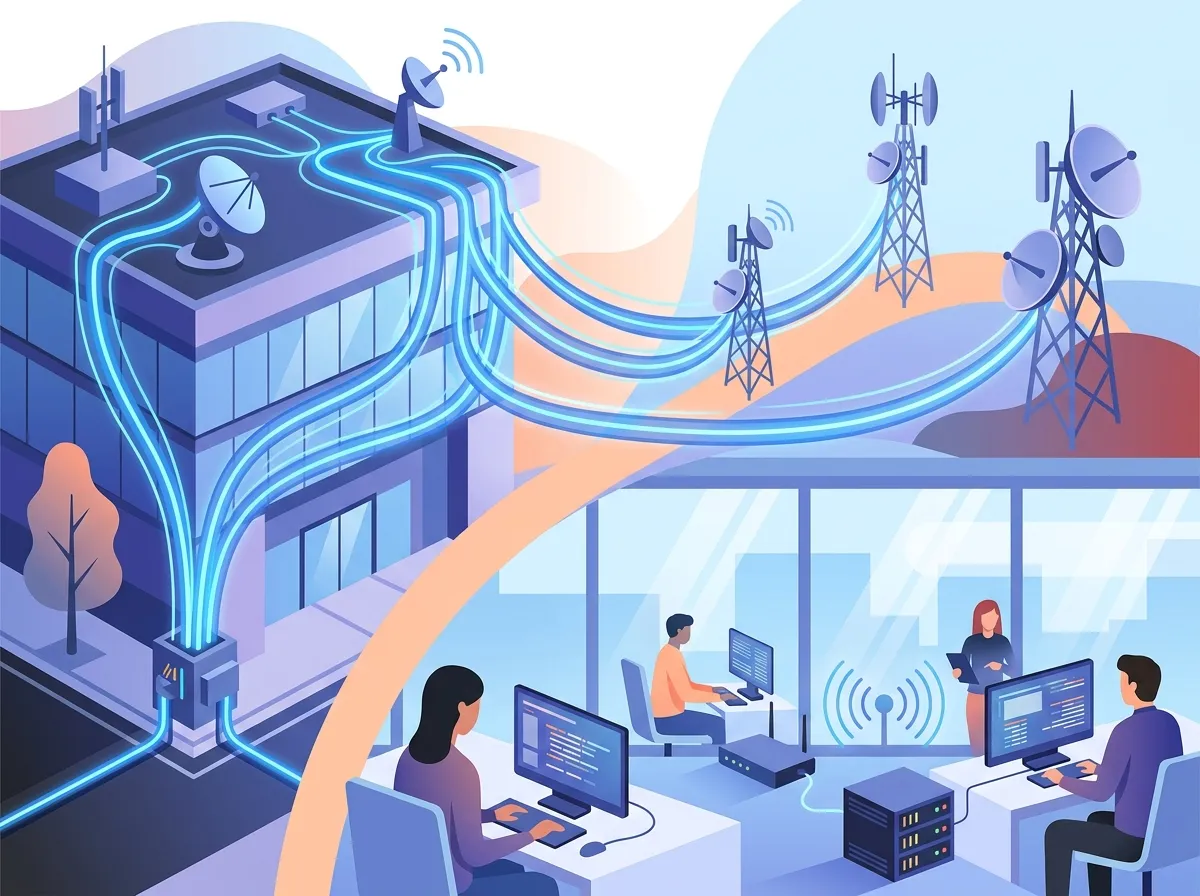
A Internet Service Provider that serves commercial customers is called a business internet provider. Unlike residential plans, business-grade service comes with features designed to keep companies running smoothly. Think dedicated bandwidth, static IP addresses, service level agreements (SLAs), and 24/7 support.
Business providers also offer a range of connection types — from fiber and cable to fixed wireless and leased lines. The right mix depends on your location, team size, and the applications you rely on daily. If you want a deeper breakdown, check out what business broadband is and why your company needs it.

Business Internet vs. Residential Internet: Key Differences
It’s tempting to use a home internet plan for your office. It’s cheaper, right? But there’s a big difference between the two — and that difference matters a lot when your livelihood is on the line.
| Feature | Business Internet | Residential Internet |
|---|---|---|
| Bandwidth | Dedicated or symmetrical | Shared, download-focused |
| Uptime Guarantee (SLA) | Yes (typically 99.9%+) | Rarely offered |
| Static IP Address | Usually included | Dynamic IP only |
| Customer Support | 24/7 priority support | Standard hours |
| Scalability | Easy to scale up | Limited options |
| Security Features | Advanced options available | Basic protection |
As you can see, business internet plans offer real advantages. If your team uses cloud software, VoIP phones, or video conferencing daily, a residential plan simply won’t keep up. Learn more about what makes high-speed internet essential for your business.
Types of Business Internet Connections
Not all internet connections are built the same. Here’s a quick rundown of the most common options available to businesses today.
1. Fiber Optic Internet
Fiber is widely considered the gold standard for business connectivity. It delivers symmetrical speeds (equal upload and download), extremely low latency, and rock-solid reliability. The fiber optic segment holds a 35.3% share of the global broadband services market in 2025 — and that number keeps growing.
If your team runs cloud apps, video calls, or large file transfers, fiber is your best bet. You can explore options in your area through resources like why Tampa businesses need dedicated fiber internet.
2. Cable Internet
Cable internet uses the same infrastructure as cable TV. It’s widely available and offers decent speeds. However, bandwidth is often shared with other businesses in your area, which can slow things down during peak hours. For a detailed comparison, see fiber vs. cable business internet in Tampa.
3. Fixed Wireless and 5G
Fixed wireless and 5G are growing fast as business access options, especially where fiber isn’t available. They’re also great as a backup connection to keep you online during outages. This makes them a smart choice for businesses that can’t afford any downtime.
4. Dedicated Leased Lines
A leased line gives your business a private, dedicated connection. Nobody else shares your bandwidth. This means consistent speeds and high reliability. It’s a premium option often used by larger enterprises or businesses with mission-critical operations.
Connection Types at a Glance
| Connection Type | Speed Range | Best For | Reliability |
|---|---|---|---|
| Fiber Optic | 100 Mbps – 10 Gbps | Cloud, VoIP, video, multi-user | Excellent |
| Cable | 25 Mbps – 1 Gbps | Small offices, light use | Good (shared) |
| Fixed Wireless / 5G | 25 Mbps – 500 Mbps | Remote areas, backup | Good |
| Dedicated Leased Line | 10 Mbps – 10 Gbps | Enterprise, mission-critical | Excellent |
What Is an SLA and Why Does It Matter?
An SLA (Service Level Agreement) is a contract between you and your business internet provider. It spells out exactly what uptime you’re guaranteed, how fast they’ll respond to outages, and what compensation you’ll receive if they fall short.
For most businesses, a 99.9% uptime guarantee is the minimum you should accept. That translates to less than nine hours of downtime per year. For businesses that depend on VoIP phones or cloud software, even a few hours of downtime can be very costly.
Always read your SLA carefully before signing. Look for clear definitions of “downtime,” response time commitments, and remedies for failures.
How to Choose the Right Business Internet Provider
Choosing the right provider doesn’t have to be stressful. Here’s a step-by-step process to make a smart decision.
- Assess your bandwidth needs. Count how many users, devices, and applications will share the connection. Cloud software, VoIP, and video all need significant bandwidth.
- Check what’s available in your area. Not every provider covers every ZIP code. Availability matters before anything else.
- Compare connection types. Fiber is ideal, but if it’s not available, evaluate cable, fixed wireless, or dedicated circuits as alternatives.
- Review SLAs carefully. Make sure the uptime guarantee matches your business needs. Don’t settle for vague promises.
- Ask about backup or redundancy options. Having a secondary connection protects you from costly outages.
- Look at support quality. 24/7 support is essential. Ask how quickly they respond to outages and how you reach them.
- Get multiple quotes. Prices vary widely. A telecom advisor can compare options from dozens of providers on your behalf.
For more guidance, check out how to compare business internet providers in Tampa, Florida or explore 13 high-speed internet tips that save your business money.
Key Features to Look for in a Business Internet Provider
When evaluating providers, keep this checklist handy. A great business internet provider should offer:
- Symmetrical upload and download speeds — critical for video calls and cloud file sharing
- Static IP addresses — needed for VoIP systems, remote access, and hosted services
- Scalable bandwidth — so you can grow without switching providers
- 24/7 technical support — because outages don’t follow business hours
- Redundancy options — backup connectivity to keep you online during failures
- Network monitoring and security — to protect your data and devices
If you’re managing multiple locations, you’ll also want to explore SD-WAN technology. It allows centralized management, improved security, and smarter routing across all your sites. Read more about how to choose SD-WAN solutions for Tampa Bay businesses to see if it’s a fit for your setup.
SD-WAN: A Game-Changer for Multi-Location Businesses
SD-WAN (Software-Defined Wide Area Network) is one of the most exciting tools available for businesses with multiple locations. It sits on top of your existing internet connections and intelligently routes traffic for the best performance and security.
Here’s why businesses love it:
- Centralizes network management across all locations
- Automatically shifts traffic away from slow or failed connections
- Improves security with built-in encryption and segmentation
- Reduces costs by using cheaper internet connections more efficiently
- Provides real-time visibility into network performance
For franchise operators and multi-site businesses, SD-WAN can be a major upgrade. Explore the 6 SD-WAN benefits every business owner should know to learn more.
Common Mistakes Businesses Make When Choosing an Internet Provider
Even smart business owners make these mistakes. Here are the top ones to avoid:
- Choosing based on price alone. The cheapest plan often means poor support, shared bandwidth, and no SLA. You’ll pay more in lost productivity.
- Not checking for redundancy. One connection is a single point of failure. Always have a backup plan.
- Ignoring upload speeds. If you use VoIP, video, or cloud backups, upload speed matters just as much as download speed.
- Skipping the SLA review. Without a strong SLA, you have no recourse when the provider fails you.
- Not planning for growth. Your bandwidth needs today won’t be the same in two years. Choose a provider that can scale with you.
You can also avoid costly errors by reviewing 12 business internet cost mistakes Tampa owners make in 2026.
How the Business Internet Market Looks in 2026
The business internet market is growing fast. The global broadband services market was estimated at USD 547.89 billion in 2025 and is projected to reach USD 1.19 trillion by 2033. Businesses are the largest segment driving this growth, fueled by cloud adoption, remote work, and data-heavy applications.
In the U.S. alone, there are 1,639 ISPs competing for business customers. That’s actually good news for you — more competition means better pricing and more options. But it also means you need a smart way to compare and choose. This is where working with a telecom advisor pays off. Learn how to work with a telecom expert who gets results.
Dedicated vs. Shared Internet: Which Do You Need?
| Feature | Dedicated Internet | Shared Internet |
|---|---|---|
| Bandwidth | Reserved just for you | Shared with other customers |
| Speed Consistency | Always consistent | Can slow during peak hours |
| Cost | Higher monthly cost | More affordable |
| SLA Availability | Yes, strong guarantees | Limited or no SLA |
| Best For | Enterprises, VoIP, cloud-heavy | Small offices, light use |
Not sure which fits your business? Read dedicated vs. shared fiber: which is right for Tampa businesses? for a detailed breakdown. And if you’re a small business wondering about affordability, explore whether you can get dedicated fiber internet for your small business in Tampa.
How Your Internet Provider Affects Your VoIP and Phone System
Your internet connection directly impacts the quality of your VoIP phone system. Choppy calls, dropped connections, and poor audio quality are almost always caused by weak or inconsistent internet service. If you’re planning to upgrade your phone system, start by making sure your internet can handle the load.
Check out what internet speed you need for VoIP in Tampa to understand the requirements. And if you’d like to follow our latest tips and updates, we share practical telecom advice regularly on our Facebook page and Instagram.
Why Work with Ideal Solutions Provider?
Shopping for business internet on your own is time-consuming and confusing. That’s where Ideal Solutions Provider comes in. As a Tampa-based telecom and IT partner with over 24 years of experience, they work with 35+ vetted suppliers to find the best internet solution for your specific needs — without the sales pressure.
They compare fiber, cable, dedicated circuits, SD-WAN, and fixed wireless options side by side. They also audit your current setup to make sure you’re not overpaying. Nine out of ten businesses they audit are either overpaying, underperforming, or both. You can also find helpful video guides and explainers on their YouTube channel. Explore your options and learn more at which business internet service providers in Tampa, Florida are best.
Steps to Get Started with a New Business Internet Provider
- Audit your current service. Know what you’re paying and what speeds you’re actually getting. Use a speed test and review your bill.
- Define your requirements. List the number of users, key applications, and any uptime requirements you need to meet.
- Consult a telecom advisor. An independent advisor can compare dozens of providers quickly and without bias.
- Review contract terms carefully. Pay close attention to SLAs, early termination fees, and installation timelines.
- Plan your transition. Make sure your new service is fully active before canceling your existing plan.
Conclusion: Find the Right Connection for Your Business
Choosing the right business internet provider is one of the most important decisions you’ll make for your company. The right connection keeps your team productive, your customers happy, and your operations running without a hitch. From fiber and dedicated circuits to SD-WAN and fixed wireless backup, today’s options are better than ever.
Don’t settle for a plan that doesn’t fit. Take the time to compare your options, review SLAs, and work with experts who understand your needs. For more tips, check out 7 ways to get fast and reliable business internet in Tampa Bay or how to choose the right internet speed for your Tampa business.
Ready to find a better connection? Reach out to our team for a free consultation and let us help you find the perfect business internet solution — without the hassle.
FAQs
Q: What is a business internet provider?
A: A business internet provider is a company that delivers commercial-grade internet access and networking services to businesses. Unlike residential plans, business service typically includes dedicated bandwidth, static IP addresses, SLAs, and priority 24/7 support — everything your company needs to stay connected and productive.
Q: How is business internet different from residential internet?
A: Business internet plans are built for reliability and performance. They often come with symmetrical speeds, guaranteed uptime (SLAs), static IPs, and faster support response times. Residential plans share bandwidth with neighbors and offer very little in the way of support or guarantees — which just doesn’t cut it for a busy workplace.
Q: What type of internet connection is best for a business?
A: Fiber optic internet is widely considered the best option for businesses because it offers fast, symmetrical speeds and outstanding reliability. If fiber isn’t available in your area, dedicated leased lines or fixed wireless are strong alternatives. The best choice really depends on your location, team size, and how you use the internet each day.
Q: What is an SLA in business internet service?
A: An SLA (Service Level Agreement) is a guarantee from your business internet provider that spells out uptime commitments, response times, and compensation if they fall short. Look for at least 99.9% uptime in any SLA — that’s the standard for most business-grade providers and it gives you real peace of mind.
Q: What should a company look for when choosing a business internet provider?
A: Start by checking for symmetrical speeds, static IP availability, a strong SLA, 24/7 support, and scalability. Also consider whether you need redundancy or backup connectivity. Working with an independent telecom advisor is a great way to compare multiple providers quickly and make sure you’re getting the best deal for your specific needs.