

Key Takeaways
-
Fiber internet is the gold standard for businesses because it offers symmetrical upload/download speeds (500 Mbps to 8+ Gbps) and low latency, making it ideal for video conferencing, cloud apps, and VoIP systems.
-
Business internet requires different capabilities than home internet: static IP addresses, SLAs guaranteeing uptime, priority support, built-in security, and scalable bandwidth that home plans simply don’t provide.
-
Dedicated Internet Access (DIA) provides consistent, unshared bandwidth with SLA-backed uptime guarantees (often 99.9%+), making it essential for mission-critical operations that cannot afford downtime like healthcare or finance.
-
Speed requirements depend on team size and usage: micro businesses need 100-500 Mbps, small businesses 500 Mbps-1 Gbps, mid-sized companies 1-2 Gbps, and enterprises 2-10 Gbps+; avoid buying excess speed without considering symmetry.
-
VoIP quality depends on four internet factors: bandwidth (100 Kbps per call), latency under 150ms, consistent low jitter, and strong upload speeds; overlooking upload speed is a common mistake that degrades call quality.
-
Plan for redundancy by implementing a secondary internet connection as failover and ensure your internal network infrastructure (cabling and equipment) matches your internet plan’s speed, or you won’t experience the performance you’re paying for.
Your business depends on the internet more than you might realize. Every video call, every cloud app, every payment transaction — all of it runs on your internet connection. When it’s slow or unreliable, everything suffers. Customers get frustrated. Employees lose time. Revenue takes a hit. That’s why choosing the right high-speed internet for your business isn’t just a tech decision — it’s a business decision.
In 2026, business internet has come a long way. You have more options than ever, from fiber to 5G to dedicated circuits. But with more options comes more confusion. How do you know which type of connection is right for your team? How much speed do you actually need? And what separates a business-grade connection from a basic home plan?
This guide breaks it all down in plain, simple terms. Whether you run a small office in Tampa or manage locations across the country, you’ll walk away knowing exactly what to look for — and what to avoid. Let’s dig in!

What Is High-Speed Internet for Business?
Business high-speed internet is not the same as what you use at home. It’s designed to support multiple users at once, handle heavy data loads, and stay online even when things get busy. Think of it like the difference between a residential driveway and a commercial loading dock — both move traffic, but one is built for serious volume.
An Internet Service Provider that offers business-grade plans typically includes extras like guaranteed uptime, priority support, and stronger security. These features matter a lot when your entire team is on a video call or processing hundreds of online orders at once.
Business internet plans are often built around two key metrics: speed and reliability. Speed is measured in megabits per second (Mbps) or gigabits per second (Gbps). Reliability refers to how consistently your connection stays fast and available throughout the day.
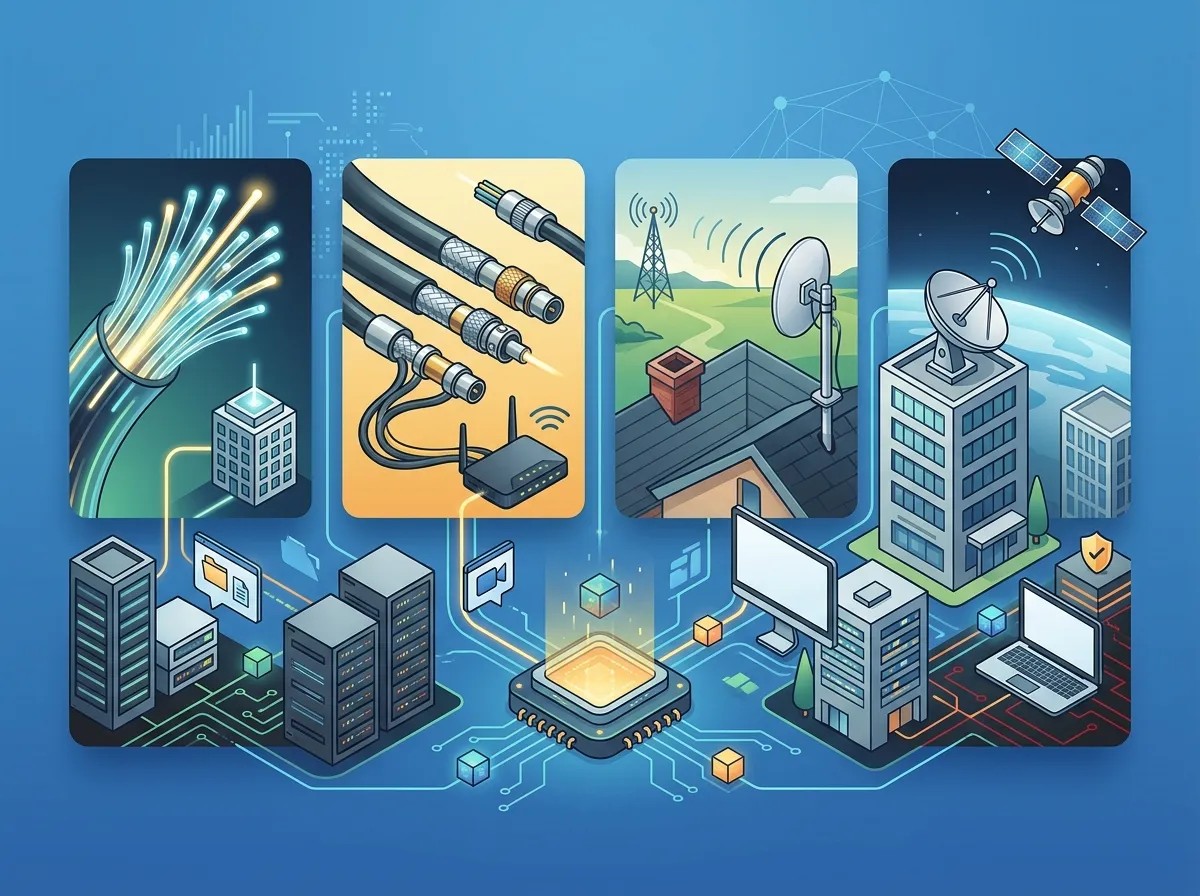
Types of Business High-Speed Internet
Not all business internet is the same. Here’s a quick overview of the main types available in 2026:
| Connection Type | Speed Range | Best For | Key Advantage |
|---|---|---|---|
| Fiber | 500 Mbps – 8+ Gbps | High-demand offices, VoIP, cloud apps | Symmetrical speeds, low latency |
| Cable | 25 Mbps – 2 Gbps | General office use, email, browsing | Wide availability, affordable |
| Dedicated Internet Access (DIA) | Varies, dedicated bandwidth | Enterprises, high-traffic operations | Consistent, unshared bandwidth |
| 5G Business Internet | Varies by location | Backup connectivity, rapid deployment | Fast setup, wireless flexibility |
| Satellite | Varies | Remote or rural locations | Reaches areas without fixed lines |
If you want to dive deeper into which option fits your business best, check out this helpful guide on Fiber vs. Cable Business Internet in Tampa: Which Wins? — it covers the real differences in plain language.
Why Fiber Is the Gold Standard for Business
Fiber internet is widely considered the best option for businesses that need speed and reliability. Here’s why so many businesses are making the switch in 2026.
Symmetrical Upload and Download Speeds
Fiber offers symmetrical speeds, meaning your upload and download rates are equal. This matters enormously for businesses. When you’re video conferencing, uploading files to the cloud, or running a hosted VoIP phone system, your upload speed is just as important as your download speed.
Some fiber plans start as low as 500 Mbps symmetrical, with options scaling up to 8 Gbps or more for larger organizations. That kind of bandwidth gives your team serious room to grow.
Low Latency Keeps Communication Clear
Latency is the delay between sending and receiving data. High latency makes video calls choppy and VoIP calls sound robotic. Fiber has very low latency, which means smoother calls and faster app performance. If your team relies on cloud-based phone systems or video conferencing, fiber is your best friend. Learn more about how internet speed affects your calls by reading our guide on affordable VoIP phone services for Tampa businesses in 2026.
What Is Dedicated Internet Access (DIA)?
Dedicated Internet Access (DIA) is a premium business internet service where your bandwidth is not shared with other users. Unlike standard cable or fiber plans that run on shared infrastructure, DIA gives you a private lane on the internet highway.
Here’s what makes DIA stand out:
- Consistent speeds at all times, not just off-peak hours
- Stronger service-level agreements (SLAs) with uptime guarantees
- Priority support from your provider
- Better performance for latency-sensitive applications like VoIP
- Ideal for businesses processing large files or running hosted servers
For businesses that cannot afford downtime — think healthcare, finance, or e-commerce — DIA is often worth the investment. You can explore whether dedicated fiber makes sense for your situation by reading about why Tampa businesses need dedicated fiber internet.
How Much Speed Does Your Business Actually Need?
This is one of the most common questions business owners ask. The honest answer: it depends on your team size and what you do online. Here’s a simple breakdown:
| Business Size | Typical Users | Recommended Speed | Key Activities |
|---|---|---|---|
| Micro Business | 1–5 users | 100–500 Mbps | Email, browsing, basic cloud apps |
| Small Business | 5–25 users | 500 Mbps – 1 Gbps | VoIP, video calls, file sharing |
| Mid-Sized Company | 25–100 users | 1–2 Gbps | Heavy cloud use, POS systems, multiple video streams |
| Enterprise | 100+ users | 2–10 Gbps+ | Data centers, hosted servers, large-scale operations |
Need help figuring out the right speed for your situation? This detailed guide on how to choose the right internet speed for your Tampa business walks you through the process step by step.
Why Business Internet Is Different From Home Internet
A lot of business owners make the mistake of using residential internet plans for their office. It feels like a way to save money, but it often costs more in the long run. Here’s what you get with a business-grade plan that you simply don’t get with a home plan:
- Static IP addresses for hosting services or remote access
- Faster, prioritized customer support response
- Service-level agreements (SLAs) guaranteeing uptime
- Scalable bandwidth that grows with your team
- Built-in security features and monitoring
- Business-specific equipment and installation
These aren’t just nice-to-haves. They’re often requirements for businesses in regulated industries or those handling sensitive customer data. If you’re curious how your current setup stacks up, it might be time to get a professional audit of your telecom services.
High-Speed Internet and VoIP: A Powerful Combination
One of the biggest reasons businesses upgrade their internet is to support VoIP phone systems. VoIP (Voice over Internet Protocol) sends phone calls over your internet connection instead of traditional phone lines. It’s more affordable, more flexible, and packed with features — but it needs solid internet to perform well.
Here’s how your internet speed affects VoIP quality:
- Bandwidth — Each VoIP call needs roughly 100 Kbps of upload and download speed. A team of 20 making simultaneous calls needs at least 2 Mbps just for voice alone.
- Latency — High latency causes noticeable call delays. Aim for under 150ms for clear, natural-sounding calls.
- Jitter — Inconsistent latency causes choppy audio. A stable connection with low jitter keeps calls smooth.
- Packet loss — When data packets don’t arrive, you get gaps in conversation. Quality internet prevents this issue.
- Upload speed — Often overlooked, upload speed is critical for VoIP since your voice is the data being sent.
If you’re thinking about combining your phone and internet services, check out this resource on how to bundle your business phone and internet service for real savings and simplified management.
Steps to Choosing the Right Business Internet Plan
Shopping for business internet doesn’t have to be overwhelming. Follow these steps to find the right fit:
- Audit your current usage — Count your users, devices, and apps. Identify peak usage times and current pain points.
- Determine your speed needs — Use the table above as a starting guide, then factor in any planned growth.
- Choose your connection type — Fiber is ideal when available. Consider DIA for mission-critical operations. Use 5G as a backup option.
- Compare providers in your area — Not every provider serves every location. Get quotes from multiple sources.
- Review the SLA — Look at uptime guarantees, support response times, and what happens if service goes down.
- Plan for redundancy — Consider a secondary internet connection as a failover to prevent costly downtime.
For a comprehensive look at your local options, this guide on how to compare business internet providers in Tampa, Florida is a great place to start.
Common Mistakes Businesses Make With Internet Plans
Even savvy business owners fall into a few traps when selecting internet service. Here are the most common ones to avoid:
- Buying more speed than you need without considering symmetry
- Ignoring upload speeds and focusing only on download
- Choosing a shared plan for a high-demand operation
- Skipping the SLA review and assuming uptime is guaranteed
- Failing to plan for growth or additional locations
Avoiding these mistakes can save your business thousands of dollars a year. For even more money-saving strategies, read our guide on 13 high-speed internet for business tips that save money — it’s packed with practical advice you can use right away.
How Ideal Solutions Provider Helps Your Business Connect
Ideal Solutions Provider works with over 35 vetted internet providers — including fiber, cable, DIA, and 5G options — to find the best fit for your business. Instead of calling multiple carriers and sitting through sales pitches, you get one trusted partner who does the comparison work for you. With over 24 years of experience, they know which providers deliver on their promises and which ones fall short.
Their team conducts free telecom audits and has found that 9 out of 10 businesses they review are either overpaying, getting less than they need, or both. That’s a lot of money and performance left on the table. Follow them on Facebook and Instagram for ongoing telecom tips, updates, and helpful content for business owners.
Internet Speed and Your Network Infrastructure
Here’s something many businesses overlook: a fast internet plan is only as good as the network carrying it inside your building. If your internal cabling is outdated or your networking equipment is underperforming, you’ll never actually experience the speed you’re paying for.
That’s why high-speed internet works best when paired with proper structured cabling and a well-designed internal network. Learn more about the role of physical infrastructure by visiting this guide on professional structured cabling services for Tampa businesses.
You can also explore how managed networking solutions keep everything running smoothly by reading about managed network services Tampa FL businesses need.
Internet Options for Multi-Location Businesses
If you run multiple locations — whether that’s a franchise, a regional office network, or a retail chain — your internet strategy gets more complex. Here are three key considerations:
- Standardize your connection types — Use the same technology across locations when possible for easier management and support.
- Use SD-WAN to connect locations intelligently — SD-WAN routes traffic across multiple internet connections, balancing loads and keeping things running even if one connection drops. Learn more about how to choose SD-WAN solutions for Tampa Bay businesses.
- Plan for local and central redundancy — Each site should have a backup connection, and your central hub should have enterprise-grade reliability.
Multi-location businesses also benefit from having a single point of contact for all internet and telecom needs. Managing a different provider for each location is a headache nobody needs. Read more about reliable network solutions for multi-location Tampa businesses to see what a unified approach looks like in practice.
Quick Comparison: Shared vs. Dedicated Business Internet
| Feature | Shared Broadband | Dedicated Internet Access (DIA) |
|---|---|---|
| Bandwidth | Shared with other users | Reserved exclusively for you |
| Speed Consistency | Varies by time of day | Consistent at all times |
| Uptime Guarantee | Often none | SLA-backed (often 99.9%+) |
| Support Priority | Standard queue | Priority business support |
| Cost | Lower monthly cost | Higher, but more predictable |
| Best For | Small teams, basic use | High-demand, mission-critical ops |
Not sure which fits your business? Our guide on dedicated vs. shared fiber for Tampa businesses breaks it down with real examples to help you decide.
Take Action: Upgrade Your Business Internet Today
Your internet connection is the backbone of your entire business operation. Getting it right means fewer dropped calls, faster workflows, happier employees, and better customer experiences. Whether you’re a small Tampa business ready to upgrade, a growing company adding locations, or an IT manager looking to simplify your vendor relationships — the right high-speed internet solution is out there waiting for you.
Watch expert telecom advice and real business solutions on the Ideal Solutions Provider YouTube channel to see how other businesses have upgraded their connectivity. And when you’re ready to explore your options, reach out to our team for a free consultation — we’ll review your current setup, compare providers, and help you find the best high-speed internet plan for your specific needs. No pressure, no jargon, just real help from people who know telecom inside and out.
FAQs
Q: What counts as high-speed internet for a business?
A: Great question! For most businesses, high-speed internet starts at 100 Mbps, but a truly capable business connection in 2026 typically starts at 500 Mbps and scales up from there. The key is having enough bandwidth for all your users, cloud apps, VoIP calls, and video conferencing happening at the same time — without slowdowns.
Q: Why does symmetrical upload and download speed matter for businesses?
A: Symmetrical speeds mean your upload rate matches your download rate — and that’s a big deal for businesses! When you’re on video calls, backing up data to the cloud, or hosting VoIP calls, your upload speed does all the heavy lifting. Fiber internet typically offers symmetrical speeds, making it the go-to choice for communication-heavy businesses.
Q: Is dedicated internet access worth the extra cost?
A: For many businesses, absolutely yes! Dedicated Internet Access (DIA) gives you bandwidth that isn’t shared with anyone else, which means consistent speeds and stronger uptime guarantees. If your business cannot afford slowdowns or outages — like a medical office, law firm, or busy retail operation — DIA is usually worth every penny.
Q: How do I know if my current business internet is fast enough?
A: If you’re noticing slow video calls, choppy VoIP audio, long file upload times, or frequent buffering during peak hours, those are strong signs your connection isn’t keeping up. A free telecom audit from a trusted partner like Ideal Solutions Provider can help you identify exactly where your current plan falls short and what upgrades make sense.
Q: Can 5G replace my business’s primary internet connection?
A: 5G is a fantastic option for backup connectivity and rapid deployment, especially in locations where fiber or cable isn’t available yet. However, for most businesses with heavy daily usage, 5G works best as a secondary or failover connection rather than a primary one — at least for now as the technology continues to mature in 2026.