

Key Takeaways
-
Spring Hill's rapid growth driven by the GM plant and commercial development requires businesses to invest in structured cabling infrastructure to support manufacturing, retail, and office operations that depend on reliable networks.
-
Look for contractors with BICSI certifications or RCDD credentials, as these ensure code-compliant installations designed for future scalability rather than just today's needs, preventing costly system failures.
-
Structured cabling costs range from $1,500-$3,000 for small offices to $5,000-$15,000+ for larger facilities, with final pricing depending on square footage, device connections, fiber optic runs, and existing infrastructure upgrades.
-
Choose a single contractor who handles cabling, VoIP, Wi-Fi, and security cameras together to avoid coordinating multiple vendors and ensure compatibility across all systems without dead zones or connectivity issues.
-
Industrial facilities in Spring Hill need ruggedized cabling and industrial-grade connectors designed for heat, dust, and electromagnetic interference, plus real-time data tracking capability for logistics operations.
-
Avoid common mistakes like selecting the cheapest quote without checking certifications, skipping the planning phase, and failing to test systems after installation—a well-planned approach prevents outages and simplifies troubleshooting.
Spring Hill, Tennessee is booming right now. Between the General Motors manufacturing plant and all the new businesses popping up along Saturn Parkway, this city is growing fast. And with growth comes a real need for solid telecom infrastructure. If you’re searching for a structured cabling contractor Spring Hill businesses can trust, you’re not alone. More companies than ever need reliable cabling to keep their phones, internet, and security systems running smoothly.
Whether you run a small office, manage a warehouse, or oversee IT for a growing manufacturing plant, your business depends on a strong cabling backbone. Bad wiring means dropped calls, slow internet, and headaches you just don’t need. This guide walks you through everything you need to know about finding the right contractor, understanding costs, and building a network that grows with you.

Why Spring Hill Businesses Need Structured Cabling Now
Spring Hill isn’t the sleepy town it used to be. Thanks to the GM plant and steady commercial development, the area is attracting new offices, warehouses, and retail spaces every year. This growth means old wiring systems just can’t keep up anymore.
Structured cabling gives your business a clean, organized system for voice, data, and video. Think of it as the highway system for all your digital traffic. Without it, everything slows down or breaks down at the worst possible time.
Here’s why local businesses are investing in proper cabling infrastructure:
- Manufacturing plants need dependable networks for machinery and logistics tracking
- Retail stores in the 37174 zip code need POS systems that never go down
- Office buildings need cabling that supports VoIP phones and fast Wi-Fi
- Warehouses need infrastructure that scales as inventory systems grow
- New commercial buildouts need cabling installed right the first time
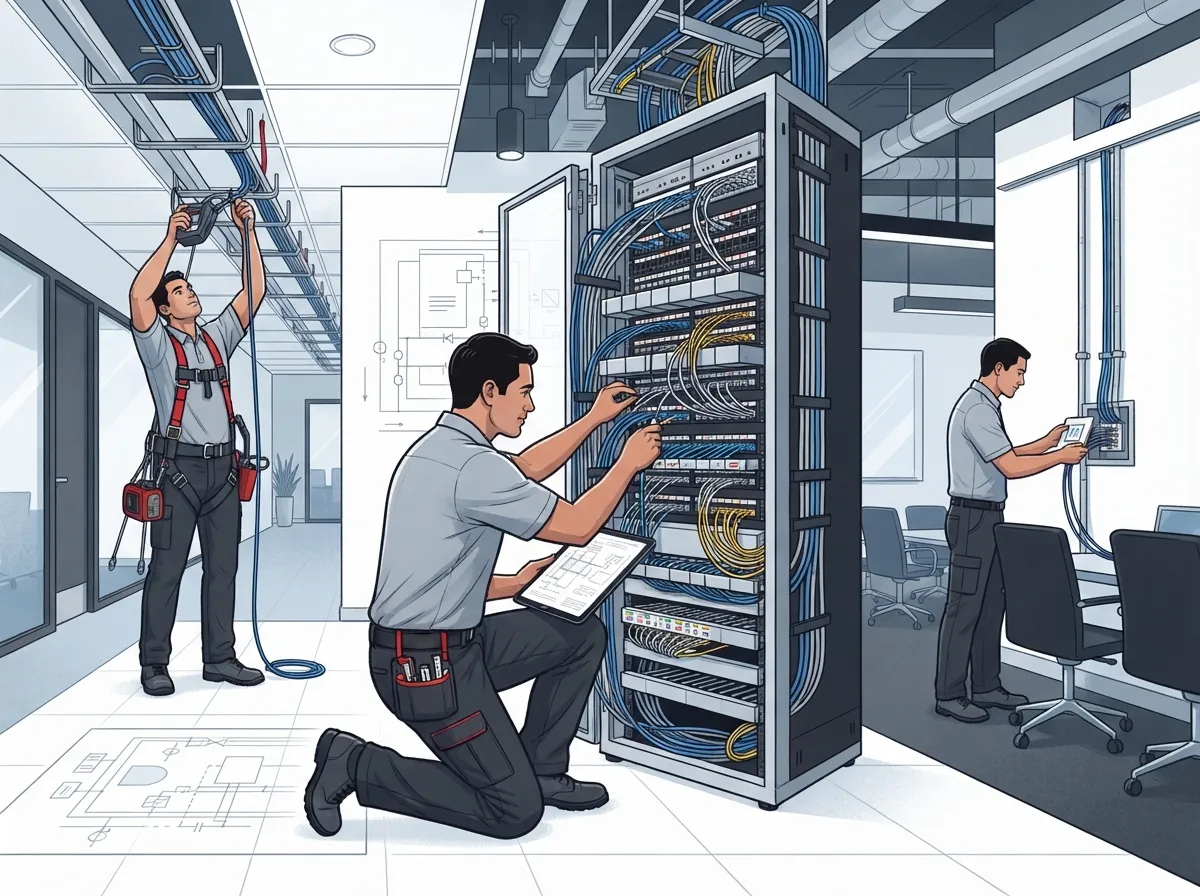
What Does a Structured Cabling Contractor Actually Do?
A structured cabling contractor installs the physical wiring that connects your business technology. This includes everything from phone lines to internet connections to security cameras. They design the layout, run the cables, and test everything before they leave.
Good contractors don’t just show up and start drilling holes. They plan the whole system first. This means mapping out where your servers, workstations, and devices will connect. It also means picking the right cable type for your needs, whether that’s CAT6 or fiber optic lines.
Core Services You Should Expect
When hiring a contractor in Spring Hill, look for these essential services:
- Site survey and network design consultation
- CAT5e, CAT6, and fiber optic cable installation
- Network rack and patch panel setup
- Cable testing and certification
- Wi-Fi access point installation and configuration
- VoIP phone system integration
- Security camera and access control wiring
- Ongoing maintenance and support plans
A contractor who handles all these services under one roof saves you time and stress. You won’t need to juggle five different vendors just to get your office connected.
Certifications That Actually Matter
Not every contractor is created equal. The best ones carry certifications that prove they know what they’re doing. Look for BICSI certified engineers or RCDDs (Registered Communications Distribution Designers) on the team.
These certifications mean the contractor follows industry standards for cable design and installation. This matters because poorly designed systems fail faster and cost more to fix later. A certified technician plans for growth, not just today’s needs.
| Certification | What It Means | Why It Matters |
|---|---|---|
| BICSI Certified | Trained in cabling design standards | Ensures code-compliant, future-ready installs |
| RCDD | Registered Communications Distribution Designer | Handles complex, large-scale network design |
| Manufacturer Certified | Trained on specific cable brands | Guarantees proper installation for warranty coverage |
How Much Does Structured Cabling Cost in Spring Hill?
Costs vary quite a bit depending on the size of your project. A small office setup with managed switching and Wi-Fi typically runs between $1,500 and $3,000. Larger commercial jobs, especially multi-floor buildings with VLANs and firewalls, can cost $5,000 to $15,000 or more.
Manufacturing facilities and warehouses usually fall on the higher end because of the scale and industrial-grade equipment needed. It’s smart to get a few quotes before committing so you understand what’s included.
Factors That Affect Your Final Price
- Square footage of your facility
- Number of workstations and devices needing connections
- Whether you need fiber optic runs between buildings
- Existing infrastructure that needs to be replaced or upgraded
- Speed of installation (rush jobs often cost more)
- Ongoing support and maintenance agreements
If you want help comparing pricing across providers before committing to anything, it helps to work with a partner who understands common cost mistakes business owners make when budgeting for network upgrades.
Choosing the Right Contractor for Your Business
Picking a contractor feels overwhelming when you don’t know what to look for. Here’s a simple process to make the decision easier.
- Ask about their certifications and years of experience
- Request references from similar businesses in your industry
- Get a detailed written quote, not just a rough estimate
- Confirm they handle testing and certification after installation
- Ask if they offer ongoing support once the job is done
- Check if they can scale the system as your business grows
- Make sure they carry proper insurance and licensing
Small business owners especially benefit from working with a contractor who explains things in plain language. You shouldn’t need a technical degree to understand your own network setup.
Questions to Ask Before You Sign a Contract
Before hiring anyone, ask these questions to avoid surprises later:
- What cable types do you recommend for our specific setup?
- How long will the installation take from start to finish?
- Will there be any downtime during the work?
- What happens if something breaks after installation?
- Do you offer bundled services like VoIP and security cameras?
Structured Cabling for Manufacturing and Industrial Facilities
Spring Hill’s manufacturing sector, driven largely by the GM plant, has unique cabling needs. Industrial environments deal with heat, dust, vibration, and electromagnetic interference that office buildings never face.
Contractors serving this sector need experience with ruggedized cabling and industrial-grade connectors. They also need to understand how to route cables around heavy machinery without creating safety hazards.
If your facility supports logistics or supply chain operations, your network also needs to handle real-time data tracking. This means your cabling infrastructure has to support fast, reliable connections across large warehouse spaces.
Supporting VoIP, Wi-Fi, and Security With Proper Cabling
Structured cabling isn’t just about internet speed. It’s the foundation for almost every piece of technology in your building. Your VoIP phone system depends on solid cabling to avoid dropped calls and choppy audio.
Managed Wi-Fi networks also rely on properly placed access points connected through structured cabling. If your cabling is outdated or poorly planned, your wireless coverage will have dead zones no matter how good your router is.
Security cameras and access control systems need dedicated cabling too. A single contractor who handles all these systems together saves you from coordinating multiple vendors and avoids compatibility headaches down the road.
| System | Cabling Requirement | Common Issue Without Proper Cabling |
|---|---|---|
| VoIP Phones | CAT6 or better | Dropped calls, poor audio quality |
| Managed Wi-Fi | CAT6 to access points | Dead zones, slow speeds |
| Security Cameras | CAT6 or coax with power | Footage gaps, connection drops |
| Access Control | Low-voltage dedicated lines | Door failures, delayed entry |
Planning for Future Growth
Spring Hill isn’t slowing down anytime soon. If your business is planning to expand, your cabling system should be built with tomorrow in mind, not just today.
Ask your contractor about scalability. Can they add more ports later without ripping out walls? Can the system support faster speeds as technology improves? These questions matter more than you might think, especially for growing companies and franchise operators managing multiple locations.
Businesses with several sites benefit from working with providers who understand reliable network solutions for multi-location businesses, since consistency across sites keeps IT management simple.
Signs Your Current Cabling Needs an Upgrade
- Frequent internet outages or slow speeds
- Phone calls dropping or sounding choppy
- Wi-Fi dead zones in certain parts of your building
- Security cameras losing connection randomly
- Adding new employees requires major rewiring work
Working With a Single Point of Contact
Managing separate vendors for phones, internet, cameras, and cabling gets exhausting fast. That’s why many businesses prefer working with a partner who handles everything under one roof.
Ideal Solutions Provider has spent over 24 years helping businesses simplify their telecom setups. While based in Tampa, the company partners with 35+ vetted suppliers nationwide, offering everything from structured cabling to VoIP phone systems and cloud security cameras. This approach means one phone call solves multiple problems instead of juggling several contracts.
IT managers especially appreciate this model because it means fewer headaches when something needs troubleshooting. Instead of calling three different companies, you make one call and get answers.
Common Mistakes to Avoid
Even well-meaning business owners make mistakes when planning their cabling projects. Here are the most common ones to watch for.
- Choosing the cheapest quote without checking certifications
- Skipping the planning phase and rushing installation
- Not asking about future scalability needs
- Ignoring proper labeling and documentation of the system
- Forgetting to test and certify the cabling after install
Avoiding these mistakes saves you money and frustration later. A well-planned system pays for itself through fewer outages and easier troubleshooting.
Final Thoughts on Finding Your Contractor
Spring Hill’s growth shows no signs of slowing down, and your business technology needs to keep pace. A qualified structured cabling contractor Spring Hill business owners trust will handle everything from planning to installation to ongoing support. Look for certifications, ask the right questions, and choose a partner who understands both office and industrial environments.
Whether you’re setting up a small office or a full manufacturing facility, the right cabling foundation makes everything else work better. From VoIP phones to security cameras, it all starts with solid wiring. If you want help planning your next project, our team is ready to walk you through the options. Contact us today to get started, or simply call us to talk through your specific needs.
You can also follow along with helpful tips and updates on our Facebook page, check out installation videos on our YouTube channel, or see behind-the-scenes photos on Instagram. And if you’re curious about how choosing the right Internet Service Provider pairs with your cabling setup, our team can walk you through that too.
FAQs
Q: What structured cabling contractors serve Spring Hill, TN for industrial facilities?
A: Spring Hill has several contractors who specialize in industrial-grade cabling for manufacturing and logistics facilities. Look for companies with BICSI certified technicians who understand the unique demands of the GM plant area and similar industrial environments. It’s always smart to ask for references from other manufacturing clients before signing anything.
Q: How much does structured cabling installation cost in Spring Hill, Tennessee?
A: Small office setups typically run $1,500 to $3,000, while larger commercial installations can range from $5,000 to $15,000 or more. The final price depends on your building size, cable type, and how many devices need connections. Getting a few quotes helps you understand what’s fair for your specific project.
Q: Which contractors in Spring Hill offer BICSI certified structured cabling services?
A: Several local providers employ BICSI certified engineers and RCDDs, which ensures your cabling meets industry standards. These certifications matter because they guarantee proper design and installation that scales with your business. Always ask a contractor directly about their certification status before hiring them.
Q: What structured cabling solutions support VoIP and Wi-Fi in Spring Hill businesses?
A: CAT6 cabling is the go-to choice for supporting both VoIP phones and managed Wi-Fi networks reliably. This cable type handles the bandwidth needed for clear calls and fast wireless coverage throughout your office. A good contractor will design your layout so access points and phones get consistent, strong connections.
Q: How do I choose a certified structured cabling contractor in Spring Hill, TN?
A: Start by checking for BICSI certifications and asking for references from businesses similar to yours. Request a detailed written quote and confirm they test and certify their work after installation. It also helps to pick a contractor who offers ongoing support, so you’re covered if issues pop up later.