
Key Takeaways
-
Compromised credentials played a role in 22% of breaches according to Verizon's 2025 report, with credential stuffing comprising 19-25% of daily login attempts across cloud systems—implement MFA for all logins immediately.
-
Encryption in transit and at rest are both essential; data moving between systems (VoIP calls) and stored data (recordings, backups) require separate protection layers to eliminate security gaps.
-
Zero-trust architecture requires treating every login, device, and admin session as untrusted regardless of location; use short-lived credentials, reauthentication, and encrypted internal traffic between all cloud services.
-
Role-based access control combined with centralized identity management prevents employees from accessing unnecessary data and simplifies security across multi-location franchises without multiplying risk.
-
Before choosing a cloud telecom provider, confirm they encrypt both in transit and at rest, support MFA by default, clearly explain key management processes, and can deprovision access immediately for departing employees.
-
Common mistakes like sharing admin logins, skipping MFA, forgetting to remove former employee access, and ignoring audit logs significantly weaken security—these require habit changes rather than technical overhauls.
Picture this: your Tampa office uses a cloud-based door system, VoIP phones, and security cameras, all humming along in the background. Sounds great, right? But have you ever stopped to wonder what’s actually keeping strangers from peeking into your call logs or unlocking your front door from a laptop in another state? That’s where cloud access control encryption steps in, and honestly, it’s one of those topics that sounds intimidating but is actually pretty simple once someone breaks it down for you (that’s us, by the way, and we’re happy to do it).
Whether you run a small Tampa shop, manage IT for a growing company, or oversee several franchise locations, this topic touches your business every single day. Cloud access control encryption is the quiet bodyguard behind your VoIP calls, your building’s entry system, and your cloud security cameras. Let’s walk through what it means, why it matters, and how you can make sure your business is protected without needing a computer science degree.
What Is Cloud Access Control Encryption, Really?
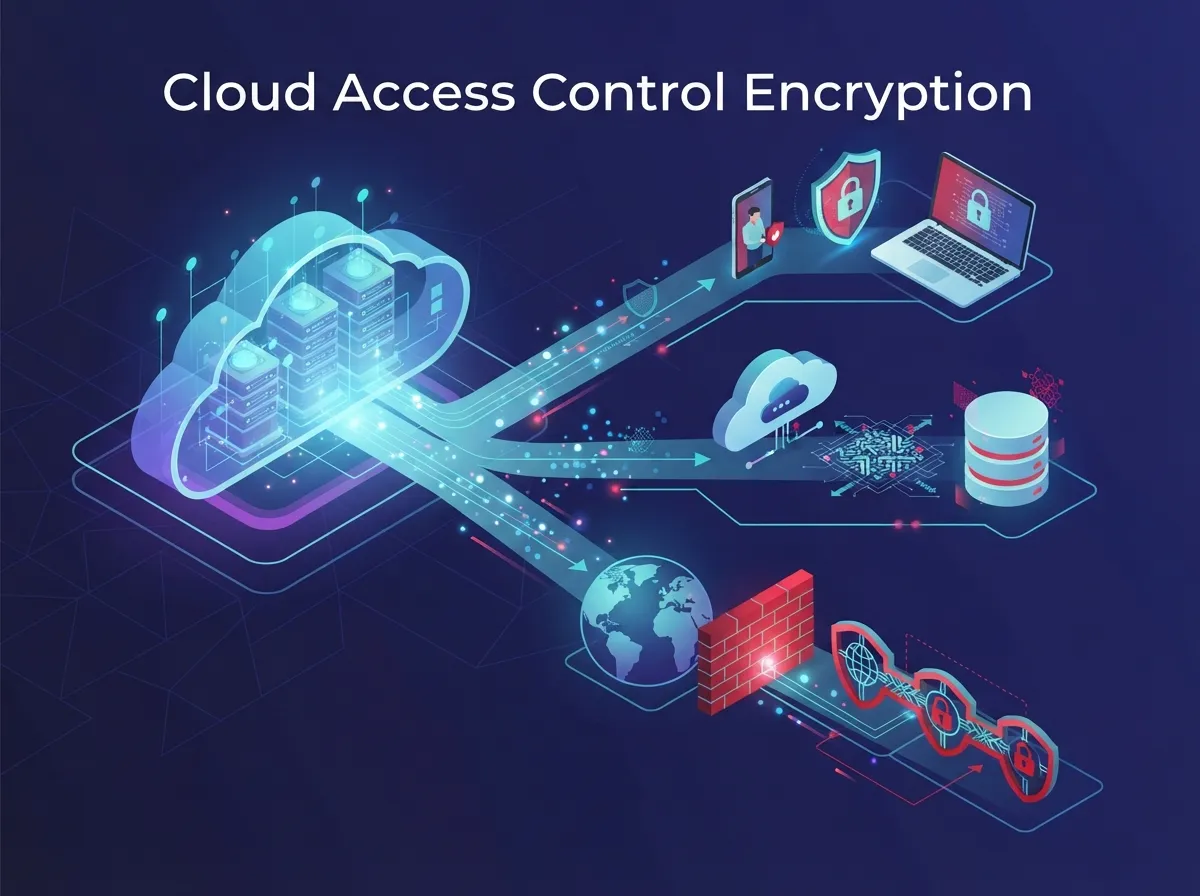
In simple terms, cloud access control encryption combines two ideas: deciding who gets in, and scrambling data so outsiders can’t read it even if they somehow get their hands on it. Think of it like a building with a keycard system (access control) plus a safe that only opens with the right combination (encryption). Both pieces work together to keep your business communications and building security locked down tight.
For businesses using VoIP phones, cloud contact centers, SD-WAN connections, or cloud-based access control systems, this pairing matters more than ever. Access control decides who or what can reach a system and under what conditions. Encryption protects your data if someone manages to intercept it anyway, whether that’s a phone call, a stored recording, or a door-entry log.
Why Small and Mid-Sized Businesses Can’t Ignore This
You might think hackers only go after big corporations. Unfortunately, that’s not true anymore. Smaller businesses are often targeted because they’re seen as easier entry points. Verizon’s 2025 Data Breach Investigations Report found that compromised credentials played a role in 22% of reviewed breaches. That’s a big chunk, and it’s a wake-up call for any business using cloud phone systems or cloud-based access control systems.
Here’s another eye-opener: the same Verizon research found credential stuffing made up a median of 19% of daily login attempts across analyzed systems. For enterprise-sized companies, that number jumped to 25%. Even small businesses saw a 12% rate. In plain English, bad actors are constantly trying stolen passwords on cloud logins, hoping one works.
Access Control vs. Encryption: What’s the Difference?
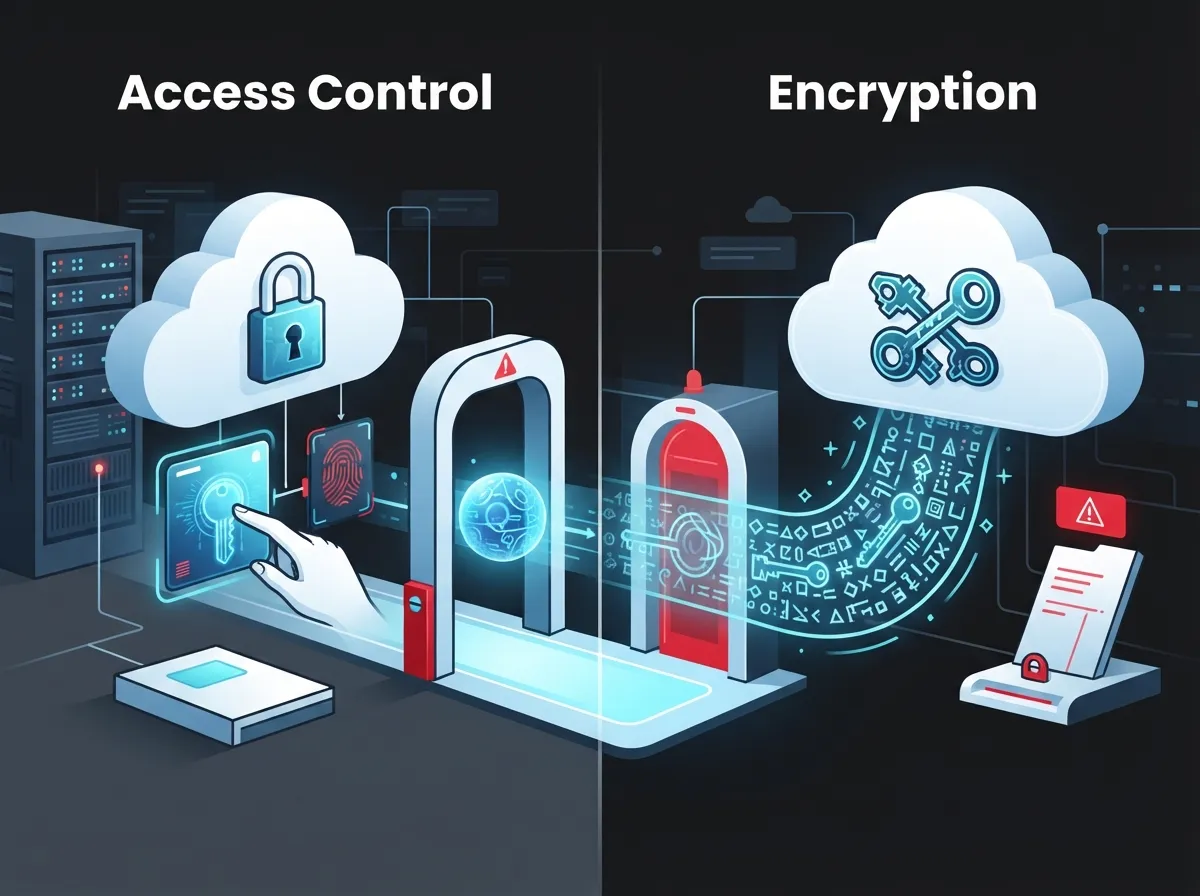
People often mix these two up, so let’s clear the air. Access control is about permission. Encryption is about protection. You need both, and neither one alone is enough to keep your business safe.
| Feature | Access Control | Encryption |
|---|---|---|
| Main Job | Decides who can log in or enter | Scrambles data so it can’t be read |
| Applies To | Users, devices, admins, apps | Data in transit and at rest |
| Example | MFA login for a VoIP admin portal | Encrypted voicemail storage |
| Fails If | Weak passwords or no MFA | Poor key management |
According to NIST SP 800-210, published in July 2020, cloud access control needs to account for broad network access, shared resources, and rapid scaling. That’s exactly what happens in cloud telecom systems, where users log in from phones, laptops, and office desks all at once.
Where Encryption Shows Up in Your Telecom Setup
You might not realize how many parts of your business phone and security systems rely on encryption. Here’s a quick rundown of the areas that need protection:
- VoIP calls and voicemail messages
- Unified communications and messaging platforms
- Cloud contact-center recordings and transcripts
- SD-WAN and SIP trunk traffic
- Customer records and billing data
- Admin portals and configuration dashboards
- Mobile softphone apps and remote logins
- Cloud video security footage and access-control logs
If any of these pieces get overlooked, that’s a gap someone could exploit. This is why a proper cloud-based phone system setup should always include encryption at every layer, not just the obvious ones.
The Zero-Trust Approach: Why Location Doesn’t Matter Anymore
Old-school security assumed that if you were inside the office network, you were trustworthy. That thinking doesn’t hold up anymore, especially with remote teams, mobile softphones, and multi-location franchises. Zero-trust flips the script: nobody gets automatic trust, no matter where they’re connecting from.
NIST SP 800-207A, published in 2023, recommends encrypted connections between every service endpoint, whether that’s a subnet, a cloud region, or an on-premises server. It also suggests using short-lived, verifiable credentials that expire quickly and require regular reauthentication. In other words, don’t trust a login forever just because it worked once.
How Zero-Trust Applies to Cloud Telecom
For businesses running cloud PBX systems, SD-WAN solutions, or cloud access control providers, zero-trust means every device, app, and admin gets checked constantly. Here’s what that typically looks like in practice:
- Every login requires multi-factor authentication (MFA)
- Access is limited to only what each role truly needs
- Admin sessions expire after a set time and require reverification
- All traffic between cloud services stays encrypted, even internally
- Every access attempt gets logged and reviewed
This isn’t just theory. It’s the kind of setup that separates a business that bounces back from an attempted breach from one that doesn’t.
Building a Strong Access Control Strategy for Your Business
Let’s get practical. If you’re an office manager or IT lead trying to strengthen your telecom security, here are the building blocks worth focusing on:
- Use role-based or attribute-based access control so employees only see what they need
- Require MFA for every admin and user login, no exceptions
- Centralize identity management so you’re not juggling ten different logins
- Set up privileged-access controls for anyone touching sensitive systems
- Deprovision former employees immediately, not weeks later
- Keep detailed audit logs of who accessed what and when
Verizon’s 2025 research also found that in a typical infostealer-malware case, only 49% of a person’s passwords across different services were unique. That statistic alone should convince any office manager that MFA and strong identity controls aren’t optional extras anymore.
Encryption in Transit vs. At Rest: Do You Need Both?
Short answer: yes, absolutely. Encryption in transit protects data while it’s moving, like a phone call traveling across the internet. Encryption at rest protects data sitting in storage, like a recorded voicemail or a backup file.
| Type | Protects | Common Use Case |
|---|---|---|
| In Transit | Data moving between systems | VoIP calls, SIP signaling, API requests |
| At Rest | Stored data | Call recordings, cloud camera footage, backups |
A good cloud telecom provider handles both, and they should be able to explain their approach clearly. If you’re unsure how your current setup handles this, it might be worth a conversation with a telecom expert who gets results.
Who Manages the Encryption Keys?
This question trips up a lot of business owners, and it’s a fair one to ask. Sometimes the cloud provider manages encryption keys. Sometimes the customer does. Sometimes it’s shared. You need to know which model applies to your systems.
- Ask who owns and rotates the encryption keys
- Find out how keys get revoked if an employee leaves
- Confirm there’s a backup and recovery plan for keys
- Check if there’s separation of duties between key holders
- Request access logs showing who touched the keys and when
NIST IR 8450, updated December 20, 2023, dives into attribute-based encryption and access control, which is a more advanced approach some providers use for sensitive data. You don’t need to memorize the technical details, but you should feel comfortable asking your provider these questions.
How to Evaluate a Cloud Telecom Provider’s Security
If you’re shopping around for a new cloud-based access control company or VoIP provider, here’s a simple checklist to bring to those conversations:
- Do they encrypt data both in transit and at rest?
- Do they support MFA and role-based access by default?
- Can they explain their key management process clearly?
- Do they offer detailed audit logs and monitoring?
- How quickly can they deprovision access when someone leaves your team?
- Do they follow zero-trust principles across their cloud infrastructure?
A provider that hesitates or gives vague answers to these questions is a red flag. This is exactly the kind of audit that Ideal Solutions Provider performs for businesses across Tampa Bay and nationwide, comparing setups across 35+ vetted suppliers to find gaps before they become problems.
Common Mistakes That Weaken Cloud Access Control
We’ve seen a lot of setups over the years, and the same mistakes tend to show up again and again. Here’s what to watch out for:
- Sharing admin logins between multiple employees
- Skipping MFA because it feels like an extra step
- Forgetting to remove access for former employees or vendors
- Assuming the cloud provider handles all security automatically
- Not reviewing audit logs regularly
- Using the same password across multiple business tools
Fixing these issues doesn’t require a massive overhaul. Often it’s a matter of tightening a few settings and creating better habits across your team.
Bringing It All Together for Franchise and Multi-Location Businesses
If you’re managing several locations, this topic gets even more important. Every site adds another door, another VoIP extension, another set of logins. Centralized identity management and consistent encryption policies make it possible to scale without multiplying your risk. This is why scalable access control systems matter so much for growing franchise operations.
Structured cabling and reliable networking also play a supporting role here. A well-designed network, built on solid structured cabling, gives your cloud systems a stable foundation to run on. Pair that with a dependable Internet Service Provider connection, and you’ve got the groundwork for strong, secure cloud telecom performance across every location.
Final Thoughts: Protecting What Matters Most
Cloud access control encryption isn’t just a technical checkbox. It’s the difference between a business that sleeps well at night and one that’s constantly worried about what might slip through the cracks. From VoIP calls to building entry systems, every piece of your cloud telecom setup deserves this kind of protection.
The good news? You don’t have to figure this out alone. With over 24 years of experience and partnerships across 35+ vetted suppliers, our team can review your current setup, spot the gaps, and recommend solutions that actually fit your business. Ready to get started? Contact us for a free consultation, or call us today to talk through your options. And if you want to see real examples of our work, check us out on Facebook, Instagram, or YouTube. Your business deserves protection that works as hard as you do.
FAQs
Q: What is cloud access control encryption for business telecom systems?
A: It’s the combo of deciding who can access your cloud phone or security systems, plus scrambling the data so it stays private. Think of it as a keycard system paired with a locked safe. Both work together to keep your VoIP calls, camera footage, and door access logs protected.
Q: Should business telecom data be encrypted in transit, at rest, or both?
A: Both, no question about it! Data moving between systems, like a phone call, needs encryption in transit. Data sitting in storage, like a recorded voicemail, needs encryption at rest too. Skipping either one leaves a gap someone could slip through.
Q: Who manages encryption keys in a cloud telecom service, the provider or the customer?
A: It depends on the provider and the setup, and honestly, this is a great question to ask before signing up. Some providers manage keys entirely, others share responsibility with you. Always ask about key rotation, backup, and recovery so there are no surprises later.
Q: How can a business implement zero-trust access control for cloud telecom services?
A: Start with MFA for every login, no exceptions, and give people access only to what they truly need. Add short-lived credentials that expire and require reauthentication regularly. It sounds like a lot, but a good telecom partner can set this up smoothly for you.
Q: How can businesses evaluate a cloud telecom provider’s access control and encryption capabilities?
A: Ask direct questions: Do they encrypt data both ways? Do they support MFA by default? Can they explain key management clearly? A provider that answers confidently and clearly is one worth trusting with your business communications.