

Key Takeaways
-
Distinguish between installer credentials and cabling certification: a certified installer doesn't automatically mean certified cabling installation—you need both qualified technicians and documented test results proving the finished work meets standards.
-
Know the key ANSI/TIA standards that govern your project: TIA-568 (cabling systems), TIA-569 (pathways), TIA-606 (labeling), and TIA-607 (grounding), and confirm which edition your local building authority requires before work begins.
-
Require comprehensive closeout documentation including individual cable test results, test settings, as-built drawings, labeling, and identification of each link to ensure accountability and enable future troubleshooting.
-
Use properly calibrated field testers matched to your cable category; a tester rated for Cat5e won't meet accuracy requirements for Cat6A, so confirm your contractor's equipment before signing off on any project.
-
Ensure firestopping is performed correctly wherever cabling penetrates fire-rated walls or floors using approved methods, as improper firestopping can fail inspection and create serious safety risks.
-
Verify that your local authority having jurisdiction (AHJ), not just your contractor, approves the final installation and firestopping work, as inspectors confirm code compliance before sign-off.
Ever signed off on a big cabling project, only to find out later that half the links fail testing? It happens more often than you’d think. When your Tampa business invests in new network cabling, you need to know exactly what “certified” really means. Otherwise, you could end up with slow internet, dropped calls, and a headache-inducing punch list right before your grand opening.
Here’s the good news: cabling certification isn’t some mysterious black box. It’s a mix of clear standards, proper testing, and the right paperwork. In this guide, we’ll walk through 14 things every business owner, IT manager, or office administrator should know about cabling certification requirements. Whether you’re planning a network cabling installation in Tampa Bay or expanding to new locations, this list will help you ask the right questions and avoid costly surprises.

1. Understand That “Certification” Means Two Different Things
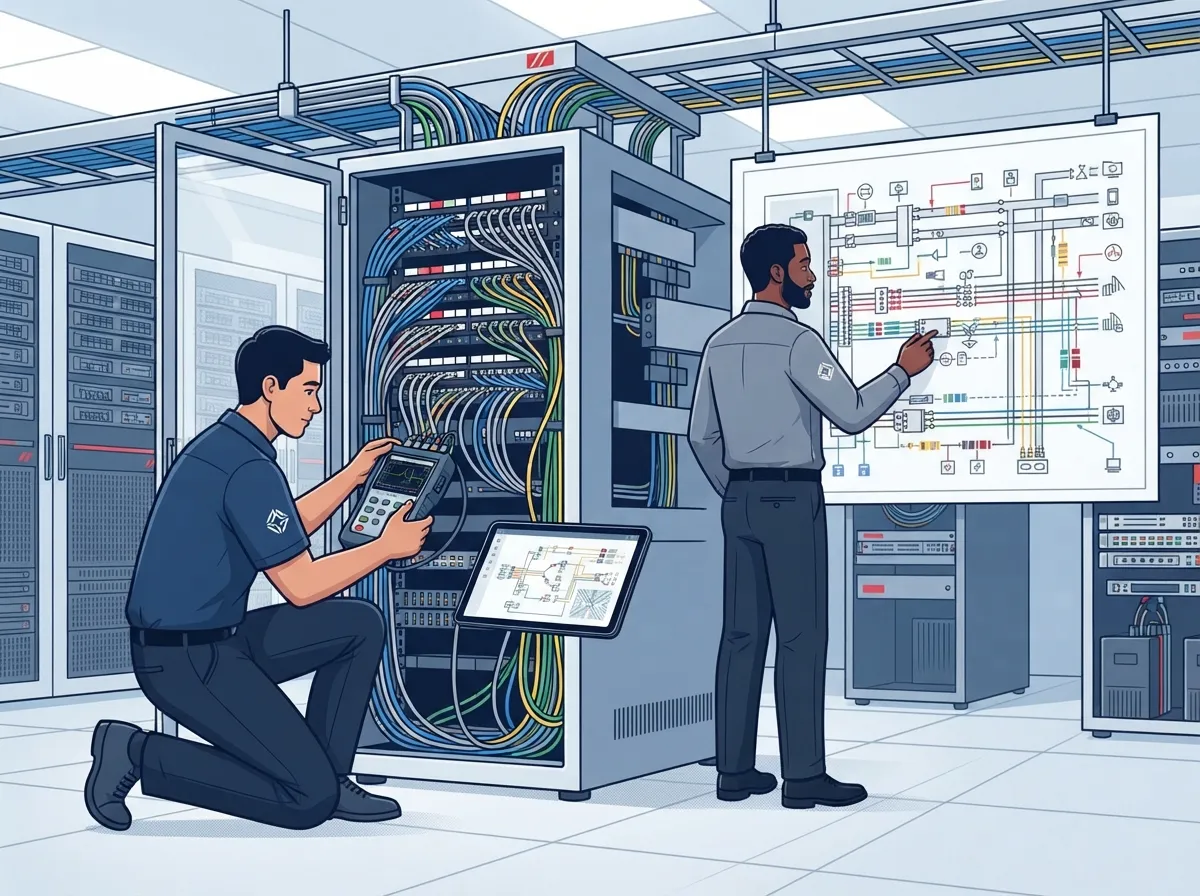
This trips up a lot of business owners. In the cabling world, “certification” can mean two separate things. First, it can mean a credential an installer earns, like a training badge. Second, it can mean documented test results proving your cabling actually works as promised.
Having a certified installer on your team does not automatically mean your cabling installation is certified. You need both pieces: qualified people doing the work, and test reports proving the finished job meets the standard. Confusing these two ideas is one of the most common mistakes we see in the field.
2. Know the ANSI/TIA Standards That Set the Rules
Most business cabling projects follow a family of standards from ANSI/TIA. These are the technical rulebooks that installers and testers use nationwide. Here are the big ones you should recognize:
- TIA-568 covers cabling systems and components, like cable types and connector specs
- TIA-569 covers pathways and spaces, meaning how cable routes through walls and ceilings
- TIA-606 covers labeling and administration, so techs can find and fix problems fast
- TIA-607 covers bonding and grounding, which protects your equipment from electrical issues
These standards get updated over time, so always confirm which edition your project or local building department requires. A good contractor will know this without you having to ask twice.
3. Confirm Which Standard Edition Applies to Your Project
Here’s something a lot of business owners don’t realize: standards change every few years. What was acceptable five years ago might not meet today’s requirements. Before work begins, ask your provider which edition of the TIA standards they’re following, and confirm it matches what your local building authority expects.
This step matters even more if you’re a multi-location business managing sites across different cities or states. Local rules can vary, so don’t assume your Tampa office and your Orlando office follow identical requirements.
4. Learn What Copper Cable Testing Actually Checks
If your office runs on copper cabling, like standard Ethernet cable, certification testing involves a calibrated field tester checking several things at once. Here’s what a proper test typically measures:
- Wiremap, to confirm wires are connected correctly
- Length, to make sure cable runs aren’t too long
- Insertion loss, which measures signal strength loss
- Return loss, which checks for signal reflections
- Crosstalk, which measures interference between wire pairs
- Propagation delay, which measures how fast signals travel
The exact limits depend on your cable category, like Cat6 or Cat6A, and the standard your project specifies. Ask your contractor which tester they use and whether it meets the required accuracy level for your cabling type. For a deeper dive into cable categories, check out our guide on key differences between Cat5e and Cat6 cabling.
5. Understand Fiber Optic Testing Requirements
Fiber cabling gets tested differently than copper. Acceptance testing usually measures optical loss using a proper test set and reference method suited to your specific link. This tells you how much signal strength is lost as light travels through the fiber.
Some backbone links or troubleshooting situations may also call for OTDR testing, which creates a detailed map of the fiber’s performance. But OTDR alone usually isn’t a substitute for the standard loss test unless your contract specifically says otherwise. If you’re exploring options, our article on fiber optic cabling services for commercial buildings breaks down the basics.
6. Don’t Overlook Fire and Electrical Code Requirements
Cabling certification isn’t only about network speed. Safety codes matter just as much. The National Electrical Code and your local building and fire codes govern how cabling gets installed, especially around fire-rated walls and ceilings.
Article 800.26 of the NEC addresses fire protection for communications cabling, though you’ll want to confirm the exact edition your local jurisdiction has adopted. Local amendments can change the details, so always check with your area’s authority having jurisdiction before assuming national rules apply exactly as written.
7. Make Sure Firestopping Gets Done Right
Whenever cabling passes through a fire-rated wall or floor, that opening needs to be firestopped using approved methods. This preserves the fire rating of that wall or floor, which protects everyone in the building.
Skipping this step, or doing it incorrectly, can fail inspection and create serious safety risks. A reputable structured cabling contractor will know local firestopping requirements and won’t cut corners here, even if it means extra time on the job.
8. Know What BICSI Credentials Actually Cover
You’ve probably heard of BICSI certifications if you’ve researched cabling contractors. BICSI offers professional training programs, but it’s important to know these are qualifications, not government licenses. Nobody legally requires a BICSI credential to install business cabling in most areas.
That said, many owners and contracts specifically request BICSI-trained technicians because the training covers installation, termination, testing, troubleshooting, grounding, and firestopping. It’s a solid signal of skill, even if it’s not a legal requirement everywhere.
9. Understand the BICSI Installer 1 Credential
BICSI Installer 1 is an entry-level, non-renewable certificate. It doesn’t require any prior cabling experience, which makes it a starting point for new technicians rather than proof of advanced skill.
Candidates must pass both a written exam and a hands-on exam to earn this credential. One helpful detail: applications for the hands-on exam must be submitted at least seven days before the scheduled test date. If you’re vetting a cabling team, ask which BICSI levels their techs hold, since more advanced credentials usually mean more experience.
| Credential Type | Experience Required | Exam Format |
|---|---|---|
| BICSI Installer 1 | None required | Written and hands-on |
| BICSI Installer 2 | Prior field experience typically expected | Written and hands-on |
| BICSI Technician | Advanced field experience | Written and hands-on |
10. Ask for a Complete Closeout Documentation Package
A strong cabling project doesn’t end when the last cable gets plugged in. You need documentation proving the work meets requirements. Here’s what a solid closeout package should include:
- Identification of each individual cable link
- Pass or fail test results for every link tested
- Test settings used during certification
- Reports in a usable, readable format
- Labeling that matches your cable schedule
- As-built drawings showing exactly where cables run
Don’t assume these deliverables come standard. Spell them out clearly in your contract before work begins, so there’s no confusion later. Good documentation also makes future troubleshooting much easier for your managed network services team.
11. Verify Who Approves the Final Installation
It’s easy to assume your contractor has the final word, but that’s not quite right. The authority having jurisdiction, often called the AHJ, is the one who ultimately approves installation and firestopping work in your building.
Your contractor is responsible for doing quality work that meets code, but local inspectors confirm it passes. Knowing this distinction helps you understand who to contact if there’s ever a dispute about whether work meets requirements.
12. Match Your Tester to Your Cable Category
Different cable categories need different testing tools and accuracy levels. A tester built for basic Cat5e cabling might not meet the accuracy standards required for Cat6A or higher. If your contractor uses the wrong tester, your certification results may not hold up.
Before signing off on any project, ask your provider what testing equipment they’ll use and confirm it’s rated for your specific cable type. This small question can save you from major headaches down the road, especially if you’re planning to scale your network later.
13. Build Certification Requirements Into Your Contract
Don’t leave certification requirements as an afterthought. Spell them out clearly in your project contract from day one. Include the specific standard edition, the testing method, and the exact documentation you expect at closeout.
This protects you if something goes wrong later. It also sets clear expectations for your contractor, so nobody’s guessing what “certified” means for your specific project. Think of it as your safety net for accountability.
14. Partner With a Provider Who Understands the Full Picture
Cabling certification touches technical standards, safety codes, testing equipment, and paperwork all at once. That’s a lot for any business owner to track alone, especially while running daily operations.
Working with an experienced structured cabling partner takes this weight off your shoulders. At Ideal Solutions Provider, we’ve spent over 24 years helping Tampa businesses and companies nationwide navigate exactly these requirements, from initial structured cabling services planning through final testing and documentation. We follow you can trust because we’ve done this thousands of times, and we know what questions actually matter.
If you’re still relying on outdated wiring or unsure whether your last installation was properly certified, our guide on signs your business needs structured cabling can help you spot warning signs early.
Good cabling forms the backbone of everything else in your office, including your cloud-based phone system, your internet connection, and your security cameras. You can learn more about how structured cabling supports your entire network by reading trusted industry resources, and you can also see real project examples on our YouTube channel.
Certification requirements might feel complicated at first glance, but they don’t have to be a source of stress. With the right partner asking the right questions, you can feel confident your network will perform exactly as promised, today and years from now. Follow us on Facebook and Instagram for more helpful tips on business telecom and cabling projects.
Ready to make sure your next cabling project is done right the first time? Contact us today for a free consultation, or call us to talk through your specific cabling certification needs with our friendly team.
FAQs
Q: What certifications should a commercial cabling installer have?
A: Great question! Many contractors hold BICSI credentials like Installer 1 or Technician level, which show they’ve passed both written and hands-on exams. That said, credentials alone don’t certify a job, so also ask about their testing process and documentation.
Q: Is BICSI certification required by law to install business network cabling?
A: Nope, not typically. BICSI credentials are professional qualifications, not government licenses. Many owners and contracts request them anyway because they’re a good sign of solid training and hands-on skill.
Q: What does cable certification testing actually verify?
A: It confirms your installed cabling meets the performance specs required by your project, like proper wiremap, length, signal loss, and crosstalk levels. Think of it as a report card proving your network will actually work as promised.
Q: What tester is required to certify Cat 6 or Cat 6A cabling?
A: You’ll need a calibrated field certifier rated for the accuracy level your specific cable category requires. Using the wrong tester can give you inaccurate results, so always confirm with your contractor beforehand.
Q: Who is responsible for approving cabling installation and firestopping?
A: Your contractor does the work, but the local authority having jurisdiction, or AHJ, gives final approval. They inspect the job to confirm it meets code before signing off, especially for fire-rated wall penetrations.