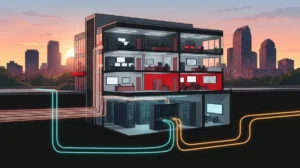
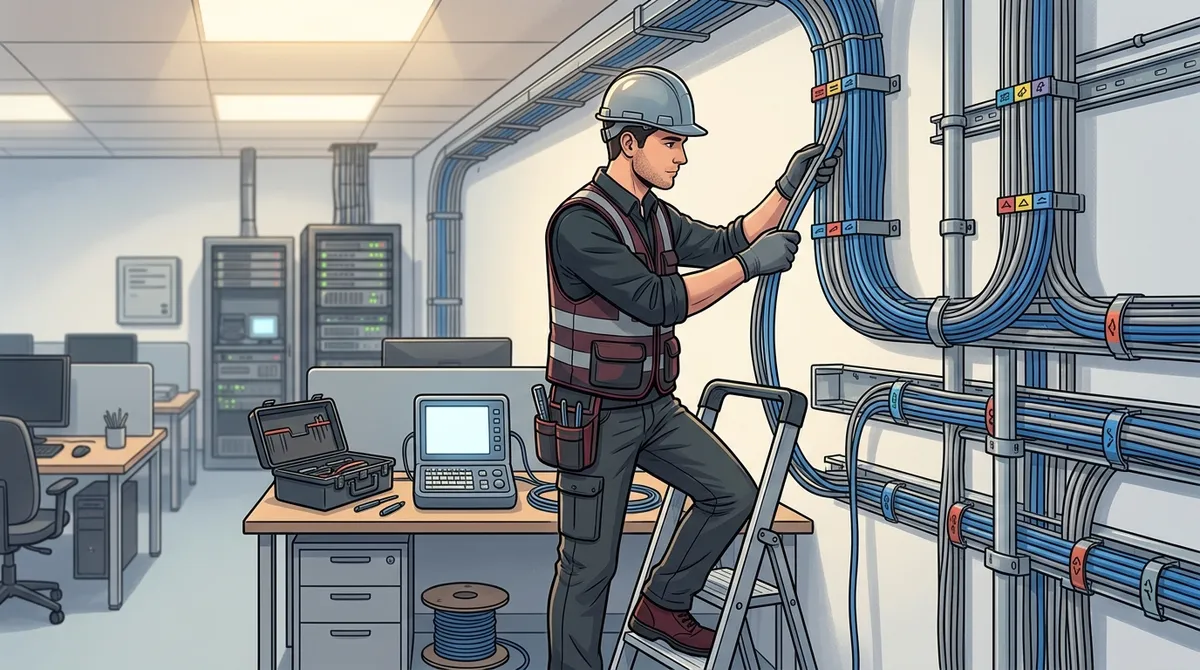
Key Takeaways
-
Assess your business needs before installation by determining the number of workstations, devices requiring connection, growth plans, and integration requirements like VoIP, cameras, and access control systems.
-
Cat6 cabling is the optimal choice for most Tampa Bay offices, offering speeds up to 10 Gbps at an affordable price point suitable for VoIP, video, and data traffic.
-
Professional cabling installation must include cable testing, consistent labeling, and comprehensive documentation to ensure signal quality, enable future troubleshooting, and support business growth.
-
Plan your cabling layout to identify main distribution points, map all endpoint locations, calculate distances accurately, and add redundant drops in key areas to accommodate future expansion without rewiring.
-
Choose an experienced local contractor with commercial certifications, bundled telecom services, and proven testing practices rather than generalist providers to prevent costly rework and ensure system integration.
-
Avoid common mistakes including skipping growth planning, choosing incorrect cable grades, neglecting testing phases, using poor labeling practices, and failing to plan for integrated systems like cameras and VoIP.
If your Tampa Bay business depends on fast, reliable communication, your network cabling is the foundation that makes it all work. Think of it like the roads in a city. Without good roads, nothing moves efficiently. Without solid cabling, your phones, internet, security cameras, and computers all struggle to perform. And when the network goes down? Everything stops.
Whether you run a small office in St. Petersburg, a growing company in Brandon, or a multi-location operation across the Tampa Bay area, getting your network cabling installation and setup right from the start saves you time, money, and a lot of headaches. In this guide, we’ll walk you through exactly how to plan a professional commercial cabling project — step by step — so your business communication infrastructure is built to last.
What Is Structured Cabling and Why Does It Matter?
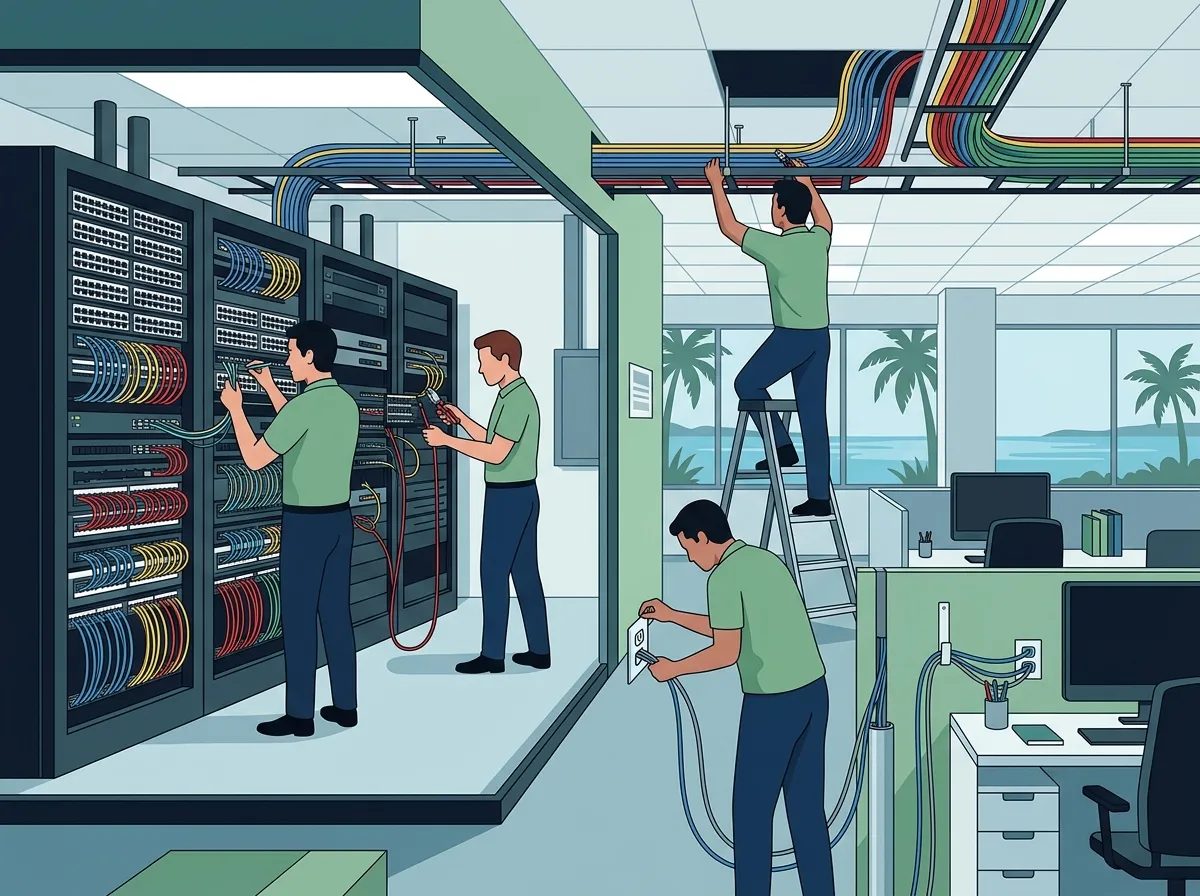
Before diving into the planning process, let’s quickly cover what we’re talking about. Structured cabling is a standardized system of cables, connectors, and hardware that forms the physical backbone of your business network. It connects your computers, VoIP phones, wireless access points, printers, security cameras, and other devices to each other and to the internet.
A well-designed cabling system isn’t just about plugging things in. It’s about creating a clean, organized, and scalable infrastructure that supports your business today and grows with you tomorrow. That’s why professional structured cabling services for Tampa businesses are so important to get right.

Step 1: Assess Your Business Needs Before You Start
The first step in any successful network cabling installation is understanding exactly what your business requires. Don’t skip this step — it’s where most projects go wrong.
Here are the key questions to ask during your assessment:
- How many employees or workstations need network connections?
- What devices need to be connected (phones, computers, cameras, printers)?
- Do you need VoIP phone system support alongside data cabling?
- Will you need wireless access points throughout the space?
- Are there plans to grow your team or expand the office?
- Do you have security cameras or access control systems to integrate?
Getting clear answers to these questions helps your cabling contractor design a system that actually fits your operations. If you’re unsure about your current setup, learn how to work with a telecom expert who gets results so you start from the right place.

Step 2: Choose the Right Cable Type for Your Business
Not all network cables are created equal. The type of cabling you choose directly affects your network speed, reliability, and future-readiness. Here’s a simple comparison of the most common options used in Tampa Bay commercial installations:
| Cable Type | Speed Support | Max Distance | Best Use Case |
|---|---|---|---|
| Cat5e | Up to 1 Gbps | 100 meters | Basic office networks, budget installs |
| Cat6 | Up to 10 Gbps (short runs) | 100 meters | Most modern offices, VoIP, video |
| Cat6A | Up to 10 Gbps (full distance) | 100 meters | High-demand environments, data centers |
| Fiber Optic | Up to 100 Gbps+ | Thousands of meters | Backbone runs, multi-floor buildings, campuses |
For most small to mid-sized Tampa Bay offices, Cat6 is the sweet spot — it’s affordable and fast enough for VoIP, video, and data traffic. For larger buildings or higher bandwidth needs, Cat6A or fiber optic may be the better choice. You can learn more about why Cat6 cabling is a smart choice for Tampa businesses and explore fiber optic cabling services for commercial buildings in Tampa for high-bandwidth environments.
Step 3: Plan Your Cabling Layout and Routing
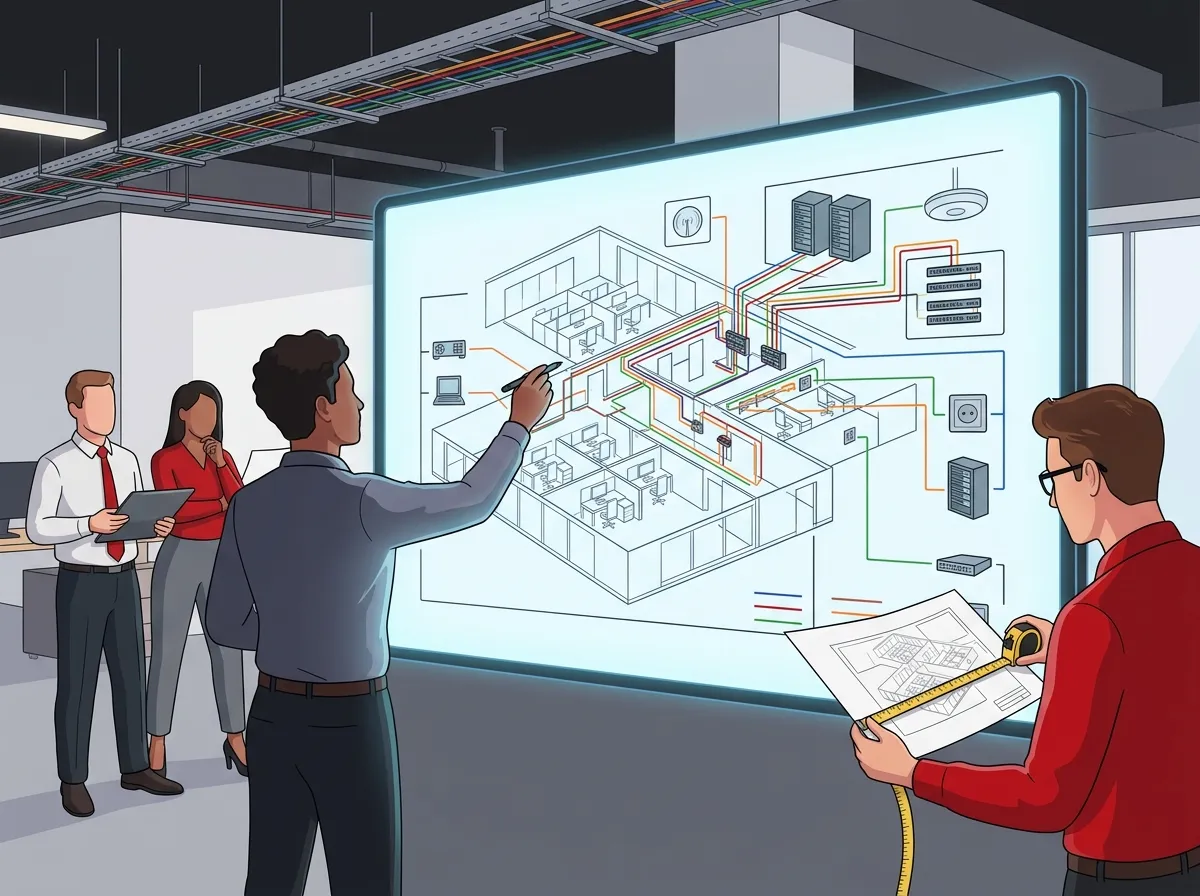
Now it’s time to map out where cables will run. This stage involves your building layout, the location of your telecom room or server closet, and how cables will be routed through walls, ceilings, and conduits.
Here’s what a professional cabling layout plan typically includes:
- Identify the main distribution point — This is usually a patch panel in a dedicated telecom or IT closet where all cables converge.
- Map out all endpoint locations — Mark every desk, access point, camera, and device that needs a network drop.
- Plan cable routing paths — Determine how cables will travel through the building, including conduit runs, ceiling cable trays, and wall penetrations.
- Calculate cable lengths — Measure distances carefully, accounting for routing (cables never go in straight lines in real buildings).
- Plan for redundancy — Add extra drops in key areas to accommodate future growth without rewiring.
A good layout plan prevents rework, reduces material waste, and makes the installation cleaner and more maintainable long-term. This is especially important for growing businesses that plan to add staff or equipment.
Step 4: Understand What the Installation Process Involves
Knowing what happens during a professional commercial cabling installation helps you prepare your workspace and set realistic timelines. Here’s what you can typically expect:
| Installation Phase | What Happens | Why It Matters |
|---|---|---|
| Cable Pulling | Cables are routed through walls, ceilings, and conduits to each endpoint | Proper routing protects cables and meets code requirements |
| Termination | Cable ends are connected to wall jacks, patch panels, and keystones | Proper termination ensures signal quality and reliability |
| Labeling | Every cable and port is clearly labeled with a consistent naming system | Makes troubleshooting and future changes much easier |
| Testing | Each cable run is tested for continuity, signal strength, and performance | Confirms every drop meets performance standards before go-live |
| Documentation | A full record of the cabling layout and test results is provided | Supports future moves, adds, and changes with minimal effort |
A reputable cabling contractor won’t just pull cables and leave. They’ll test everything, label it properly, and hand over documentation so your IT team or future technicians can manage the system easily. When looking for a qualified partner, check out what to expect from a structured cabling installation company in Tampa FL.
Step 5: Integrate Cabling With Your Other Business Systems
Here’s where the real value of a well-planned cabling project shines. Modern business networks don’t just support computers — they power your entire communications and security infrastructure. Your cabling should be designed to support all of it from day one.
Here are the key systems that rely on your structured cabling:
- VoIP phone systems — Cloud-based phone systems run over your data network, so quality cabling directly affects call clarity.
- High-speed internet — Cabling connects your internet gateway to every device in your office. Explore business high-speed internet services to pair with your new cabling.
- Cloud security cameras — IP cameras need reliable network drops or PoE (Power over Ethernet) connections. Learn more about cloud video security options for your business.
- Access control systems — Door readers and controllers connect through the same low-voltage network infrastructure. See how cloud-based access control integrates seamlessly.
- Wireless access points — PoE-capable access points require a solid wired backbone to deliver reliable Wi-Fi throughout your space.
Thinking about all of these systems together during the cabling planning phase prevents costly rework later. This integrated approach is exactly what sets professional telecom partners apart from a basic electrician or general contractor.
Step 6: Hire the Right Commercial Cabling Contractor in Tampa Bay
Choosing the right contractor is just as important as the cabling design itself. Here’s what to look for when evaluating commercial network cabling contractors in Tampa Bay:
- Commercial experience — Look for contractors who specialize in commercial and business environments, not just residential work.
- Proper certifications — Reputable cabling contractors should be certified and follow industry standards for installation quality.
- Testing and documentation practices — Ask whether they test every run and provide a full documentation package upon completion.
- Bundled telecom services — A contractor who also handles VoIP, internet, and security can save you significant coordination time and cost.
- Local Tampa Bay presence — A local provider can respond quickly when you need support or changes down the road.
Read more about why it pays to hire a commercial network cabling contractor in Tampa rather than relying on a generalist. Also, feel free to follow Ideal Solutions Provider on Facebook to stay updated on telecom tips and local service announcements.
What Does Network Cabling Installation Cost in Tampa Bay?
Costs vary widely depending on the size of your space, the cable type, and the complexity of the installation. Here’s a general breakdown to help you budget:
| Project Type | Approximate Cost Range | Notes |
|---|---|---|
| Small office (10–20 drops) | $800 – $2,500 | Straightforward Cat6 install with patch panel |
| Medium office (20–50 drops) | $2,500 – $7,000 | Includes testing, labeling, and documentation |
| Large office or warehouse (50+ drops) | $7,000 – $20,000+ | May include fiber backbone and multiple telecom rooms |
| Fiber optic backbone installation | $3,000 – $15,000+ | Depends on distance, number of strands, and connectors |
These are general estimates. Getting a site walkthrough and formal quote is always the best approach for accurate pricing. A full structured cabling services assessment from a qualified provider will give you a clear picture of exactly what’s needed for your space.
Common Mistakes to Avoid During Your Cabling Project
Even with a good plan, cabling projects can go sideways. Here are the most common mistakes Tampa Bay businesses make — and how to avoid them:
- Not planning for growth — Install extra drops now. Adding cables later is far more expensive than running a few extra during the initial project.
- Choosing the wrong cable grade — Saving a few dollars on Cat5e when Cat6 is the right choice will cost you more in performance limitations and future replacements.
- Skipping the testing phase — Untested cables lead to mystery connectivity problems that are frustrating and expensive to diagnose later.
- Poor labeling — Unlabeled or inconsistently labeled cables become a nightmare during moves, changes, or troubleshooting.
- Ignoring integration needs — Not planning cabling for cameras, access control, or VoIP phones upfront leads to messy add-on installs later.
Avoiding these pitfalls starts with working with an experienced partner. Business network solutions from a trusted Tampa Bay provider like Ideal Solutions Provider — with over 24 years of experience — can help you plan it correctly from the start. You can also watch helpful installation and service overview content on their YouTube channel to understand what a professional install looks like.
Maintaining Your Cabling Infrastructure After Installation
Once your cabling is in place, a little ongoing attention goes a long way. Here are simple maintenance practices to keep your network running smoothly:
- Keep documentation updated — Any time you add, move, or remove a drop, update your cabling records.
- Inspect patch panels and cable management regularly — Look for loose connections, damaged cables, or messy routing that could cause problems.
- Retest after significant changes — If you renovate, add new rooms, or expand your network, have the affected runs retested.
- Schedule periodic audits — A quick annual review of your cabling infrastructure catches small issues before they become big ones.
Good cabling is an investment in your business infrastructure. Treat it that way, and it will serve you reliably for years. Follow Ideal Solutions Provider on Instagram for ongoing tips on maintaining your business telecom setup in top shape.
Conclusion: Build Your Tampa Bay Network on a Solid Foundation
Network cabling installation and setup in Tampa Bay doesn’t have to be complicated or stressful. With the right planning, the right cable types, a solid layout design, and a trusted local contractor, your business will have a communications infrastructure that supports everything from high-speed internet and VoIP phones to cloud security cameras and access control.
The key is to treat cabling as a strategic investment, not just a technical chore. Get it right from the start, build in room to grow, and partner with a provider who understands the full picture of your business telecom needs. Whether you’re setting up a brand new office or upgrading aging infrastructure, now is the perfect time to get a professional assessment.
Ready to get started? Reach out to our team at Ideal Solutions Provider for a free consultation and let’s build a cabling solution your Tampa Bay business can count on for years to come.
FAQs
Q: What is structured cabling and why do Tampa Bay businesses need it?
A: Structured cabling is a standardized system of cables and hardware that connects all your business devices — computers, phones, cameras, and more — to your network. Tampa Bay businesses need it because a properly designed cabling infrastructure supports reliable communication, faster internet, VoIP phones, and security systems all working together seamlessly.
Q: What is the difference between Cat6 and fiber optic cabling for a commercial office?
A: Cat6 is a copper cable great for most standard office environments, supporting speeds up to 10 Gbps over short distances and working perfectly for VoIP, internet, and data connections. Fiber optic cabling is ideal for longer cable runs, high-bandwidth environments, or backbone connections between floors and buildings — it’s faster, immune to electrical interference, and built for demanding commercial applications.
Q: How long does network cabling installation take in a Tampa Bay office?
A: The timeline depends on the size and complexity of your space — a small office with 10 to 20 network drops might be completed in one to two days, while a larger office or warehouse project could take several days to a week or more. A professional cabling contractor can give you a more accurate timeline after a site walkthrough.
Q: Can a Tampa Bay cabling contractor also install my VoIP phone system and security cameras?
A: Absolutely — and that’s actually a big advantage! Many Tampa Bay telecom partners offer bundled services that include structured cabling, VoIP phone system installation, cloud security cameras, and access control all in one project. Working with a single provider like this saves you coordination headaches and ensures all your systems are designed to work together from day one.
Q: What should I look for when hiring a commercial network cabling contractor in Tampa Bay?
A: Look for a contractor with proven commercial experience, proper industry certifications, and a process that includes cable testing, labeling, and full documentation upon project completion. It’s also a real bonus if they offer bundled telecom services — so your cabling, internet, VoIP, and security systems can all be handled by one trusted local partner.