Key Takeaways
-
Verify credentials like RCDD certification, Florida low-voltage contractor license, and OSHA compliance training before hiring any structured cabling contractor in Tampa.
-
Always require testing and certification of every cable run using industry-standard tools like Fluke DSX analyzers, plus complete as-built documentation and labeling for future maintenance.
-
Choose a full-service telecom partner who handles structured cabling alongside VoIP, networking, and security systems to ensure seamless integration and reduce vendor management headaches.
-
Get detailed quotes that specify cable categories (Cat6 or Cat6A for most 2026 installations), include testing and documentation, and clearly outline scope to avoid hidden costs later.
-
Ask for two or three recent Tampa-area references and verify liability and workers’ compensation insurance before signing any contract.
-
Confirm the contractor follows National Electrical Code (NEC) standards, pulls required permits, and answers technical questions about cable types and testing methods clearly without pressure tactics.
Your office network is only as good as the cabling behind it. If your business is growing, moving, or just struggling with slow and unreliable connections, finding a reliable structured cabling contractor in Tampa is one of the best investments you can make. But with so many options out there, how do you know who to trust?
The good news is that picking the right contractor does not have to feel overwhelming. Whether you are a small business owner, an IT manager, or running multiple locations, there are clear signs that separate a great cabling contractor from one that will cost you time and money later. This guide walks you through exactly what to look for, what questions to ask, and how to make a confident, informed decision for your Tampa business.
Why Structured Cabling Matters for Your Business
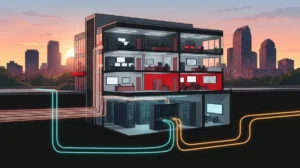
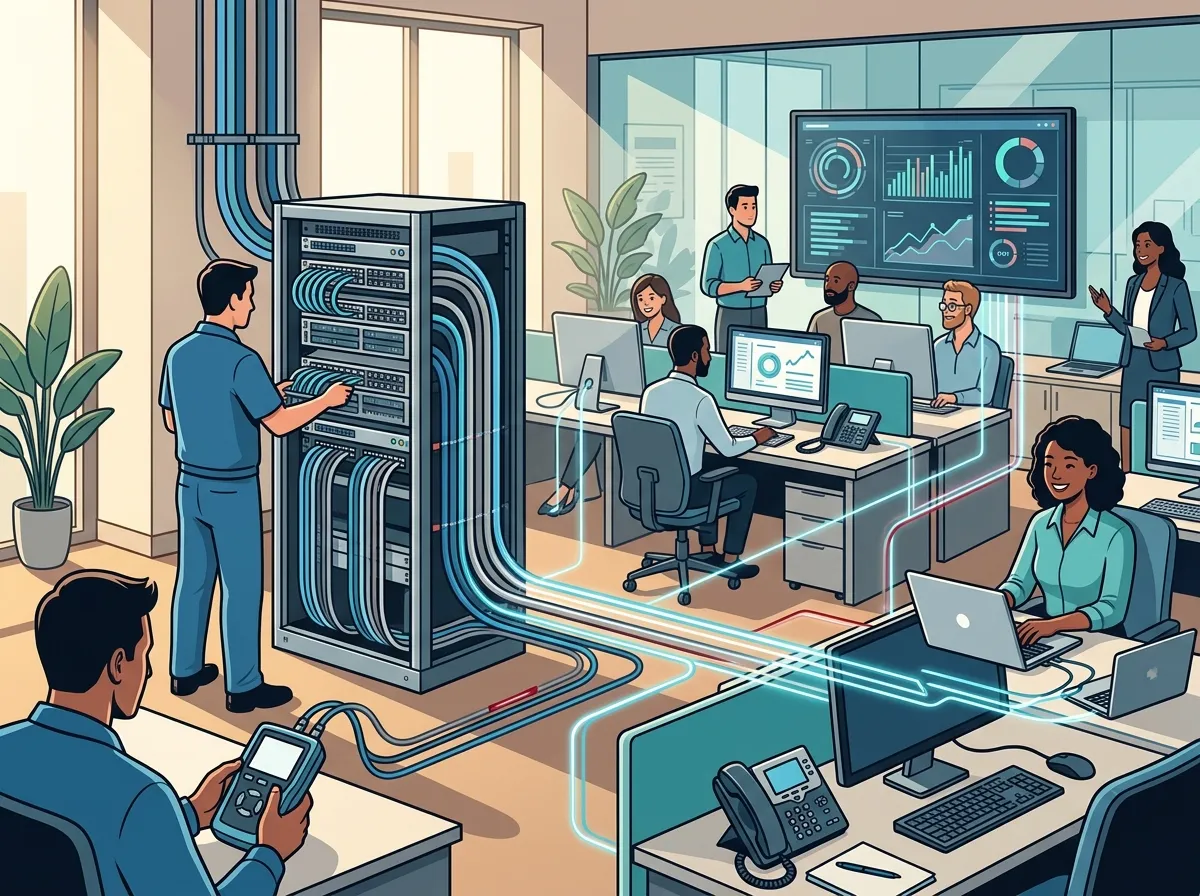
Before diving into how to find the right contractor, it helps to understand what is at stake. Structured cabling is the physical backbone of your entire business network. It connects your phones, computers, security cameras, and internet access into one organized system.
Poor cabling leads to dropped calls, slow internet, and network outages. Good cabling, on the other hand, supports faster speeds, easier upgrades, and fewer headaches down the road. For businesses using cloud-based phone systems or cloud video security, having a properly installed cabling infrastructure is absolutely essential.

Step 1: Verify Credentials and Certifications
The first thing to check when evaluating any structured cabling contractor is their credentials. Certifications show that a contractor has been trained to industry standards and knows what they are doing.
Here are the key credentials to look for:
- BICSI membership or RCDD certification — RCDD (Registered Communications Distribution Designer) is one of the highest credentials in the cabling industry. Contractors with RCDD-certified staff bring serious expertise to your project.
- Low-voltage contractor license — In Florida, structured cabling falls under low-voltage electrical work. Always confirm the contractor holds a valid state license.
- OSHA compliance training — This ensures crews follow proper safety practices on your job site.
- Manufacturer certifications — Some contractors are certified by cabling manufacturers, which may allow them to offer extended warranties on materials and installation.
One Tampa-area provider even reports having two RCDD-certified designers with over 40 years of combined experience between them. That kind of expertise makes a real difference, especially for complex commercial installations.
Step 2: Look for Experience with Commercial Environments
Not all cabling projects are the same. A small professional office has very different needs compared to a hospital, warehouse, or multi-tenant commercial building. Make sure the contractor you choose has hands-on experience in environments like yours.
Ask specifically about experience with:
- Office buildings and corporate suites
- Retail and restaurant locations
- Healthcare and medical facilities
- Warehouses and distribution centers
- Call centers and high-density data environments
- Multi-location or franchise buildouts
If you are managing several locations across Tampa Bay, you will want a contractor — or a telecom partner — who can handle consistent installs across all your sites. Structured cabling services from a proven local provider can simplify that process significantly.
Step 3: Understand the Cable Types They Work With
A reliable contractor should be comfortable working with all the cable types your business might need now and in the future. Here is a quick breakdown of the most common options:
| Cable Type | Speed Capability | Best Use Case | Max Distance |
|---|---|---|---|
| Cat5e | Up to 1 Gbps | Basic office networking | 100 meters |
| Cat6 | Up to 10 Gbps (short runs) | Modern office and VoIP networks | 55 meters at 10 Gbps |
| Cat6A | Up to 10 Gbps | High-performance commercial networks | 100 meters at 10 Gbps |
| Fiber Optic | Up to 100+ Gbps | Backbone runs, long distances, high-speed internet | Varies (up to several km) |
For most Tampa businesses upgrading their infrastructure in 2026, Cat6 or Cat6A is the sweet spot for copper cabling. If you are running long backbone runs between floors or buildings, fiber optic cabling is the way to go. You can learn more about this in our guide on fiber optic cabling services for commercial buildings in Tampa.
Step 4: Ask About Testing and Certification
This is a step that many businesses overlook — and it can really come back to bite you. Installing cable is only half the job. A professional contractor must also test and certify every run to confirm it meets performance standards.
Here is what proper testing should include:
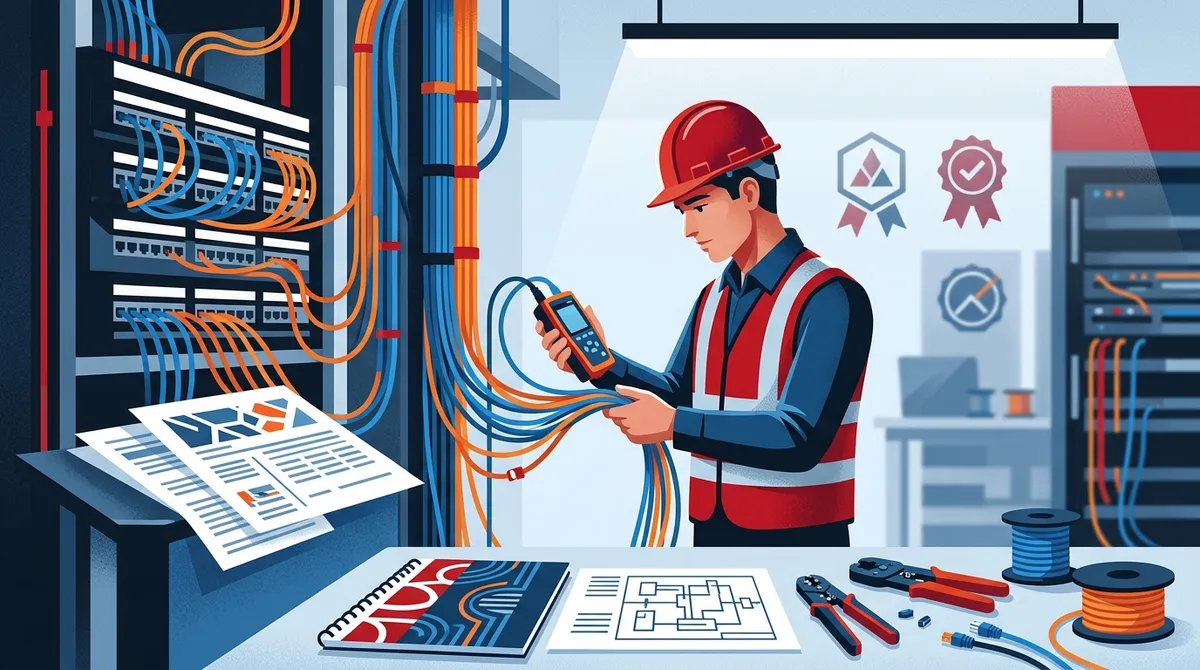
- Cable performance testing — Using tools like the Fluke DSX cable analyzer to verify that each run meets the specified category standard (Cat6, Cat6A, etc.).
- Documentation and labeling — Every cable run should be clearly labeled and documented with a map or spreadsheet so future troubleshooting is easy.
- As-built drawings — A professional contractor provides a final record of where every cable goes, which is invaluable for future expansions or repairs.
- Certification reports — Written proof that all runs passed testing, which you may need for warranty purposes or IT audits.
If a contractor cannot tell you clearly how they test their work, that is a red flag. Always ask for sample documentation from a past project before you sign anything.
Step 5: Confirm They Follow Local Code and Safety Standards
Florida has specific regulations for low-voltage and structured cabling work. A trustworthy contractor will follow the National Electrical Code (NEC) as well as all applicable local Tampa and Hillsborough County regulations. This protects your business from liability and ensures your cabling will pass any future inspections.
When speaking with a potential contractor, ask directly:
- Do you follow NEC standards for low-voltage installations?
- Are your technicians licensed in the state of Florida?
- Will you pull any required permits for this project?
- Do you carry general liability and workers’ compensation insurance?
These questions might feel formal, but any reputable contractor will answer them without hesitation. If someone seems evasive or says permits are not necessary, walk away.
How to Compare Structured Cabling Quotes in Tampa
Once you have a shortlist of qualified contractors, it is time to get quotes and compare them side by side. Do not just look at the bottom-line price. Here is what a thorough quote should include:
| Quote Element | Why It Matters |
|---|---|
| Number of cable runs | Confirms scope of work is accurate for your space |
| Cable category specified | Ensures you are getting the right performance tier |
| Testing and certification included | Guarantees verified performance, not just installation |
| Labeling and documentation | Makes future maintenance and troubleshooting easier |
| Patch panel and hardware | Confirms all components are included, not added later |
| Warranty terms | Protects your investment if problems arise |
| Project timeline | Helps you plan around business operations and minimize downtime |
A low-ball quote that skips testing or documentation is not actually saving you money. It is setting you up for problems later. For a deeper look at planning your project, check out this helpful article on how to plan network cabling installation in Tampa Bay.
Step 6: Check for Complementary Services
Here is a smart tip that many business owners miss: choose a contractor — or a full-service telecom partner — who can handle more than just the cables. When your cabling team also understands VoIP phones, networking, and security systems, everything gets installed to work together seamlessly from day one.
Look for providers who also offer:
- VoIP and cloud phone system installation
- Business Wi-Fi and network configuration
- Cloud security camera installation
- Access control systems
- Ongoing maintenance and support
This is exactly where a full-service partner like Ideal Solutions Provider stands out. With over 24 years of experience and partnerships with 35+ vetted suppliers, they handle everything from structured cabling to business network solutions — all under one roof. That means fewer vendors to manage and one trusted point of contact for all your telecom needs.
Want to see if your current setup is working as hard as it should? You can learn more about identifying gaps in your infrastructure by reading about the 9 signs your Tampa business needs structured cabling now.
Red Flags to Watch Out For
Not every contractor is the right fit. Here are warning signs that should make you pause before signing a contract:
- No verifiable license or insurance — Always ask for documentation and verify it is current.
- Vague scope of work — A professional proposal should be specific, not full of general language.
- No testing or documentation included — If it is not in the quote, it probably will not happen.
- No local references — Ask for two or three recent Tampa-area projects they can vouch for.
- Pressure to decide quickly — A good contractor earns your trust, not just your signature.
You can also read our in-depth guide on the 6 signs you found the best structured cabling contractor in Tampa for more detail on what a great fit looks like.
Questions to Ask Before You Hire
Use this checklist when speaking with potential contractors to make sure you cover all the bases:
| Question | What You Are Looking For |
|---|---|
| Are your technicians licensed in Florida? | A clear “yes” with proof available |
| Do you carry liability and workers’ comp insurance? | Certificates of insurance on request |
| What cable categories do you install? | Cat6, Cat6A, and fiber at minimum |
| How do you test and certify your work? | Fluke or similar certified testing tools |
| Will you provide as-built documentation? | A full labeled diagram of all cable runs |
| Can you provide Tampa-area references? | At least two or three recent local projects |
| Do you offer ongoing maintenance or support? | Yes, with a clear service agreement option |
Taking 20 minutes to ask these questions upfront can save you thousands of dollars and weeks of frustration later. If you want to see how DIY compares to professional cabling for Tampa offices, that article breaks it down in a very easy-to-follow way.
How Long Will a Commercial Cabling Install Take?
This is one of the most common questions Tampa business owners ask. The honest answer is: it depends. A small office with 10 to 20 cable drops might be done in one or two days. A larger commercial buildout with 100+ runs across multiple floors could take one to two weeks.
A professional contractor will give you a realistic project timeline upfront. They should also work around your business hours when possible to minimize disruption. You can get a more detailed breakdown in this article on how long structured cabling installation takes for a commercial building in Tampa.
Connecting Cabling to Your Broader Telecom Strategy
Great cabling does not exist in a vacuum. It is the foundation that supports your phones, internet, security cameras, and access control. That is why it is worth thinking about your entire telecom infrastructure — not just the cables — when planning a project.
For example, your structured cabling should be designed to support the specific demands of your business high-speed internet and any cloud-based access control systems you plan to add. Thinking ahead saves you from having to re-cable later. Follow us on Facebook and Instagram for helpful tips on building smarter business networks, or check out our YouTube channel for video walkthroughs of real installations.
Conclusion: Take the Next Step With Confidence
Finding a reliable structured cabling contractor in Tampa comes down to doing a little homework upfront. Check credentials, ask smart questions, get detailed quotes, and make sure testing and documentation are part of the deal. When you find a contractor who ticks all those boxes, you will have a network infrastructure that supports your business for years to come.
If you would rather skip the guesswork and work with a team that handles everything — from cabling design to installation to ongoing support — we are here to help. Reach out to our team at Ideal Solutions Provider for a free consultation, or simply give us a call at 813-388-4935 to talk through your project. We would love to help your Tampa business build the strong, reliable network it deserves.
FAQs
Q: What certifications should a structured cabling contractor have in Tampa?
A: Look for contractors with BICSI membership, RCDD-certified designers, and a valid Florida low-voltage contractor license. Manufacturer certifications are a great bonus — they often come with extended warranties on materials and workmanship, which is always a win for your peace of mind!
Q: How do I verify a Tampa cabling contractor’s testing process?
A: Ask them directly what tools they use for cable certification — professional contractors typically use industry-standard analyzers like the Fluke DSX. Also request a sample of their documentation from a past project so you can see exactly what you will receive when the job is done.
Q: Should I choose a contractor that also offers VoIP and networking services?
A: Absolutely — and here is why it matters! A contractor who understands how cabling connects to your phone systems, internet, and security cameras can design your infrastructure to support all of it from day one. It saves you the hassle of coordinating multiple vendors and reduces the chance of compatibility issues later.
Q: What is the difference between Cat6 and Cat6A for a Tampa business network?
A: Cat6 supports up to 10 Gbps over shorter runs (about 55 meters), while Cat6A supports the full 10 Gbps over 100 meters, making it a better fit for larger office spaces or high-demand environments. If you are building out a new space in 2026, Cat6A is worth the modest extra investment for the added performance headroom.
Q: How long does a commercial structured cabling installation take in Tampa?
A: It really depends on the size and complexity of your space! A small office with 10 to 20 cable runs might be wrapped up in a day or two, while a larger commercial buildout could take one to two weeks. A trustworthy contractor will give you a clear timeline upfront and work around your schedule to keep downtime to a minimum.