Key Takeaways
-
Choose a structured cabling contractor with commercial experience, ANSI/TIA-568 certification compliance, and full testing documentation to avoid poor performance and costly re-installations.
-
Cat6 and Cat6A are the industry standard for most Tampa commercial projects, supporting up to 10 Gbps with Cat6A reaching 100 meters, while fiber optic backbone connections provide long-distance, high-speed connectivity between floors or buildings.
-
A single-source telecom partner handling cabling, VoIP, internet, security cameras, and access control eliminates coordination gaps between vendors and provides one point of contact for your entire technology ecosystem.
-
Properly installed structured cabling supports VoIP reliability, reduces latency, prevents dropped calls, maximizes internet performance, and delivers consistent Wi-Fi coverage throughout your business location.
-
Request a professional site survey before accepting any quote, plan installation during low-impact hours, and budget for long-term value — quality Cat6A systems support business networks for 15-20 years with minimal maintenance.
-
Well-designed cabling systems provide easier troubleshooting, code compliance, scalability for growth, and reduced long-term repair costs compared to outdated or disorganized “spaghetti wiring” setups.
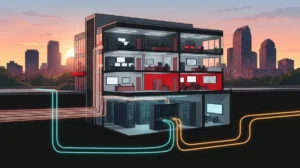
If your business runs on communication — and what business doesn’t? — then the wiring behind your walls matters more than you might think. A reliable structured cabling installation company in Tampa FL builds the physical backbone that keeps your phones, internet, Wi-Fi, security cameras, and access control systems running smoothly every single day. Think of it like the foundation of a house. Without it, everything else is on shaky ground.
Whether you’re moving into a new office, upgrading an aging network, or expanding to multiple locations, getting your cabling right from the start saves time, money, and a whole lot of headaches down the road. Tampa businesses across industries — from healthcare to manufacturing to professional services — are discovering just how much a properly installed cabling system improves day-to-day operations. Let’s explore what structured cabling really means for your business and how to find the right partner to get the job done right.
What Is Structured Cabling and Why Does Your Business Need It?
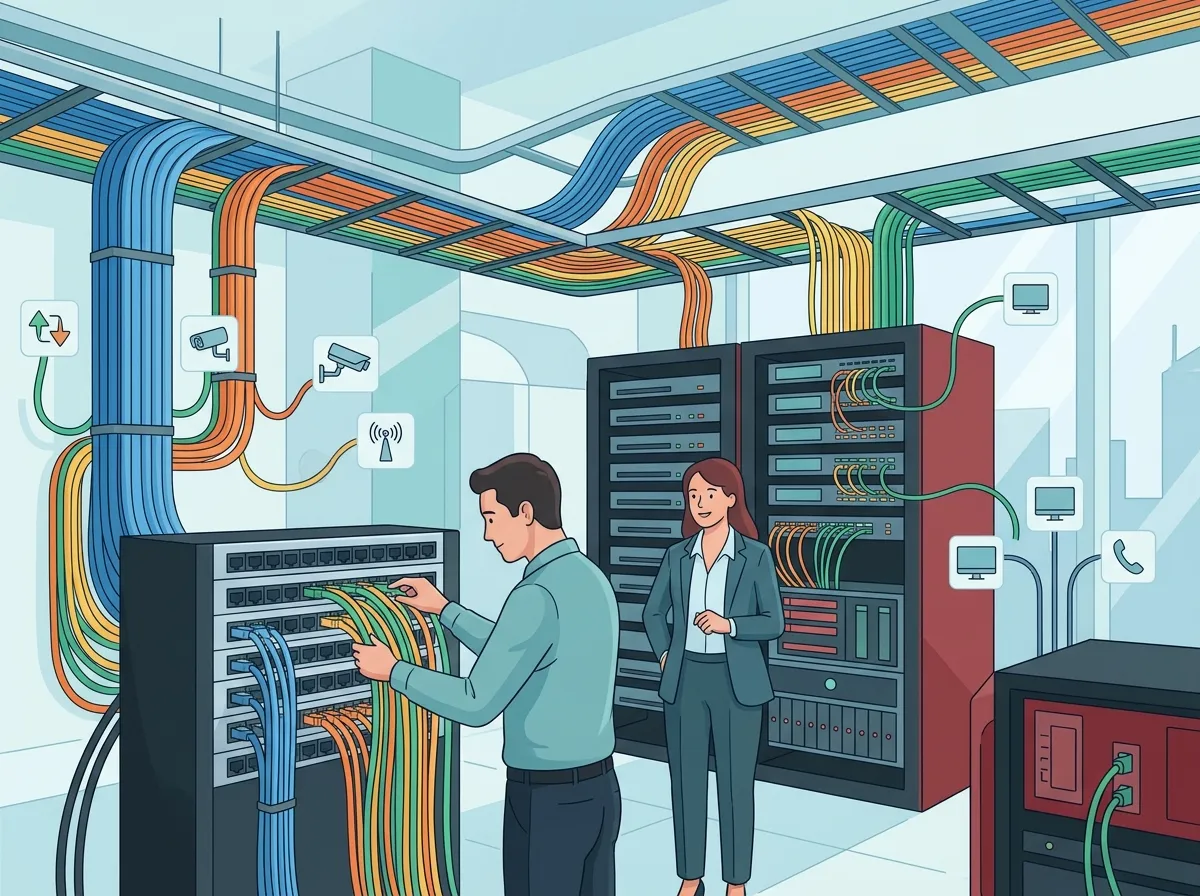
In simple terms, structured cabling is an organized system of cables and hardware that forms the communication infrastructure of a building. Instead of messy, tangled wires running in every direction (a setup sometimes called “spaghetti wiring”), structured cabling follows a clean, standardized design. Every cable has a purpose, a label, and a clear path.
This matters enormously for businesses. A well-designed cabling system supports your VoIP phones, high-speed internet connections, wireless access points, CCTV cameras, and access control panels — all from a single unified infrastructure. Learn more about how structured cabling services can support your entire telecom setup from the ground up.
Here’s why businesses in Tampa are making the switch to structured cabling systems:
- Better network reliability — fewer outages and dropped connections
- Easier troubleshooting — technicians can quickly locate and fix issues
- Scalability — add new users, devices, or locations without rewiring everything
- Cleaner workspace — organized cabling reduces clutter and safety risks
- Code compliance — professional installations meet local building and fire codes
- Long-term cost savings — proper installation reduces the need for costly repairs later
Common Types of Structured Cabling for Tampa Businesses
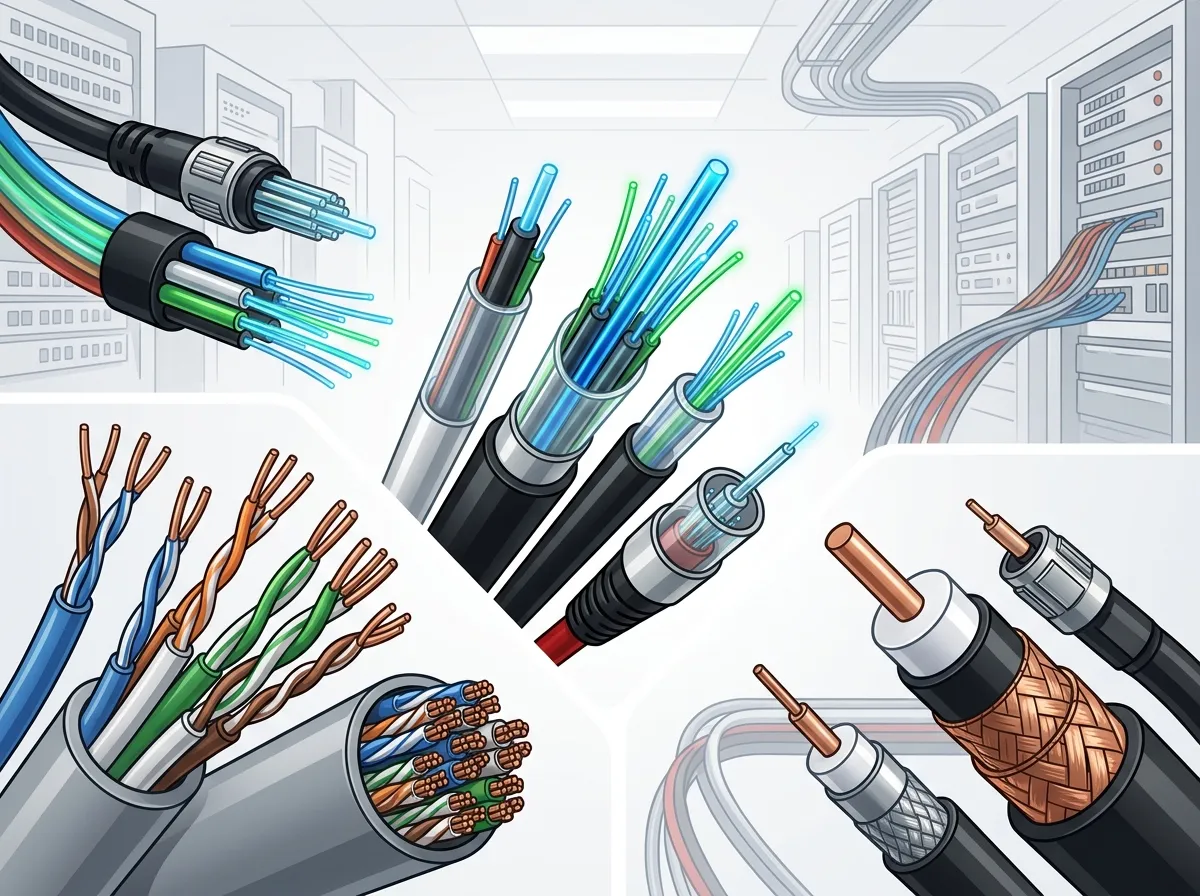
Not all cables are created equal. The type of cabling you need depends on your business size, building layout, and the speed requirements of your network. Most structured cabling projects use some combination of copper Ethernet cables and fiber optic lines.
| Cable Type | Speed Capability | Best Use Case | Typical Range |
|---|---|---|---|
| Cat5e | Up to 1 Gbps | Small offices, basic networking | Up to 100 meters |
| Cat6 | Up to 10 Gbps (short range) | Mid-sized offices, VoIP, video | Up to 55 meters at 10 Gbps |
| Cat6A | Up to 10 Gbps | Large offices, data centers | Up to 100 meters at 10 Gbps |
| Cat8 | Up to 40 Gbps | High-performance data centers | Up to 30 meters |
| Fiber Optic | 100 Gbps+ | Backbone connections, long distances | Miles with no signal loss |
According to industry data, most commercial structured cabling projects in Tampa today use Cat6 or Cat6A as the primary horizontal cabling, with fiber optic backbone connections running between floors or buildings. Cat5e remains in use for budget-conscious projects, while Cat8 is gaining traction in high-performance data environments. Your business network solutions provider can help you choose the right cable type for your specific needs.
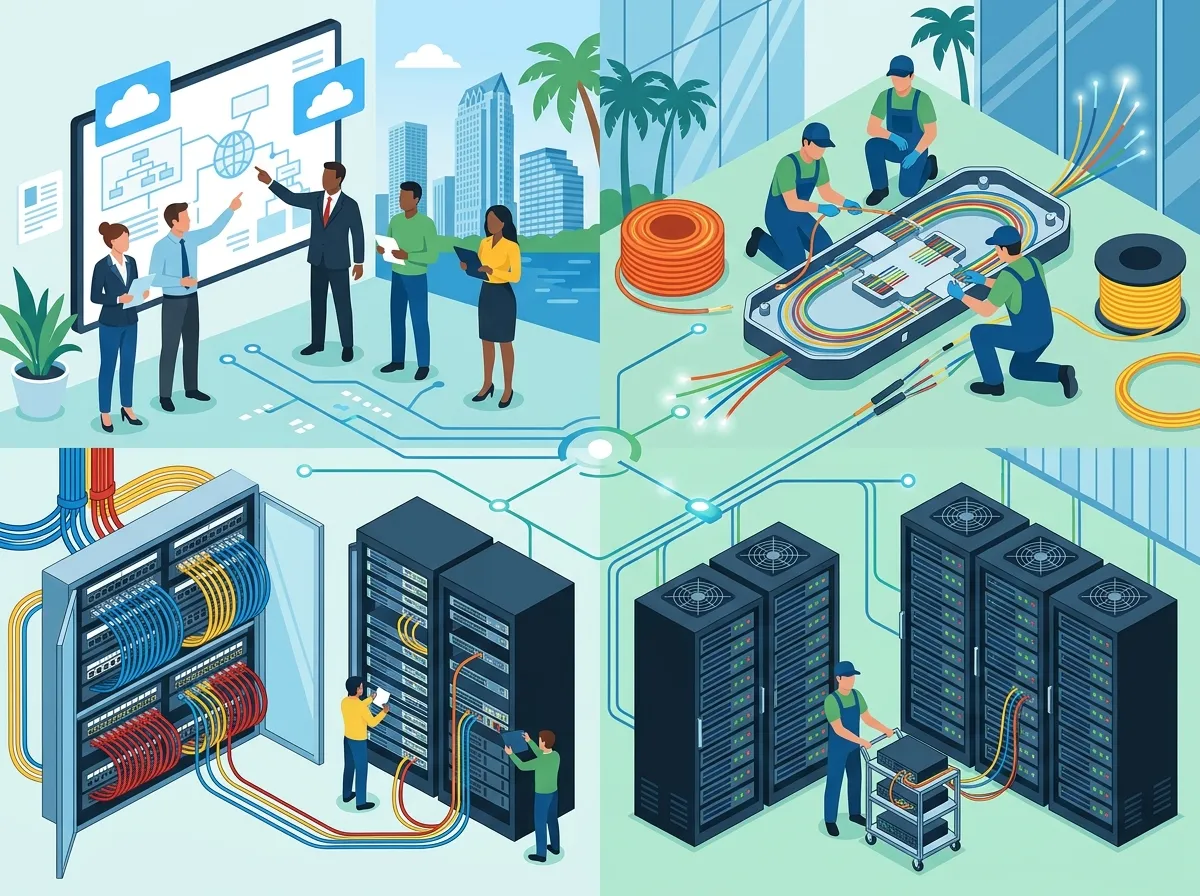
Services Offered by a Structured Cabling Installation Company in Tampa FL
A full-service structured cabling company does much more than simply pull wire through walls. Here’s what a complete installation typically includes:
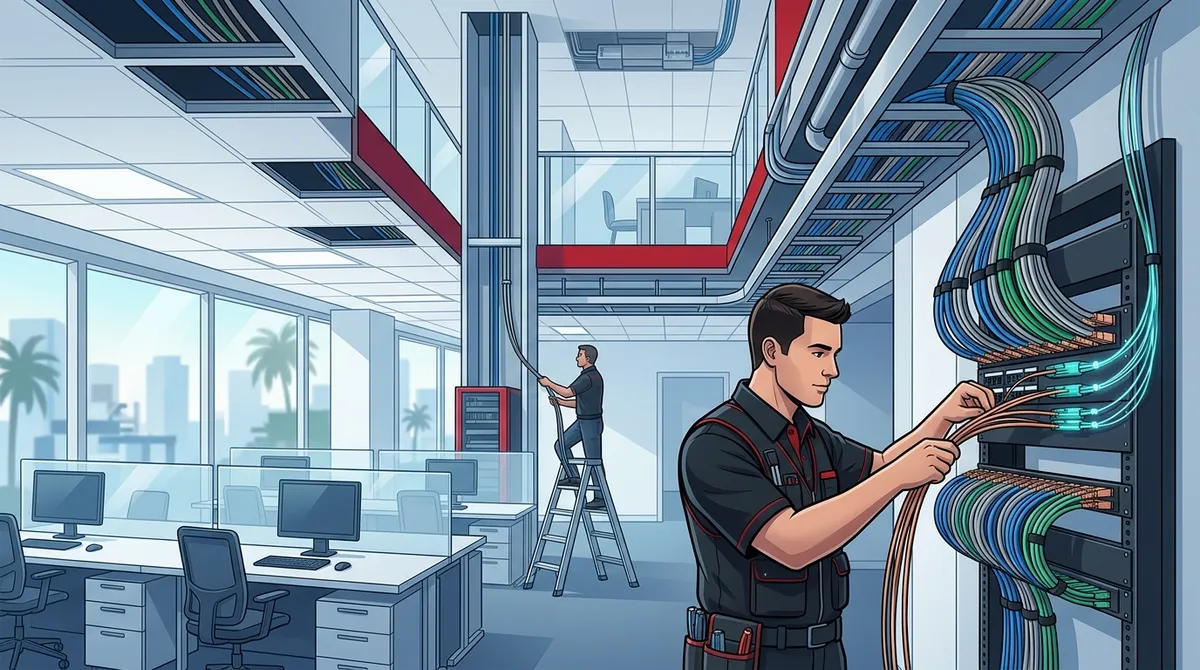
- Site survey and design — The team assesses your space, maps cable runs, and creates a detailed installation plan tailored to your building layout and technology needs.
- Cable installation — Technicians install Cat5e, Cat6, Cat6A, or fiber cabling to every endpoint including desks, conference rooms, server areas, and common spaces.
- Rack and panel buildouts — Patch panels, cable managers, and network racks are installed and labeled in your telecom room or server closet.
- Testing and certification — Every cable run is tested with professional equipment to verify performance meets industry standards.
- WAP cabling — Dedicated cabling runs support wireless access points so your Wi-Fi coverage is strong and consistent throughout your space.
- CCTV and access control cabling — Low-voltage cabling supports your cloud video security cameras and cloud-based access control systems.

Industries That Benefit From Structured Cabling in Tampa
Tampa is a diverse business city, and structured cabling serves organizations of all types and sizes. From Ybor City startups to South Tampa professional offices to large manufacturing facilities in the Port of Tampa area, the need for reliable cabling is universal.
| Industry | Key Cabling Needs | Systems Supported |
|---|---|---|
| Healthcare | High reliability, HIPAA-compliant networks | VoIP, patient monitoring, security cameras |
| Education | High-density Wi-Fi, classroom connectivity | Internet, IP phones, access control |
| Manufacturing | Industrial-grade cable runs, warehouse coverage | Network, VoIP, CCTV, access control |
| Professional Services | Clean office aesthetics, conference room AV | VoIP, high-speed internet, video conferencing |
| Retail & Franchise | Scalable multi-location deployments | POS networking, IP cameras, access control |
| Warehousing & Logistics | Long cable runs, rugged environments | Wi-Fi, inventory systems, CCTV |
How Structured Cabling Supports Your Entire Telecom System
Here’s a fun way to think about it: your structured cabling is the highway system, and your telecom services are the vehicles driving on it. Without a solid highway, even the fastest cars go nowhere fast. When your cabling is built right, every other system performs better.
For example, cloud-based phone systems rely entirely on your network connection to carry voice traffic. Poor cabling leads to dropped calls, choppy audio, and frustrated employees. The same applies to your business high-speed internet services — even a blazing-fast fiber connection underperforms if the cabling inside your building creates bottlenecks. You can read more tips on maximizing your internet investment in our guide to 13 high-speed internet for business tips that save money.
A properly structured cabling system delivers these critical benefits for telecom performance:
- Reduced latency for VoIP calls and video conferencing
- Higher throughput for data-intensive applications
- Consistent Wi-Fi coverage from properly placed access points
- Reliable video feeds from IP security cameras
- Faster response times from access control door readers
What to Look for in a Tampa Structured Cabling Contractor
Choosing the right structured cabling installation company in Tampa FL is a big decision. The wrong choice can lead to poor performance, failed cable tests, and costly re-installations. Here’s what to look for when evaluating vendors:
- Experience with commercial projects — Look for companies with a track record in commercial and industrial environments, not just residential work. Some Tampa firms have been active in telecommunications since the 1980s, bringing decades of hands-on expertise.
- Certifications and standards compliance — Ask if the installer follows ANSI/TIA-568 cabling standards and whether technicians hold certifications such as BICSI RCDD or manufacturer-specific credentials.
- Testing and documentation — Every cable run should be tested with a certified cable tester, and you should receive full documentation of test results for your records.
- Warranty on materials and labor — A reputable installer backs their work with a warranty on both parts and installation quality.
- Ability to serve your full telecom ecosystem — Ideally, your cabling partner can also support your VoIP, internet, networking, security cameras, and access control — so everything integrates seamlessly.
Why a Single-Source Telecom Partner Makes Sense
Many Tampa business owners discover that managing separate vendors for cabling, internet, phones, security cameras, and access control is exhausting. Coordination gaps between vendors often lead to finger-pointing when problems arise. That’s where a single-source telecom partner becomes a game-changer.
Ideal Solutions Provider serves Tampa businesses as exactly this kind of partner. With over 24 years of experience and relationships with 35+ vetted suppliers, the team handles structured cabling alongside cloud phones, high-speed internet, networking, cloud security cameras, and access control — all under one roof. That means one point of contact, one relationship, and one team that knows your entire setup. You can explore their full range of offerings at idealsolutionsprovider.com.
This single-source approach is especially valuable for franchise operators and multi-location businesses. Whether you need five drops or five hundred, having one trusted partner coordinate everything across Tampa Bay and nationwide simplifies your life considerably. Check out how to work with a telecom expert who gets results to understand what a great partnership looks like in practice.
Structured Cabling Costs: What Tampa Businesses Should Expect
Pricing for structured cabling varies based on several factors. Understanding what drives cost helps you budget accurately and avoid surprises.
| Cost Factor | Impact on Price | Notes |
|---|---|---|
| Number of cable drops | High | More endpoints = higher material and labor costs |
| Cable category (Cat6 vs. fiber) | Medium to High | Fiber is more expensive but often necessary for backbone |
| Building construction type | Medium | Concrete or steel buildings require more labor |
| Rack and panel equipment | Medium | Varies by brand and configuration |
| Testing and certification | Low to Medium | Always worth the investment for quality assurance |
| Project timeline and urgency | Variable | Rush jobs may carry premium labor rates |
Most commercial structured cabling projects in Tampa run from a few thousand dollars for a small office buildout to tens of thousands for larger facilities. Getting multiple quotes and comparing scope of work is always smart. Also consider the long-term value — a well-installed Cat6A system can support your network for 15 to 20 years with minimal maintenance. Follow us on Facebook and Instagram for tips, updates, and insights from our team of telecom experts.
Planning Your Structured Cabling Project: Step-by-Step
Ready to move forward? Here’s a practical roadmap for getting your cabling project off the ground smoothly:
- Assess your current setup — Document existing cabling, note problem areas, and identify what systems you need to support (VoIP, internet, cameras, etc.).
- Define your growth plans — Tell your installer how many employees you expect to add in the next three to five years. Good cabling design leaves room to grow without a complete redo.
- Request a site survey — A professional installer should walk your space before quoting. Be wary of anyone who quotes without seeing the building.
- Review the proposal carefully — Make sure the quote includes cable type, number of drops, testing, labeling, rack buildout, and warranty terms.
- Schedule during low-impact hours — Plan installation during evenings, weekends, or phased during business hours to minimize disruption to your team.
You can also check out our video resources and watch real-world examples of how telecom upgrades transform Tampa businesses. And if you’re curious about upgrading your phone system alongside your cabling, explore our article on which cloud-based phone system is best for Tampa businesses.
Your Next Step Toward Better Business Connectivity
Great business communication starts at the physical layer — and that means getting your cabling right. A qualified structured cabling installation company in Tampa FL will design, install, test, and document a system that supports your phones, internet, security cameras, access control, and everything in between. When it’s done well, you won’t even notice it’s there — and that’s exactly the point.
Don’t let outdated or disorganized wiring hold your business back. Whether you’re a small business owner tired of dropped calls, an IT manager looking for a reliable vendor, or a franchise operator expanding across Tampa Bay, the right cabling infrastructure changes everything. You can also explore how security cameras really help your business once you have the right cabling infrastructure supporting them.
Ready to build a stronger foundation for your business communications? Reach out to our team today for a free consultation and let’s design a cabling system that grows with your business. Or give us a call directly at 813-388-4935 — we’d love to hear what you’re working on and help you find the best path forward. You can also browse our helpful YouTube channel for demonstrations and expert insights on business telecom solutions.
FAQs
Q: What does a structured cabling installation company do in Tampa, FL?
A: A structured cabling company designs and installs the physical wiring infrastructure that connects all your business communication systems — including VoIP phones, internet, Wi-Fi access points, security cameras, and access control. Think of them as the team that builds the roads your data travels on every day. A good installer will also test every cable run and provide full documentation so you know your network is performing at its best.
Q: Does structured cabling support VoIP phones, Wi-Fi, security cameras, and access control?
A: Absolutely! That’s one of the biggest advantages of a properly designed structured cabling system. A single unified cabling infrastructure can support your VoIP phone system, wireless access points, cloud security cameras, and door access control readers — all from the same organized backbone. It’s one of the reasons businesses love structured cabling: one clean system supports everything.
Q: What is the difference between Cat5e, Cat6, and Cat6A cabling?
A: Great question! Cat5e handles speeds up to 1 Gbps and works well for smaller offices with basic networking needs. Cat6 steps it up with 10 Gbps capability over shorter distances, making it a popular choice for most commercial offices today. Cat6A delivers the full 10 Gbps over longer runs up to 100 meters, making it the go-to choice for larger offices and data-intensive environments.
Q: How much does structured cabling installation cost for a Tampa business?
A: Costs vary depending on your building size, number of cable drops, cable category, and the complexity of the installation. Small office projects may run a few thousand dollars, while larger facilities can cost significantly more. The best way to get an accurate number is to request a professional site survey — a good installer will walk your space before quoting rather than giving a ballpark over the phone.
Q: How do I choose the best structured cabling contractor in Tampa Bay?
A: Look for a contractor with commercial experience, proper certifications (like BICSI credentials), and a commitment to testing and documenting every cable run. It’s also smart to choose a partner who understands your broader telecom ecosystem — phones, internet, cameras, and access control — so your cabling design truly supports all your systems from day one. A free consultation is a great starting point to see if a contractor is the right fit.