

Key Takeaways
-
Cloud video analytics uses AI to automatically detect motion, faces, vehicles, and unusual activity, sending instant alerts instead of requiring manual footage review like traditional DVR systems.
-
Motion detection, face recognition, license plate reading, and intrusion detection are core features that should be prioritized based on your specific business type and security concerns.
-
The global video analytics market is expected to grow from $14.65 billion in 2026 to $41.39 billion by 2031, indicating this technology is becoming essential for business security and operations.
-
Bandwidth demands, internet dependency, and latency are manageable challenges best addressed through dedicated fiber internet or hybrid cloud-edge processing approaches.
-
Bundling cloud video analytics with existing telecom services (internet, phone systems) from one provider simplifies integration, reduces troubleshooting time, and enables centralized management across multiple locations.
-
Retail, healthcare, manufacturing, and franchise operations see the strongest ROI by combining people counting, access control monitoring, and real-time alerts with their existing network infrastructure.
Picture this: you’re running a busy Tampa business, and you get a phone alert the second someone walks near your back door after hours. No rewinding grainy tape. No waiting for a call from a neighbor. Just instant, smart video that tells you exactly what’s happening, right when it happens. That’s the magic of cloud video analytics, and it’s changing how business owners think about security cameras for good.
If you’ve been shopping for a cloud video security system, you’ve probably noticed the feature lists can feel overwhelming. Motion detection, face recognition, license plate reading, smoke detection… what do you actually need? This guide breaks down the real cloud video analytics features that matter for your business, why they matter, and how they fit into your bigger telecom picture. We’ll keep things simple, practical, and grounded in what actually works for small businesses, growing companies, and multi-location operations alike.

What Is Cloud Video Analytics, Really?
Cloud video analytics means your security cameras send video to a cloud platform instead of just a box sitting in a closet. That cloud platform uses artificial intelligence to watch the footage for you. It looks for things like motion, faces, vehicles, and unusual activity, then alerts you the moment something matters.
This is a big shift from old-school DVR systems where you had to dig through hours of footage after something went wrong. With cloud video analytics, the system does the watching. You just get the alerts that count. It’s a smarter way to protect your business, and it fits naturally alongside other business network solutions your company already relies on.
The market is growing fast for good reason. Video analytics globally is expected to jump from about $14.65 billion in 2026 to $41.39 billion by 2031, a growth rate of 23.1% each year. That tells you businesses everywhere are catching on to how useful this technology really is.
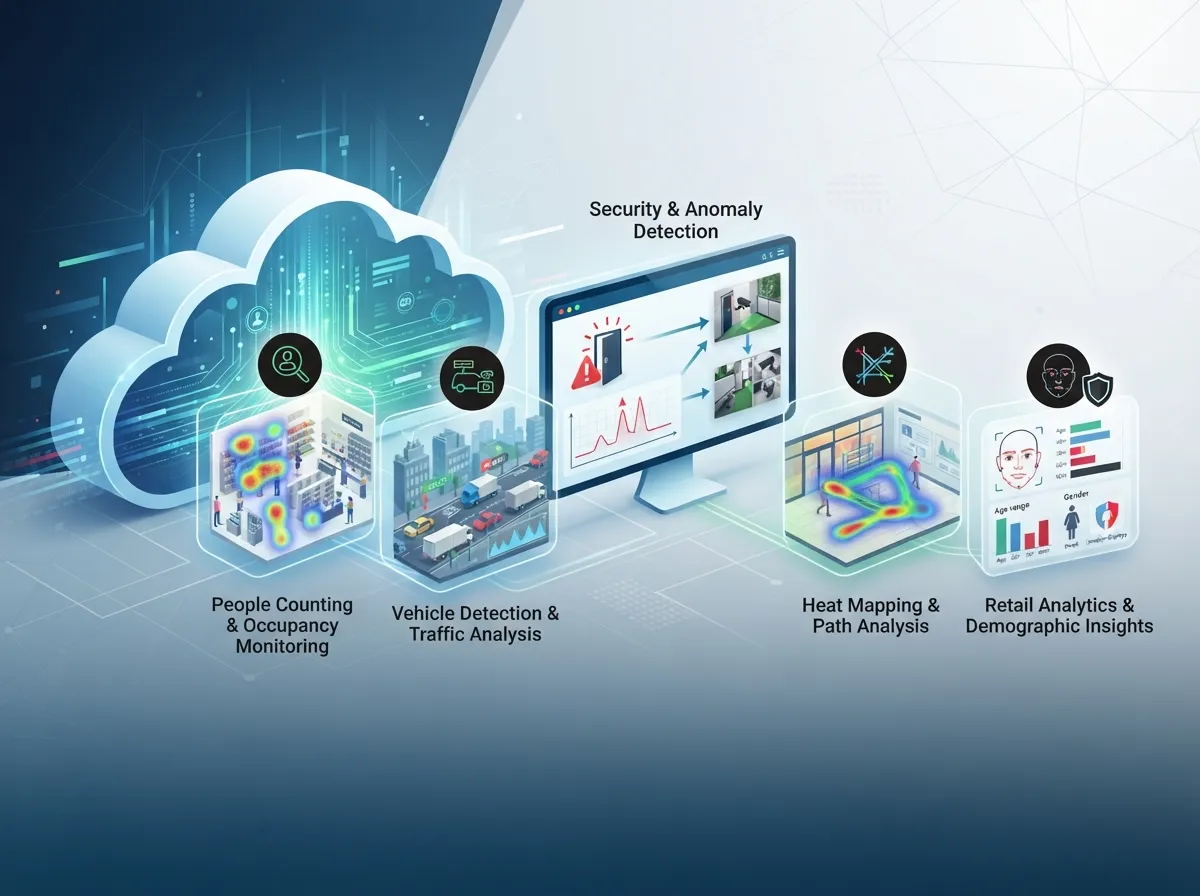
Core Cloud Video Analytics Features Every Business Should Know
Not every camera platform offers the same tools. Here are the features that show up most often, and why each one matters for a business like yours.
1. Motion Detection
This is the foundation of almost every cloud video system. The camera notices movement in a specific zone and sends you an alert. It sounds simple, but good motion detection can tell the difference between a leaf blowing by and a person walking up to your door.
2. Face Recognition
Face recognition helps you spot familiar visitors, flag repeat troublemakers, or confirm employee check-ins. Retail stores and offices use this to build a record of who comes and goes, which pairs nicely with a cloud based access control system.
3. License Plate Recognition
For businesses with parking lots, loading docks, or gated entries, license plate reading is a game-changer. It logs every vehicle that enters or leaves, which is great for tracking deliveries or catching unwanted visitors.
4. Smoke and Fire Detection
Some cloud platforms can spot smoke or flame patterns before a smoke alarm even goes off. For warehouses, restaurants, or manufacturing sites, this early warning can protect your building and your people.
5. Intrusion Detection and Line Crossing
You can draw a virtual line or zone on your camera view. If someone crosses it after hours, you get an instant alert. This is perfect for fenced yards, storage areas, or restricted rooms.
6. Loud-Sound Detection
Some systems listen for glass breaking, shouting, or alarms, then send a notification even if the camera didn’t catch clear motion. It adds another layer of awareness beyond just video.
7. People Counting
Retailers and restaurants love this one. People counting tracks foot traffic throughout the day, helping you plan staffing and understand busy hours without guessing.
Comparing Cloud Video Analytics Features by Business Need
Different businesses need different combinations of features. Here’s a quick breakdown to help you figure out what matters most for your setup.
| Business Type | Top Priority Features | Why It Matters |
|---|---|---|
| Retail Stores | People counting, face recognition, motion detection | Tracks traffic patterns and deters theft |
| Warehouses | Smoke detection, intrusion detection, line crossing | Protects large open spaces and inventory |
| Professional Offices | Face recognition, remote access, event notifications | Confirms visitor identity and supports access control |
| Multi-Location Franchises | Centralized dashboards, unified reporting | Manages many sites from one screen |
| Parking Facilities | License plate recognition, motion detection | Tracks vehicle activity and entry/exit times |
Why Telecom Providers Are Betting Big on Video Analytics
Telecom operators and internet providers are increasingly bundling cloud video analytics into their service packages. It’s not just about selling cameras anymore. It’s about creating ongoing, recurring revenue through Video Surveillance as a Service (VSaaS) and Video Analytics as a Service (VaaS) models.
This matters to you as a business owner because it means better pricing, more bundled options, and tighter integration with your existing cloud-based phone system and internet service. When your camera platform, phone system, and internet connection all come from one place, troubleshooting gets a whole lot easier.
Some numbers to consider:
- The telecom analytics market alone is valued around $9.06 billion in 2026.
- The broader video surveillance and analytics market was worth between $59.3 billion and $84.1 billion in 2025.
- Analysts predict this market could reach close to $150 billion by 2032.
- Google Cloud’s video intelligence tools can already recognize over 20,000 objects, places, and actions in video footage.
These numbers show this isn’t a passing trend. It’s becoming a core part of how businesses run security, and how telecom companies package their services.
Cloud Video Analytics vs. Edge Video Analytics
You may hear the term “edge analytics” thrown around too. Here’s the difference in plain terms.
| Feature | Cloud Video Analytics | Edge Video Analytics |
|---|---|---|
| Where Processing Happens | Centralized cloud servers | On the camera or local device |
| Scalability | Easy to add cameras and locations | Limited by hardware capacity |
| Bandwidth Use | Higher, since video streams to the cloud | Lower, since processing stays local |
| Software Updates | Automatic and fast | Slower, needs manual updates sometimes |
| Best For | Multi-site businesses, remote management | Single-site setups with limited internet |
Most modern business setups actually use a mix of both. Cameras do some basic processing on the edge, then send important events to the cloud for deeper analysis and storage. This hybrid approach balances speed with the flexibility that cloud platforms offer.
How to Choose the Right Cloud Video Analytics Platform
Picking a platform can feel like a big decision, but breaking it into steps makes it manageable. Here’s a simple process to follow.
- List your top security concerns, like theft, unauthorized entry, or fire risk.
- Decide which locations need coverage and how many cameras each site requires.
- Check if the platform offers centralized dashboards for multi-site management.
- Ask about bandwidth requirements and whether your current internet plan can handle it.
- Confirm how long video footage is stored and if that meets your compliance needs.
- Review integration options with your phone system, access control, and network.
- Get a clear price breakdown, including installation, storage, and monthly fees.
This is exactly the kind of process our team walks through with clients every day. Ideal Solutions Provider compares options across dozens of vetted suppliers, so you’re not stuck guessing which platform fits your business best.
Common Challenges With Cloud-Based Video Analytics
Cloud video analytics brings a lot of benefits, but it’s fair to talk about the trade-offs too. Being upfront about these helps you plan better.
- Bandwidth demands: Streaming video to the cloud uses more internet bandwidth than local-only storage.
- Latency: There can be a small delay between an event happening and the alert reaching you.
- Privacy concerns: Storing video off-site raises questions about who can access your footage and where it’s kept.
- Internet dependency: If your connection goes down, cloud features may pause until service is restored.
- Ongoing costs: Cloud storage and analytics often come with a monthly subscription instead of a one-time purchase.
The good news is that most of these challenges can be managed with the right internet setup. A strong, reliable connection, like a dedicated fiber line, solves the bandwidth and latency issues before they become a problem. Businesses looking into dedicated fiber internet often find that camera performance and other cloud tools run much smoother.
How Cloud Video Analytics Supports 5G and Edge Monetization
Telecom companies are also using video analytics as part of their 5G rollout strategy. Faster wireless networks mean video can move between cameras, edge devices, and the cloud almost instantly. This opens the door for real-time alerts, live remote monitoring, and richer data insights, even for businesses without traditional wired internet at every location.
For franchise operators or businesses expanding into new markets, this means you can get reliable video security features up and running faster, even before permanent cabling or fiber lines are installed. It’s one more reason cloud video analytics fits so well into a modern, flexible telecom strategy.
Industries That Benefit Most From Cloud Video Analytics
While almost any business can use these tools, some industries see especially strong results.
- Retail: Tracks customer flow and reduces shrinkage from theft.
- Healthcare: Monitors entry points and secures sensitive areas like pharmacies.
- Manufacturing: Watches for safety violations and unauthorized access to equipment.
- Education: Improves campus safety with real-time alerts for unusual activity.
- Hospitality: Monitors common areas, parking lots, and entrances around the clock.
- Franchise Operations: Centralizes video across many locations for consistent oversight.
Whatever industry you’re in, the goal is the same: fewer surprises, faster responses, and better peace of mind. Learn more about how security cameras really protect your business beyond just recording footage.
Bringing It All Together With Your Telecom Setup
Cloud video analytics doesn’t exist in a vacuum. It works best when it’s part of a bigger, connected system. That means pairing your cameras with solid structured cabling, dependable internet, and a phone system that keeps your team talking when something happens on camera.
This is where working with a single telecom partner really pays off. Instead of juggling separate vendors for cameras, internet, and phones, you get one team handling it all. That’s the entire idea behind how Ideal Solutions Provider works with businesses across Tampa Bay and nationwide.
You can also follow along with real client stories and behind-the-scenes looks at installations on Facebook, Instagram, or YouTube to see how these systems come together in real businesses.
Final Thoughts on Cloud Video Analytics Features
Cloud video analytics isn’t just a fancy upgrade anymore. It’s quickly becoming a standard part of running a safe, efficient business. From motion alerts to license plate tracking to smoke detection, these features give you eyes on your business even when you’re not there.
The best part? You don’t have to figure this out alone. With over 24 years of experience and partnerships with more than 35 vetted suppliers, our team can help you find the right mix of cameras, cloud features, and internet strength to match your business needs. Whether you run a single Tampa storefront or manage locations across the country, we’ll help you build a system that actually works for you.
Ready to see what cloud video analytics can do for your business? Reach out to our team today for a free consultation, or give us a call to talk through your options.
FAQs
Q: What is cloud video analytics in telecom?
A: It’s a way for security cameras to send video to a cloud platform that uses AI to spot motion, faces, vehicles, and other events automatically. Telecom providers often bundle this with internet and phone services, so you get one connected system instead of juggling separate vendors.
Q: What features should a cloud video analytics platform include?
A: Look for motion detection, face recognition, license plate reading, smoke detection, and centralized dashboards at minimum. The right mix depends on your business type, but these core features cover most everyday security needs.
Q: How do telecom operators monetize cloud video analytics?
A: Many telecom companies now offer Video Surveillance as a Service and Video Analytics as a Service, bundling cameras and AI features into monthly plans. This creates recurring revenue for providers while giving businesses easier access to smart security tools.
Q: What is the difference between cloud video analytics and edge video analytics?
A: Cloud analytics processes video on remote servers, which makes it easier to scale across many locations. Edge analytics processes video right on the camera, which uses less bandwidth but can be harder to update and expand.
Q: What are the main challenges of cloud-based video analytics?
A: The biggest challenges are bandwidth use, occasional delays in alerts, and dependence on a stable internet connection. A strong, dedicated internet plan usually solves most of these issues so your system runs smoothly.