
Key Takeaways
-
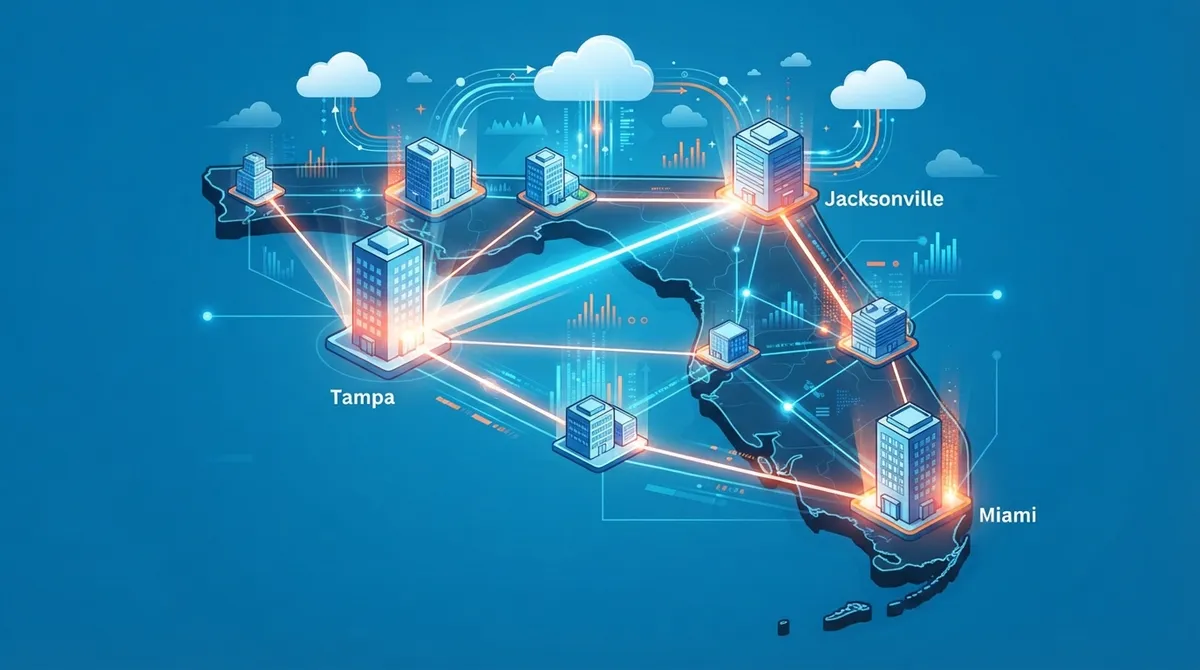
Cloud-based phone systems (hosted VoIP) enable multi-location businesses to share extensions, transfer calls between offices, and add new locations without waiting weeks for installation.
-
Unified call routing automatically directs customer calls to the correct office or department, with automatic failover to other sites if needed, creating a seamless experience across multiple Florida locations.
-
Site-by-site internet evaluation is critical because connection options vary significantly by address and city; fiber availability in downtown Tampa differs from smaller towns, requiring customized solutions per location.
-
SD-WAN networks intelligently combine multiple internet connections and automatically reroute traffic during outages, reducing costs compared to traditional dedicated lines while improving reliability across branch offices.
-
Consolidating with one provider offering unified billing, shared support, and multi-site management eliminates vendor complexity and typically reduces overall costs compared to maintaining separate contracts at each location.
-
Cloud-based security systems (video surveillance and access control) allow remote management from a single dashboard, enabling instant credential revocation and centralized footage storage across all Florida sites.
Running one Florida office is hard enough. Now imagine juggling phone systems, internet bills, and support tickets across three, five, or even twenty locations. If that sounds like your Tuesday morning, you are exactly who this article is for. Whether you run a small chain of Tampa shops or manage IT for a growing statewide company, keeping every site connected shouldn’t feel like herding cats.
The good news? Multi-location business telecom solutions in Florida have come a long way. Today’s tools let you run every office under one system, with one bill, one support team, and consistent service no matter the city. In this guide, we’ll walk through seven telecom solutions that make multi-site management simple, plus practical tips for choosing the right setup for your business. Let’s get into it.
Why Multi-Location Telecom Matters for Florida Businesses
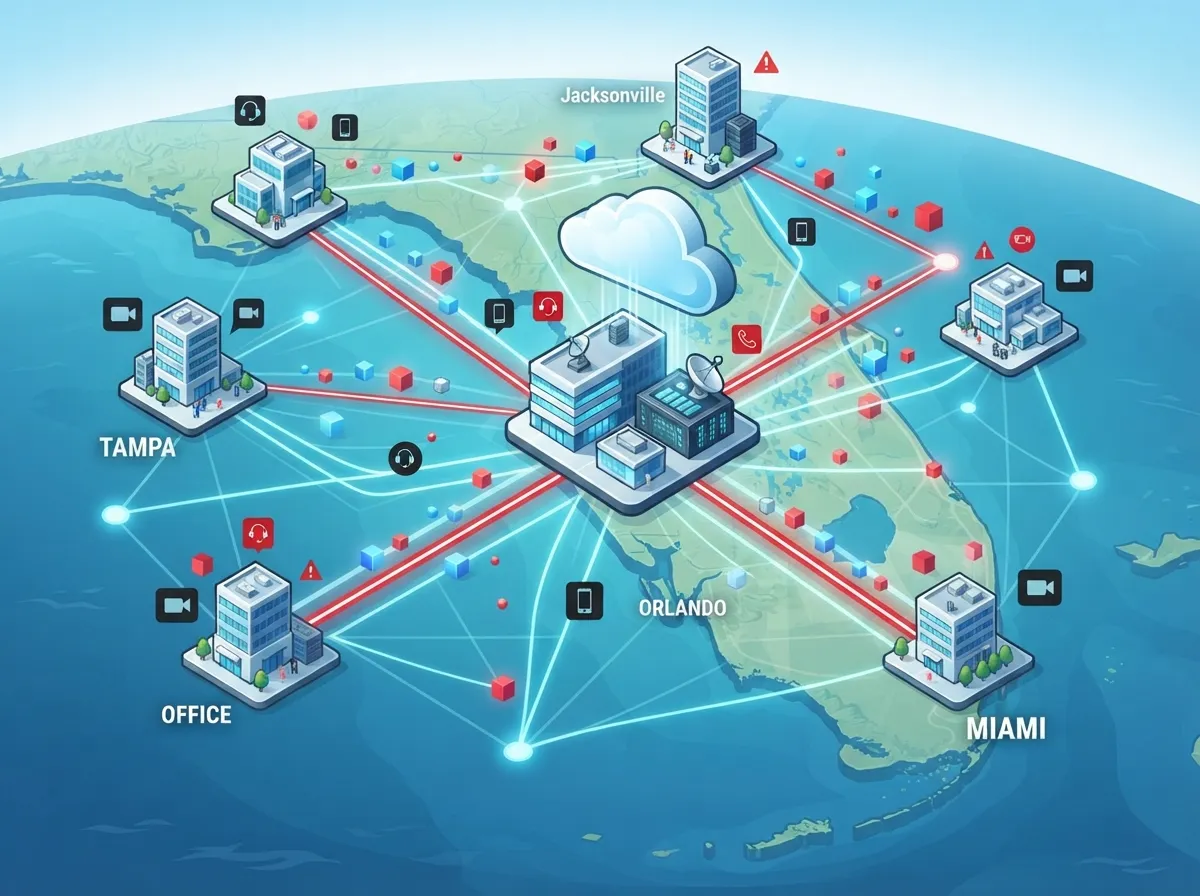
Florida is a big state with a lot of moving parts. Tampa Bay, Orlando, Fort Lauderdale, Miami, and Central Florida each have their own business rhythms, and that means telecom needs can look different from city to city. A restaurant chain in Tampa may need different internet options than a law firm in Fort Lauderdale, even if they’re both part of the same company.
That’s why smart providers evaluate each location individually. Carrier availability, building access, and connection quality can vary by address, so a one-size-fits-all plan rarely works well. Instead, the goal is to build a system that feels unified to your team, even though the technology behind it is customized per site.
- Consistent phone experience across every office
- Centralized billing instead of a dozen separate invoices
- One support team to call when something breaks
- Scalable systems that grow as you add locations
- Reduced vendor headaches for busy office managers
7 Multi-Location Business Telecom Solutions Florida Companies Rely On
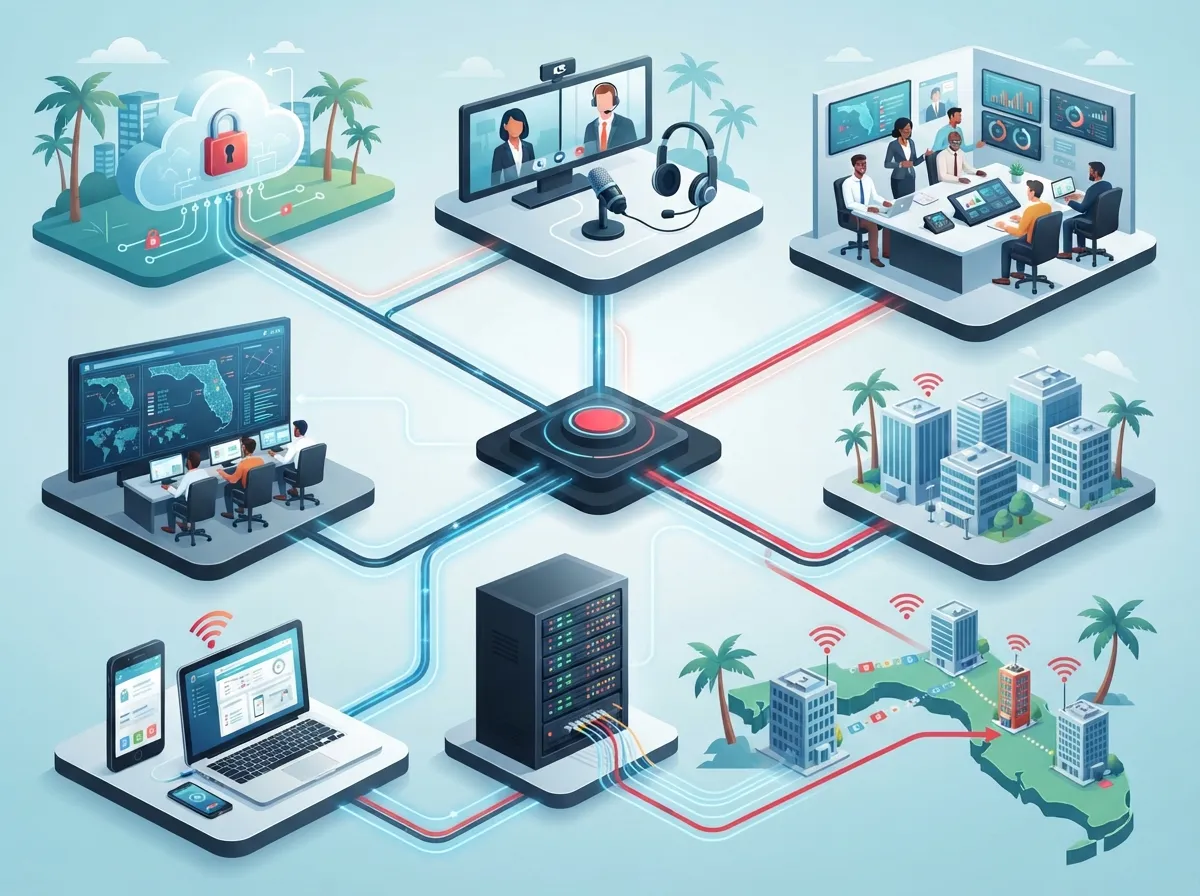
Here are the seven core solutions that make multi-site telecom work smoothly across Florida. Think of this as your shopping list for building a connected, reliable business.
1. Cloud Phone Systems (Hosted VoIP)
A cloud-based phone system is the backbone of most multi-location setups. Instead of separate phone lines at each office, everything runs through the internet using a cloud-based phone system built for growing businesses. This means your Tampa office and your Orlando branch can share extensions, transfer calls, and even answer each other’s lines during busy periods.
Cloud VoIP also makes it easy to add a new location without waiting weeks for a phone company to run new lines. If you’re still deciding whether cloud is right for your business, this guide on how to choose cloud based phone system providers breaks it down step by step.
2. Unified Call Routing and Directories
Nothing frustrates customers faster than getting bounced between offices with no clear direction. Unified call routing solves this by letting every location share one directory, one set of extensions, and smart routing rules.
Here’s how it typically works for a multi-site business:
- A customer calls your main business number
- The system checks time-of-day and location rules
- The call routes to the right office or department automatically
- If no one answers, it rolls over to a hunt group at another site
- Voicemail and missed calls sync across the whole team
This kind of setup keeps things feeling personal, even when you’re managing calls across five Florida cities. If you’re weighing hosted options against older systems, avoiding common hosted PBX mistakes can save you real headaches down the road.
3. Business Internet Built for Multiple Sites
Your phone system, security cameras, and daily operations all depend on solid internet. But here’s the catch: internet options can be very different from one Florida address to the next. A building in downtown Tampa might have fiber options that aren’t available just a few miles away.
That’s why smart multi-location plans start with a site-by-site internet review. This often includes a mix of connection types, matched to what’s actually available:
| Internet Type | Best For | Key Benefit |
|---|---|---|
| Dedicated Fiber | High-traffic offices, HQ locations | Fast, symmetrical speeds with priority support |
| Business Broadband | Smaller branch offices | Affordable and widely available |
| Cable Business Internet | Retail locations, satellite offices | Good speed at a lower cost |
| Backup/Failover Internet | Every location, as a safety net | Keeps you online during outages |
For a deeper dive into picking the right connection type, check out these high-speed internet tips that save money. And if fiber is on your radar, this comparison of fiber vs. cable business internet is worth a read.
4. SD-WAN for Smarter, Simpler Networking
If you’ve never heard of SD-WAN, don’t worry. It’s simply a smarter way to connect multiple offices into one network. Instead of relying on a single, expensive dedicated line between locations, SD-WAN uses multiple internet connections and automatically picks the best path for your data.
Why does this matter for Florida businesses? Because it means faster performance, easier management, and better reliability across every site. Here are the top reasons growing companies adopt it:
- Combines multiple internet connections into one smart network
- Automatically reroutes traffic if one connection slows down
- Centralized management from a single dashboard
- Lower cost than traditional MPLS networks
- Easier to add new locations as you grow
Curious how it stacks up against older technology? This breakdown of SD-WAN vs. traditional WAN explains the differences in plain terms.
5. Structured Cabling for Every New or Renovated Site
Whether you’re opening a new location or upgrading an old one, good structured cabling is the foundation everything else sits on. Phones, cameras, Wi-Fi, and computers all depend on clean, well-planned cabling behind the walls.
Skipping this step, or hiring an unqualified installer, often leads to slow networks and constant troubleshooting. If you’re planning a buildout, this guide on how to plan network cabling installation walks through the process from start to finish.
6. Cloud Video Security Across All Locations
Franchise owners and office managers both know the value of keeping an eye on things, even when they’re not physically there. Cloud video security lets you check in on any location from your phone, no matter where you are.
This is especially useful for multi-site businesses because it centralizes footage storage and viewing into one app. Learn more about what security cameras really do for your business before you invest in a system.
7. Cloud Access Control for Scalable Building Security
Managing keys across multiple Florida locations is a logistical nightmare. Someone loses a key, and now you’re rekeying doors or worrying about who still has access. Cloud access control solves this with mobile credentials and remote management.
With a scalable system, you can grant or revoke access instantly at any site, right from your phone. This is a favorite among scalable access control systems for multi-location businesses, especially for franchise operators managing several sites at once.
How Florida Providers Handle Service Across Multiple Cities
One thing worth knowing: telecom providers in Florida often organize service by regional market rather than offering one blanket statewide plan. Providers frequently support Central Florida counties like Orange, Osceola, and Seminole, along with South Florida markets such as Fort Lauderdale. Others focus on West Florida, covering Hillsborough, Pasco, Pinellas, and Polk counties.
This regional approach makes sense because building access, carrier availability, and installation timelines really do vary by city. A good provider will walk your team through what’s available at each specific address, rather than promising the same setup everywhere.
Common Florida Regions Served for Multi-Site Telecom
| Region | Key Counties/Cities | Typical Services Available |
|---|---|---|
| Tampa Bay | Hillsborough, Pinellas, Pasco | Fiber, VoIP, SD-WAN, structured cabling |
| Central Florida | Orange, Osceola, Seminole, Lake | Business broadband, hosted PBX, networking |
| South Florida | Miami, Fort Lauderdale, Boca Raton | Dedicated fiber, cloud voice, security systems |
| Southwest Florida | Collier, Lee | Cable internet, VoIP, managed network services |
Choosing the Right Multi-Location Telecom Partner
Not all providers are built to handle multi-site complexity. Here’s a simple checklist to guide your decision:
- Do they evaluate each location individually for internet and voice options?
- Can they offer one bill and one point of contact for all sites?
- Do they include backup internet and automatic failover?
- Can their phone system support shared extensions and unified call routing?
- Do they have experience with businesses similar in size to yours?
- Will they help you scale as you open new locations?
- Do they offer ongoing support, not just installation?
This is exactly the kind of work Ideal Solutions Provider handles every day. As a Tampa-based telecom and IT partner with over 24 years of experience and relationships with 35+ vetted suppliers, they act as a single point of contact for businesses managing multiple Florida locations, or sites across the country. Instead of juggling five different vendors, you get one team handling everything from consultation to installation to ongoing support.
Reducing Costs Across Multiple Locations
Cost control gets harder as you add locations, simply because there are more contracts, more bills, and more chances for overlap or waste. Here are a few ways multi-location businesses trim costs without cutting corners:
- Bundle phone and internet service under one provider
- Audit existing contracts at each site for overlapping services
- Standardize equipment across locations to reduce support costs
- Use cloud systems to avoid expensive on-site hardware at every office
- Negotiate multi-site pricing instead of paying per-location rates
If you want a deeper look at cost-cutting strategies, this article on 15 ways to reduce business telecom costs covers plenty of practical ideas.
Hosted PBX vs. Premise-Based Systems for Multi-Site Businesses
This is one of the most common questions we hear from office managers and IT teams alike. A premise-based phone system keeps hardware on-site at each location, which means more equipment to maintain and less flexibility. A hosted or cloud PBX system, on the other hand, keeps everything in the cloud, so all your locations connect through the same platform without needing a server room at every site.
For most multi-location Florida businesses, hosted PBX wins on flexibility, cost, and ease of scaling. You can learn more about how much a VoIP phone system costs for a business to get a clearer picture of the investment involved.
You can also see real examples of how businesses have made the switch by checking out YouTube for video walkthroughs, or follow ongoing tips and updates on Facebook and Instagram.
Final Thoughts on Multi-Location Telecom in Florida
Managing telecom across multiple Florida locations doesn’t have to be stressful. With the right mix of cloud phone systems, smart networking, structured cabling, and centralized management, your business can run smoothly no matter how many cities you’re in. The key is working with a partner who treats every site as its own project while keeping the big picture connected.
If you’re ready to simplify your multi-location telecom setup, our team would love to help you compare options and build a plan that fits every one of your Florida locations. Contact us today for a free consultation, or call us to talk through your specific needs. We’re here to make multi-site telecom feel simple again.
FAQs
Q: What are multi-location business telecom solutions?
A: They’re a bundle of services, like VoIP, internet, and networking, that connect all your business locations under one unified system. Think one bill, one support team, and consistent service no matter which Florida city you’re in. It’s all about making multiple offices feel like one connected business.
Q: How does VoIP work for multi-location businesses in Florida?
A: VoIP runs your phone calls over the internet instead of old phone lines, which means every location can share extensions, directories, and call routing. So if your Tampa office is slammed, calls can roll over to your Orlando team automatically. It’s flexible, affordable, and easy to scale as you add sites.
Q: What is SD-WAN and why is it useful for branch offices?
A: SD-WAN is a smart way to connect multiple offices using several internet connections instead of one expensive line. It automatically picks the fastest, most reliable path for your data, which keeps things running smoothly even during hiccups. For growing Florida businesses, it’s a cost-effective way to stay connected.
Q: How do providers handle internet availability at different Florida locations?
A: Good providers check each address individually because internet options really do change from city to city, and even block to block. What works great in downtown Tampa might not be available in a smaller town nearby. That’s why a site-by-site review is so important before signing any contracts.
Q: How can multi-location businesses reduce telecom costs?
A: Bundling services under one provider, auditing existing contracts, and standardizing equipment across sites are all great starting points. Cloud-based systems also cut down on hardware costs at each location. A little review often uncovers savings you didn’t know were there.