Key Takeaways
-
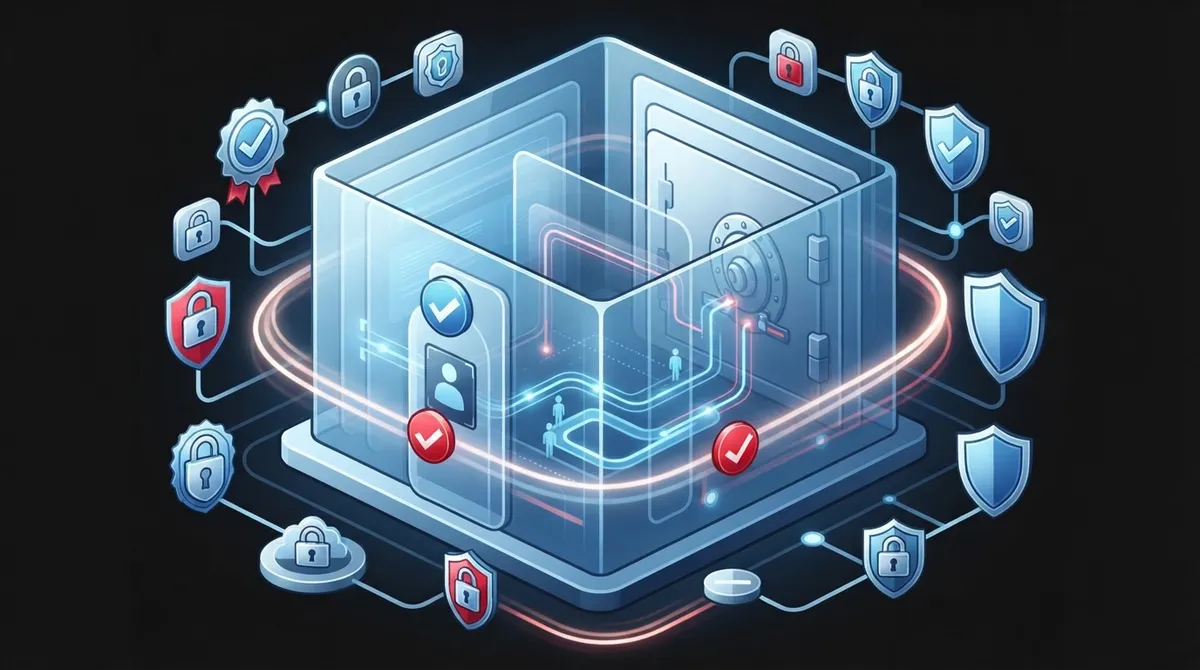
Cloud access control compliance requires proving three things: only approved people can access systems, every entry and exit is tracked, and you can show auditors complete proof of all activities when requested.
-
The shared responsibility model means your cloud provider secures infrastructure while you must manage user roles, permissions, multi-factor authentication, and audit log reviews—skipping your half is a common compliance mistake.
-
Combine RBAC with multi-factor authentication and least-privilege access to significantly reduce compliance risk; give users only minimum access needed and use read-only permissions whenever possible.
-
Audit logs recording user identity, timestamps, device location, and actions taken are essential for compliance; implement continuous near-real-time monitoring rather than checking logs only during annual audits.
-
Telecom businesses must address three specific regulatory areas: license acquisition for communications services, lawful interception support for law enforcement, and reliable emergency calling like 911 routing.
-
Multi-location and franchise businesses need one company-wide access policy applied consistently across all sites with centralized audit logs, as weak compliance at one location creates risk for the entire organization.
If you run a business, chances are you’ve swapped your metal keys for a badge or a mobile app. That’s cloud access control, and it’s a great tool. But here’s the catch: having a cloud access control system isn’t the same as having a compliant one. Many Tampa business owners install a fancy new door system, feel good about it, and never think about the rules and logs that go along with it. That gap can cause real problems, from failed audits to data breaches to fines.
This guide breaks down cloud access control compliance in plain language. We’ll cover what it means, why it matters for your telecom setup, and how to get it right without losing sleep. Whether you manage one office or ten franchise locations, this is information you can actually use. And if you ever feel stuck, the team at Ideal Solutions Provider is always happy to walk through your setup with you.

What Is Cloud Access Control Compliance?
Cloud access control compliance means making sure your cloud-based door and system access follows the right rules. This includes laws, industry standards, and your own internal security policies. It’s not just about who can open a door. It also covers who can log into your telecom systems, view call records, or touch sensitive customer data.
In telecom and IT environments, compliance usually means proving three things. First, only approved people can get in. Second, you can track every entry and exit. Third, you can show auditors proof of all this when asked. Think of it as digital paperwork that backs up your physical and digital security.
Why This Matters for Business Telecom Solutions
Business phone systems, networks, and cameras all connect to the cloud these days. That means your cloud access control systems aren’t standing alone anymore. They talk to your VoIP platform, your network, and sometimes your customer data too. If one part isn’t locked down, the whole chain can be at risk.
- Unauthorized access to phone systems can lead to costly toll fraud
- Weak access rules can expose customer call records
- Poor logging makes it hard to prove who did what during an incident
- Non-compliance can mean fines or lost contracts, especially in healthcare or finance
- Franchise locations without consistent rules create uneven risk across sites
The Shared Responsibility Model Explained
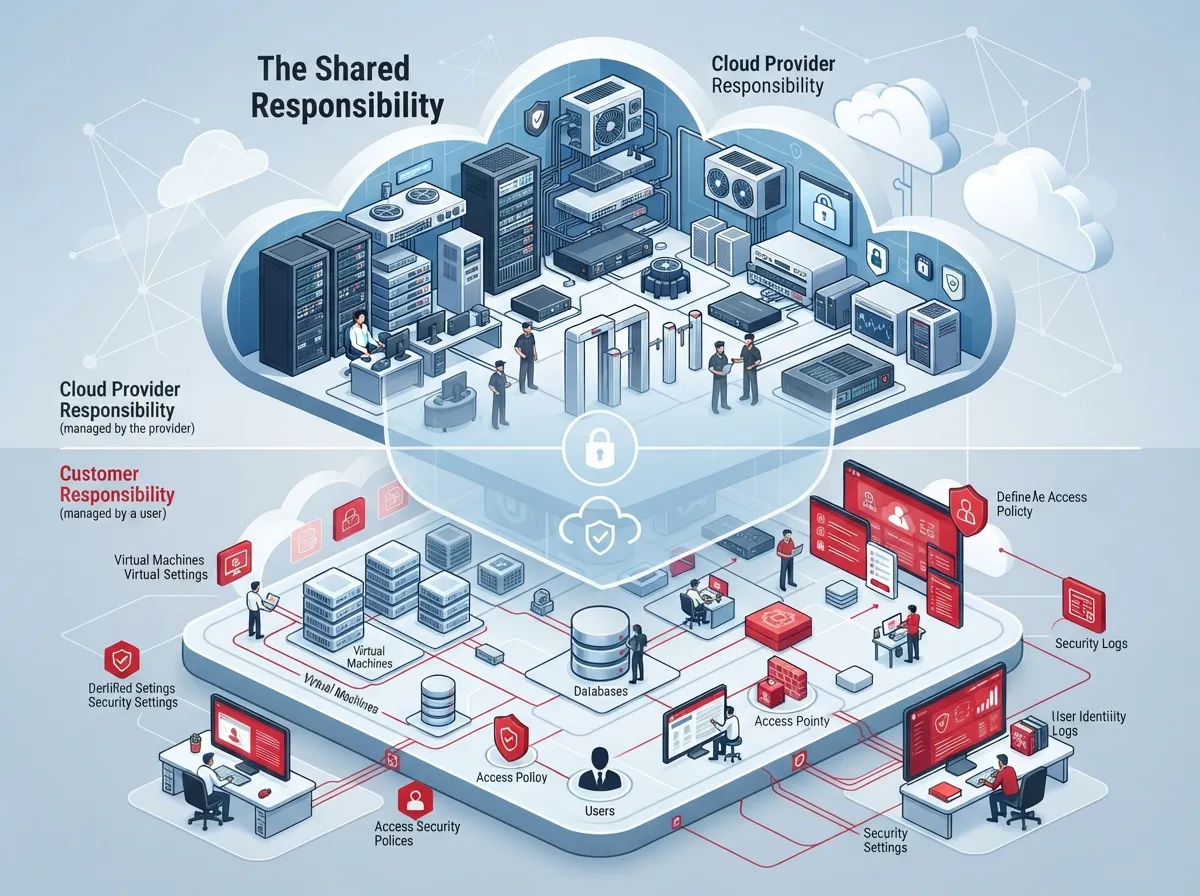
Here’s something that surprises a lot of business owners. Cloud compliance is a two-way street. Your cloud provider secures the servers, the data centers, and the core software. But you are responsible for who gets access, what they can do, and how you track it.
This is called the shared responsibility model. Your telecom cloud provider builds a strong, secure house. But you still have to lock the doors, hand out the right keys, and keep a log of who came and went. Skipping your half of the job is one of the most common compliance mistakes businesses make.
What Your Provider Handles
- Physical security of data centers and servers
- Network-level protections and firewalls
- Software patching and system updates
- Built-in certifications and third-party audits
- Infrastructure uptime and disaster recovery
What Your Business Handles
- Setting user roles and permissions
- Turning on multi-factor authentication
- Removing access for former employees
- Reviewing audit logs regularly
- Training staff on proper access habits
Access Control Models That Support Compliance
Not all access control setups are created equal. Some are far better at supporting compliance than others. Here’s a quick comparison of the most common models used in telecom cloud environments today.
| Access Control Model | How It Works | Best For |
|---|---|---|
| Role-Based Access Control (RBAC) | Access is tied to job roles, like manager or technician | Most small to mid-sized businesses |
| Attribute-Based Access Control (ABAC) | Access depends on context, like time, location, or device | Larger enterprises with complex needs |
| Multi-Factor Authentication (MFA) | Requires two or more proofs of identity to log in | Every business, as a baseline layer |
| Least-Privilege Access | Users only get the minimum access needed for their job | Any business wanting lower risk |
Most telecom cloud guidance recommends combining these models rather than picking just one. For example, RBAC handles the everyday structure, while MFA adds a strong extra layer. Some providers, like those mentioned in VMware’s Telco Cloud Platform guidance, suggest removing permissions employees don’t need and giving read-only access whenever possible. That one habit alone can shrink your compliance risk significantly.
Telecom-Specific Rules You Need to Know
Business telecom compliance isn’t only about locking doors and setting passwords. There are specific rules tied to communications that you need on your radar too.
Key Regulatory Areas
A cloud communications compliance guide from BICS points to three major regulatory areas that affect telecom businesses. These apply whether you’re running a single office phone system or a nationwide network.
- License acquisition for operating communication services
- Lawful interception support for law enforcement requests
- Emergency calling access, like reliable 911 routing
On top of these, businesses handling sensitive data often need to align with broader security frameworks. Google Cloud, for instance, maps its telecom compliance guidance to the Cloud Security Alliance Cloud Controls Matrix. This gives businesses a shared baseline to measure against, rather than guessing what “secure enough” looks like.
Data Retention and Call Records
Many industries require you to keep call records and access logs for a set period of time. Healthcare, financial services, and government contractors often face stricter retention rules. If your cloud-based phone system doesn’t support proper retention and easy retrieval, that’s a compliance gap waiting to bite you.
Audit Logs and Continuous Monitoring
If compliance had a best friend, it would be the audit log. These logs record who accessed what, when, and from where. Without them, you have no proof of anything during an audit or after a security incident.
What a Good Audit Trail Should Include
- User identity for every access event
- Timestamp of each login or door entry
- Device or location used for access
- Actions taken once access was granted
- Alerts for unusual or failed access attempts
Tata Communications, a major player in cloud compliance offerings, highlights RBAC, audit logging, identity integration, and continuous monitoring as core pieces of a solid compliance program. Continuous monitoring means you’re not just checking logs once a year. You’re watching in near real time, so problems get caught early instead of during a painful audit.
Common Compliance Risks to Watch For
Even well-meaning businesses slip up here. Recognizing these risks early can save you a lot of stress later.
- Former employees who still have active login credentials
- Admin accounts with far more access than needed
- Shared logins used by multiple staff members
- Missing or incomplete audit logs
- No regular review of who has access to what
- Access control systems not integrated with your network security
Least-privilege access keeps coming up in telecom cloud guidance for good reason. Stale admin rights and unused accounts are some of the easiest things for hackers to exploit, and some of the easiest things for you to fix.
How to Prepare for a Cloud Compliance Audit
Audits don’t have to be scary. With the right prep work, they can actually feel pretty routine. Here’s a simple path to follow.
- Review all current user accounts and remove anyone who shouldn’t have access
- Confirm MFA is turned on for every system, not just some
- Pull recent audit logs and check them for gaps or errors
- Match your access policies against relevant industry frameworks
- Document your shared responsibility split with your cloud provider
- Test your emergency calling and lawful intercept support if applicable
- Schedule a walkthrough with your telecom or IT partner before the audit date
Doing this a few times a year, not just before an audit, keeps your business in a much stronger position. It also makes conversations with your cloud phone system provider much easier when everyone already knows where things stand.
Building Compliance Into Your Telecom Setup From Day One
The businesses that struggle most with compliance are usually the ones that bolted it on after the fact. It’s much easier, and cheaper, to build compliance in from the start.
Steps for a Strong Foundation
- Choose vendors that publish clear compliance certifications
- Ask providers directly how they support audit logging and monitoring
- Set access policies before you roll out new VoIP phone system features
- Pair your phone systems, network, and access control under one coordinated plan
- Work with a partner who understands both telecom and security compliance together
This is exactly where having a single point of contact pays off. Instead of juggling separate vendors for your phones, internet, cabling, and access control, one partner can help you see the full compliance picture. Ideal Solutions Provider has spent over 24 years helping Tampa businesses and companies nationwide connect these pieces the right way, working with 35+ vetted suppliers to match the right compliance-ready tools to your setup.
Comparing Compliance Support Across Solution Types
| Solution Area | Compliance Focus | Common Tools Used |
|---|---|---|
| Cloud Phone Systems | Call record retention, lawful intercept, emergency calling | MFA, encrypted call logs, retention policies |
| Cloud Access Control | Physical entry logs, credential management | Mobile credentials, RBAC, real-time alerts |
| Network Infrastructure | Data protection, secure transmission | SD-WAN encryption, firewalls, monitoring |
| Cloud Video Security | Footage access control, storage retention | Role-based viewing, cloud storage policies |
Seeing these side by side helps you spot where your business might have gaps. If your network solutions are solid but your access control logging is weak, that’s a mismatch worth fixing sooner rather than later.
Why Franchise and Multi-Location Businesses Need Extra Care
If you’re managing several locations, compliance gets more complicated fast. Each site might have different staff, different hours, and different levels of risk. Without a shared standard, one weak location can create problems for the whole company.
- Set one company-wide access policy, then apply it everywhere
- Use scalable access control systems that manage all sites from one dashboard
- Centralize audit logs so you’re not chasing reports from five different systems
- Standardize onboarding and offboarding steps across every location
This kind of consistency isn’t just good for compliance. It also makes day-to-day management so much simpler for busy office managers and IT teams juggling multiple sites.
Final Thoughts on Staying Compliant and Secure
Cloud access control compliance isn’t a one-time checklist you finish and forget. It’s an ongoing habit that protects your business, your customers, and your reputation. The good news is you don’t have to figure this out alone. With clear access rules, strong audit logs, and the right telecom partner by your side, staying compliant becomes part of your normal routine instead of a source of stress.
If you’re not sure where your business stands today, it might be time for a fresh set of eyes on your setup. You can reach out to our team for a free consultation or simply give us a call to talk through your current access control and telecom compliance needs. You can also follow along on Facebook, Instagram, or YouTube for more tips on keeping your business connected and protected. Compliance doesn’t have to be complicated, and you’ve got support ready when you need it.
FAQs
Q: What does cloud access control compliance mean in telecom?
A: It simply means your cloud-based access systems follow the right rules, laws, and security standards. This covers who can enter buildings, log into systems, or view sensitive telecom data. Think of it as proof that your security setup is doing what it’s supposed to do.
Q: Which access control models work best for telecom cloud environments?
A: Most businesses do great with a mix of role-based access control and multi-factor authentication. Larger companies sometimes add attribute-based access control for extra context, like location or device checks. The right combo really depends on your size and how sensitive your data is.
Q: How does RBAC support telecom compliance?
A: RBAC ties access to specific job roles, so people only get what they actually need. This makes audits much easier because you can clearly show who has access and why. It also cuts down on accidental over-permissions that create compliance headaches.
Q: What is the shared responsibility model for telecom cloud compliance?
A: Your cloud provider secures the infrastructure, like servers and data centers. Your business is responsible for managing user access, permissions, and monitoring. Both sides matter, and missing your half can leave gaps even if the provider’s security is excellent.
Q: How do telecom providers prepare for cloud compliance audits?
A: They usually start by reviewing user accounts, checking audit logs, and confirming MFA is active everywhere. It also helps to document how responsibilities are split with your cloud provider ahead of time. Doing regular check-ins throughout the year makes the actual audit feel much less stressful.