

Key Takeaways
-
Verify that individual technicians on your job hold specific BICSI certifications (Installer 1, Installer 2 Copper/Fiber, or Technician) rather than assuming company-wide certification means equal expertise across all staff.
-
Require documented per-link testing reports for every cable run covering wire map, length, insertion loss, and crosstalk before considering the project complete—this protects your business from costly downtime.
-
Compare bids using a detailed scope checklist including cable type, routes, labeling standards, firestopping, grounding, testing deliverables, and warranty terms to ensure quotes are truly comparable.
-
Ask installers about ANSI/TIA-568 standards compliance and building code requirements during the selection process—contractors who can't confidently explain standards are likely cutting corners.
Typing “certified cabling installers near me” into Google feels like it should give you an easy answer. But here’s the thing: not every business owner knows what to do once the search results pop up. Picking the wrong cabling contractor can mean slow Wi-Fi, dropped VoIP calls, and a network that can’t keep up with your growing business. The good news? Avoiding a few common mistakes can save you time, money, and a whole lot of headaches down the road.
Whether you’re a small business owner in Tampa setting up your first office network, an IT manager juggling multiple vendors, or a franchise operator planning cabling across several locations, this guide is for you. We’ll walk through the biggest mistakes businesses make when searching for certified cabling installers, and how to avoid them. Think of this as your friendly checklist before you sign any contract.
Mistake 1: Assuming “Certified” Means the Same Thing for Every Installer
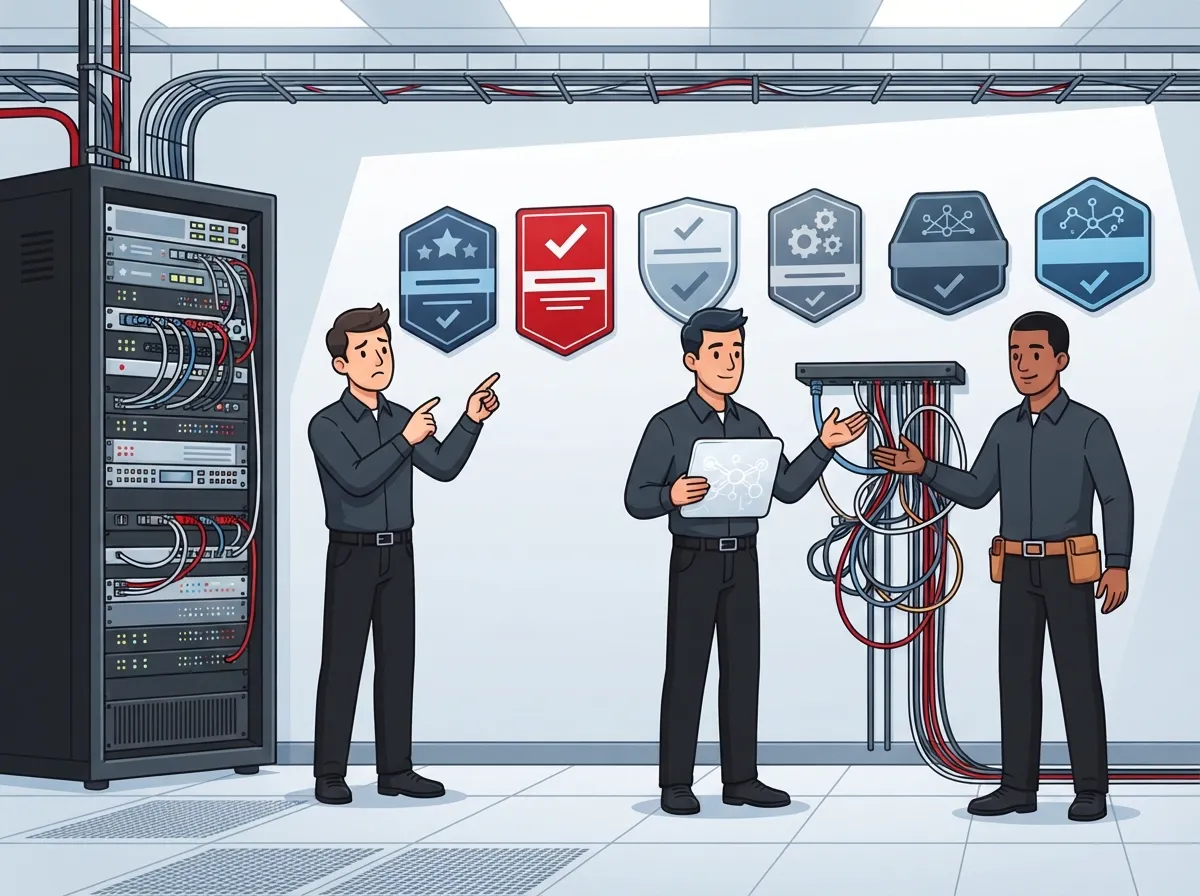
Here’s a fun fact that trips up a lot of business owners: certification isn’t one-size-fits-all. When people search for certified cabling installers near me, they often assume every certified technician has the same skills. That’s not quite true, and understanding the difference can save you from a mismatched contractor.
The most widely recognized credentials come from BICSI, a respected organization in the structured cabling industry. They offer several levels of training, and each one covers different skills.
- Installer 1: An entry-level, non-renewable certificate. Think of it as Cabling 101.
- Installer 2 Copper: Focused specifically on copper Ethernet cabling skills.
- Installer 2 Optical Fiber: Focused on fiber optic installation, a different skill set entirely.
- Technician: A more advanced credential for complex projects.
Both written and hands-on exams are required for these credentials, which is reassuring. But don’t stop there. Always ask which certifications the actual technicians on your job hold, not just the company as a whole.

Mistake 2: Hiring Based on Certification Alone (Without Checking Experience)
Certification tells you someone passed a test. It doesn’t tell you they’ve handled a project like yours before. This is a big mistake business owners make: they see a certification badge and stop asking questions.
A credential is a great starting point, but it’s not a guarantee of great workmanship. Before you hire, ask these simple questions:
- Which technicians will actually be on-site for my project?
- What certifications do those specific technicians hold?
- Can you share references from similar commercial projects?
- Do you carry proper insurance for this type of work?
- Have you worked in buildings similar to mine (office, warehouse, retail, medical)?
A contractor who confidently answers all five questions is one you can trust. If they hesitate or dodge, that’s a red flag. This matters just as much for a single-location small business as it does for a franchise operator rolling out cabling across ten sites.
Mistake 3: Skipping the Standards Conversation
Business cabling isn’t like running a wire behind your TV at home. Commercial installations need to follow specific industry standards, mainly ANSI/TIA-568. This standard covers how commercial telecommunications cabling should be designed and installed.
Why does this matter for your search for certified cabling installers near me? Because a contractor who doesn’t mention standards at all might be cutting corners. Ask your installer:
- Which edition of ANSI/TIA-568 applies to my project?
- Are there other standards we need to follow for our building type?
- How do you confirm compliance with the building’s authority having jurisdiction?
A good contractor won’t blink at these questions. They’ll walk you through it like it’s second nature, because it should be.
Mistake 4: Not Requiring Documented Testing for Every Cable Run
This is probably the most overlooked step, and it’s a costly one to skip. Some installers will tell you the system was tested and leave it at that. That’s not good enough for a business network supporting phones, security cameras, and daily operations.
You should get documented, per-link testing for every single cable run, not just a general statement. Here’s what should be tested and recorded:
| Cable Type | What Gets Tested | Why It Matters |
|---|---|---|
| Copper (Cat5e/Cat6/Cat6A) | Wire map, length, insertion loss, return loss, crosstalk | Confirms the cable will support the data speeds you need |
| Fiber Optic | Loss testing appropriate to the link and application | Ensures reliable long-distance and high-bandwidth connections |
| Full Documentation | Test results for every installed link | Protects you if problems come up later |
Ask for a full closeout report before you consider the job complete. If a company can’t or won’t provide this, walk away. This is one of the structured cabling mistakes that hurt your business the most, and it’s completely avoidable.
Mistake 5: Comparing Bids Without a Complete Scope of Work
Ever gotten three quotes for the same project and they were wildly different? That’s usually because the bids weren’t actually comparing the same scope. A vague quote makes it nearly impossible to know what you’re really paying for.
A complete proposal should spell out these details clearly:
- Cable type and category (Cat6, Cat6A, fiber, etc.)
- Routes and pathways through the building
- Labeling standards for every cable and port
- Termination hardware and patch panel details
- Firestopping requirements where cables pass through walls
- Grounding and bonding responsibilities
- Testing and documentation deliverables
- Cleanup and debris removal
- Project schedule and milestones
- Warranty terms and any exclusions
When you compare quotes, lay them side by side using this list. If one bid is missing half these details, it’s probably cheaper for a reason. This approach works whether you’re planning a single office buildout or coordinating reliable network solutions for multi-location businesses.
How to Actually Compare Local Cabling Installers
Now that you know what to avoid, let’s talk about what a smart comparison looks like. Here’s a quick checklist to run through with every contractor on your list:
- Do they serve your area with reasonable response times?
- Do they have real commercial project experience, not just residential work?
- What credentials do their technicians hold?
- Do they use proper testing equipment and provide detailed reports?
- Can they share references from businesses similar to yours?
- Can they coordinate with your IT team, electricians, and other trades?
- Can they support your future growth and expansion plans?
This last point matters more than people realize. Your cabling needs today might not match your needs in two years. A good partner plans for that. This is especially true if you’re rolling out scalable access control systems for multi-location businesses or adding security cameras down the line, since your cabling backbone needs to support it all.
Why Structured Cabling Is the Foundation of Your Whole Network
It’s easy to think of cabling as just wires in the wall. But it’s really the foundation for everything else your business relies on. Your cloud-based phone system, your Wi-Fi access points, your security cameras, and your business network solutions all depend on solid, well-tested cabling underneath.
Poor cabling shows up as slow internet, dropped calls, and frustrated employees. Good cabling is invisible, quietly doing its job every single day. That’s the goal.
At Ideal Solutions Provider, we’ve spent over 24 years helping Tampa businesses and companies nationwide get this foundation right. We work with 35+ vetted suppliers, so you get honest recommendations instead of a one-size-fits-all pitch. Whether you need structured cabling services for a new office or an upgrade for an existing space, our team handles it from consultation through installation and support.
What This Means for Your Business Growth
Choosing the right cabling installer isn’t just a maintenance task. It’s an investment in how smoothly your business runs. A well-designed, properly tested cabling system supports your phones, your internet, your security systems, and everything in between.
Take your time comparing options. Ask the tough questions. Require documentation. And remember that the cheapest bid isn’t always the best value, especially when you factor in downtime, rework, and frustration later. You can also follow updates and project photos on our Facebook page or check out installation walkthroughs on our YouTube channel to see this work in action.
Ready to Get Your Cabling Done Right?
Finding certified cabling installers near me doesn’t have to feel overwhelming. With the right questions and a clear checklist, you can confidently choose a partner who delivers quality work backed by real documentation. If you’re ready to talk through your project, our team would love to help. Contact us today for a free consultation, or call us to speak with a telecom specialist who can walk you through your options.
FAQs
Q: What does a certified cabling installer do for a business?
A: A certified cabling installer designs, installs, and tests the copper and fiber cabling that supports your phones, internet, Wi-Fi, and security systems. They also handle patch panels, racks, and telecom rooms, and provide documented testing so you know everything works before they leave.
Q: How do I find a commercial structured cabling installer near me?
A: Start by searching for local contractors with real commercial project experience, not just residential work. Ask about their certifications, request references, and confirm they provide full testing documentation for every cable run before you sign anything.
Q: Which cabling certifications should a business installer have?
A: Look for BICSI credentials like Installer 1, Installer 2 Copper, Installer 2 Optical Fiber, or Technician certifications. Just remember that certification alone doesn’t guarantee great workmanship, so pair it with references and real project experience.
Q: Should a cabling contractor test and certify every network cable run?
A: Absolutely, yes! Every single cable run should be tested and documented, not just given a general thumbs-up. Ask for detailed reports covering wire map, length, insertion loss, and other key parameters for copper, plus appropriate testing for fiber.
Q: What should be included in a structured cabling installation quote?
A: A solid quote should cover cable type, routes, labeling, termination hardware, firestopping, grounding, testing, cleanup, schedule, and warranty details. Comparing quotes side by side using this checklist helps you avoid surprises later.