
Key Takeaways
-
ANSI/TIA-568.2-E (October 2024) is the latest copper cabling standard with new requirements for power delivery and DC resistance unbalance; verify your contractor tests against this version, not older editions.
-
Maximum channel length for copper Ethernet is 100 meters (328 feet) including patch cords; exceeding this causes signal degradation—larger buildings need multiple telecommunications rooms to maintain performance.
-
Cat6A cabling is recommended for new installations as it future-proofs investments by supporting 10 Gigabit Ethernet speeds without requiring rewiring during business growth.
-
Star topology layout with centralized telecommunications rooms improves troubleshooting, limits signal travel distance, and enables easier expansion compared to daisy-chained connections.
-
Certified testing and documentation of completed installations confirm performance, create compliance records for insurance/leases, and provide troubleshooting references for future IT teams.
-
Verify contractors follow ANSI/TIA-568 standards, recommend appropriate cable categories, provide test results, and understand local electrical codes before hiring for cabling projects.
If you’ve ever heard your IT guy mention “TIA-568” and immediately zoned out, you’re not alone. Most business owners just want their phones to work, their internet to be fast, and their network to stay up without drama. But here’s the thing: the cabling hiding behind your walls is the real backbone of everything you rely on every single day, from VoIP calls to security cameras to your point-of-sale system.
ANSI/TIA-568 is the rulebook that tells cabling installers how to wire a building the right way. Think of it like a building code, but for your network instead of your plumbing. When your cabling follows these standards, your systems talk to each other smoothly. When it doesn’t, you get dropped calls, slow internet, and mystery outages that make everyone want to pull their hair out.
At Ideal Solutions Provider, we’ve spent over 24 years helping Tampa businesses (and companies nationwide) get their structured cabling services done right the first time. In this article, we’ll break down five key ANSI/TIA-568 cabling standards every business owner, office manager, and IT lead should understand before their next build-out or upgrade. No confusing jargon, we promise.
1. Understand What ANSI/TIA-568 Actually Covers
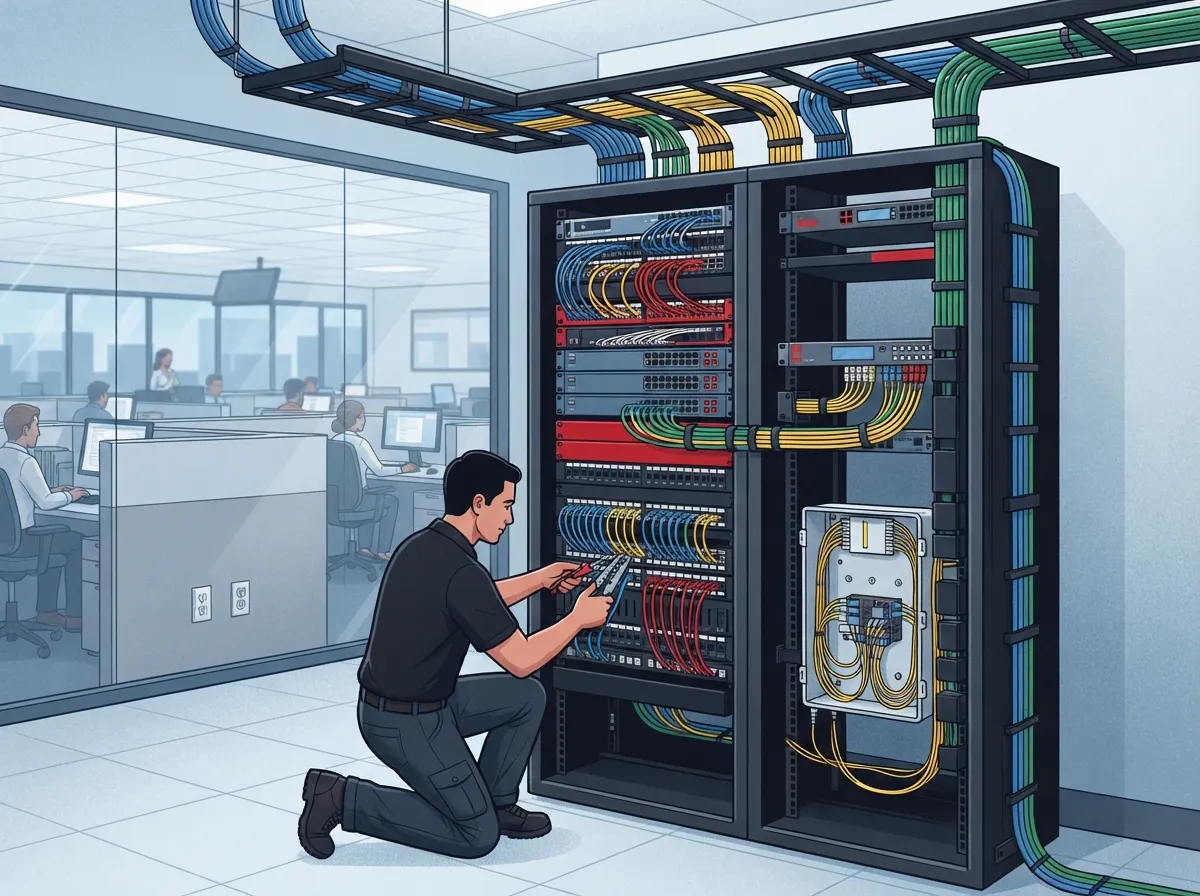
ANSI/TIA-568 isn’t one single rule. It’s a whole family of standards that guide how cabling gets designed, installed, and tested inside a business building. It covers everything from cable layout to how far a cable can run before signal quality drops.
Here’s a simple breakdown of the main parts of the standard family:
- TIA-568.0: The generic rulebook for cabling in any type of building
- TIA-568.1: Focused specifically on commercial office buildings
- TIA-568.2: Covers copper cabling, like the Cat6 or Cat6A wires most offices use
- TIA-568.3: Covers fiber optic cabling and its components
These standards don’t just cover one cable type. They set rules for cable performance, how components fit together, and how everything gets tested once installed. If you’re planning any kind of office move or expansion, understanding this framework helps you ask smarter questions when hiring a cabling contractor. Our team has put together a helpful guide on signs your business needs structured cabling if you’re not sure where to start.
2. Know the Latest Standard Revisions and Why the Date Matters
Standards get updated over time, kind of like how building codes change to keep up with new safety needs. The copper cabling standard, ANSI/TIA-568.2-E, was published on October 24, 2024. It’s the newest version and it updates older requirements, including new guidance on delivering power over network cables and better balance in how electrical current flows.
The fiber cabling standard, ANSI/TIA-568.3-E, came out a bit earlier, on September 29, 2022. It sets rules for fiber cable, connectors, and patch cords used in office and campus networks.
Here’s a quick comparison to help you keep them straight:
| Standard | Cable Type | Published Date | Main Focus |
|---|---|---|---|
| ANSI/TIA-568.2-E | Copper (twisted-pair) | October 24, 2024 | Performance, power delivery, resistance balance |
| ANSI/TIA-568.3-E | Fiber optic | September 29, 2022 | Fiber performance, testing, connector polarity |
One important thing to know: if your existing cabling was certified under an older version of the standard, that certification doesn’t automatically carry over to the new edition. If you’re planning an upgrade, it’s worth asking your cabling partner which version they’re testing against. This is exactly the kind of detail we walk clients through during a network cabling installation plan in Tampa Bay.
3. Pick the Right Cable Category for Your Business Needs
Not every business needs the same cable. Picking the right category depends on how much bandwidth you need now, and how much you’ll need down the road. Choosing wrong can mean paying more than necessary, or getting stuck with cabling that can’t keep up with growth.
Here’s a simple way to think through your options:
- Small offices with basic needs: Cat5e might handle daily tasks, but it’s quickly becoming outdated for growing businesses
- Standard business networks: Cat6 offers solid performance for most day-to-day operations, including VoIP and general internet use
- Businesses planning for growth: Cat6A gives you more headroom for faster speeds, like 10 Gigabit Ethernet, without needing a redo in a few years
- High-performance or data-heavy environments: Fiber optic cabling supports the fastest speeds and longest distances, ideal for data centers or multi-building campuses
Many businesses today choose Cat6A or higher when building out new offices, simply because it future-proofs the investment. If you’re weighing your options, check out our comparison guide on the differences between CAT5e and CAT6 cabling for a deeper look.
4. Follow the Standard’s Layout and Distance Rules
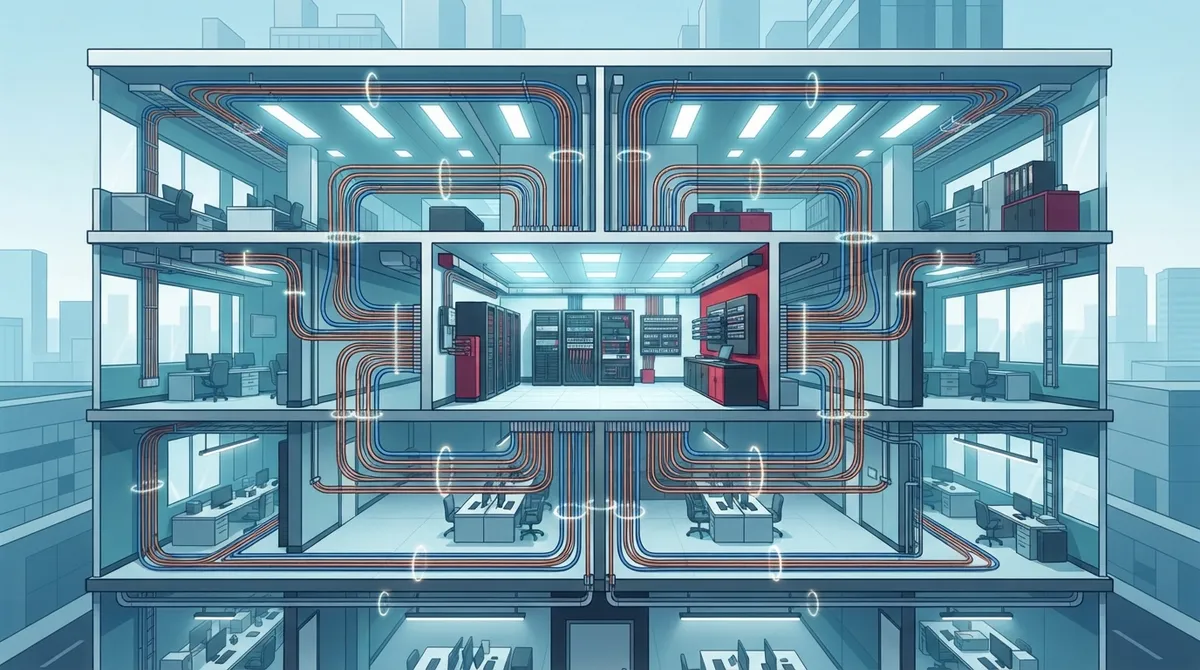
ANSI/TIA-568 also sets rules for how cabling should be arranged in your building. Most business networks use what’s called a star topology. Picture a wheel with spokes: every work area connects back to a central point, usually a telecommunications room, rather than daisy-chaining from one device to the next.
Here’s why this matters for your business:
- A star layout makes troubleshooting much easier when something goes wrong
- It limits how far a signal has to travel, keeping performance strong
- It supports easier future expansion since each connection is independent
For copper Ethernet cabling, the standard generally allows a maximum channel length of 100 meters, or about 328 feet. That includes up to 10 meters set aside for patch cords and jumpers. Go beyond that distance, and your signal quality can drop, causing slow connections or dropped packets.
This distance rule is one reason larger buildings or multi-floor offices often need multiple telecommunications rooms rather than one central hub. If you’re managing a growing office or a multi-location business network, planning your cabling layout early saves a lot of headaches later.
Why Layout Planning Pays Off Long-Term
Skipping proper layout planning is one of the most common mistakes we see. Businesses often try to save money upfront by running cables in a rushed, unstructured way. It usually costs more later when they need to troubleshoot problems or add new devices. A well-planned structured cabling system, one that follows the principles of structured cabling, actually saves money over time by reducing downtime and maintenance headaches.
5. Test, Document, and Certify Every Installation
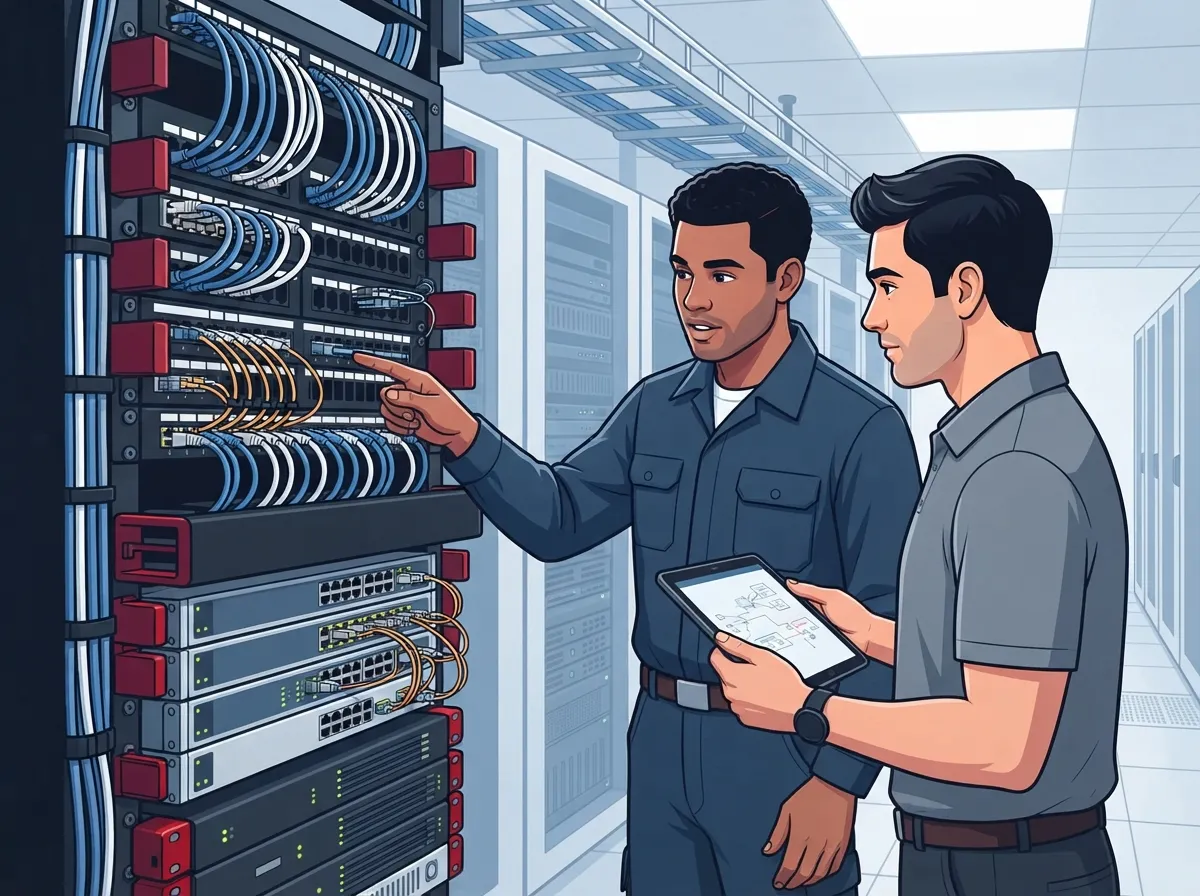
Here’s something a lot of business owners don’t realize: following the standard isn’t just about buying the right cable. It’s also about testing and documenting the finished installation. A properly installed cabling system should be tested with certified field equipment, and the results should be saved for future reference.
Why does this step matter so much? A few reasons:
- It confirms your network will actually perform as expected before you rely on it
- It gives you a paper trail if something fails down the road and needs troubleshooting
- It protects you if you ever need to prove compliance for an insurance claim or lease requirement
- It helps future IT teams understand exactly what’s behind your walls
The newest copper standard also added specific requirements around DC resistance unbalance for Cat5e, Cat6, and Cat6A cabling. This detail affects how well cables handle power delivery, which matters more now that many devices, like VoIP phones and security cameras, pull power directly through the network cable itself. It also recommends keeping ambient temperatures around 45°C or below and using cable rated for at least 60°C when power delivery is involved.
None of this needs to be something you memorize. It just needs to be something your cabling partner takes seriously. That’s why working with an experienced structured cabling contractor in Tampa makes such a big difference. They should hand you test results and documentation as part of the job, not as an afterthought.
How This Impacts Your Everyday Business Technology
You might be wondering why any of this matters if you just want your phones and internet to work. Here’s the honest answer: almost everything your business relies on runs through this cabling.
Your cloud-based phone system, your high-speed internet connection, your security cameras, and your access control system all depend on solid cabling underneath. If the cabling is outdated, poorly installed, or doesn’t meet current standards, you’ll notice it in the form of dropped calls, buffering video feeds, or slow file transfers.
We’ve seen it firsthand. A business calls us frustrated about spotty VoIP calls, and after an audit, the real issue isn’t the phone provider at all. It’s cabling that was installed years ago without following proper standards. Fixing the cabling fixes the calls. That’s why we always look at the whole picture, not just one piece of the puzzle, when working with clients on structured cabling that supports VoIP and security cameras.
What to Ask Before Hiring a Cabling Company
Next time you’re getting quotes for a cabling project, here are a few smart questions to ask:
- Which version of the ANSI/TIA-568 standard will the installation follow?
- What cable category do you recommend for our current and future needs?
- Will you provide test results and documentation after installation?
- How will the cabling layout support future expansion?
- Do you follow local electrical and fire codes alongside the cabling standard?
A trustworthy contractor should answer these without hesitation. If they seem unsure or dismissive, that’s a red flag worth paying attention to.
Bringing It All Together for Your Business
ANSI/TIA-568 cabling standards might sound technical, but the takeaway is simple: good cabling is the foundation for everything your business does online and on the phone. Whether you’re a small Tampa shop setting up your first real network, or an IT manager overseeing multiple office locations, following these standards protects your investment and keeps your team productive.
You don’t need to become a cabling expert yourself. You just need a partner who understands these standards inside and out, and who treats your network like it matters, because it does. That’s the whole reason Ideal Solutions Provider exists. We work with over 35 vetted suppliers and bring decades of hands-on experience to every project, so you get one point of contact instead of a dozen confusing vendors.
You can also check out real client stories and behind-the-scenes looks at our installs on our Facebook page, follow project photos on Instagram, or watch how we approach network builds on our YouTube channel. And if you want to learn more about how a solid Internet Service Provider connection pairs with quality cabling, our blog covers that too.
Ready to make sure your cabling actually meets today’s standards? Get in touch with our team for a free consultation, or simply call us at 813-388-4935 to talk through your project. We’re here to make your network work the way it should, no confusing jargon required.
FAQs
Q: What is the ANSI/TIA-568 cabling standard?
A: It’s basically the rulebook for how business cabling should be designed, installed, and tested. Think of it like a building code, but for your network wiring instead of pipes and wires in the walls. Following it means your phones, internet, and other systems all work together smoothly.
Q: What is the latest version of ANSI/TIA-568 for copper cabling?
A: That would be ANSI/TIA-568.2-E, published back in October 2024. It’s the newest word on copper cabling performance, including updated rules for power delivery and resistance balance. If your business is upgrading soon, it’s worth asking your installer if they’re building to this version.
Q: What cable category should a business use for new Ethernet cabling?
A: It really depends on your needs, but many growing businesses choose Cat6A these days. It gives you plenty of speed for today and room to grow without needing a rewire in a few years. Smaller offices with lighter needs sometimes go with Cat6, which still performs well for everyday tasks.
Q: What is the maximum distance for a TIA-568 copper Ethernet channel?
A: Generally, it’s 100 meters, or about 328 feet, and that includes up to 10 meters for patch cords and jumpers. Go past that and you risk signal loss, which can slow things down or cause connection drops. It’s one reason larger buildings often need more than one wiring closet.
Q: Do existing Cat6 or Cat6A installations need to be retested for TIA-568.2-E?
A: Not automatically, no. Your old certification from a previous standard doesn’t just carry over to the newest version. If you’re planning any major network changes, it’s a smart idea to have your cabling checked and retested so you know exactly where you stand.