Key Takeaways
-
Structured cabling consolidates VoIP phones, IP security cameras, and business networks into one unified infrastructure using Ethernet connections, eliminating the need for separate wiring systems and reducing total installation and maintenance costs.
-
Power over Ethernet (PoE) technology allows a single Cat6 cable to deliver both data and electrical power to VoIP phones and IP cameras, eliminating the need for separate power outlets and simplifying device deployment.
-
Cat6 cabling is the current standard for Tampa businesses, supporting faster data speeds and reduced interference that ensures clearer VoIP calls, smoother video streams, and better performance for high-resolution camera systems.
-
Structured cabling systems support seamless scalability—adding new phones, cameras, or network expansion is straightforward when built on an organized infrastructure rather than patched-together cabling.
-
Professional structured cabling installations following TIA/EIA industry standards simplify troubleshooting, reduce downtime, and meet compliance requirements for healthcare, finance, and government sectors in Tampa.
-
Working with a single certified low-voltage contractor for cabling, phones, cameras, and access control provides faster installation, fewer coordination issues, and one point of contact for ongoing support and future upgrades.
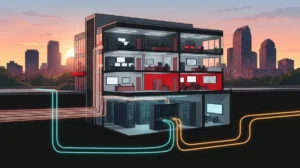
If you run a business in Tampa, you’ve probably asked yourself this question at some point: Can one cabling system really handle my phones, internet, and security cameras? The short answer is yes — and it works beautifully. Structured cabling is a unified, standards-based wiring system designed to carry voice, data, and video traffic across a single infrastructure. That means your VoIP phones, IP security cameras, Wi-Fi access points, and business network can all run on the same organized cabling backbone.
For Tampa business owners, this is great news. Instead of running separate wiring for every system, you get one clean, professional installation. It’s easier to manage, easier to troubleshoot, and much easier to scale as your business grows. Whether you’re a small business owner setting up a new office or an IT manager upgrading an enterprise network, structured cabling is the foundation that ties everything together. Let’s walk through 13 specific ways it supports your VoIP phones and security cameras — and why Tampa businesses are making the switch right now in 2026.
What Is Structured Cabling and Why Does It Matter?
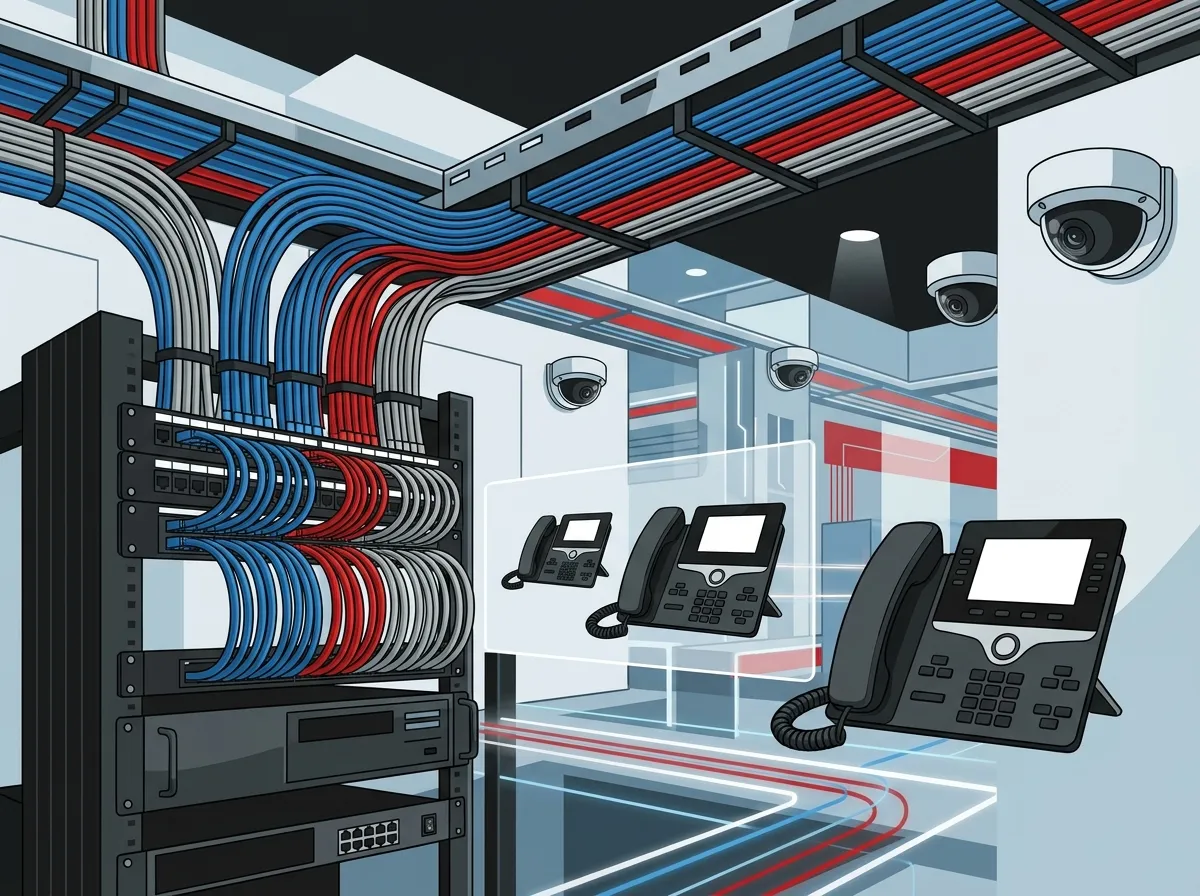
Structured cabling is a standardized approach to network wiring. Instead of a jumble of mismatched cables running every which way, it creates an organized system using consistent hardware, pathways, and labeling. Think of it like the electrical wiring in a well-built home — everything follows a plan, everything is labeled, and everything works together.
For business telecom, this matters a lot. Your VoIP phones need a reliable network connection to make calls. Your IP cameras need bandwidth to stream video. Your team needs fast internet to stay productive. Structured cabling supports all of this from a single infrastructure. That’s why structured cabling services have become such a popular investment for Tampa businesses of all sizes.
13 Ways Structured Cabling Supports VoIP Phones and Security Cameras
1. Carries Voice and Data on the Same Cable
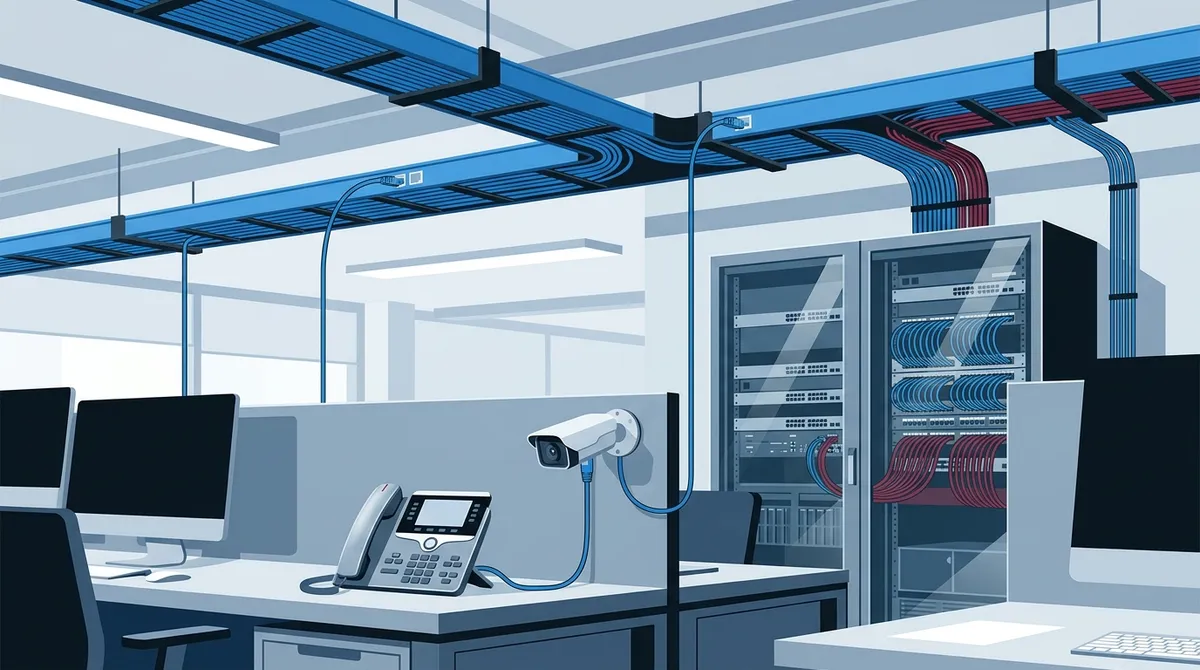
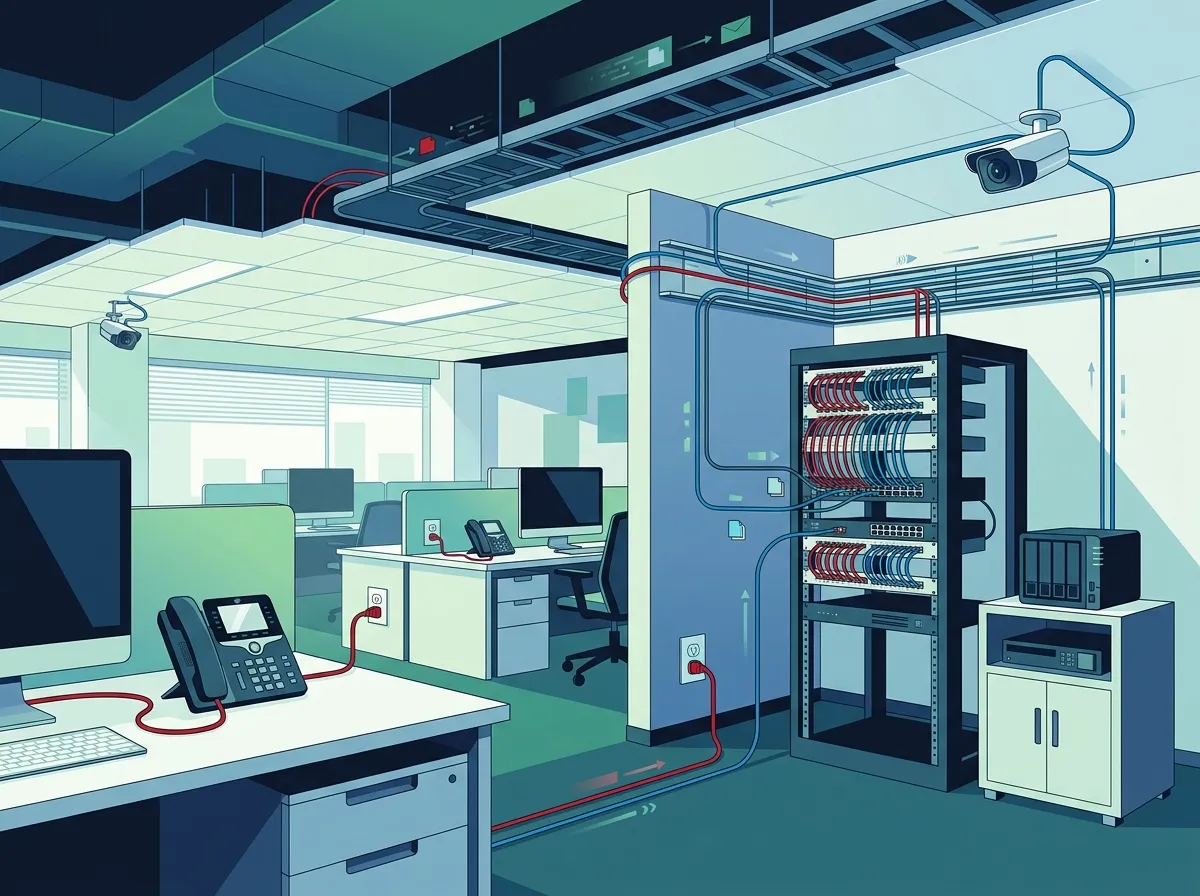
VoIP phones don’t need phone lines. They run over your Ethernet network, just like your computers. Structured cabling provides the Ethernet connections that make this possible. One cable can carry both voice and data traffic, which simplifies everything.
2. Supports IP Security Cameras Without Separate Wiring
Traditional analog cameras required coaxial cable, which is a completely separate system. IP cameras are different. They connect to your network and transmit video over Ethernet — the same cabling your phones and computers use. This makes structured cabling a perfect fit for cloud video security deployments.
3. Delivers Power to Devices via PoE
Power over Ethernet (PoE) is one of the biggest advantages of structured cabling for cameras and phones. A single Cat6 cable can deliver both data and electrical power to a device. That means no separate power outlet needed for each camera or VoIP phone — just one cable does it all.
4. Uses Cat6 Cabling for Better Performance
Cat6 cabling is the current standard for most business deployments. It supports faster data transfer speeds and significantly reduces interference compared to older cabling types. For VoIP calls and IP camera streams, this means clearer audio, smoother video, and fewer dropouts. Learn more about why Cat6 cabling is the smart choice for Tampa businesses.
5. Scales Easily as Your Business Grows
Need to add five more cameras next quarter? Hiring ten new employees who all need desk phones? With structured cabling already in place, expansion is straightforward. You’re adding to an organized system rather than hacking together a patchwork of cables.
6. Supports Remote Access for IP Cameras
IP cameras can stream video over the internet in real time. They also support storage on local devices or in the cloud. All of this depends on a solid network connection — which structured cabling provides. Check out what security cameras really do for your business when backed by a professional cabling system.
7. Simplifies Troubleshooting and Maintenance
When your cabling is properly organized and labeled, finding and fixing problems is much faster. If a camera goes offline or a phone loses its connection, a technician can trace the issue quickly. Messy, unorganized cabling makes this a nightmare — structured cabling makes it a quick fix.
8. Supports Higher-Resolution Camera Systems
Higher-resolution IP cameras require more bandwidth. A properly designed structured cabling system accounts for this. Cat6 cabling, combined with a well-planned network switch infrastructure, ensures your cameras can transmit high-quality video without bogging down the rest of your network.
9. Integrates with Cloud Phone Systems
Modern cloud-based phone systems are entirely network-dependent. They rely on a stable, low-latency connection to deliver call quality that your team and customers expect. Structured cabling gives your VoIP system the reliable foundation it needs to perform consistently every day.
10. Works Alongside Access Control Systems
Many Tampa businesses are pairing their security cameras with cloud-based access control systems. Door readers, electronic locks, and intercoms all benefit from the same structured cabling infrastructure. One low-voltage contractor can install all of it together, saving time and money.
11. Reduces Total Cost of Ownership
Running separate cabling systems for phones, cameras, and data is expensive. Structured cabling consolidates all of these into one system. Installation costs are lower, maintenance is simpler, and future upgrades are more affordable. It’s a smarter long-term investment for any Tampa business.
12. Meets Industry Standards for Reliability
Structured cabling follows established industry standards (TIA/EIA). This means your system is tested, certified, and built to perform reliably over time. For businesses in healthcare, finance, or government sectors, meeting these standards isn’t optional — it’s a requirement.
13. Enables a Single-Vendor Solution for All Low-Voltage Needs
Some providers, including Ideal Solutions Provider, offer structured cabling installation alongside VoIP phone systems, security cameras, and access control — all under one roof. This single-point-of-contact model means fewer headaches, faster installations, and one number to call when something needs attention.
VoIP Phones vs. Analog Phones: What’s the Difference for Cabling?
This is a question we hear a lot from office managers and small business owners. Here’s a simple breakdown:
| Feature | Analog Phone System | VoIP Phone System |
|---|---|---|
| Cabling Type | Traditional phone lines (RJ-11) | Ethernet (Cat5e / Cat6) |
| Uses Structured Cabling? | No | Yes |
| Supports PoE? | No | Yes |
| Scalability | Limited | Highly scalable |
| Remote Work Friendly | No | Yes |
| Cost to Add Lines | High | Low |
As you can see, VoIP is a natural fit for structured cabling. If you’re still running on an analog system, learn the key differences between VoIP and traditional phone systems before your next upgrade.
IP Cameras vs. Analog Cameras: Which Works with Structured Cabling?
| Feature | Analog Cameras | IP Cameras |
|---|---|---|
| Cabling Type | Coaxial cable | Ethernet (Cat6) |
| Works with Structured Cabling? | No | Yes |
| Supports PoE? | No | Yes |
| Remote Access | Limited | Full remote access |
| Cloud Storage | No | Yes |
| Video Resolution | Lower | Higher (HD and above) |
IP cameras are clearly the better choice for businesses that want to take full advantage of structured cabling. They’re also much easier to manage remotely, which is ideal for multi-location businesses and franchise operators.
What Tampa Businesses Should Know Before Planning a Unified Cabling System
Planning a structured cabling installation isn’t something to rush. Here are the key things to think through before you start:
- Assess your current infrastructure. Do you have existing cabling that can be upgraded, or are you starting from scratch? A professional audit can reveal a lot.
- Plan for future growth. Always install more cable runs than you think you need today. Adding capacity later is much more expensive than planning for it upfront.
- Choose the right cabling standard. For most Tampa businesses in 2026, Cat6 is the minimum recommendation. For high-bandwidth applications, fiber optic cabling may be worth considering — especially for longer cable runs between floors or buildings. Learn more about fiber optic cabling services for commercial buildings in Tampa.
- Work with a certified low-voltage contractor. Proper installation matters. Poorly installed cabling leads to performance issues that are hard to diagnose and expensive to fix. Read about the signs you found the best structured cabling contractor in Tampa.
- Bundle your services when possible. A single contractor who can handle phones, cabling, cameras, and access control will save you time, money, and a lot of frustration.
Common Cabling Standards for Tampa Business Installations
| Cable Type | Best For | Max Speed | Typical Use Case |
|---|---|---|---|
| Cat5e | Basic VoIP and data | 1 Gbps | Small offices with light use |
| Cat6 | VoIP, IP cameras, data | 10 Gbps (short runs) | Most commercial installations |
| Cat6A | High-density camera systems | 10 Gbps (full distance) | Warehouses, large offices |
| Fiber Optic | Long-distance backbone | 100 Gbps+ | Multi-floor or multi-building |
Not sure which cable type is right for your business? Check out the key differences between Cat5e and Cat6 cabling for Tampa businesses before making a decision.
Signs Your Tampa Business Needs a Cabling Upgrade Right Now
Here are some clear signals that your current cabling is holding your business back:
- VoIP calls are dropping or sounding choppy
- Security camera feeds are laggy or going offline
- Your internet feels slow even with a fast plan
- You’re running out of network ports and adding workarounds
- Your cabling looks like a bowl of spaghetti in the server room
- You’re managing separate vendors for phones, cameras, and networking
If several of these sound familiar, it’s time to take action. Read more about the 9 signs your Tampa business needs structured cabling now. You can also explore business network solutions designed to fix these exact problems.
How to Get Started with Structured Cabling in Tampa
Getting started is easier than most business owners expect. Here’s a simple three-step process:
- Schedule a free consultation. A good provider will walk through your current setup and identify exactly what needs to change. There’s no obligation, and you’ll learn a lot in the process.
- Get a cabling design and quote. A professional installer will map out your cable runs, device locations, and equipment needs before any work begins. This prevents surprises.
- Book the installation. Most commercial cabling projects can be completed with minimal disruption to your business operations. A good team will work around your schedule.
If you want to dive deeper into the process, check out how to plan a network cabling installation in Tampa Bay. And if you’re wondering about timeframes, this guide on how long structured cabling installation takes for a commercial building in Tampa is a great resource.
You can also follow along with real project updates and tips on Facebook and Instagram to see what professional structured cabling installations look like in action. For visual walkthroughs and expert advice, the YouTube channel has plenty of helpful content to guide you through your decision.
Conclusion: Yes, Structured Cabling Can Do It All
The answer to the big question is clear: structured cabling absolutely supports VoIP phones and security cameras in Tampa — and it does it well. It’s the backbone that ties your entire business communication and security system together. From Cat6 Ethernet runs that power your IP phones to PoE connections that bring your cameras to life, structured cabling makes everything work as one cohesive system.
Tampa businesses in 2026 are increasingly moving toward unified low-voltage infrastructures that combine phones, cameras, access control, and networking under one organized system. It reduces cost, simplifies management, and positions your business to scale without headaches. Whether you’re building out a new office or upgrading an existing one, structured cabling is the smartest place to start.
Ready to see what a professionally designed cabling system can do for your Tampa business? Reach out to our team for a free consultation and let’s figure out the best path forward together. You can also give us a call at 813-388-4935 — we’d love to help.
FAQs
Q: Can structured cabling run both VoIP phones and IP security cameras on the same network?
A: Absolutely! That’s one of the biggest benefits of structured cabling. Both VoIP phones and IP cameras use Ethernet connections, so they can share the same organized cabling infrastructure — no need for separate wiring systems.
Q: What type of cable is best for VoIP phones and security cameras in Tampa offices?
A: Cat6 cabling is the most popular choice for Tampa businesses in 2026. It supports faster speeds, handles more bandwidth, and reduces interference — which means cleaner VoIP calls and smoother camera feeds for your team.
Q: Do security cameras need separate cabling from business phone systems?
A: Not with IP cameras! Unlike older analog cameras that need coaxial cable, IP cameras connect over Ethernet — the same network your VoIP phones use. A well-designed structured cabling system handles both with ease.
Q: Can one contractor install phones, cameras, and structured cabling together?
A: Yes, and this is actually the preferred approach! Working with a single low-voltage contractor for your cabling, phones, and cameras saves time, reduces coordination headaches, and typically results in a cleaner, more organized installation.
Q: How does structured cabling improve VoIP call quality?
A: Structured cabling reduces signal interference and provides consistent, reliable network connections. This directly improves VoIP call clarity and stability — no more choppy calls or dropped connections during important business conversations.