
Key Takeaways
-
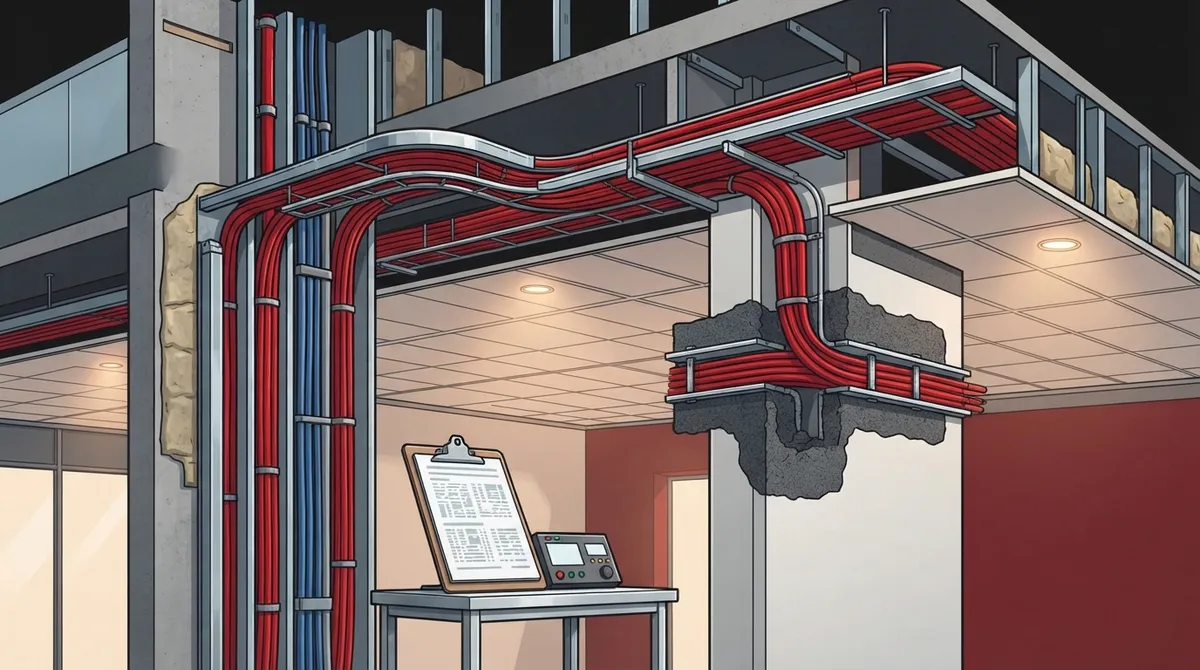
Use CMP plenum-rated cable in air-handling ceiling spaces and CMR for vertical runs between floors; using general-purpose cable in these environments creates fire safety hazards and fails inspections.
-
Compliance requires following ANSI/TIA-568 standards plus local AHJ codes, which vary by city/county; confirm the specific code edition and local requirements before starting any cabling project.
-
Complete testing with calibrated equipment and retain all documentation including test results, as-built drawings, and labeling records; this documentation proves compliance and protects you during inspections.
-
Install firestopping at every wall and floor penetration, maintain proper cable bend radius, and clearly label all connections following TIA-606 guidelines to prevent network failures and safety risks.
-
For multi-location businesses, work with one experienced cabling partner across all sites since code requirements differ by location; this ensures consistent standards and prevents compliance gaps.
-
Conduct a compliance audit if you cannot answer questions about when cabling was last tested, whether your ceiling space is plenum-rated, or if you have proper firestopping in place.
Picture this: your office network keeps failing, an inspector flags your ceiling wiring, and nobody can explain why. Sound stressful? You’re not alone. Many Tampa business owners don’t realize their cabling might not meet code until something breaks or an inspection stalls a move-in. That’s where compliance cabling systems come in, and honestly, once you understand the basics, it’s not as scary as it sounds.
Compliance cabling simply means your network wiring is designed, installed, and tested to meet the standards and codes that apply to your building. It’s not one single certificate you can buy. It’s a whole approach that covers everything from the type of cable you use to how it’s labeled and tested. Whether you’re a small business owner setting up your first office or an IT manager overseeing a multi-location rollout, getting this right saves you headaches, money, and potential safety risks down the road. Let’s walk through what compliance really means and how to get there without losing your mind.

What Compliance Cabling Systems Actually Mean
Here’s the thing: “compliance cabling systems” isn’t an official product name you’ll find on a shelf. In the world of structured cabling, it refers to network wiring built to match industry standards, local fire codes, and your specific project requirements.
Think of it like building a house. You can’t just nail boards together and call it done. You need the right materials, the right layout, and someone to check your work. Cabling works the same way. Good compliance means:
- Using cable that’s rated for where it’s installed (more on this below)
- Following proper pathways and support systems
- Sealing openings where cable passes through walls or floors (firestopping)
- Grounding and bonding everything correctly
- Labeling cables clearly so anyone can trace them later
- Testing every connection and keeping records of results
Skip any of these steps, and you could end up with a network that fails inspection, or worse, creates a real safety hazard. If you want to learn more about the basics, our guide on what structured cabling means for your business network is a great starting point.
The Standards That Guide Compliant Cabling
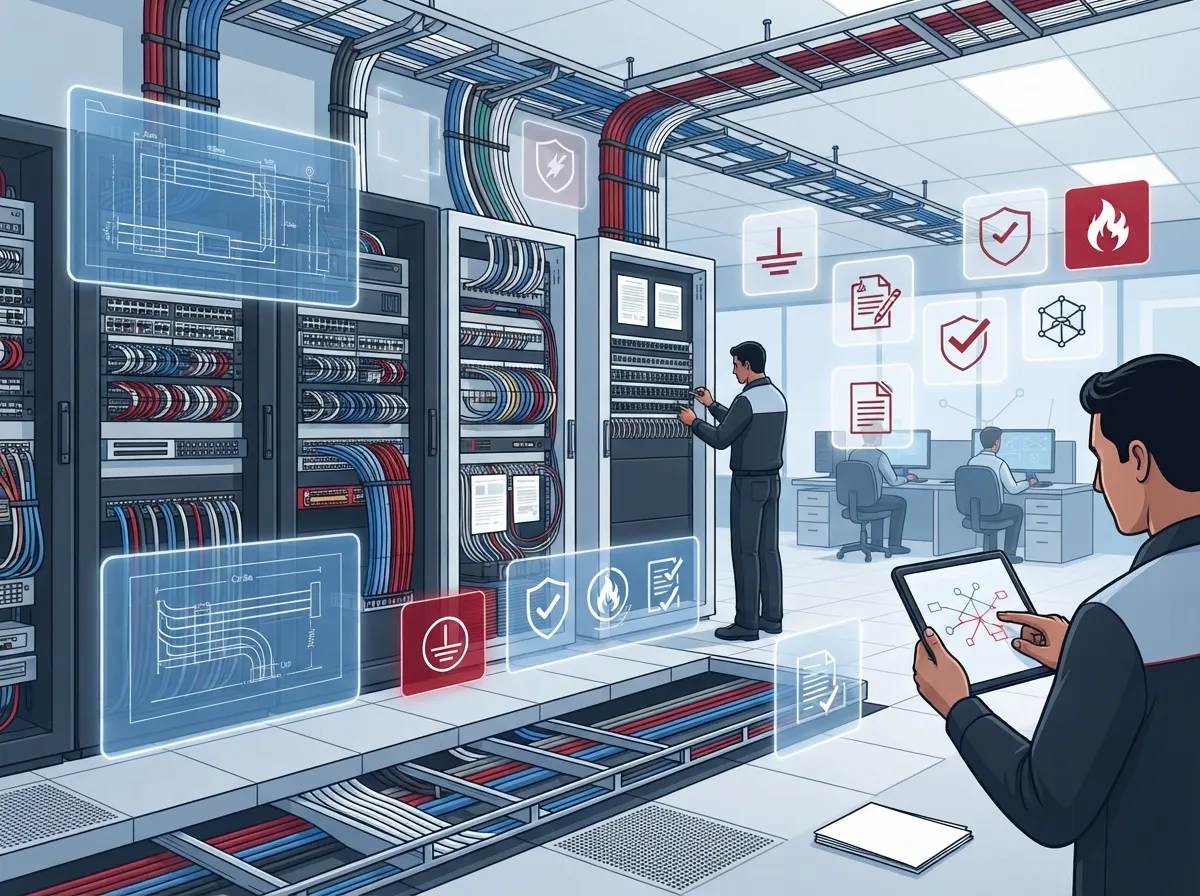
You don’t need to memorize every rule, but knowing the major players helps you ask smart questions when hiring a contractor.
ANSI/TIA Standards Family
The core standard for commercial cabling comes from ANSI/TIA-568. This covers how cabling should be designed and how it should perform, whether you’re using copper or fiber. A few related standards matter too:
- TIA-569 covers pathways and spaces, meaning how cable should physically travel through your building
- TIA-606 handles labeling and documentation, so your network is trackable years later
- TIA-607 governs grounding and bonding for telecommunications equipment
These standards get updated over time. For example, recent editions include TIA-568.0-E and 568.1-E from 2020, TIA-568.3-E from 2022, and TIA-607-D with a 2021 addendum. Always confirm which edition your project needs, since an outdated compliance claim doesn’t help you much. Our article on ANSI/TIA-568 cabling rules Tampa businesses must follow breaks this down further.
The National Electrical Code (NEC)
Beyond TIA standards, the National Electrical Code sets rules for communications cabling and fire safety. Your local authority having jurisdiction, often called the AHJ, adopts and sometimes amends this code. That means requirements can differ depending on where your Tampa business is located, so always check with your local building department before assuming you know the rules.
Cable Ratings: Why CMP and CMR Actually Matter
This is where a lot of business owners get tripped up. Not all cable is the same, and using the wrong type can create real fire risks.
| Cable Type | Where It’s Used | Key Feature |
|---|---|---|
| CMP (Plenum) | Air handling spaces like drop ceilings used for HVAC airflow | Low smoke and flame spread rating for enclosed air spaces |
| CMR (Riser) | Vertical runs between floors | Designed to prevent fire from spreading floor to floor |
| General Purpose | Standard office spaces with no plenum or riser conditions | Not a substitute where higher-rated cable is required |
According to NEC Article 800 guidance, CMP cable is meant for qualifying environmental-air spaces, while CMR is intended for vertical runs through more than one floor. If your ceiling doubles as an air return space (a common setup in Tampa office buildings), you likely need plenum-rated cable. Guessing wrong here isn’t just a paperwork problem, it’s a fire safety issue. Check out our piece on 14 Cat6 cabling facts every business owner should know for more detail on cable types.
Steps to Build a Compliant Cabling System
Ready to tackle a cabling project the right way? Here’s a simple process that keeps you on track.
- Define your project requirements. Talk with your AHJ and confirm which code editions apply to your building.
- Choose the right cable and topology. Match cable category and fire rating to your specific environment.
- Plan pathways and spaces. Make sure cable runs follow proper support, spacing, and bend radius rules.
- Install firestopping at penetrations. Any place cable passes through a fire-rated wall or floor needs proper sealing.
- Complete grounding and bonding. This protects your equipment and your people.
- Label everything clearly. Follow TIA-606 guidelines so future technicians can trace every connection.
- Test every link. Copper connections need certified testing against TIA limits, and fiber needs insertion-loss testing.
- Keep your documentation. Save test results, calibration records, and as-built drawings for future reference.
Skipping steps might save time upfront, but it usually costs more later in rework, failed inspections, or downtime. If you’re planning a new build or renovation, our guide on how to plan network cabling installation in Tampa Bay walks through this in more depth.
Testing and Documentation: The Part Nobody Talks About
Here’s something a lot of businesses miss: compliance isn’t just about installing cable correctly. It’s about proving it works.
Copper cabling should be field-tested with a calibrated certifier against the performance limits for your cable category. Fiber cabling typically gets insertion-loss testing, and sometimes polarity checks depending on the project. Once testing is done, keep those results. They’re your proof that everything meets spec, and they’ll save you time if problems pop up later or if you ever need to prove compliance to an inspector or insurance company.
A good cabling contractor will hand you a complete closeout package. This should include:
- Test results for every cable run
- As-built drawings showing actual cable paths
- Labeling schema documentation
- Calibration records for testing equipment used
Don’t accept a project as “done” without this paperwork. It’s your safety net.
Common Mistakes That Break Compliance
Even well-meaning businesses make mistakes here. Watch out for these common pitfalls:
- Using general-purpose cable in plenum spaces to save money
- Skipping firestopping at wall or floor penetrations
- Ignoring bend radius limits, which can degrade performance over time
- Leaving abandoned cable in place without removing or labeling it
- Assuming one cable rating works everywhere in the building
- Hiring installers who don’t provide test documentation
Any one of these can turn into a costly problem, whether that’s a failed inspection, a fire code violation, or a network that just doesn’t perform. If you’ve experienced any of these issues, our article on 12 structured cabling mistakes that hurt your business covers even more red flags to avoid.
Who Decides If Your Cabling Is Compliant
This trips people up all the time. Your cabling contractor can follow best practices and industry standards, but the final word on code compliance comes from your local AHJ. This might be a city or county building inspector, depending on where your business is located.
That’s why it’s smart to work with contractors who understand local requirements and pull the right permits before starting work. A qualified partner should also carry industry certifications, similar to those offered through organizations like BICSI, which trains and certifies cabling professionals. Choosing an experienced team means fewer surprises during inspection day.
Why This Matters for Growing and Multi-Location Businesses
If you’re a franchise operator or mid-sized enterprise expanding across Tampa Bay or beyond, compliance cabling becomes even more important. Every new location needs its own review, since codes can vary by city or county. A cabling system that passed inspection in one location might not automatically pass in another.
This is where having a single point of contact really pays off. Instead of juggling different cabling contractors at every site, working with one experienced partner means consistent standards, consistent documentation, and fewer compliance gaps. It also makes it much easier to support your VoIP phones, security cameras, and access control systems since they all depend on solid cabling underneath. Our post on how structured cabling supports VoIP and cameras explains this connection well.
How Ideal Solutions Provider Approaches Compliance Cabling
At Ideal Solutions Provider, we’ve spent over 24 years helping Tampa businesses and companies nationwide get their cabling right the first time. We work with 35 plus vetted suppliers and follow current TIA standards and local code requirements on every project, whether it’s a small office buildout or a multi-site network rollout.
We know that most business owners don’t want to become cabling experts. That’s fair. Our job is to handle the technical details, the documentation, and the testing, so you can focus on running your business. If you’d like to see examples of our work, feel free to check out our YouTube channel or follow us on Facebook for project updates and tips.
Getting Started With a Compliance Review
If you’re not sure whether your current cabling meets code, don’t panic. A simple audit can identify gaps before they become expensive problems. This is especially useful if you’re planning a move, an expansion, or adding new technology like cloud security cameras or access control systems.
We recommend starting with these questions:
- When was your cabling last tested and documented?
- Do you have as-built drawings showing your cable pathways?
- Is your ceiling space used for air handling, and if so, is your cable plenum-rated?
- Are all cable runs properly labeled according to a clear system?
- Do you have firestopping in place at all wall and floor penetrations?
If you answered “I don’t know” to more than one of these, it might be time for a professional review. Our team at Ideal Solutions Provider can walk through your space, review your setup, and give you a clear picture of where you stand.
Bringing It All Together
Compliance cabling systems might sound technical, but at their core, they’re about protecting your business, your employees, and your network investment. Good cabling means fewer outages, safer buildings, and smoother inspections. It also sets the foundation for everything else you rely on, from your phone system to your Internet Service Provider connection to your security cameras.
You don’t have to figure this out alone. Whether you’re opening a new Tampa office, upgrading an older building, or planning a multi-location rollout, getting compliance right from the start saves you time, money, and stress later. Contact our team today for a free consultation, or give us a call to talk through your cabling project. We’re here to make this part of your business simple, so you can focus on everything else.
FAQs
Q: What does a compliant structured cabling system include?
A: It’s more than just running cable through walls. A truly compliant system includes the right cable rating for the space, proper pathways, firestopping at penetrations, grounding and bonding, clear labeling, and full test documentation. Think of it as a complete package, not just one piece.
Q: Which TIA standards apply to commercial building cabling?
A: The main one is ANSI/TIA-568, which covers cabling design and performance. You’ll also want to know about TIA-569 for pathways, TIA-606 for labeling, and TIA-607 for grounding and bonding. Always confirm the current edition your project needs, since standards get updated over time.
Q: What is the difference between CMP, CMR, and general-purpose cable?
A: CMP cable is rated for plenum spaces like air-handling ceilings, while CMR is designed for vertical runs between floors. General-purpose cable doesn’t meet either of these higher fire-safety ratings, so it’s not a safe substitute where code requires something stronger.
Q: How often should business cabling be inspected or recertified?
A: There’s no one-size-fits-all answer, but many businesses check in during major renovations, technology upgrades, or if they notice network performance issues. A good rule of thumb is to review your documentation every few years or anytime you add new equipment like cameras or access control systems.
Q: Who determines whether a cabling installation meets code?
A: That call ultimately belongs to your local authority having jurisdiction, often a building or fire inspector in your city or county. Your contractor should follow best practices and pull proper permits, but the AHJ has the final say on compliance.