

Key Takeaways
-
Choose a contractor with commercial cabling expertise, Florida licensing, BICSI membership, and RCDD credentials to ensure standards-based installation rather than improvised solutions.
-
Cat6 or Cat6A copper cabling works for most Orlando offices up to 100 meters, but fiber optic is essential for multi-building connections, data centers, or long-distance runs requiring future-proofing.
-
Plan MDF and IDF closets in climate-controlled central locations with proper ventilation, labeling, and documentation to prevent network failures and enable quick troubleshooting during emergencies.
-
Upgrade your cabling if you experience dropped calls, slow speeds, plan new systems, have Cat5/5e cabling over 10-15 years old, or are expanding—messy wiring buckles under growth from 5 to 50 employees.
If your Orlando business runs on spotty Wi-Fi, tangled cords, or a network closet that looks like spaghetti, you’re not alone. So many business owners tell us the same thing: they didn’t realize how much their internet, phone, and security systems depended on good cabling until something broke. The good news? Structured cabling Orlando FL solutions are more accessible, affordable, and reliable than ever in 2026. Let’s walk through everything you need to know, together.
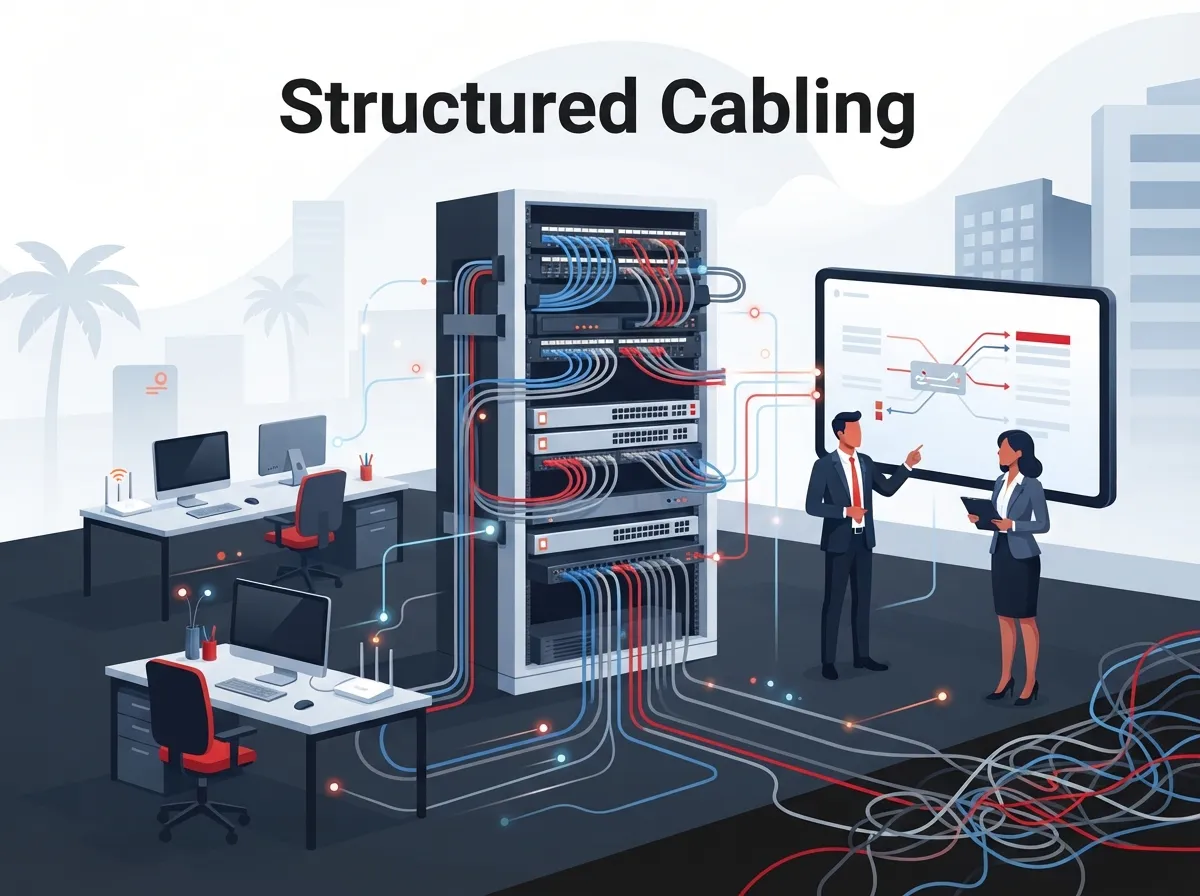
Think of structured cabling as the skeleton of your business’s technology. It’s the organized system of wires, panels, and pathways that lets your phones, internet, security cameras, and Wi-Fi all work in harmony. Without it, you’re basically asking your network to run a marathon in flip-flops. With it, everything just clicks. Whether you’re a small shop in downtown Orlando or a growing company with multiple locations, this guide will help you understand what good cabling looks like and how to get it done right.
1. Understand What Structured Cabling Actually Means for Your Business
Structured cabling is a standardized way of wiring your building for voice, data, video, and security systems. Instead of running random cables whenever a new device shows up, everything follows a planned layout. This includes copper cabling, fiber optic lines, patch panels, and clearly labeled pathways from your main equipment room to every desk, camera, or access point in the building.
This isn’t just a nerdy IT detail. It’s the foundation that supports your phones, your high-speed internet connection, your security cameras, and even your door access system. When it’s done right, you barely think about it. When it’s done wrong, you think about it every single day.
Why Orlando Businesses Can’t Skip This Step
Central Florida is booming. Offices, healthcare clinics, schools, hotels, and government buildings across Orlando are expanding fast, and their technology needs are growing right along with them. A messy wiring setup that worked fine for five employees will absolutely buckle under the weight of fifty.
- Supports voice, data, video, and security on one unified network
- Reduces downtime caused by loose or damaged wiring
- Makes future upgrades faster and cheaper
- Keeps your equipment room organized and easy to troubleshoot
- Helps your business look professional to clients and staff alike
2. Know the Difference Between Cat6, Cat6A, and Fiber Optic Cabling
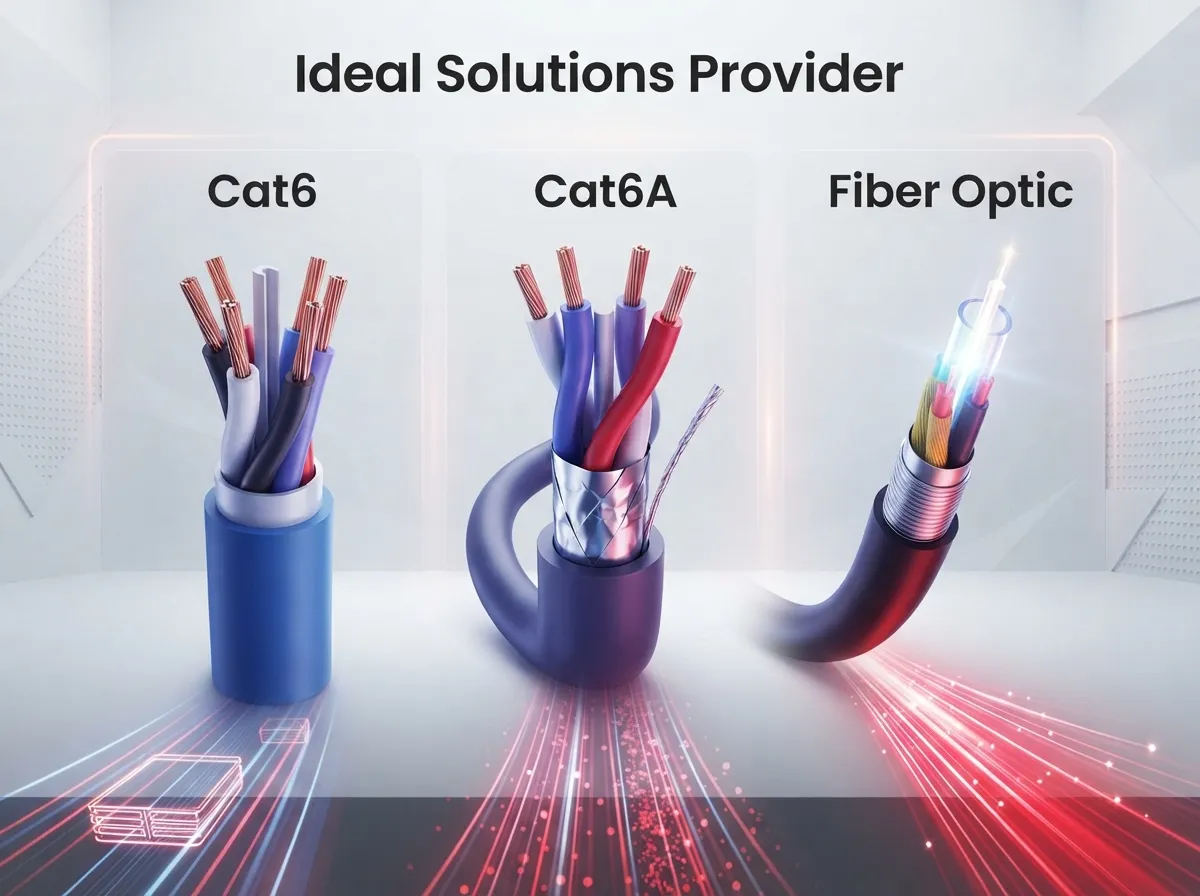
One of the first questions Orlando business owners ask us is which type of cable they actually need. Here’s the short answer: it depends on your building size, your bandwidth needs, and how far your signal has to travel.
| Cable Type | Best For | Typical Speed | Distance Limit |
|---|---|---|---|
| Cat6 | Small to mid-size offices | Up to 1 Gbps (10 Gbps at short range) | About 100 meters |
| Cat6A | Growing offices, higher data demands | Up to 10 Gbps | About 100 meters |
| Multi-mode Fiber | Larger buildings, data centers | 10 Gbps and up | Several hundred meters |
| Single-mode Fiber | Long-distance runs, campuses | 10 Gbps and up | Miles, not meters |
Most Orlando offices do great with Cat6 or Cat6A copper cabling for everyday connections. But if you’re linking multiple buildings, running a data center, or planning for serious growth, fiber optic cabling might be worth the investment. A good fiber cabling plan can future-proof your business for years.
3. Plan Your MDF and IDF Closets the Right Way
Here’s something people don’t think about until it’s too late: where does all this cabling actually go? Every structured cabling project needs a main distribution frame (MDF) closet and, in bigger buildings, one or more intermediate distribution frame (IDF) closets.
These closets house your patch panels, switches, and other core equipment. If they’re cramped, poorly ventilated, or disorganized, your whole network suffers. A thoughtful layout here saves you headaches down the road.
Steps for Smart Closet Planning
- Choose a central, climate-controlled location for your MDF
- Map out IDF closets based on building size and cable distance limits
- Leave room for future equipment and cable growth
- Install proper labeling on every patch panel and cable run
- Document everything for easy troubleshooting later
Good documentation might sound boring, but trust us, your future self (or your IT manager) will thank you when something needs fixing at 2 a.m.
4. Choose a Contractor Who Understands Commercial Cabling
Not all cabling work is created equal. Residential wiring and commercial structured cabling are two very different beasts. Orlando businesses need contractors who specialize in voice and data networks for offices, healthcare facilities, hospitality venues, schools, and government buildings.
Some Central Florida providers highlight decades of combined experience, licensed electrical or low-voltage contractor status, and standards-based installation practices, including BICSI membership and RCDD leadership. These credentials matter because they show a contractor knows how to follow national structured cabling standards, not just wing it.
- Ask about licensing and certifications specific to Florida
- Request references from similar Orlando-area commercial projects
- Confirm they offer cable testing and certification after installation
- Check if they provide ongoing support, not just a one-time install
- Look for a provider who bundles cabling with phone, internet, and security services
5. Budget Realistically for Your Cabling Project
Cost is always top of mind, and we get it. Structured cabling pricing in Orlando depends on several factors, including building size, cable type, number of drops, and labor complexity.
| Factor | Impact on Cost |
|---|---|
| Number of cable drops | More drops mean more labor and materials |
| Cable type (Cat6 vs fiber) | Fiber typically costs more upfront |
| Building age and layout | Older buildings may need extra prep work |
| Testing and certification | Adds a small cost but ensures reliability |
| Ongoing maintenance | Optional, but helps prevent future issues |
Many providers bundle cabling with related services like professional structured cabling services, business phone systems, and network setup, which can actually save you money compared to hiring separate vendors for each piece.
6. Match Your Cabling to Your Industry’s Needs
Different Orlando industries lean on structured cabling in different ways. Understanding your specific use case helps you plan smarter.
Common Industries That Rely on Structured Cabling
- Healthcare facilities needing reliable data for patient records and monitoring systems
- Hospitality businesses supporting guest Wi-Fi and property-wide phone systems
- Schools and universities running classroom technology and security cameras
- Government offices requiring secure, standards-compliant networks
- Professional service firms depending on VoIP and cloud applications
- Manufacturing facilities connecting equipment and inventory systems
- Retail locations supporting point-of-sale systems and surveillance
If your business supports remote monitoring, you might also want to explore cloud video security systems, which rely heavily on strong cabling to function smoothly.
7. Know When It’s Time to Upgrade Your Existing System
Cabling isn’t a one-and-done project. Technology changes, businesses grow, and old wiring eventually becomes a bottleneck. Here are some clear signs it’s time for an upgrade.
- Frequent dropped calls or slow internet speeds
- Adding new employees or departments that need more connections
- Planning to install a new phone system or security cameras
- Cabling older than 10-15 years, especially Cat5 or Cat5e
- Frequent troubleshooting calls to your IT team
- Moving to a new office space or renovating your current one
If any of these sound familiar, it’s worth getting an honest assessment. In fact, many businesses that get an audit find they’re either overpaying, underperforming, or both when it comes to their telecom setup. This is one reason companies like Ideal Solutions Provider offer free consultations to review what’s already in place before recommending changes.
Bringing It All Together for Your Orlando Business
Structured cabling might not be the most exciting topic at a networking event, but it’s one of the smartest investments your business can make. It supports everything from your phone system to your business network setup, and it keeps your operations running smoothly behind the scenes.
Whether you’re opening a new office, expanding an existing one, or just tired of unreliable connections, getting your cabling right sets the stage for everything else. And you don’t have to figure it out alone. With over 24 years of experience and partnerships with 35+ vetted suppliers, Ideal Solutions Provider acts as a single point of contact for businesses across Florida and nationwide, handling everything from consultation to installation and ongoing support. You can also check out real project examples and tips on their YouTube channel or connect with them on Facebook and Instagram for more helpful updates.
Good cabling is a bit like good plumbing. Nobody notices it when it works, but everyone notices when it doesn’t. So let’s make sure yours works beautifully, quietly, and reliably, day after day.
Ready to Upgrade Your Orlando Business Network?
You deserve a communications system that just works, without the headaches of juggling multiple vendors or wondering if your wiring can keep up with your growth. Whether you need structured cabling, a reliable Internet Service Provider connection, or a complete telecom overhaul, our team is here to help. Contact us today for a free consultation, or simply call us to talk through your options with a real person who genuinely wants to help your business thrive.
FAQs
Q: What is structured cabling in a business telecom environment?
A: Structured cabling is the organized wiring system that connects your phones, internet, security cameras, and other technology into one reliable network. Think of it as the backbone that keeps everything talking to each other smoothly, instead of a mess of random cables patched together over time.
Q: Why do Orlando businesses need structured cabling instead of ad hoc network wiring?
A: Ad hoc wiring might work fine for a tiny office, but it quickly becomes a headache as your business grows. Structured cabling gives you a clean, documented system that’s easier to troubleshoot, upgrade, and expand without tearing everything apart later.
Q: How much does structured cabling cost in Orlando, FL?
A: Costs vary based on building size, cable type, and the number of connections you need, so there’s no one-size-fits-all price. The best approach is getting a free consultation so a professional can look at your specific space and give you an honest, accurate quote.
Q: What is the difference between Cat6, Cat6A, and fiber for Orlando office cabling?
A: Cat6 works great for most small to mid-size offices, while Cat6A handles higher data demands over the same distance. Fiber optic cabling is the go-to choice when you need to connect multiple buildings or support very high bandwidth over longer distances.
Q: How do you choose a structured cabling contractor in Orlando?
A: Look for a contractor with real commercial experience, proper licensing, and a track record of serving offices, healthcare facilities, or similar businesses. It also helps to choose one who offers testing, documentation, and ongoing support, not just a quick install and a wave goodbye.