

Key Takeaways
-
Fiber cabling transmits data at light speed using glass fibers, delivering speeds up to 10 Gbps with symmetrical upload/download bandwidth—far superior to copper cabling which maxes out at 1 Gbps and degrades over 100 meters.
-
Single-mode fiber (9 microns) handles long-distance building-to-building connections up to several miles, while multi-mode fiber (50-62.5 microns) works within single buildings up to 550 meters—choose based on your specific distance requirements.
-
Fiber availability is location-dependent; proximity to existing fiber infrastructure, building conduit access, local permits, and landlord approval directly impact installation feasibility and cost—consult a telecom partner early.
-
Fiber cabling supports your entire communications stack including VoIP, security cameras, cloud applications, and SD-WAN networks with low-latency, interference-free performance—upgrading cabling improves all systems simultaneously.
-
Professional installation by certified contractors is essential; they handle site surveys, cable termination, testing, and certification documentation to ensure proper performance from day one.
-
Clear warning signs you need fiber include slow internet despite paying for high speeds, dropped video calls, CAT5e cabling, recent cloud system additions, office expansion, or constant IT troubleshooting.
If your office network feels sluggish, or your team keeps complaining about dropped video calls and slow file uploads, the problem might be simpler than you think. Your cabling infrastructure could be holding you back. Fiber cabling has become the go-to solution for businesses that need fast, reliable, and future-ready connectivity. Whether you’re setting up a new office, expanding to multiple locations, or just tired of dealing with network slowdowns, understanding fiber cabling is a great place to start. This guide walks you through everything you need to know — in plain English — so you can make a smart decision for your business. We’ll cover how fiber works, why it beats older copper systems, what the installation process looks like, and how to find the right partner to get the job done. Let’s dive in!

What Is Fiber Cabling in Business Telecom?
Fiber cabling uses thin glass fibers to transmit data using pulses of light. This is very different from traditional copper cables, which send electrical signals. Because light travels faster and with less interference, fiber cabling delivers significantly higher speeds and more stable connections. For businesses, this is a game-changer.
In the world of business telecom, fiber cabling is commonly used for backbone networks, building-to-building connections, and dedicated internet access. It’s also the foundation for many enterprise-grade cloud services, VoIP phone systems, and video collaboration tools. If you want to learn more about how fast internet supports your phone system, check out this helpful resource on what internet speed you need for VoIP in Tampa.
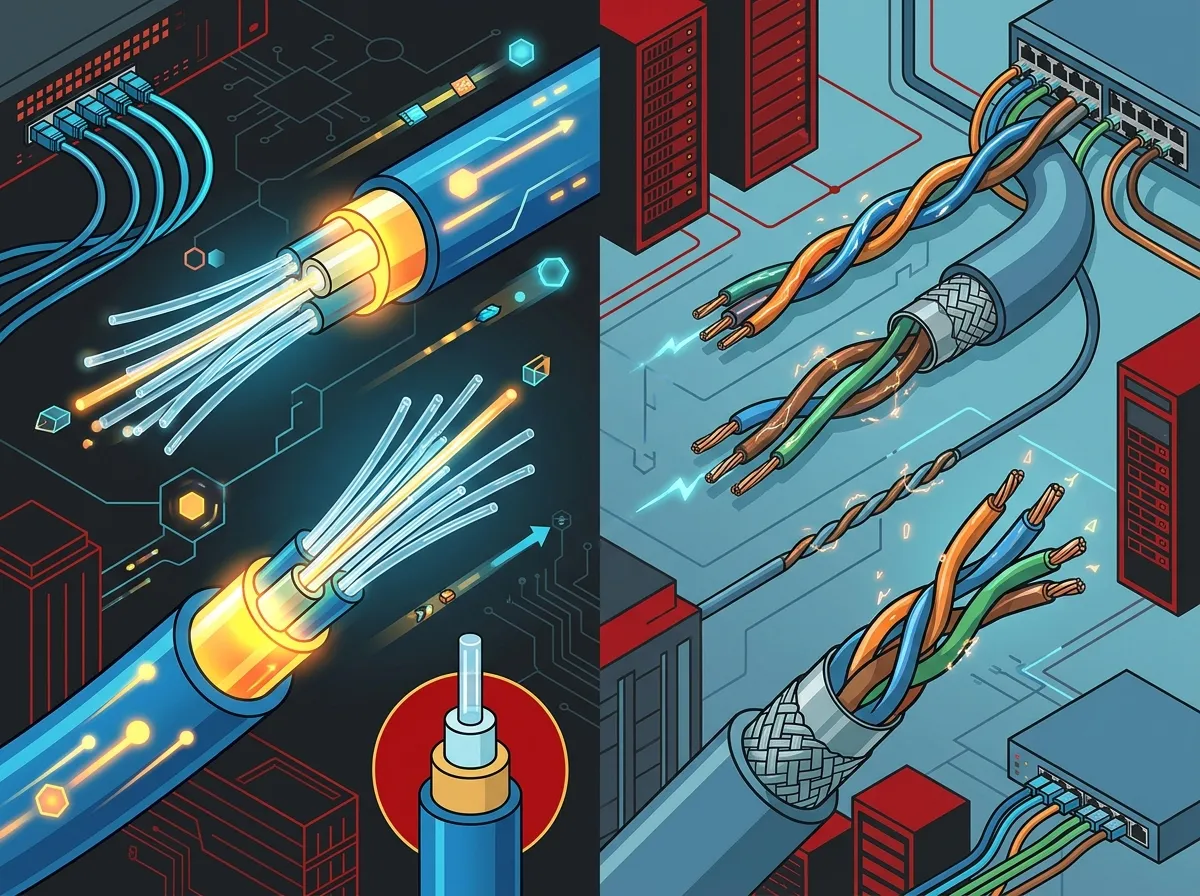
Fiber Cabling vs. Copper Cabling: Key Differences
Many businesses still run on older copper cabling like CAT5e or even basic phone wires. These systems worked fine years ago, but today’s bandwidth demands have outgrown them. Here’s a quick comparison to help you see the difference clearly.
| Feature | Fiber Cabling | Copper Cabling |
|---|---|---|
| Speed Range | Up to 10 Gbps and beyond | Up to 1 Gbps (CAT6) |
| Signal Degradation | Very low over long distances | Degrades over 100 meters |
| Electromagnetic Interference | Not affected | Susceptible to interference |
| Bandwidth Symmetry | Upload and download speeds match | Often asymmetric |
| Ideal Use Case | Backbone networks, multi-building links | Desktop connections, short runs |
| Longevity | Future-proof for many years | May need upgrading sooner |
One major advantage of fiber cabling is symmetrical bandwidth. That means your upload and download speeds are nearly equal. This matters a lot for businesses that rely on video conferencing, cloud backup, and real-time file sharing. For more context on how copper and fiber compare in a business setting, take a look at the key differences between CAT5e and CAT6 cabling for Tampa businesses.
Common Types of Fiber Cabling Used in Business Networks
Not all fiber cables are the same. There are two main types used in enterprise and commercial settings, and each serves a different purpose. Here’s a breakdown:
| Fiber Type | Core Size | Best For | Typical Distance |
|---|---|---|---|
| Single-Mode Fiber (SMF) | 9 microns | Long-distance runs, building-to-building | Up to several miles |
| Multi-Mode Fiber (MMF) | 50 or 62.5 microns | Short-distance, within a building | Up to 550 meters |
Single-mode fiber is the preferred choice when you need to connect buildings across a campus or link remote office locations. Multi-mode fiber works great for running cable within a single office floor or data center. Both options offer dramatically better performance than copper alternatives. You can also explore how fiber optic cabling services work for commercial buildings in Tampa to get a clearer picture of what’s involved.
Top Benefits of Fiber Cabling for Businesses
So why are so many businesses making the switch? Here are the biggest advantages that make fiber cabling worth the investment:
- Blazing fast speeds — Business fiber connections can range from 25 Mbps all the way to 10 Gbps, supporting even the most demanding workloads.
- Low latency — Data travels at the speed of light, which means fewer delays on video calls and cloud applications.
- Symmetrical upload and download — Great for cloud backups, video uploads, and collaborative tools.
- Reliable uptime — Some fiber providers offer service-level agreements with up to 99.999% uptime guarantees.
- Immune to electrical interference — Fiber doesn’t pick up interference from nearby equipment or power lines.
- Scalable for growth — Fiber infrastructure can handle more bandwidth as your team or business expands.
- Longer cable runs — Fiber carries signals much farther than copper without losing quality.
These benefits make fiber cabling an excellent fit for businesses that are growing, adopting cloud tools, or simply tired of network problems. You can also explore how dedicated fiber internet supports Tampa businesses at a deeper level.
How to Plan Your Fiber Cabling Installation
Planning is the most important step. A rushed or poorly planned fiber installation can cost you more time and money in the long run. Here’s a step-by-step approach to get it right from the start:
- Assess your current infrastructure — Walk through your office or building and document what cabling you already have. Note any problem areas like slow zones or frequent outages.
- Define your bandwidth needs — Think about how many users you have, what applications they run, and whether you use cloud-based phone systems or video tools. For help with this, see our guide on how to choose the right internet speed for your Tampa business.
- Identify the fiber route — Determine where cables will run. Fiber availability depends heavily on proximity to existing fiber infrastructure, so check with a telecom partner early in this process.
- Choose the right fiber type — Based on your building layout and distance requirements, decide between single-mode and multi-mode fiber.
- Hire a certified cabling contractor — Professional installation ensures your fiber is properly terminated, tested, and documented. Learn more about how to plan a network cabling installation in Tampa Bay.
- Schedule testing and certification — After installation, your contractor should perform cable certification, wire mapping, and provide full test documentation to verify performance.
Following these steps helps ensure your fiber cabling project runs smoothly and delivers the performance your business needs from day one.
What Factors Affect Fiber Cabling Availability?
Here’s something many businesses don’t realize until they’re deep in the planning process: fiber cabling availability is highly location-dependent. Your building needs to be near existing fiber infrastructure for a practical and affordable installation. If you’re in a dense urban area or a newer commercial district, you’re likely in good shape. Rural locations or older buildings can be more challenging.
- Distance from the nearest fiber route or fiber-lit building
- Whether your building has existing conduit that can accommodate fiber
- Local permits required for trenching or aerial cable runs
- Building owner or landlord approval for installation work
- Timing — some fiber builds can be completed quickly, while others take longer depending on infrastructure needs
Working with an experienced telecom partner early in the process can save you a lot of headaches. They can assess your location, check nearby fiber routes, and give you a realistic timeline. The professional structured cabling services available in Tampa are a great starting point if you’re in the area. For businesses nationwide, a single-point-of-contact telecom partner like Ideal Solutions Provider can compare options across 35+ vetted suppliers to find the best fit for your location and budget.
Fiber Cabling for Multi-Location and Franchise Businesses
If you run multiple office locations or a franchise operation, fiber cabling becomes even more important. A consistent, high-speed network infrastructure across all your sites ensures your teams stay connected and productive. Here’s what to consider for multi-location deployments:
- Standardize your cabling specs — Using the same fiber type and equipment across locations makes management and troubleshooting much easier.
- Consider point-to-point fiber links — If your buildings are close together, dedicated fiber links between them can create a private, high-speed network.
- Pair fiber with a managed network solution — SD-WAN or MPLS services layered on top of fiber cabling can optimize traffic across all your locations. Learn more about reliable network solutions for multi-location Tampa businesses.
Franchise operators especially benefit from a scalable fiber cabling strategy. You can roll out the same high-performance infrastructure to each new location without starting from scratch every time. For more ideas on managing multi-site connectivity, check out 9 mistakes to avoid when connecting Tampa business locations.
How Fiber Cabling Supports Other Business Telecom Systems
Fiber cabling isn’t just about internet speed. It’s the backbone that supports everything else in your communications stack. Here’s how it connects to the broader picture:
| Business System | How Fiber Cabling Helps |
|---|---|
| VoIP Phone Systems | Provides low-latency, high-quality voice calls without jitter or drops |
| Cloud Security Cameras | Supports high-definition video streams and cloud uploads |
| Access Control Systems | Enables real-time data transfer for door access and alerts |
| SD-WAN / MPLS Networks | Acts as the high-speed transport layer for managed network traffic |
| Cloud Applications | Supports fast, reliable access to SaaS tools and remote servers |
When you invest in solid fiber cabling, every other system in your office benefits. Your VoIP calls sound clearer, your security camera footage streams without lag, and your team can collaborate in real time without frustrating delays. For a deeper look at how cabling supports your full communications setup, explore 13 ways structured cabling supports VoIP and security cameras.
Signs Your Business Needs a Fiber Cabling Upgrade
Not sure if it’s time to upgrade? Here are some clear signs your current cabling infrastructure is due for an overhaul:
- Your internet connection is slow even when you’re paying for high speeds
- Video calls drop or freeze regularly
- Your office runs on old CAT5e or lower-grade copper cabling
- You’ve recently added cloud phone systems or security cameras
- You’re expanding to new offices or adding workstations
- Your IT team is constantly troubleshooting network issues
If several of these sound familiar, it’s time to have a professional assess your setup. You might also want to read about 9 signs your Tampa business needs structured cabling now for a more detailed checklist. You can also follow Ideal Solutions Provider on Facebook for the latest updates and tips on business telecom solutions.
Choosing the Right Partner for Fiber Cabling Installation
Installing fiber cabling isn’t a DIY project. It requires specialized tools, training, and experience. Choosing the right contractor or telecom partner makes all the difference. Here’s what to look for:
- Experience with commercial and enterprise fiber installations
- Certifications for cable testing and performance verification
- A clear process for documentation and project management
- Access to multiple suppliers and fiber providers
- Ongoing support after installation is complete
Ideal Solutions Provider brings over 24 years of experience to the table, working with businesses across Tampa Bay and nationwide. As an independent telecom partner, they compare options across more than 35 vetted suppliers to find the best fiber cabling solution for your specific needs and location. They act as a single point of contact, managing everything from consultation to installation and ongoing support. You can also get inspiration from their team by watching real-world project walkthroughs on their YouTube channel.
If you’re comparing options for your network infrastructure, it also helps to understand the broader structured cabling standards that guide professional installations. These standards ensure your fiber cabling is built to last and meets industry performance benchmarks.
Want to know whether professional or DIY cabling is the right call for your office? Read our comparison of DIY vs. professional cabling for Tampa offices to help you decide. And if you’re curious about how your internet provider fits into all of this, learning about the role of an Internet Service Provider can give you helpful context.
What to Expect During a Fiber Cabling Installation
Many business owners worry that a cabling project will disrupt their operations. Here’s a realistic look at what the process typically involves:
- Site survey and planning — A technician visits your location to map out cable routes, assess conduit options, and identify any access challenges.
- Equipment and material procurement — Your contractor orders the right fiber type, connectors, patch panels, and enclosures for your project.
- Cable installation — Fiber is pulled through conduit or cable trays, terminated at both ends, and organized in structured enclosures.
- Testing and certification — Every cable run is tested for signal loss, continuity, and performance. You receive full documentation of the results.
- Handoff and support — Your team is walked through the new setup, and your telecom partner remains available for questions and ongoing maintenance.
Most commercial fiber cabling projects can be completed with minimal disruption, especially when scheduled during off-hours or weekends. For a more detailed look at timelines, check out how long structured cabling installation takes for a commercial building in Tampa.
Wrapping Up: Make Fiber Cabling Work for Your Business
Choosing the right fiber cabling solution doesn’t have to be complicated. Start by understanding your current network pain points, assess your bandwidth needs, and work with a trusted telecom partner who can guide you through the right options for your location and budget. Fiber cabling is one of the smartest long-term investments you can make for your business communications infrastructure. It supports faster internet, better VoIP call quality, smoother cloud application performance, and reliable security systems — all at once.
Whether you’re a small business owner in Tampa, an IT manager at a growing enterprise, or a franchise operator rolling out new locations, fiber cabling gives you the foundation to scale confidently. Follow Ideal Solutions Provider on Instagram for helpful tips, behind-the-scenes content, and more business telecom insights. Ready to take the next step? Reach out to our team for a free consultation and let’s find the right fiber cabling solution for your business today.
FAQs
Q: What is fiber cabling in business telecom?
A: Fiber cabling uses thin glass fibers to transmit data as pulses of light, giving your business network much faster and more reliable connectivity than traditional copper cabling. In business telecom, it’s commonly used for backbone networks, building-to-building links, and high-speed internet access. It’s a great foundation for cloud applications, VoIP phones, and video collaboration tools!
Q: How does fiber cabling differ from copper cabling for businesses?
A: Fiber cabling carries data using light, while copper cabling uses electrical signals — and that makes a huge difference in performance! Fiber supports much higher speeds (up to 10 Gbps and beyond), isn’t affected by electrical interference, and can carry signals over much longer distances without degrading. Copper is still useful for short desktop connections, but fiber is the clear winner for backbone networks and high-demand business environments.
Q: Is fiber cabling the same as fiber internet?
A: Not exactly — they’re related but different things! Fiber internet refers to your internet service delivered over a fiber-optic network from your provider, while fiber cabling refers to the physical cables installed inside (and between) your buildings. Think of fiber cabling as the plumbing inside your office and fiber internet as the water supply coming in from the street. Both work together to give you a fast, reliable connection.
Q: What factors affect fiber cabling availability at my business location?
A: Great question! Fiber cabling availability depends largely on how close your building is to existing fiber infrastructure. Urban and newer commercial areas tend to have better access, while rural or older buildings can face more challenges. Other factors include whether your building has existing conduit, local permit requirements for installation, and landlord approval. Working with an experienced telecom partner early helps you understand your options quickly.
Q: How much does business fiber cabling installation cost?
A: The cost of fiber cabling installation varies depending on the size of your space, the type of fiber used, the distance of cable runs, and any special requirements like trenching or conduit work. Smaller office projects can be very affordable, while larger multi-building installations naturally cost more. The best way to get an accurate number is to schedule a free site assessment with a certified telecom partner who can review your specific needs and provide a clear quote.