Key Takeaways
-
Professional installation costs around $150+ per camera in Tampa, but saves money long-term through proper network integration, avoiding rework expenses, and reducing hidden costs that quickly exceed initial professional quotes.
-
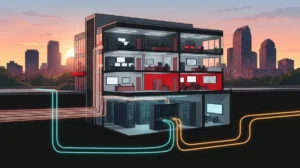
Professional surveillance systems integrate seamlessly with access control and business networks, creating unified security dashboards with real-time monitoring—capabilities that DIY setups struggle to achieve without technical expertise.
-
Cloud-based surveillance is the best option for most Tampa businesses in 2026, offering remote access from any device, scalability across multiple locations, and no bulky on-site hardware requirements.
-
DIY installation only works for very small, temporary, or supplemental setups; most Tampa businesses with multiple rooms, outdoor areas, or growth plans require professional installation to avoid blind spots and connectivity issues.
-
Professional installers provide ongoing technical support, system design based on your building layout, proper weatherproofing, and structured cabling integration—eliminating the need for self-managed troubleshooting.
-
Multi-location businesses must use professional installation to manage all sites under one unified platform; DIY approaches don’t scale and create logistical nightmares across different locations.
If you run a business in Tampa, Florida, security is always top of mind. Whether you manage a retail shop, a warehouse, or a multi-site franchise, one question keeps coming up: should you handle your own camera setup, or hire a pro for business video surveillance installation in Tampa Florida? It sounds like a simple choice, but the answer can seriously affect your budget, your coverage, and your peace of mind.
The good news? You don’t have to figure it out alone. In this article, we break down both options side by side so you can make the smartest decision for your business. We’ll look at costs, quality, scalability, and what really happens when things go wrong. By the end, you’ll know exactly which path makes sense for you — and why most Tampa businesses are choosing professional installation backed by a trusted telecom partner.
Why Business Video Surveillance Matters More Than Ever in 2026
Security cameras aren’t just about catching theft anymore. Modern cloud video security systems give businesses real-time visibility into daily operations. They help managers review incidents, monitor productivity, and protect employees and customers alike.
Tampa businesses face unique challenges too. From busy retail corridors to sprawling industrial parks near the port, physical security needs vary widely. And with hybrid work environments becoming the norm, remote monitoring has become a must-have feature — not a luxury. Check out what security cameras really do for your business to understand the full range of benefits.
DIY Camera Installation: What It Really Involves
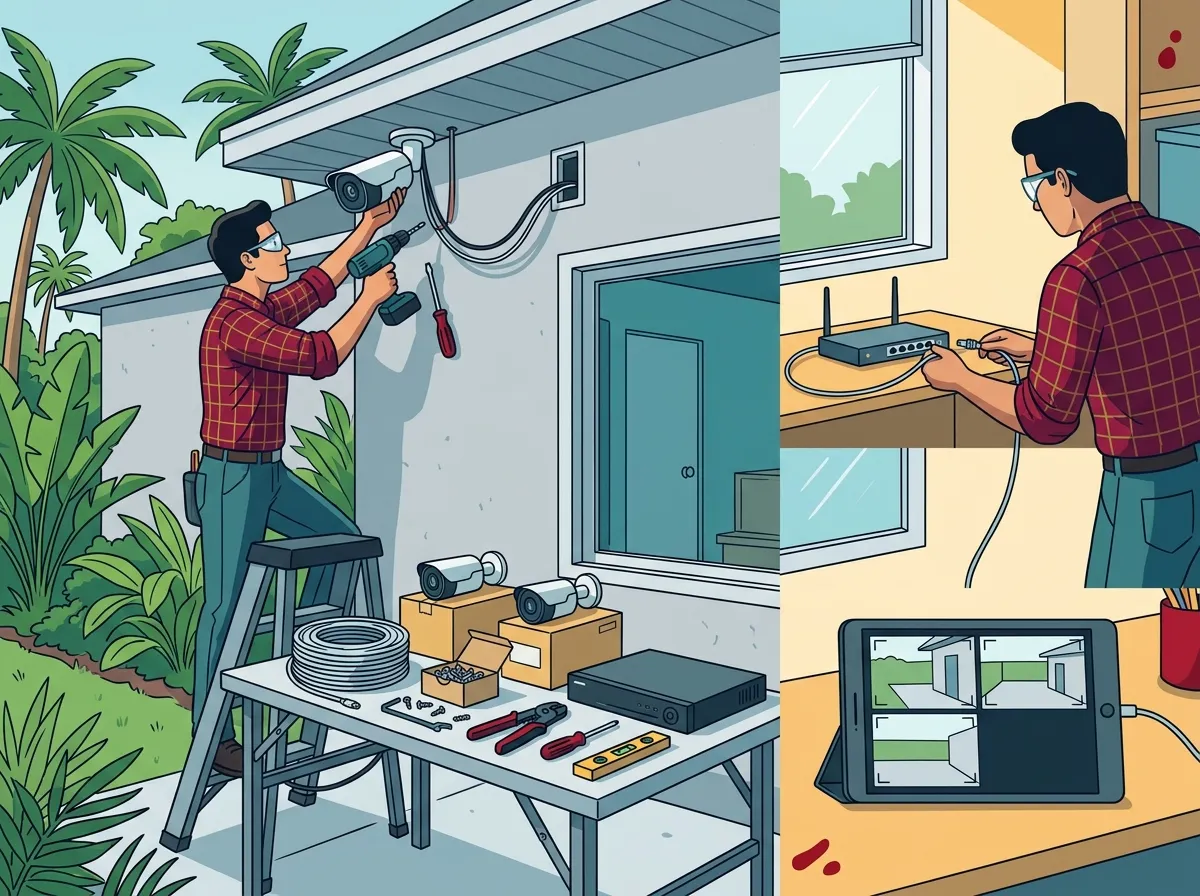
DIY camera installation might seem like the budget-friendly choice at first glance. You buy the cameras, mount them yourself, run the cables, and connect everything to a DVR or NVR. Simple enough, right? Not always.
Here’s what the DIY process actually looks like step by step:
- Plan your camera placement — Identify coverage gaps, entry points, and blind spots around your property.
- Purchase compatible equipment — Choose between IP cameras, analog systems, DVR, or NVR setups and make sure they work together.
- Run cable through walls and ceilings — This requires drilling, fishing wire, and sometimes professional tools you may not own.
- Configure the DVR or NVR — Set up recording schedules, resolution settings, and user access permissions.
- Set up remote viewing — Connect the system to your network and configure mobile app access for off-site monitoring.
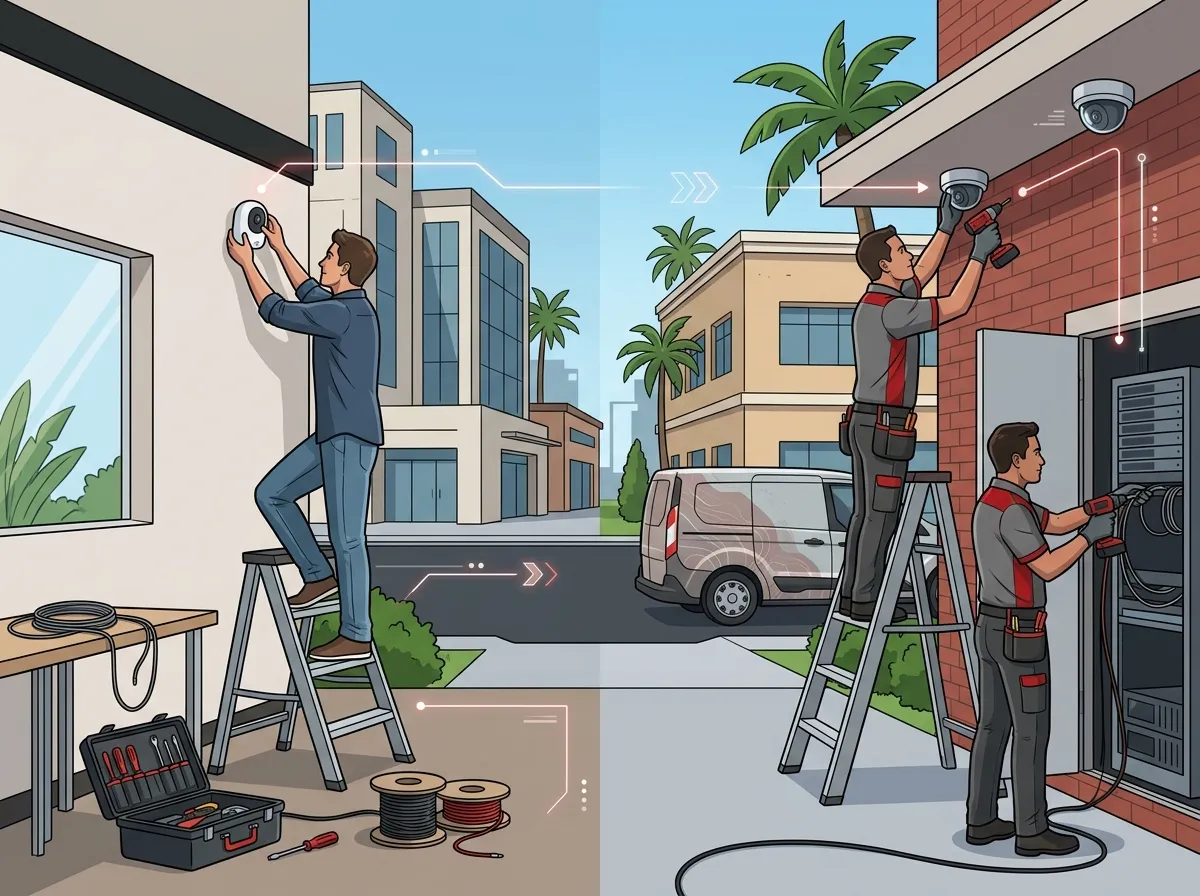
Each of those steps can get complicated fast. And if your business runs on a professional network, integrating cameras without proper structured cabling services can create connectivity headaches down the road.
Professional Camera Installation: What You Actually Get
Professional business video surveillance installation in Tampa Florida means more than just someone screwing a camera to a wall. A qualified telecom and security partner handles everything from system design to ongoing support.
Here’s what professional installation typically includes:
- Custom system design based on your building layout and coverage needs
- Professional-grade camera mounting and weatherproofing
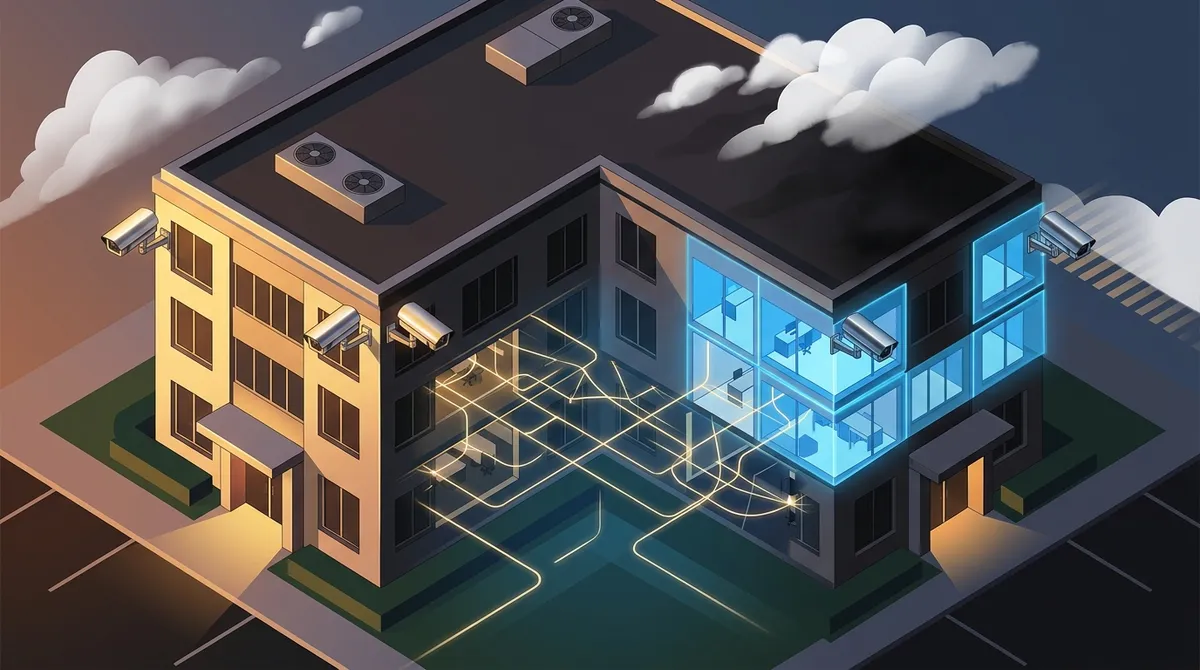
- Structured cabling runs that integrate with your existing network infrastructure
- DVR, NVR, or cloud configuration and testing
- Mobile app setup so you can monitor cameras from anywhere
- Integration with cloud-based access control and alarm systems
- Ongoing maintenance and technical support
That last point is huge. When a camera goes offline at 2 AM, you want a support team to call — not a YouTube tutorial to follow.
Side-by-Side Comparison: DIY vs. Professional Installation
Let’s put both options on the table and compare them across the factors that matter most to Tampa business owners.
| Factor | DIY Installation | Professional Installation |
|---|---|---|
| Upfront Cost | Lower (equipment only) | Higher (includes labor and design) |
| System Quality | Consumer-grade options | Commercial-grade equipment |
| Installation Time | Days to weeks (self-paced) | Hours to days (efficient) |
| Network Integration | Often limited or misconfigured | Fully integrated with business network |
| Scalability | Difficult to expand | Designed for growth from day one |
| Ongoing Support | Self-managed | Dedicated technical support |
| Remote Monitoring | Possible but complex to configure | Set up and tested by professionals |
| Access Control Integration | Rare or incompatible | Standard with full-stack providers |
Breaking Down the Cost Difference
Cost is usually where the DIY conversation starts. And yes, handling your own installation does save money upfront. But the real question is whether those savings last.
For reference, Tampa-area commercial installers typically charge around $150 per camera for customer-supplied equipment. For a full custom project — which includes cabling, mounting, and configuration — a 12-camera system often runs upwards of $400 total. Those are very manageable numbers for most businesses, especially when you factor in what you get.
| Cost Factor | DIY | Professional |
|---|---|---|
| Camera equipment | $30–$150 per camera | $100–$400+ per camera (commercial grade) |
| Cabling and materials | $50–$200+ (plus tools) | Included in installation quote |
| Labor | Your time (often 2–3 days) | $150+ per camera (professional installer) |
| Reconfiguration or repairs | Your cost every time | Often covered by support agreements |
| Long-term hidden costs | High (rework, replacements) | Low (designed to last) |
The hidden costs of DIY add up quickly. Rework, cable rerouting, camera replacements, and lost time can easily exceed what professional installation would have cost. A solid business network solution built by professionals simply performs better over time.
When DIY Actually Makes Sense
To be fair, DIY installation isn’t always a bad idea. There are scenarios where it works just fine. Here are three situations where going the DIY route might be appropriate:
- Very small footprint — A one-room office with a single camera covering the front door may not need professional installation.
- Temporary setup — If you need basic coverage for a short-term event or pop-up location, a DIY system can work.
- Supplementing an existing pro system — Adding one extra camera to a professionally installed system may be something a tech-savvy owner can handle.
But for most Tampa businesses — especially those with multiple rooms, outdoor areas, parking lots, or multiple locations — DIY falls short fast.
Why Professional Installation Wins for Growing Tampa Businesses
Here’s where the real difference shows up. Professional business video surveillance installation in Tampa Florida isn’t just about cameras. It’s about building a complete, connected security infrastructure that scales with your business.
Think about it this way. If your cameras aren’t properly integrated with your business high-speed internet, your remote viewing will lag or drop entirely. If your cabling isn’t done right, you’ll have dead zones and signal issues. And if your system can’t connect to your access control setup, you’re managing two separate security tools instead of one unified platform.
Professional providers also help you choose the right system. The three most common options — DVR, NVR, and cloud-based systems — each have pros and cons depending on your business size and needs.
| System Type | Best For | Key Benefit | Limitation |
|---|---|---|---|
| DVR (Digital Video Recorder) | Small businesses with analog cameras | Lower initial cost | Limited remote access |
| NVR (Network Video Recorder) | Mid-sized businesses with IP cameras | Higher resolution and flexibility | Requires solid network setup |
| Cloud-Based Surveillance | Multi-location businesses and enterprises | Remote access, scalable, low hardware | Requires reliable internet connection |
For most growing businesses, cloud-based surveillance is the clear winner in 2026. It requires no bulky on-site hardware, supports remote monitoring from any device, and scales easily as you open new locations. You can learn more about cloud video security options that fit your business perfectly.
The Integration Advantage: Cameras Plus Access Control
One of the biggest advantages of going professional is system integration. When your cameras, access control, and networking all work together, you get a level of security that no DIY setup can match.
Here’s what a fully integrated security stack looks like for a Tampa business:
- Cloud cameras monitor all entry points and interior zones in real time
- Access control restricts door entry based on credentials, time, and location
- Alarms trigger automatically when motion is detected after hours
- All activity is logged and accessible from a single dashboard
- Incident footage can be pulled instantly for review or law enforcement
Ideal Solutions Provider brings all of these pieces together as a single point of contact. With over 24 years of experience serving Tampa Bay businesses, they handle everything from consultation and installation to ongoing support — so you’re never left troubleshooting on your own. Learn more about Ideal Solutions Provider and see how their approach sets them apart.
It’s also worth noting that structured cabling supports both VoIP phones and security cameras, meaning a well-designed cabling infrastructure serves double duty for your entire communication and security setup.
Questions to Ask Before Choosing a Tampa Camera Installer
Whether you’re leaning toward DIY or professional installation, here are the key questions every Tampa business owner should ask before making a decision:
- How many cameras do I actually need? — A professional site survey can answer this accurately. Guessing usually leads to blind spots.
- Do I need indoor cameras, outdoor cameras, or both? — Outdoor cameras need weatherproofing and vandal-resistant housing that most DIY kits don’t include.
- Will this system integrate with my existing network? — If your network infrastructure isn’t ready, your cameras won’t perform well regardless of brand.
- Do I want cloud storage or on-site storage? — Cloud storage is more resilient against theft or damage but requires consistent internet bandwidth.
- What happens when something breaks? — A professional installer offers support agreements. DIY means you’re on your own.
A trusted telecom partner can walk you through every one of these questions during a free consultation. Need guidance? You can always reach out to the team at Ideal Solutions Provider to review your current setup and explore the right options for your business.
Multi-Location Businesses: Professional Is the Only Real Option
If you operate multiple Tampa Bay locations — or have sites across Florida and beyond — DIY simply doesn’t scale. Managing separate systems at different sites is a logistical nightmare. Professional providers design systems that connect all your locations under one platform, giving you unified visibility from a single dashboard.
This is especially important for franchise operators, healthcare providers, and multi-site retailers who need consistent security policies across every location. Reliable network solutions for multi-location Tampa businesses make this kind of setup not just possible — but seamless.
Want to see real-world examples of how Tampa businesses are upgrading their security and telecom infrastructure? Follow along on YouTube, Facebook, and Instagram for helpful tips and project highlights.
The Verdict: Which Option Wins for Tampa Businesses?
For the vast majority of Tampa business owners, professional business video surveillance installation in Tampa Florida is the clear winner. The upfront cost difference is smaller than most people expect, and the long-term value — better coverage, network integration, ongoing support, and scalability — is significantly higher.
DIY works in very narrow scenarios, but the moment your business grows, adds locations, or needs integration with access control or networking, a professional approach pays for itself many times over. When security is your priority, cutting corners on installation is never worth the risk.
Ready to stop guessing and start protecting your business the right way? Give us a call at 813-388-4935 and let’s design a surveillance solution that fits your Tampa business perfectly — from day one and beyond.
FAQs
Q: How much does business video surveillance installation cost in Tampa, Florida?
A: Great question! Costs vary based on your project size. For customer-supplied equipment, Tampa installers typically start around $150 per camera. A full custom 12-camera system often runs upward of $400, including cabling and configuration. Professional systems cost more upfront but save you money on rework and repairs down the road.
Q: What is included in a professional commercial camera installation package?
A: Most professional packages cover system design, camera mounting, structured cabling, DVR or NVR configuration, mobile app setup, and network integration. Many providers also include access control integration and ongoing technical support — so you get a complete, connected security solution rather than just cameras on a wall.
Q: Can business security cameras in Tampa be integrated with access control systems?
A: Absolutely — and it’s one of the best upgrades you can make! When your cameras and access control work together, you get a unified security dashboard that shows who entered, when, and what happened on camera. Professional telecom partners like Ideal Solutions Provider specialize in building these fully integrated systems for Tampa businesses.
Q: What is the difference between DVR, NVR, and cloud video surveillance for businesses?
A: DVR systems use analog cameras and are best for smaller setups with tighter budgets. NVR systems use IP cameras and offer higher resolution with more flexibility. Cloud-based surveillance is the modern favorite — it requires minimal on-site hardware, supports remote monitoring from any device, and scales easily for multi-location businesses.
Q: Do I need professional installation if I only have a small Tampa business?
A: It depends on your needs! A single-room office with one or two cameras might be manageable as a DIY project. But if you have multiple rooms, outdoor coverage, a parking lot, or plan to grow, professional installation ensures better coverage, proper cabling, and reliable support when you need it most.