
Key Takeaways
-
Cloud-based VoIP phone systems are typically 30-50% cheaper than traditional copper lines and offer instant scalability, making them ideal for businesses of any size.
-
Modern business phone service now includes AI-powered features like smart call routing, sentiment analysis, and automatic transcription—92% of organizations have already adopted AI in customer experience.
-
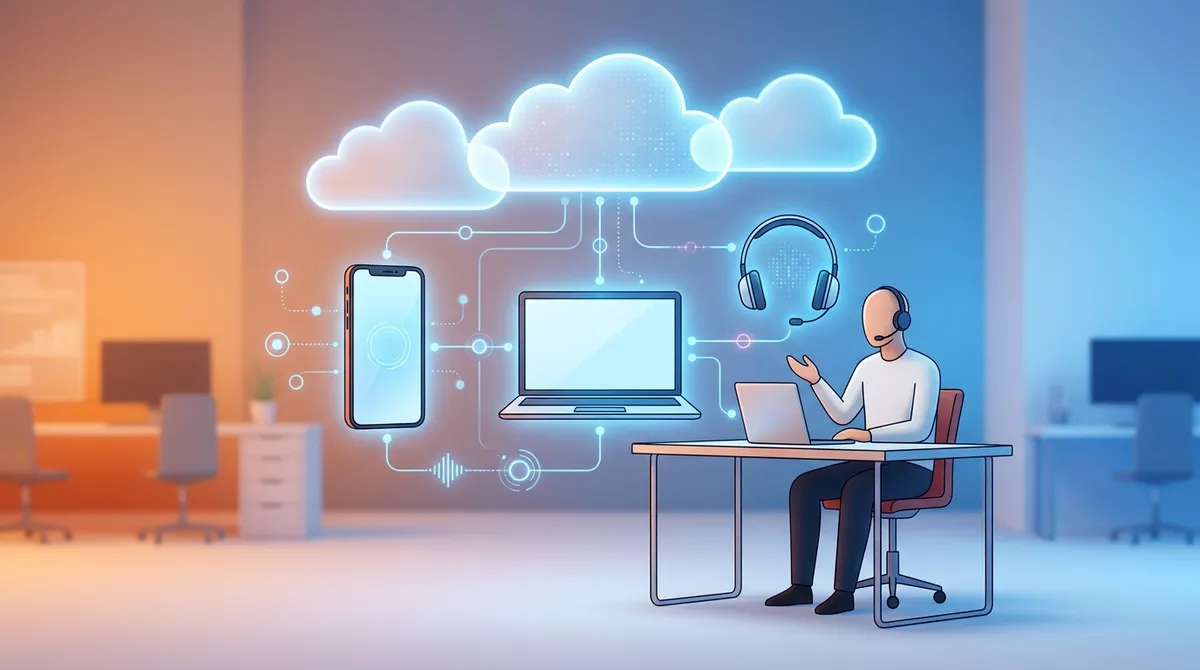
Cloud phone systems enable true remote and hybrid work by allowing employees to use their business number on any device from anywhere, eliminating the need to share personal cell numbers with customers.
-
The global business phone market is growing at 11.8% annually and projected to exceed $264 billion by 2029, with legacy systems facing potential service shutdown deadlines soon.
-
When choosing a provider, audit your current setup, list must-have features, verify your internet speed supports VoIP, and compare multiple vendors before committing to avoid costly mistakes.
-
Essential security features include end-to-end encryption, 99.99% uptime SLAs, multi-factor authentication, redundant data centers, and compliance certifications like HIPAA for sensitive industries.
If you have ever picked up an office phone and thought, “There has to be a better way,” you are not alone. Business phone service has changed dramatically over the last few years. Today, it is much more than just making and receiving calls. It is a full communication platform that helps your team stay connected, serve customers faster, and work from anywhere. Whether you run a small Tampa business or manage multiple locations across the country, the right phone service can make a real difference in how your company operates every single day.
In this guide, we will walk you through everything you need to know about modern business phone service — what it includes, why VoIP is leading the charge, and how to choose the right setup for your team. Let’s dive in!

What Is Business Phone Service in 2026?
Business phone service refers to any voice communication system that helps companies handle inbound and outbound calls. But in 2026, that definition has expanded quite a bit. Most businesses today use cloud-based systems that combine voice, video, messaging, and collaboration tools in one platform. This type of setup is often called Unified Communications as a Service (UCaaS).
The shift away from traditional copper phone lines has been happening for years. According to recent market data, the global business phone service market is projected to grow at a 4.3% CAGR from 2025 to 2035. Businesses of all sizes are realizing that legacy systems simply cannot keep up with today’s demands. If you want to learn more about 6 Key Differences Between VoIP and Traditional Phone Systems, that is a great starting point for understanding the shift.
VoIP vs. Traditional Phone Lines: The Big Picture
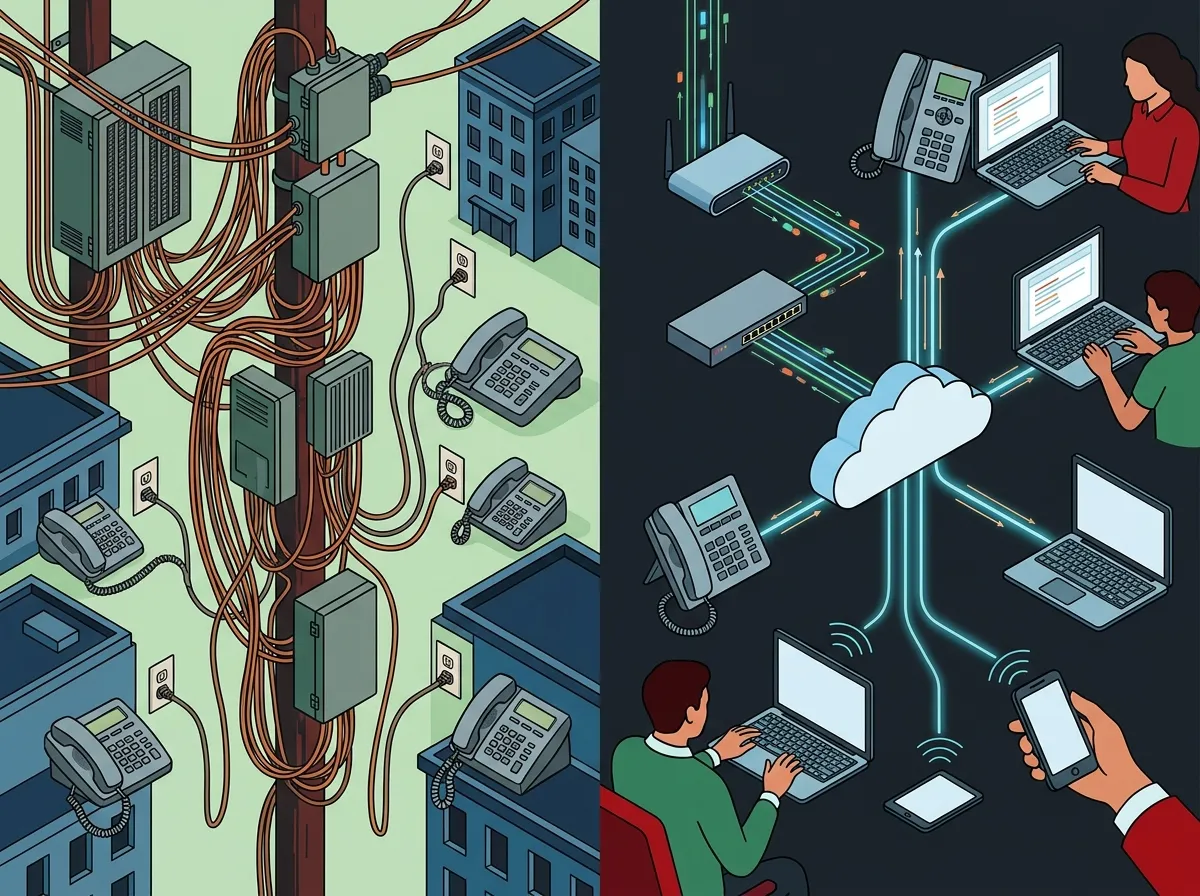
Let’s keep this simple. Traditional phone lines use copper wires to carry voice signals. VoIP (Voice over Internet Protocol) uses your internet connection instead. That one change opens up a whole world of features and flexibility that older systems just cannot match.
| Feature | Traditional Phone Line | VoIP / Cloud Phone Service |
|---|---|---|
| Cost | Higher monthly fees | Typically lower cost per user |
| Scalability | Requires hardware upgrades | Add or remove users instantly |
| Remote Access | Limited or unavailable | Work from desktop or mobile |
| Features | Basic calling and voicemail | Video, chat, AI tools, SMS, and more |
| Maintenance | On-site hardware required | Managed in the cloud |
According to Software Advice as cited by Nextiva, 36% of software buyers choose VoIP compared to just 24% who still choose traditional POTS lines. That gap is only going to grow. You can also explore a deeper look at VoIP Provider vs. Traditional Phone: Which Wins for Business? to help you decide what makes sense for your company.
Key Features Every Business Phone Service Should Include
Not all phone services are created equal. When you are shopping for a business phone solution, here is what you should look for:
- Auto attendant: Greets callers and routes them to the right department automatically
- Voicemail to email: Sends voicemail recordings directly to your inbox
- Call routing and forwarding: Makes sure no call goes unanswered
- Conference calling: Connects multiple team members or clients at once
- Mobile app access: Lets employees use their business number on any device
- SMS messaging: Sends and receives texts from your business number
- AI-powered tools: Includes call summaries, smart routing, and virtual assistants
If you want a deeper look at must-have capabilities, check out 12 VoIP Phone System Features Every Business Needs in 2026. These features are not luxury add-ons anymore — they are the standard for any competitive business.
Why AI Is Changing Business Phone Service
Artificial intelligence is now baked into many business phone platforms. According to Nextiva’s 2025 CX research, 92% of organizations have adopted AI in customer experience. That is a staggering number. AI tools help with everything from automatic call routing to meeting summaries and smart voicemail.
Here is what AI features typically look like in a modern business phone service:
- Smart call routing: Directs callers to the right agent based on history or intent
- Virtual assistants: Handles common questions without a live agent
- Call transcription and summaries: Automatically logs what was discussed
- Sentiment analysis: Detects customer frustration in real time
- Predictive dialers: Improves outbound calling efficiency for sales teams
These tools are not just for big corporations. Small businesses can use them too, often at very affordable price points. That is part of what makes cloud-based phone service so exciting right now.
How Business Phone Service Supports Remote and Hybrid Teams
Remote work is not going anywhere. In fact, 75% of employees now use mobile VoIP applications for business calling, according to recent industry data. Your phone system needs to support your team wherever they are — whether that’s the office, home, or a coffee shop in Tampa Bay.
Cloud phone service makes this possible by letting employees use their business number from any device. Calls, texts, and voicemails all go through the same platform. Nobody has to give out their personal cell number. Customers always reach the business, not just one person.
For franchise operators and multi-location businesses, this is especially valuable. You can manage phone settings, users, and call flows across every location from one dashboard. Learn more about Which Cloud-Based Phone System Is Best for Tampa Businesses? to see what options are available in your area.
What Does Business Phone Service Cost?
Cost is always a top question, and the good news is that cloud-based business phone service is generally very affordable. Here is a general breakdown of what you might expect to pay:
| Business Size | Estimated Monthly Cost Per User | Typical Features Included |
|---|---|---|
| 1–10 Users | $15 – $35 | Calling, voicemail, SMS, auto attendant |
| 11–50 Users | $25 – $45 | Above + video, integrations, analytics |
| 50+ Users | $35 – $60+ | Above + AI tools, advanced reporting, SLAs |
These are general estimates and can vary based on the provider and features selected. For a more detailed breakdown, visit How Much Does a VoIP Phone System Cost for a Business in Tampa? to get real numbers specific to your situation. You may also find that bundling your phone and internet together saves money — see How Do I Bundle My Business Phone and Internet Service? for tips on doing exactly that.
Cloud Phone Service vs. On-Premises Phone Systems
Some businesses still wonder whether a traditional on-premises phone system (called a PBX) is the right choice. Let’s compare them side by side:
| Category | On-Premises PBX | Cloud Phone Service |
|---|---|---|
| Upfront Cost | High (hardware purchase) | Low (subscription-based) |
| Maintenance | In-house IT required | Handled by the provider |
| Flexibility | Limited | Highly flexible |
| Disaster Recovery | At risk during outages | Built-in redundancy |
| Upgrades | Costly and time-consuming | Automatic and seamless |
For most small and mid-sized businesses today, cloud phone service wins on nearly every category. If you want to dive deeper, read 14 Reasons to Switch to a Cloud Phone System in Tampa to see a full list of benefits. And if you are concerned about common missteps when making the switch, 5 Hosted PBX Mistakes Tampa Small Businesses Must Avoid is worth a read too.
Security and Reliability: What to Look For
As more business communications move into the cloud, security matters more than ever. A good business phone service provider should offer:
- End-to-end encryption for all voice and data traffic
- Multi-factor authentication to protect account access
- Uptime guarantees (look for 99.99% SLA commitments)
- Redundant data centers to keep you online during outages
- Compliance certifications such as HIPAA for healthcare businesses
Do not skip over the security checklist when evaluating providers. 56% of customers switch support channels when responses are slower than expected, according to Nextiva’s research. If your phone system goes down, customers will notice — and they may not come back. You can find more guidance on staying protected in our article on Cloud Security vs. Traditional Network Security: Which Wins?
How to Choose the Right Business Phone Service Provider
With so many options out there, choosing a provider can feel overwhelming. Here is a simple step-by-step process to follow:
- Audit your current setup: Know what you have before you decide what you need
- List your must-have features: Auto attendant? Video calls? SMS? Write them down
- Set a realistic budget: Include hardware, setup fees, and monthly costs
- Evaluate your internet connection: VoIP needs reliable bandwidth — check your speed
- Ask about support: Find out who answers the phone when something goes wrong
- Compare multiple providers: Do not settle for the first option you see
This is where working with a trusted telecom partner really helps. Ideal Solutions Provider is a Tampa-based telecom and IT partner with over 24 years of experience. They work with 35+ vetted suppliers to find the right fit for each business — not the most expensive one. They serve as a single point of contact, handling everything from consultation to installation and ongoing support. You can explore more on How to Choose Cloud Based Phone System Providers in Tampa FL for a full breakdown of what to look for.
Also, make sure your internet connection can support VoIP. What Internet Speed Do I Need for VoIP in Tampa? is a helpful resource to check before you commit to any phone plan.
The Market Is Growing Fast — Here Is Why It Matters
The numbers behind business phone service are hard to ignore. The VoIP market is projected to exceed $264 billion by 2029, with a CAGR of 11.8%. The cloud-based contact center market powered by VoIP is expected to grow by 26% between 2024 and 2029. These numbers reflect a massive shift in how businesses communicate.
Legacy telephony is also phasing out in many markets. That means businesses that have not yet made the switch may face service shutdown deadlines sooner than expected. If you want to stay ahead of the curve, read 7 Reasons Tampa Businesses Are Switching to VoIP in 2026 to understand the urgency. You can also connect with us on Facebook and Instagram for the latest updates and tips on modern business communications.
Quick Checklist Before Switching Your Business Phone Service
Ready to make the move? Here is a quick checklist to help you prepare:
- Check your current internet speed and reliability
- Confirm your existing phone numbers can be ported over
- Decide how many users need access
- Choose which devices will be used (desk phones, computers, mobile)
- Make sure your network cabling supports modern VoIP traffic
- Ask your provider about onboarding and training for staff
If you need help with network cabling to support your new phone system, 13 Ways Structured Cabling Supports VoIP & Cameras explains why the physical infrastructure matters just as much as the software. And if you are worried about keeping your existing number, How to Keep Your Phone Number When Switching to VoIP in Tampa walks you through the process step by step.
Final Thoughts and Next Steps
Modern business phone service is more powerful, more affordable, and more flexible than ever before. Whether you are a small business owner looking to cut costs, an IT manager searching for a smarter solution, or a franchise operator managing multiple sites, there is a cloud-based phone system that fits your needs perfectly.
The key is working with the right partner who can cut through the noise and help you find the best fit. You can also check out helpful videos and walkthroughs on the YouTube channel to see real-world examples of how businesses are upgrading their communications.
Ready to explore your options? Get in touch with our team at Ideal Solutions Provider for a free consultation. We will review your current setup, identify any gaps or savings opportunities, and help you find a business phone service that works as hard as you do. You can also give us a call directly and speak with a real telecom expert who is happy to help.
FAQs
Q: What is business phone service in telecom?
A: Business phone service in telecom refers to a voice communication system designed specifically for companies. In 2026, this usually means a cloud-based or VoIP platform that includes calling, voicemail, SMS, video, and collaboration tools all in one place — making it much more than just a regular phone line!
Q: What is the difference between VoIP and a traditional business phone line?
A: VoIP uses your internet connection to make and receive calls, while traditional phone lines use copper wires. VoIP is typically more affordable, easier to scale, and packed with features like mobile access, AI tools, and video conferencing that old-school lines simply cannot offer.
Q: How much does business phone service cost for a small business?
A: Most small businesses pay between $15 and $35 per user per month for a cloud-based business phone service. That price usually includes core features like auto attendants, voicemail, and SMS — making it a very budget-friendly option compared to traditional landline systems.
Q: How does business phone service support remote and hybrid teams?
A: Cloud-based business phone service lets employees use their business number from any device, anywhere in the world. Whether your team is in the office, working from home, or traveling, they can make calls, send texts, and check voicemails just like they would at their desk — seamlessly and professionally.
Q: What security features should I look for in a business phone provider?
A: Look for end-to-end encryption, multi-factor authentication, uptime guarantees of 99.99% or higher, and redundant data centers. If your business handles sensitive customer information, also ask about compliance certifications like HIPAA — it is better to ask these questions upfront than to deal with a security issue later!