

Key Takeaways
-
Structured cabling is the hidden foundation that makes wireless networks function—without solid cabling behind access points, Wi-Fi will always struggle with reliability and speed issues.
-
Cat6 cabling offers the best cost-to-performance balance for most growing businesses, supporting 10 Gbps speeds, while fiber optic is essential for multi-building connections and heavy video traffic.
-
Following industry standards like ANSI/TIA-568.1-E during installation prevents costly troubleshooting nightmares and ensures your network is properly labeled, tested, and easy to manage long-term.
-
Professional installation is critical because improper cabling creates safety hazards, slow speeds, and expensive rework—DIY approaches lack proper testing, documentation, and building code compliance.
-
Structured cabling supports your entire business ecosystem including VoIP phones, security cameras, access control, and point-of-sale systems with dedicated bandwidth, while wireless-only setups cause lag when sharing bandwidth across all devices.
-
Warning signs like dropped VoIP calls, lagging cameras, and internet slowdowns during peak usage indicate you need a cabling upgrade before performance issues damage productivity and customer satisfaction.
Picture this: your office Wi-Fi drops right in the middle of a big client call. Your VoIP phones freeze. Your security cameras go dark for a few scary minutes. Sound familiar? A lot of business owners think the fix is “more Wi-Fi.” But the real answer often hides behind your walls, in your cabling. We know it’s not the most exciting topic at the coffee shop, but stick with us, because this decision affects almost everything your business does every single day.
In this friendly, no-jargon guide, we’re going to compare structured cabling against wireless-only setups. We’ll walk through real numbers, real standards, and real scenarios so you can make a smart choice. Whether you run a cozy Tampa storefront or manage IT for a growing company with several locations, this one’s for you. Let’s dig in together.
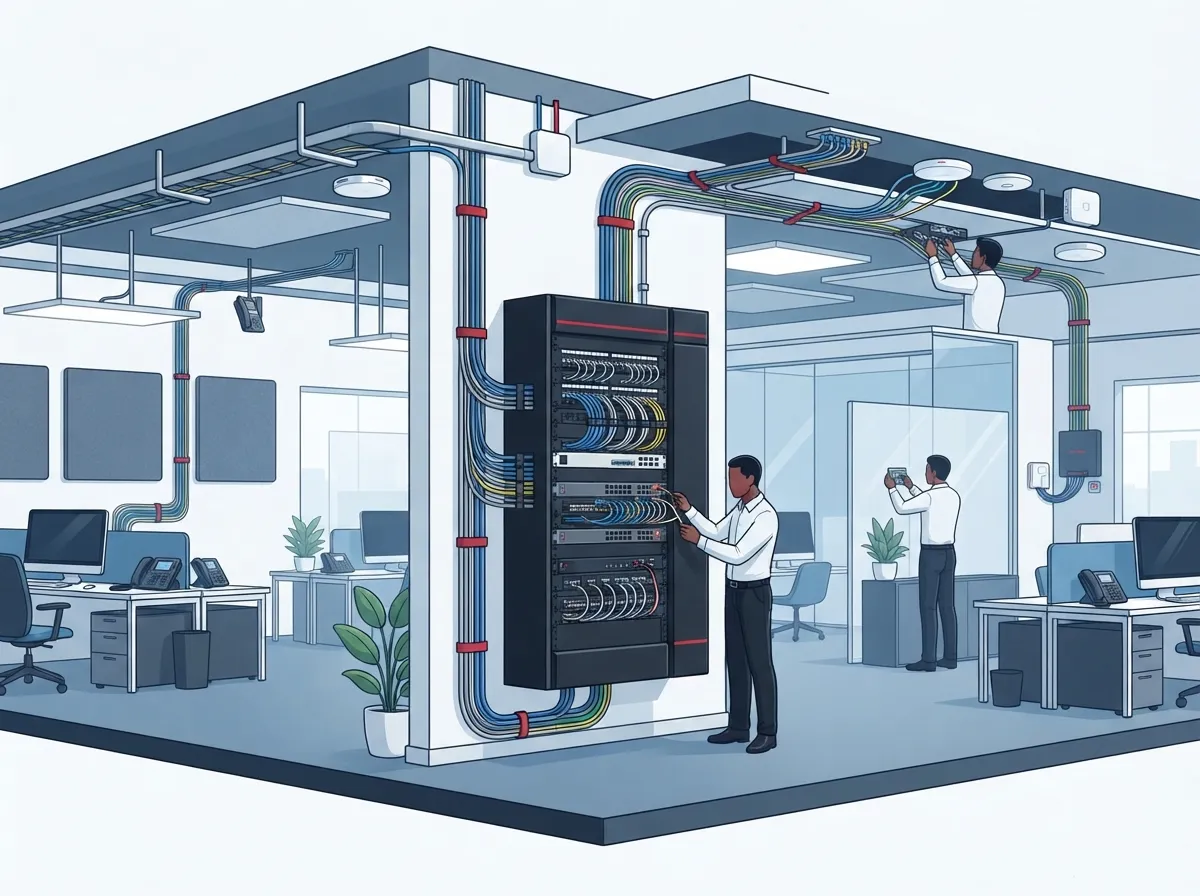
What Is Cabling in Business Telecom, Really?
In the world of business telecom, cabling means the physical wires connecting your phones, computers, cameras, and Wi-Fi access points. Think of it as the hidden highway system inside your building. Everything you rely on, from VoIP phone systems to cloud video security cameras, travels through this network.
Structured cabling is a planned, organized system. It’s not just wires tossed behind a wall. It follows recognized standards like ANSI/TIA-568.1-E and structured cabling best practices used around the world. These rules make sure your network runs fast, stays organized, and can grow with your business.
Why Cabling Still Matters in a Wireless World
You might wonder, “Isn’t everything wireless now?” Not quite. Wireless signals actually depend on cabled access points to work well. Without solid cabling behind the scenes, your Wi-Fi will always struggle. Good cabling is like a strong foundation under a house. You don’t see it, but everything else depends on it.
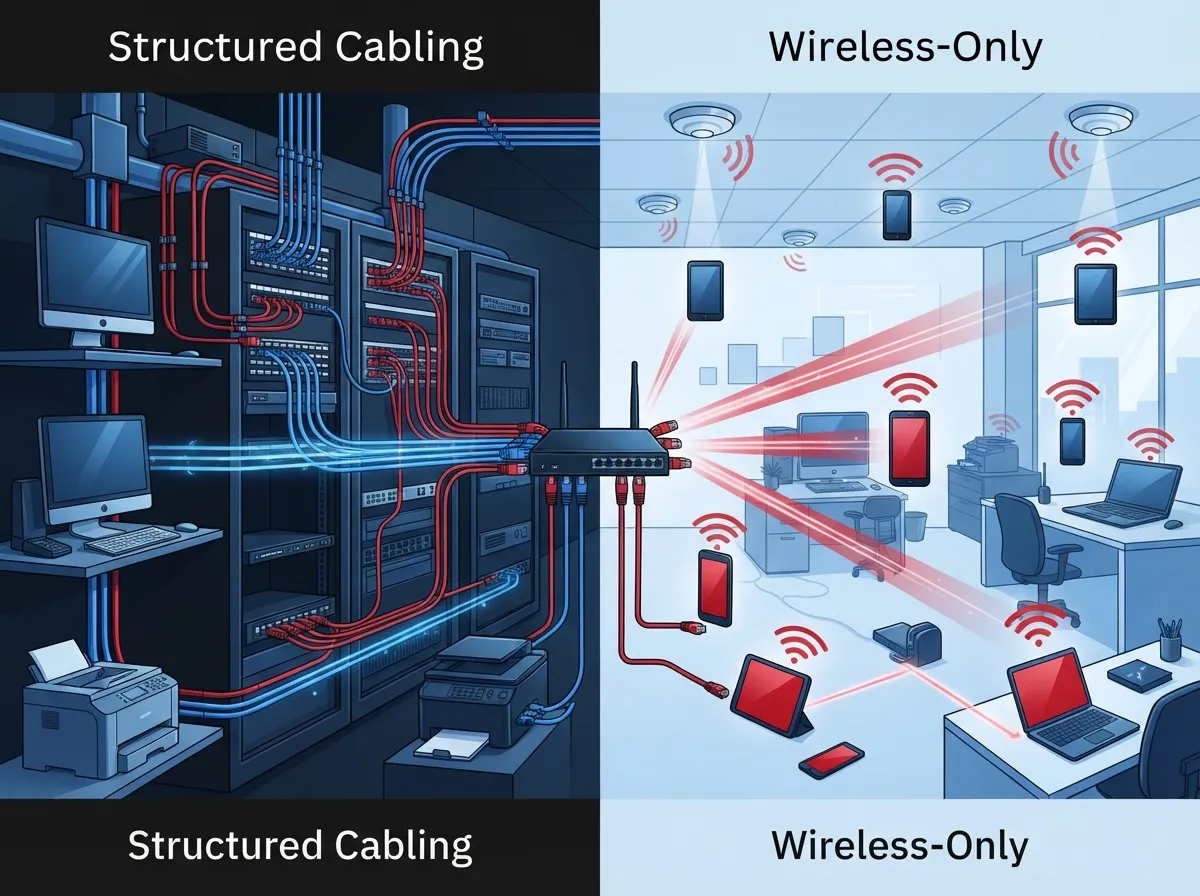
Structured Cabling vs. Wireless-Only: The Head-to-Head Comparison
Let’s break this down so it’s easy to picture. Below is a simple comparison table showing how each option performs across common business needs.
| Feature | Structured Cabling | Wireless-Only Setup |
|---|---|---|
| Speed Reliability | Consistent, high-speed, low interference | Can slow down with distance or walls |
| Security | Harder to intercept, more controlled access | More exposed to outside interference |
| Scalability | Easy to add ports and devices | Limited by access point capacity |
| Supports VoIP & Cameras | Yes, with dedicated bandwidth | Shared bandwidth can cause lag |
| Long-Term Cost | Higher upfront, lower maintenance | Lower upfront, higher ongoing issues |
As you can see, wireless has its place. It’s great for guest access or flexible desk setups. But when it comes to running your whole business, structured cabling usually wins on reliability and long-term value.
The Main Types of Business Cabling You’ll Hear About
Not all cabling is the same. Here’s a friendly breakdown of the most common types used in commercial buildings today.
- Cat5e: Supports up to 1 Gbps over 100 meters. A solid, budget-friendly option for smaller offices.
- Cat6: Supports up to 10 Gbps over 55 meters, with around 250 MHz bandwidth. Great for growing businesses.
- Cat6a: An upgraded version of Cat6 with better shielding, ideal for busy networks.
- Fiber optic cabling: Can support very high speeds, with some setups reaching up to 100 Gbps over distances up to 10 km.
If you’re comparing these two popular choices in more detail, our article on the 7 key differences between CAT5e and CAT6 cabling breaks it down even further.
When Fiber Makes Sense
Fiber optic cabling is the superhero of the group. It’s perfect for connecting buildings, running data centers, or handling heavy video traffic. If your business handles large files, video calls, or multiple locations, fiber might be your best friend. Learn more in our guide on fiber optic cabling services for commercial buildings.
How Standards Keep Your Cabling Safe and Reliable
You wouldn’t want an electrician skipping safety codes, right? Cabling works the same way. Standards like ANSI/TIA-568.1-E and ISO/IEC 11801 guide how cabling should be designed and installed in commercial buildings. These standards cover everything from cable types to labeling and testing.
Following these standards isn’t just about compliance. It’s about avoiding headaches down the road. Poorly labeled or untested cabling can turn a simple fix into a multi-hour troubleshooting nightmare.
Key Things Good Cabling Standards Cover
- Cable types and performance ratings
- Labeling and documentation practices
- Testing and certification requirements
- Distance and bandwidth limits
- Future capacity planning
These steps might sound technical, but they simply mean your network is easier to manage and less likely to break down when you need it most.
What Can Structured Cabling Actually Support?
This is where things get exciting. Structured cabling isn’t just for internet access anymore. It’s the backbone for almost every piece of business technology you use.
- VoIP phone systems for clear, reliable calls
- Wi-Fi access points for fast wireless coverage
- Cloud-based security cameras for 24/7 monitoring
- Access control systems for secure entry points
- Building automation like smart thermostats and lighting
- Point-of-sale systems for retail and restaurants
If you’re setting up any of these systems, our guide on how structured cabling supports VoIP and cameras shows exactly how it all connects.
Signs Your Business Needs a Cabling Upgrade
Not sure if it’s time for new cabling? Here are some common warning signs business owners tell us about all the time.
- Your internet slows down when multiple people are online
- VoIP calls drop or sound choppy
- Security cameras lag or freeze randomly
- You’re adding new employees or desks and running out of ports
- Your building still has old, unlabeled cabling from years ago
- You’re planning to move locations or expand
If any of these sound familiar, it might be time to explore our detailed list of 9 signs your Tampa business needs structured cabling now.
Commercial Cabling vs. Residential Cabling: What’s the Difference?
You might think cabling is cabling, no matter where it goes. But commercial cabling is a whole different animal. Business networks need to support more devices, more people, and much less downtime.
| Factor | Commercial Cabling | Residential Cabling |
|---|---|---|
| Device Density | High, supports many users and devices | Low, built for a few devices |
| Uptime Needs | Critical, minimal downtime allowed | Flexible, occasional downtime okay |
| Compliance | Follows enterprise-grade standards | No strict requirements |
| Future Planning | Built for growth and scalability | Rarely planned for expansion |
This is exactly why hiring an experienced provider matters. A home network setup and a business network setup are simply not the same job.
Steps to Plan a Smart Cabling Installation
Planning ahead saves you money and stress later. Here’s a simple step-by-step process that works well for most businesses.
- Assess your current setup and identify pain points
- Count your devices, including future growth plans
- Choose the right cable type for your needs (Cat6, Cat6a, or fiber)
- Work with a licensed installer who follows TIA-568 standards
- Label and document every cable run clearly
- Test and certify the finished installation
- Schedule regular reviews as your business grows
Need a deeper walkthrough? Check out our guide on how to plan network cabling installation in Tampa Bay.
DIY Cabling vs. Professional Installation
We get it. DIY projects can be fun and save money. But cabling isn’t quite like assembling furniture. One wrong move can mean slow speeds, safety hazards, or costly rework.
Professional installers understand building codes, cable ratings, and proper testing procedures. They also document everything, so future troubleshooting is quick and painless. If you want the full breakdown, take a look at our comparison on DIY vs. professional cabling for Tampa offices.
Why Businesses Choose Ideal Solutions Provider for Cabling Projects
At Ideal Solutions Provider, we’ve spent over 24 years helping Tampa businesses (and companies nationwide) build strong, reliable networks. We partner with 35+ vetted suppliers, so you get honest recommendations instead of a one-size-fits-all sales pitch.
We handle everything from consultation to installation to ongoing support. That means one phone call solves your cabling, internet, VoIP, and security needs. No juggling five different vendors. No confusing invoices. Just a team that treats your business like it’s our own.
Our structured cabling services are designed to keep your network fast, secure, and ready for whatever comes next. Whether you’re opening a new office or upgrading old wiring, we’re here to make it simple.
Real Talk: What Happens If You Ignore Cabling Problems?
Ignoring bad cabling is a bit like ignoring a slow leak in your roof. It might seem fine for a while. Then one day, everything floods at once. Slow networks lead to lost productivity. Dropped VoIP calls frustrate customers. Camera outages leave your building vulnerable.
The good news? Fixing it now is much easier (and cheaper) than fixing it during a crisis. A quick reliable structured cabling contractor can assess your setup and get you back on track quickly.
Bringing It All Together
So, structured cabling vs. wireless-only setups: which one wins? Honestly, it depends on your goals, but for most growing businesses, structured cabling wins the long game. It’s more reliable, more secure, and built to grow with you. Wireless still has its place, especially for flexibility, but it shouldn’t be your entire network strategy.
If you’re ready to stop guessing and start building a network that actually works for your business, we’d love to help. Our friendly team follows every major industry standard, and we treat your business communications like they matter, because they do.
Feel free to reach out to our team for a free consultation, or simply give us a call to talk through your options. We’re here, we’re friendly, and we’re ready to help your business connect better. You can also follow our updates on Facebook, check out project photos on Instagram, or watch helpful tips on YouTube.
FAQs
Q: What is structured cabling in business telecom?
A: Structured cabling is an organized system of wires that connects your phones, internet, cameras, and other devices. It follows official standards, so everything runs smoothly and can grow with your business over time.
Q: What type of cabling is best for office networks?
A: For most offices, Cat6 cabling hits a sweet spot between cost and performance. If you need extra speed or run heavy video traffic, fiber optic cabling might be worth the investment too.
Q: What is the difference between Cat6 and Cat6a cabling?
A: Cat6 supports up to 10 Gbps over shorter distances, while Cat6a offers better shielding and improved performance over longer runs. Cat6a is a great pick for busier, more demanding networks.
Q: When should a business use fiber optic cabling instead of copper?
A: Fiber optic cabling shines when you need very high speeds or long-distance connections, like linking multiple buildings. It’s also a smart choice for data centers or businesses handling heavy video and data traffic.
Q: How often should business cabling be tested or certified?
A: It’s smart to test and certify your cabling right after installation, and then review it whenever you add new equipment or notice performance issues. Regular check-ins help catch small problems before they become big headaches.