
Key Takeaways
-
Cloud access control eliminates the need for local servers at each location, allowing security teams to manage dozens of buildings and hundreds of employees from a single centralized dashboard, whether on-site or remote.
-
The cloud access control market is experiencing significant growth with 63.8% of enterprises already adopted it, projected to reach $47.8 billion by 2034, making it a critical investment for multi-location organizations.
-
Key features to prioritize include mobile credential support, biometric authentication, integration with existing security systems, role-based permissions, and AI-assisted monitoring for comprehensive enterprise security.
-
Cloud access control shifts costs from large upfront hardware purchases to predictable monthly subscription fees while reducing IT overhead, as providers handle all updates, maintenance, and backend security automatically.
Picture this: you run a growing company with five offices spread across three states. Someone lost their key card in Tampa. A new hire starts Monday in Orlando. And your compliance officer just asked for a report on who entered the server room last week. If your stomach just dropped a little, you’re not alone. This is exactly why cloud access control for large organizations has become such a hot topic in 2026, and honestly, it’s about time.
Here at Ideal Solutions Provider, we’ve spent over 24 years helping businesses simplify their telecom and security setups. We’ve watched cloud access control grow from a nice-to-have feature into a must-have tool for companies managing multiple locations. Let’s walk through what it actually is, why it matters, and how it can make your life a whole lot easier.
What Is Cloud Access Control for Large Organizations?
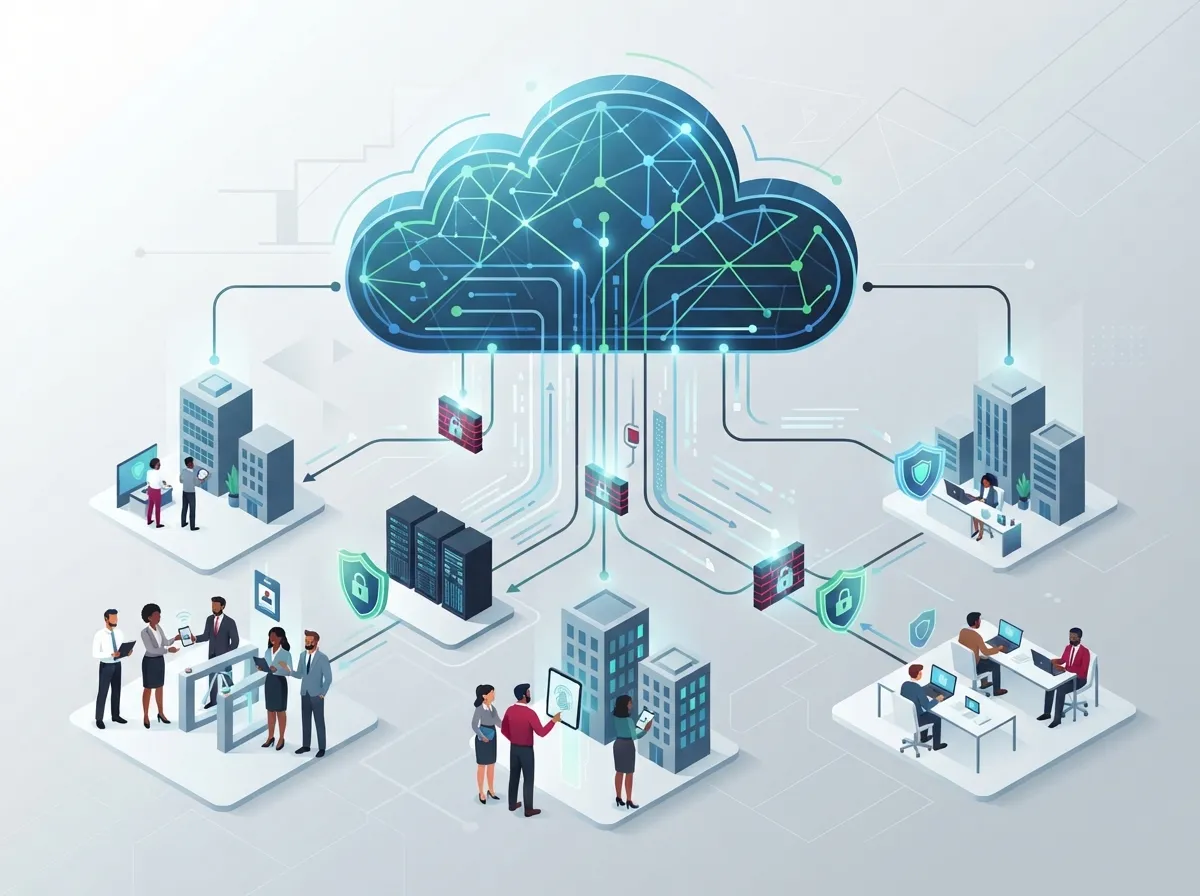
Cloud access control is a system that manages who can enter your buildings, using an online platform instead of a bulky server sitting in a closet somewhere. Think of it like managing your email from any device, but instead of messages, you’re managing doors, badges, and permissions.
For large organizations, this matters even more. You’re not just controlling one door. You might be managing dozens of buildings, hundreds of employees, and countless daily entries and exits. A cloud-based system lets your security team see and control everything from one dashboard, whether they’re in the office or working from home.
The ACaaS Model Explained
In the telecom and IT world, this is often called Access Control as a Service, or ACaaS. Here’s the simple version: the provider hosts the technical infrastructure and stores the data. You just manage the rules, like who gets access and when. No servers to maintain. No software updates to worry about. Just a clean, simple system that works.
- The provider handles hosting, updates, and backend security
- Your team manages permissions and daily operations remotely
- Costs shift from big upfront hardware purchases to predictable monthly fees
- Updates and new features roll out automatically, without extra IT work
Why Large Organizations Are Making the Switch
The numbers tell a pretty convincing story here. Large enterprises made up 63.8% of the cloud access control market share in 2025. That’s not a small trend. That’s most of the market choosing this path.
Market researchers are also projecting big growth ahead. One report pegs the cloud access control market at USD 12.4 billion in 2025, climbing to a jaw-dropping USD 47.8 billion by 2034. Another forecast shows the broader cloud-based access control market growing from USD 3.39 billion in 2025 to more than USD 10 billion by 2031. However you slice the data, the direction is clear: businesses are moving to the cloud, and they’re moving fast.
Top Reasons Enterprises Are Adopting Cloud Access Control
- Managing multiple sites from a single, centralized platform
- Supporting mobile credentials so employees can use their phones instead of key cards
- Meeting strict compliance requirements with detailed audit trails
- Reducing IT overhead since there’s no local server to maintain
- Scaling easily as the company opens new locations or adds staff
- Integrating with other security tools like cloud security cameras for a unified view
Key Benefits for Multi-Site Businesses
If your company operates across Tampa Bay, or even nationwide, you already know the headache of juggling different systems at different locations. Cloud access control solves that problem in a pretty satisfying way.
| Benefit | What It Means for Your Business |
|---|---|
| Centralized Management | Control every door, at every site, from one login |
| Remote Access | Grant or revoke access instantly, from anywhere |
| Mobile Credentials | Employees use smartphones instead of physical badges |
| Real-Time Alerts | Get notified the moment something unusual happens |
| Audit Trails | Pull detailed reports for compliance in seconds |
| Scalability | Add new locations without buying new servers |
This kind of flexibility pairs beautifully with other telecom upgrades, like cloud-based phone systems and modern high-speed internet solutions. When your whole tech stack lives in the cloud, everything just works together more smoothly.
Cloud vs. On-Premises Access Control: What’s the Real Difference?
Let’s be honest, on-premises systems aren’t bad. They’ve just become harder to justify for companies with more than one location. Here’s a side-by-side look.
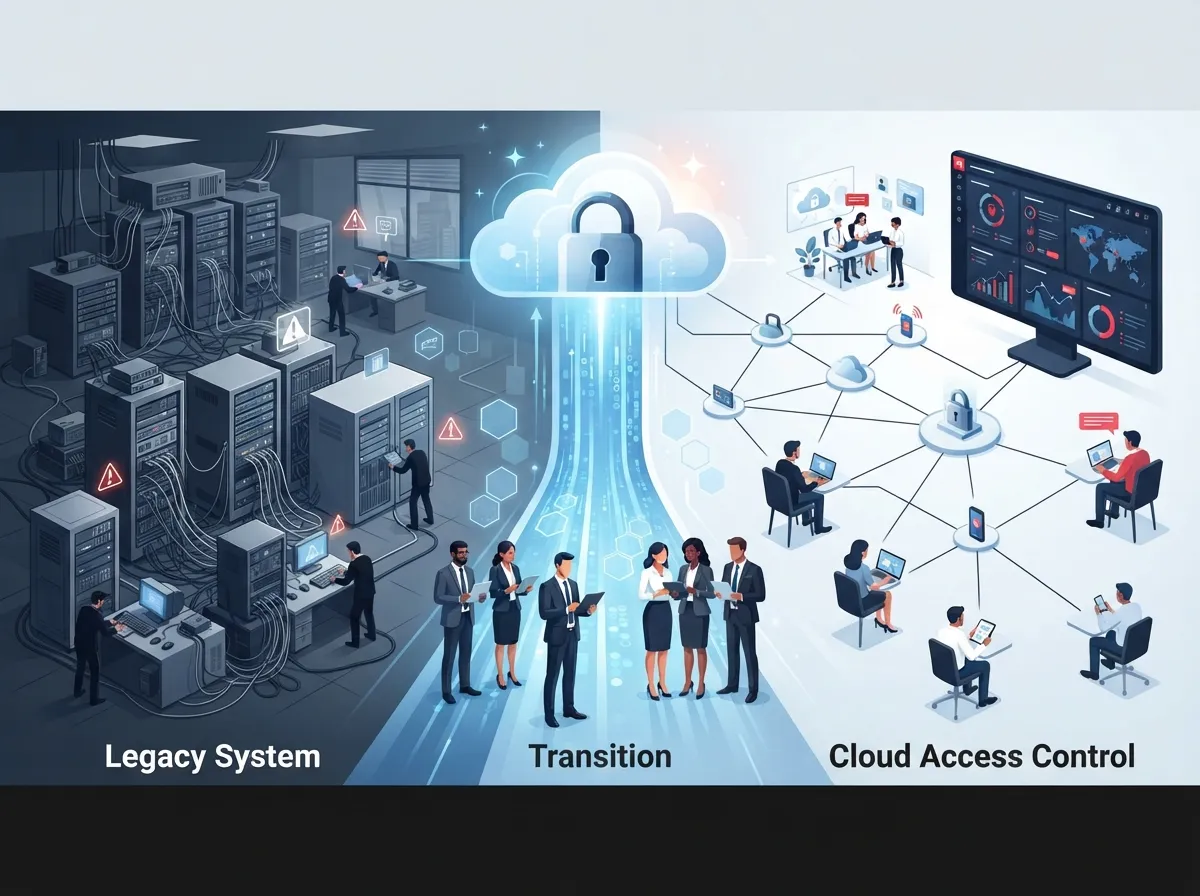
| Feature | On-Premises Access Control | Cloud Access Control |
|---|---|---|
| Management | Local server at each site | Single online platform |
| Updates | Manual, often delayed | Automatic, handled by provider |
| Remote Access | Limited or none | Full access from any device |
| Upfront Cost | Higher hardware investment | Lower, subscription-based |
| Scalability | Requires new hardware per site | Add sites with minimal setup |
| Maintenance | In-house IT team required | Provider manages backend |
For a single-location small business, on-premises might still make sense. But for large organizations juggling multiple buildings, the cloud model saves time, money, and a lot of headaches.
Features to Look for in Enterprise Cloud Access Control Software
Not all cloud access control platforms are created equal. When you’re shopping around, keep an eye out for these must-have features.
- Mobile credential support so employees can use their phones as keys
- Biometric options for extra-sensitive areas like data centers
- Integration capabilities with your existing security cameras and network systems
- Detailed reporting tools for compliance audits and internal reviews
- Role-based permissions so you can set different access levels for different employees
- AI-assisted monitoring that flags unusual activity automatically
Modernization priorities like these are exactly why demand keeps climbing. Enterprises want systems that do more than just unlock doors. They want tools that talk to each other and give a complete picture of what’s happening across every site.
Is Cloud Access Control Secure Enough for Enterprise Use?
This is probably the most common question we hear, and it’s a fair one. The short answer is yes, cloud access control is built with enterprise-grade security in mind. Providers typically use encrypted data transmission, redundant backups, and strict compliance standards to keep your information safe.
That said, security is only as strong as the setup behind it. This is where working with an experienced telecom and security partner really pays off. A well-configured system, paired with reliable Internet Service Provider connectivity and proper structured cabling, creates a foundation that’s tough to beat.
Steps to a Secure Rollout
- Audit your current access control setup and identify gaps
- Choose a platform that supports mobile credentials and biometrics
- Plan network infrastructure, including cabling and internet bandwidth
- Set up role-based permissions before going live
- Train staff on new procedures and mobile app usage
- Schedule regular reviews of access logs and system performance
The Market Outlook for 2026 and Beyond
If you’re wondering whether this is just a passing trend, the data says otherwise. The access control market overall was estimated at USD 4.09 billion in 2026, with a projected annual growth rate of 7.72% through 2031. One industry survey found that 60% of security professionals expect access control revenue to increase in 2026, while another 37% expect it to hold steady. That’s 97% of the industry expecting things to stay strong or grow.
Commercial organizations already account for 32.1% of cloud access control spending. That tells us businesses like yours aren’t just dabbling in this technology. They’re investing in it seriously, and for good reason.
How Ideal Solutions Provider Helps Large Organizations Get It Right
Managing cloud access control across multiple locations can feel overwhelming, especially if you’re also juggling phone systems, internet service, and networking needs. That’s exactly the kind of complexity we love solving.
As a Tampa-based telecom and IT partner with over 24 years of experience, we work with 35+ vetted suppliers to build access control solutions that actually fit your business. We handle the audit, the comparison shopping, and the installation, so you don’t have to become an expert overnight. Many of our clients also pair their access control rollout with upgrades to cloud video security systems or scalable access control systems designed for multi-location businesses.
A Few Things We See Often
- Companies overpaying for outdated on-premises hardware they no longer need
- IT teams stretched thin trying to manage separate systems at each location
- Security gaps caused by inconsistent access policies across sites
- Missed opportunities to bundle access control with existing telecom upgrades
We’ve found that 9 out of 10 companies we audit are either overpaying, underperforming, or both. Sound familiar? You’re definitely not alone.
Bringing It All Together
Cloud access control for large organizations isn’t just about locking and unlocking doors anymore. It’s about giving your team the tools to manage security across every location, from any device, with confidence. Whether you’re dealing with compliance requirements, multiple offices, or just tired of juggling different vendors, a cloud-based solution can make life a whole lot simpler.
We’d love to help you figure out what makes sense for your organization. You can check out our updates and behind-the-scenes content on Facebook, follow along on Instagram, or watch installation walkthroughs on YouTube. If you’re ready to talk specifics, feel free to reach out to our team for a free consultation, or simply give us a call to get started today.
FAQs
Q: What is cloud access control for large organizations?
A: It’s a system that manages building entry through an online platform instead of local servers. Large organizations love it because it lets them control access across many sites from one simple dashboard.
Q: How does cloud access control work in telecom and enterprise environments?
A: The provider hosts the technical backend, while your team manages who gets access and when. It’s often called Access Control as a Service, and it pairs nicely with other cloud tools your business already uses.
Q: What are the benefits of cloud-based access control for multi-site businesses?
A: You get centralized management, mobile credentials, real-time alerts, and easy scaling as you open new locations. No more juggling different systems at every building, which honestly feels like a relief.
Q: Is cloud access control secure for enterprise use?
A: Yes, cloud access control uses encrypted data, redundant backups, and strict compliance standards. Working with an experienced telecom partner helps make sure everything is set up correctly from day one.
Q: What is the market outlook for cloud-based access control in 2026 and beyond?
A: The outlook is strong, with growth forecasts ranging from low double-digit billions to nearly 48 billion dollars by 2034. Most security professionals expect revenue to grow or hold steady this year, so it’s a smart time to invest.