Key Takeaways
-
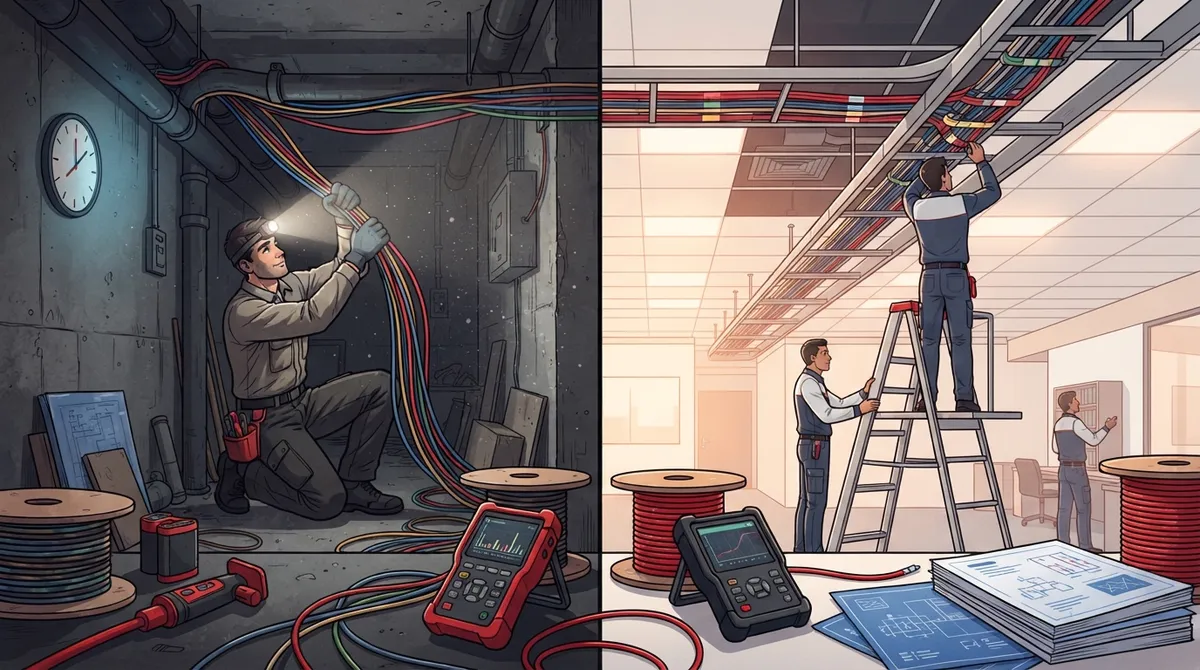
Labor typically accounts for 45-60% of cabling project costs and can range from 1.5-2.5 hours per drop in open spaces to 3-5 hours in difficult conditions like concrete walls or conduit work, making it the largest cost driver.
-
Complete quotes must specify cable category, testing method with certification reports, terminations, firestopping, labeling, and as-built documentation—comparing per-drop prices alone masks significant scope differences and hidden costs.
-
Plan for 20-30% more drops than current needs upfront since adding drops later is far more expensive than including them during initial installation.
-
After-hours work premiums can add 25-50% to labor costs, and building code requirements like plenum-rated cable and firestopping can substantially increase expenses—clarify these constraints before requesting bids.
Budgeting for a new office buildout or a network refresh can feel like trying to hit a moving target. One vendor says $150 per drop. Another says $350. Both sound reasonable, yet the gap between them is huge. So what is really going on?
The cost of network cabling installation depends on more than the cable itself. It depends on your building, your pathways, your testing needs, and how clearly your quote spells everything out. The good news is that once you know the key factors, comparing bids gets much easier.
Recent commercial pricing guides suggest a typical Cat6 drop runs about $125 to $300, and Cat6A about $175 to $400. Treat those numbers as planning benchmarks, not promises. Your real price can land well outside them. Let’s walk through the 10 factors that move your final number, so you can plan with confidence.
1. The Number of Drops You Need
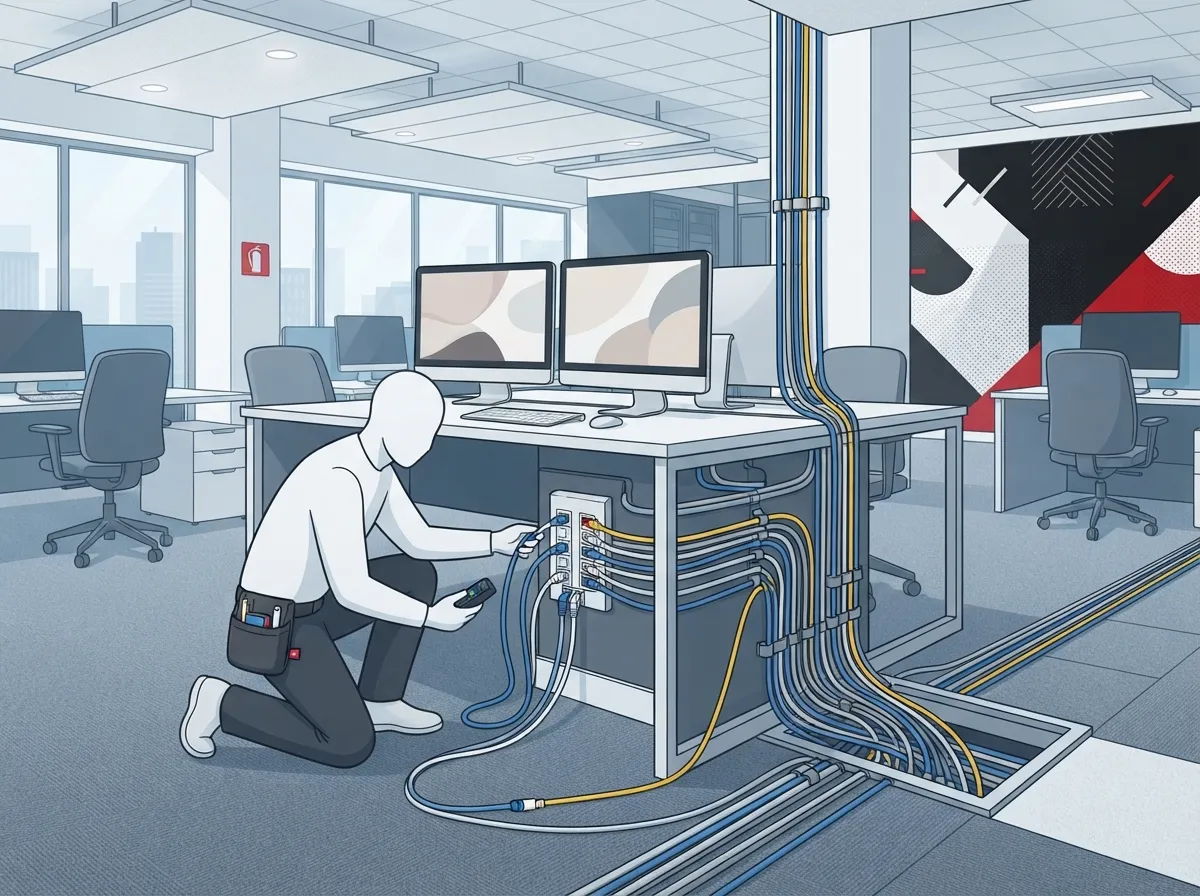
A “drop” is one cable run from a patch panel in your telecom room to a wall outlet at a work area. Most businesses budget their network cabling installation costs this way.
More drops usually means a lower price per drop, because crews can pull cable in bulk and reuse setup time. A 6-drop job in a small office often costs more per drop than a 60-drop job in a larger one.
Plan your drops by counting more than desks. Think about:
- Desk and workstation locations
- VoIP phones and conference room phones
- Wireless access points
- Security cameras and access control readers
- Printers, displays, and other devices
Adding drops now is far cheaper than going back later. If you want a deeper planning walkthrough, see how to plan network cabling installation in Tampa Bay.
2. Cable Category: Cat6, Cat6A, or Fiber
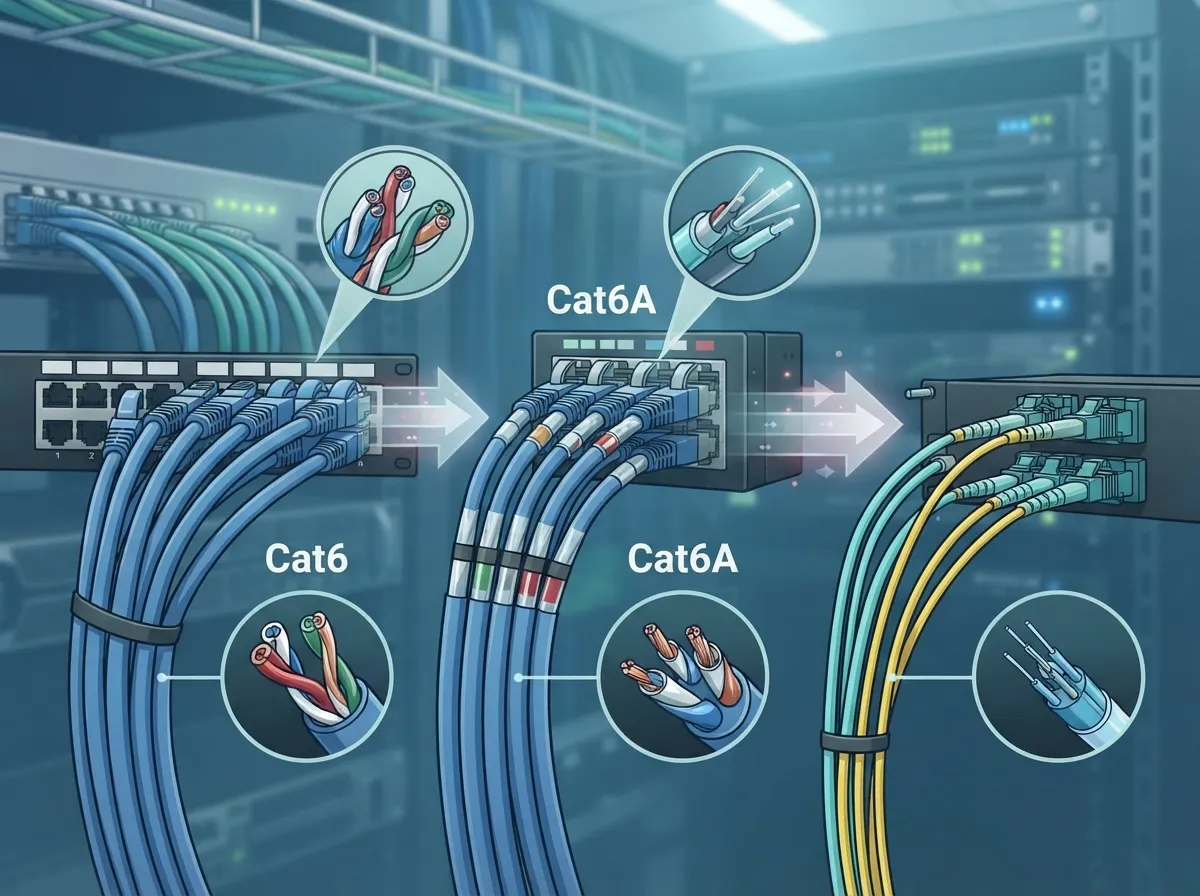
Your cable choice affects both material and labor costs. Cat6 is a common office baseline. Cat6A is thicker and often needs more pathway space and careful handling, so it usually costs more per drop.
Fiber is different. It is used for backbone links, longer distances, and heavy bandwidth needs. Fiber is priced by run or by project, not directly compared to a copper drop. Interior fiber runs can cost several hundred dollars each, while long, exterior, or splice-heavy jobs can cost far more.
| Cable Type | Typical Planning Range | Best For |
|---|---|---|
| Cat6 | $125 to $300 per drop | Standard office workstations, phones, Wi-Fi |
| Cat6A | $175 to $400 per drop | Higher-speed needs, future growth |
| Fiber | Priced per run or project | Backbone, long distances, large bandwidth |
These are guide ranges only. Your site conditions can push prices up or down. For a closer look, read how to choose between Cat6 and Cat6A for your office.
3. Labor and How Hard the Job Is
Labor is often the biggest piece of the bill. One 2026 commercial guide estimates labor at 45 to 60 percent of project cost, with materials at 30 to 45 percent. That is a vendor estimate, so your split may differ.
The same guide estimates about 1.5 to 2.5 technician-hours per drop in a standard open-ceiling space. That can rise to 3 to 5 hours when crews deal with conduit, concrete walls, or tricky routing.
Here is a simple way to think about it: the cable is cheap, but getting it from point A to point B is the real work.
4. Access Conditions and Pathways
Where your cable has to travel matters a lot. Open ceilings and ready-made pathways are the friendliest to your budget. Harder conditions add time and cost.
Things that tend to raise the price:
- Hard ceilings or finished drywall with no access
- Congested pathways full of existing wiring
- Masonry, concrete, or block walls
- New conduit that must be installed
- High ceilings that need lifts
- Occupied spaces with limited work hours
A walk-through before quoting helps a lot. A contractor who never sees your space can only guess.
5. After-Hours and Restricted Work Schedules
Many businesses cannot shut down for cabling work. A clinic, restaurant, or busy office may need the crew to work nights or weekends. That convenience can come with a premium.
One commercial pricing guide estimates after-hours labor premiums of roughly 25 to 50 percent. The real number depends on your contractor, your location, and your building rules. If your property manager limits work to certain hours, ask about this early so it does not surprise you later.
6. Building Codes and Cable Ratings
Safety rules affect which cable you can use and where. Plenum-rated cable may be required in air-handling spaces, and it usually costs more than standard jacketed cable. Your installer should check local codes and building requirements instead of assuming one cable type works everywhere.
Firestopping is another code-related item. When cable passes through a fire-rated wall or floor, the opening must be sealed properly. Make sure your quote says who handles it.
7. Testing and Certification
This is where bids can look similar but be very different. A basic continuity check only confirms that wires are connected. Certification testing measures whether the installed link meets performance requirements, and it produces a report you can keep.
Pricing for testing varies widely. One 2026 guide reports certification may add about $8 to $20 per drop, while another commercial guide gives a higher allowance of $25 to $50. That gap shows why you should ask exactly what is included.
Test reports help with troubleshooting and warranty claims later. They are well worth the small extra cost.
8. Termination, Patch Panels, and Labeling
A cable run is only useful if it is terminated cleanly at both ends. Some quotes include patch-panel ports, wall jacks, patch cords, and labeling. Others leave these out, which makes the bid look cheaper than it really is.
Good labeling and documentation save you real money down the road. When something breaks, a clear label means a tech can find the problem in minutes instead of hours. Ask for as-built documentation so you have a record of what was installed and where.
For more on what a full scope looks like, check out our guide to what structured cabling is for your business network.
9. Your Location and Local Labor Market
Where you are matters. Labor rates, permit requirements, and travel time all shift from city to city. A project in a busy metro area may cost more than the same work in a smaller market.
If you run a franchise or several offices, expect pricing to differ by site. A single point of contact can help you compare costs and keep standards the same across locations. Ideal Solutions Provider is a Tampa-based telecom and IT partner that works with businesses across Tampa Bay and nationwide, so it can help coordinate multi-site cabling without you juggling many vendors.
10. What the Quote Actually Includes
The biggest cost factor may be the quote itself. Two bids can have very different prices and still describe different jobs. Compare scope, not just the per-drop number.
A complete business proposal should spell out:
- Cable category and rating (for example, Cat6A plenum)
- Route and approximate length of each run
- Outlet and patch-panel terminations
- Pathways, conduit, and firestopping
- Testing method and delivery of test reports
- Labeling and as-built documentation
- Exclusions, warranty terms, and any after-hours charges
If a quote is missing several of these items, ask questions before you sign. A low price with a long exclusions list is rarely a bargain.
A Quick Budget Planning Checklist
Use this simple process to build a realistic estimate before you request bids:
- Count every device that needs a wired connection, then add 20 to 30 percent for growth.
- Decide your cable category based on speed needs and future plans.
- Note any hard ceilings, masonry walls, or tight pathways.
- Check your building rules for work hours and cable ratings.
- Ask each vendor to price testing, labeling, and documentation separately.
- Compare bids line by line, not just by the bottom number.
Standards also evolve. ANSI/TIA-568.2-E was published in October 2024, according to a 2026 industry source, so confirm the current requirements for your project with your cabling contractor. You can read more background on structured cabling if you want the big picture.
Why Your Cabling Choice Affects Everything Else
Cabling is the foundation for your phones, internet, cameras, and door readers. If it is weak, everything sitting on top of it suffers. Slow Wi-Fi, choppy calls, and dropped camera feeds often trace back to poor wiring, not the services themselves.
That is why many owners treat cabling as a long-term asset instead of a one-time expense. It can serve you for years, so quality work upfront often costs less than patching problems later. See how this ties together in 13 ways structured cabling supports VoIP and cameras.
It also helps to avoid common errors. Our list of 12 structured cabling mistakes that hurt your business is a good read before you hire anyone.
Ready to Get a Clear Price?
Getting a fair price starts with a clear scope and an honest walk-through. Ideal Solutions Provider brings over 24 years of experience and a network of 35+ vetted suppliers to help you plan, install, and support your cabling. You get one point of contact from consultation through ongoing support.
Contact us for a free consultation, or call us to talk through your project. You can also explore our structured cabling services to see what a full-scope proposal looks like. Follow along for tips on YouTube, too.
FAQs
Q: How much does it cost to install a network cable drop in a commercial office?
A: Recent commercial pricing guides put a standard Cat6 drop at roughly $125 to $300, with tough jobs reaching $400 or more. Your final price depends on access, cable rating, testing, and local labor, so treat these as planning numbers.
Q: What is included in the price of a network cabling drop?
A: It depends on the quote, which is why you should ask! A full price may cover the cable, terminations, patch-panel ports, testing, labeling, and documentation, but some bids leave items like patch cords or certification out.
Q: How much more does Cat6A cost than Cat6?
A: Cat6A is often budgeted around $175 to $400 per drop, compared to $125 to $300 for Cat6. The extra cost comes from thicker cable, more pathway space, and more careful installation.
Q: Is network cable certification testing included in an installation quote?
A: Not always. Basic continuity checks are not the same as certification, and testing prices vary by vendor. Ask for certification reports in writing so you have proof of performance and support for any warranty claims.
Q: How can a business compare structured cabling installation bids?
A: Line up each bid by scope, not just the per-drop price. Check cable type, routes, terminations, firestopping, testing, labeling, documentation, warranty, and any after-hours charges to see which bid truly offers the best value.