

Key Takeaways
-
Confirm fiber or broadband availability at your exact address, since providers' service is decided building by building, not citywide.
-
Add a backup connection from a different carrier so critical systems stay online if your main line fails; a single line is a single point of failure.
-
Keep operational technology (machine controllers) on a segmented network separate from everyday business IT to limit the spread of problems and improve security.
-
Choose structured cabling and enclosures rated for heat, dust, vibration, and moisture rather than office-grade materials.
-
Plan Wi-Fi with a site walk around metal racks, machines, and concrete, then test coverage before going live.
-
Compare total costs and written service-level terms (install fees, contract length, repair times), not just the monthly price, and prefer one partner to avoid juggling vendors.
If you run a plant, a warehouse, or a production floor in Tampa Bay, you already know that a dropped connection is never “just a glitch.” It can stop a line, delay a shipment, or leave a supervisor shouting into a dead phone. The good news? Picking the right manufacturing telecom solution in Tampa does not have to feel like a second job.
Tampa Bay is a busy place for makers. According to Tampa Bay EDC’s 2026 Community Overview (using Lightcast data), the region has more than 60,000 manufacturing jobs across 13 subsectors. Manufacturing employment grew 10.5% from 2020 to 2025. That growth means more machines, more sensors, more cameras, and more people who need to stay connected.
In this guide, we will walk through what a manufacturing telecom solution includes, how to plan one, and how to avoid common mistakes. We will keep it friendly and simple. Whether you are a small shop owner, an IT manager, or a multi-site operator, you will leave with a clear game plan.
What Is a Manufacturing Telecom Solution?
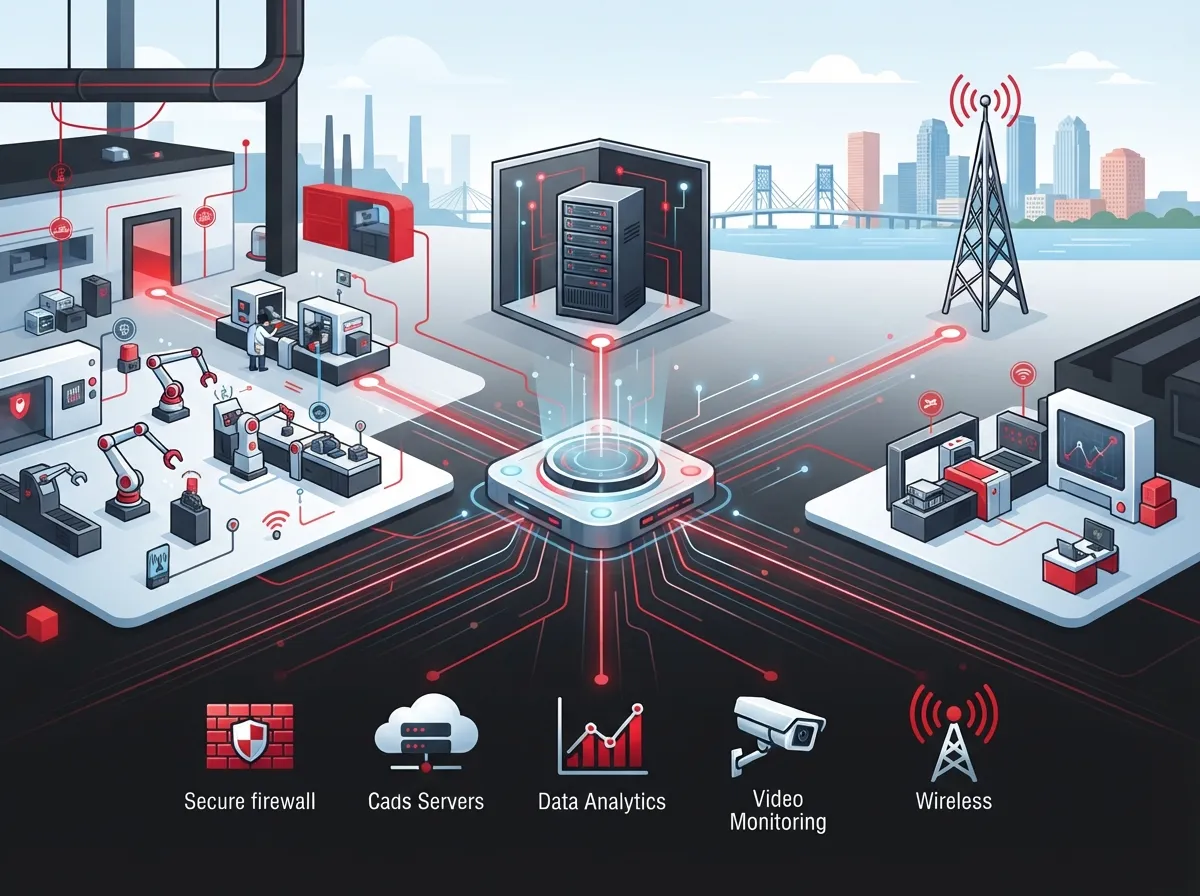
A manufacturing telecom solution is a bundle of communication and network services that connects your whole operation. Think of it as the nervous system of your facility. It links the shop floor, the front office, the warehouse, and the cloud tools your team uses every day.
A strong setup usually combines these pieces:
- Business-grade internet: fiber or other broadband that fits your site and uptime needs.
- Voice and VoIP: desk phones, mobile apps, messaging, and video in one system.
- Structured cabling: the wired backbone that carries your data, built to the right rating for your environment.
- Wi-Fi and networking: coverage planned around machinery, racks, and building materials.
- Security and access: cloud cameras and door access control.
- Ongoing support: someone to call when things go sideways.
The exact mix depends on your address, your production systems, and how much downtime you can stomach. That last part matters most, so we will come back to it.

Why Tampa Manufacturers Need Strong Connectivity
Modern manufacturing runs on data. Production monitoring, machine-to-machine messaging, inventory scanners, and quality checks all depend on a steady network. Add cloud software and video surveillance, and your bandwidth needs climb fast.
The local market backs this up. Tampa Bay EDC reports that computer and electronic product manufacturing is the region’s largest subsector, with 10,821 jobs. The Tampa MSA also accounts for 16% of Florida’s manufacturing employment. Newmark’s Q4 2025 report counted 76,569 manufacturing payroll jobs, up 1.5% year over year. These are labor-market figures, not telecom demand numbers, but they show a big, active community of plants that rely on good connections.
Here are a few ways connectivity shows up on a typical floor:
- Machines send status and output data to dashboards.
- Handheld scanners update inventory in real time.
- Cameras watch loading docks, entrances, and restricted areas.
- Office staff use cloud apps for orders, billing, and shipping.
- Managers call, text, and video chat with teams across the building or across the country.
When any one of these fails, the others often feel it. That is why a single plan beats a patchwork of separate fixes.
Core Components of a Tampa Manufacturing Telecom Setup
Business Internet and Redundancy
Your internet connection is the front door for every cloud tool you use. For many plants, fiber is the first choice because of its speed and steady performance. Still, availability is location-specific. A provider that serves the building next door may not reach yours, so always confirm service at your exact address.
Redundancy is the quiet hero here. A second connection, such as a backup circuit from a different carrier, can keep critical systems alive if the main line goes down. If you want to dig deeper, read our guide on why Tampa businesses need dedicated fiber internet, or compare options in fiber vs. cable business internet in Tampa.
Cloud VoIP for Plants and Warehouses
Hosted VoIP can tie together desk phones, mobile users, messaging, and video. That is handy when your supervisors walk the floor while your sales team sits in the office. Voice quality depends on four things: enough bandwidth, network prioritization, power continuity, and a tested failover plan.
Loud environments need extra thought. Many plants add headsets, paging, or ruggedized handsets so calls are clear over machine noise. For a closer look at costs and features, see how much a VoIP phone system costs for a Tampa business and which cloud-based phone system fits Tampa businesses.
Structured Cabling Built for the Environment
Cabling is not glamorous, but it is the backbone of everything else. In a factory, cable runs may face heat, dust, vibration, moisture, and electrical noise. That means choosing cable types and enclosures that are rated for the space. Good structured cabling follows clear standards, stays organized, and is documented so future changes are simple.
Our team covers this in detail in how to plan manufacturing facility cabling that lasts. You can also explore our structured cabling services for new builds and upgrades.
Wi-Fi and Network Design
Wi-Fi on a production floor is not the same as Wi-Fi in an office. Metal racks, large machines, and concrete walls can block or bounce signals. Plan coverage with a site walk, place access points with the right ratings, and test before you go live.
Another smart move is segmentation. Keep your operational technology (OT), like machine controllers, separate from your everyday business IT. That way, a problem in one area is less likely to spill into the other. For broader network planning, see what enterprise network infrastructure services in Tampa include.
Cloud Video Security and Access Control
Plants have valuable tools, inventory, and people to protect. Cloud cameras let you check feeds from your phone, search footage fast, and avoid old recorder boxes. Pair them with cloud-based door access so you can grant or remove entry in seconds. Learn more about setting up cloud video security for manufacturing, then see our cloud video security and cloud based access control options.
Quick Comparison: Which Connection Fits Your Plant?
| Option | Best For | Things to Check |
|---|---|---|
| Dedicated fiber | Plants with heavy cloud, video, and data use | Address-level availability, written service terms |
| Shared fiber or cable | Smaller shops with moderate needs | Peak-hour speeds, upload capacity |
| Fixed wireless or 5G backup | Secondary connection for failover | Signal strength at your site, data limits |
| SD-WAN over multiple links | Multi-site operators needing smart traffic routing | Design, monitoring, and support terms |
No single option wins every time. Many plants use two links together so one can cover for the other. If you want to compare further, check dedicated vs. shared fiber for Tampa businesses.
A Simple Step-by-Step Plan to Choose Your Solution
You do not need to be a network engineer to do this well. Follow these steps and you will be in good shape:
- Take inventory. List your applications, devices, cameras, phones, and machines that touch the network.
- Map the building. Mark where cabling runs, where Wi-Fi is weak, and where dead zones live.
- Check carrier options. Confirm which providers can serve your exact address and what speeds they offer.
- Set uptime and recovery goals. Decide how long you can be down and what must keep running.
- Compare total costs and support terms. Look past the monthly price. Ask about install fees, contract length, repair times, and written service-level terms.
- Test before you commit. Pilot the design, check call quality, and confirm failover works.
Not sure how much speed you need? Our post on choosing the right internet speed for your Tampa business can help you size things up. And if your phones are part of the plan, read what internet speed you need for VoIP in Tampa.
Common Mistakes Manufacturers Make
Even smart teams trip over the same few things. Here are the big ones to dodge:
- Assuming citywide coverage. Providers advertise broadly, but service is decided building by building.
- Skipping redundancy. One line means one point of failure.
- Ignoring the environment. Office-grade gear may struggle around heat, dust, and heavy machinery.
- Mixing OT and IT on one flat network. This makes troubleshooting and security harder.
- Juggling too many vendors. Separate bills, separate support lines, and lots of finger-pointing.
That last one is where a single point of contact helps. Our article on why to use one telecom partner in Tampa explains how this works in real life. You can also see common mistakes when connecting multiple business locations if you run more than one site.
How This Fits Different Tampa Teams
Every team has its own worries, so let us make this practical:
- Small shop owners: Start with reliable internet, a simple cloud phone system, and clean cabling. Keep it affordable and avoid juggling vendors.
- Mid-sized plants: Add backup connectivity, segmented networks, and cloud cameras with access control as you grow.
- IT managers: Look for one partner who can handle cabling, circuits, and security so you are not chasing five support desks.
- Office managers: Focus on easy phone setup, clear support, and fast fixes so the front office keeps humming.
- Franchise and multi-site operators: Choose scalable, cloud-based tools you can roll out the same way at every location.
Where Ideal Solutions Provider Fits In
Ideal Solutions Provider is a Tampa-based telecom and IT partner with over 24 years of experience. We work with 35+ vetted suppliers, so we can compare options across carriers instead of pushing a single one. That means one point of contact for your internet, cloud phones, cabling, networking, cloud security cameras, and access control, from the first consultation through install and ongoing support.
We can also audit what you have today. Many businesses find they are overpaying, underperforming, or both. If you want a head start, see how to set up telecom solutions for Tampa manufacturers, and follow us on YouTube for helpful walkthroughs.
Final Thoughts
A good manufacturing telecom solution in Tampa keeps your people talking, your machines reporting, and your site protected. Start by listing what you have, confirm what is available at your exact address, plan for backup, and choose support you can count on. Take it one step at a time, and the whole thing becomes far less scary.
Ready to talk it through? Contact us for a free consultation, or call us and let’s map out the right setup for your facility together.
FAQs
Q: What telecom services does a manufacturing business in Tampa need?
A: Most plants need business-grade internet, VoIP phones, structured cabling, reliable Wi-Fi, and ongoing support. Many also add cloud security cameras and access control. The right mix depends on your facility, your production systems, and how much downtime you can handle.
Q: How can I check fiber and broadband availability at my Tampa factory?
A: Availability is decided address by address, so never assume citywide coverage. A telecom partner can check serviceability for your exact location across several carriers at once. Always ask for written service-level terms before you sign.
Q: Is hosted VoIP reliable for a manufacturing plant or warehouse?
A: Yes, when it is set up well. Voice quality depends on enough bandwidth, network prioritization, power backup, and a tested failover plan. In noisy areas, headsets or rugged handsets can make calls much clearer.
Q: How should a manufacturer separate OT and business IT networks?
A: Use network segmentation so machine controllers and production systems sit apart from office computers and guest devices. This limits the spread of problems and makes security easier to manage. A network designer can map the right boundaries for your plant.
Q: What should I compare when choosing a Tampa business telecom provider?
A: Look at address-level availability, total cost, uptime commitments, repair times, and who you call for help. A provider that works with many carriers can compare options for you and handle everything through one point of contact.





