

Key Takeaways
-
Managed SD-WAN can ease the burden on lean IT teams, since providers often handle setup, 24/7 monitoring, and policy changes, while DIY suits teams wanting full control.
-
SD-WAN uses application-aware routing to send voice and video over the healthiest link in real time, helping calls stay clear even when one connection slows down.
-
Before signing, confirm whether bandwidth is bundled or billed separately, what SLAs cover, and which security features are included, since SD-WAN alone is not a complete security solution.
-
SD-WAN is a networking layer, while SASE adds cloud-delivered security like secure web gateways and zero-trust access; check which one a provider is actually quoting.
-
SD-WAN works on top of your existing connections, so weak underlying internet links cannot be fixed by software alone; verify your fiber, broadband, or wireless options first.
-
Savings are not guaranteed; they depend on your current circuit costs, application needs, and design, so request a side-by-side review of your actual setup before committing.
Picture this: your Tampa office is on a video call with a client, your cloud software is syncing, and someone just started a huge file upload. Suddenly, the call freezes. Sound familiar? If you run a business with more than one location, or you rely heavily on cloud tools, you have probably felt that pain. That is where SD-WAN services come in, and the good news is they are easier to understand than the name suggests.
In this friendly guide, we will walk through what SD-WAN services are, how they work, what they can (and cannot) do for your business, and what to compare before you sign anything. Whether you are a small business owner, an IT manager, an office manager, or a franchise operator with sites across Tampa Bay and beyond, you will leave with a clear picture. Grab a coffee and let’s dig in!
What Are SD-WAN Services, in Plain English?
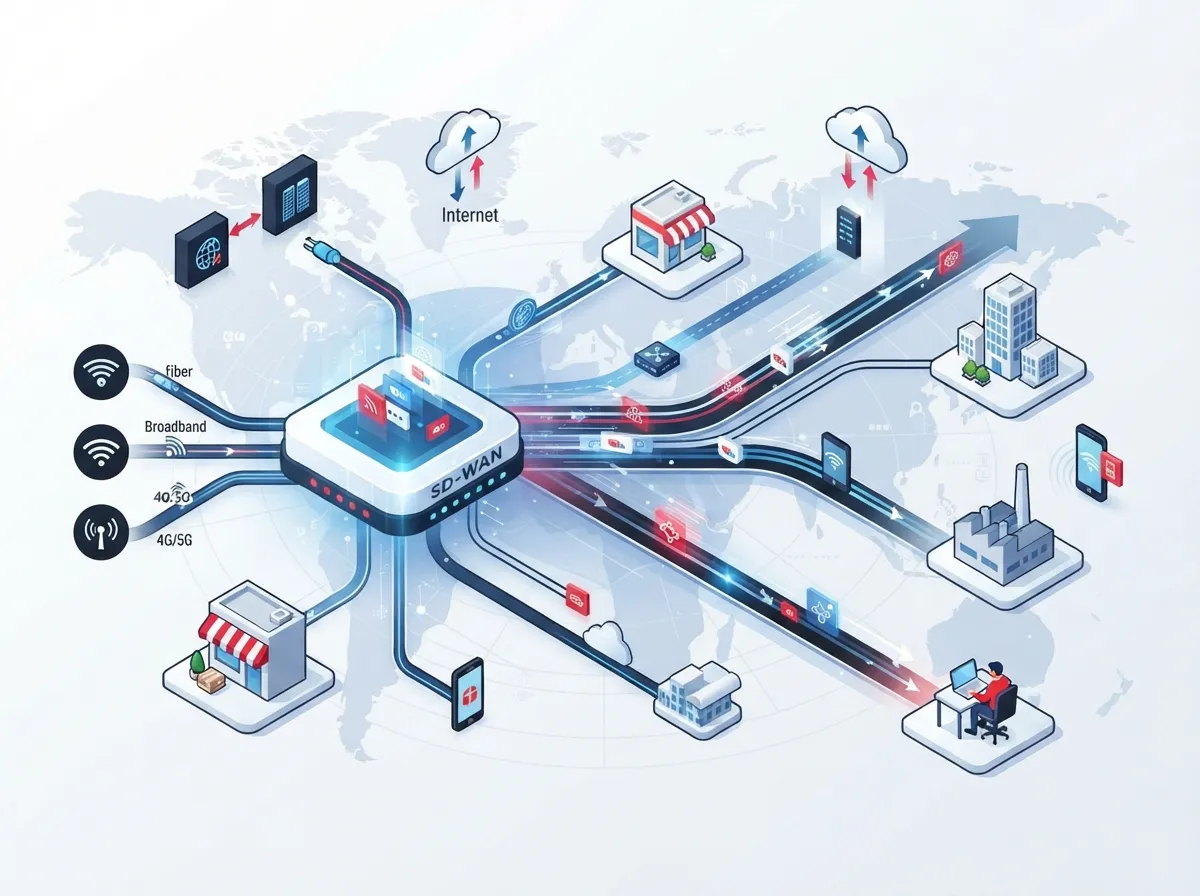
SD-WAN stands for software-defined wide area network. That is a mouthful, so here is the simple version: SD-WAN services use smart software to connect your business sites, cloud apps, data centers, and remote users over the internet connections you already have or choose to add.
Think of it like a GPS for your business traffic. A regular network sends data down one fixed road, even if there is a traffic jam. SD-WAN checks the road conditions in real time and picks the best route for each type of traffic. Your video calls get the fast lane. Your big file backups can take the scenic route.
SD-WAN is an overlay. That means it sits on top of your existing connections, which can include:
- Broadband internet (cable or fiber)
- Dedicated internet access
- MPLS circuits
- Ethernet links
- LTE or 5G wireless backup
You do not have to rip everything out. You can mix and match links, and the software decides how to use them based on rules you set.
How Does SD-WAN Work Day to Day?
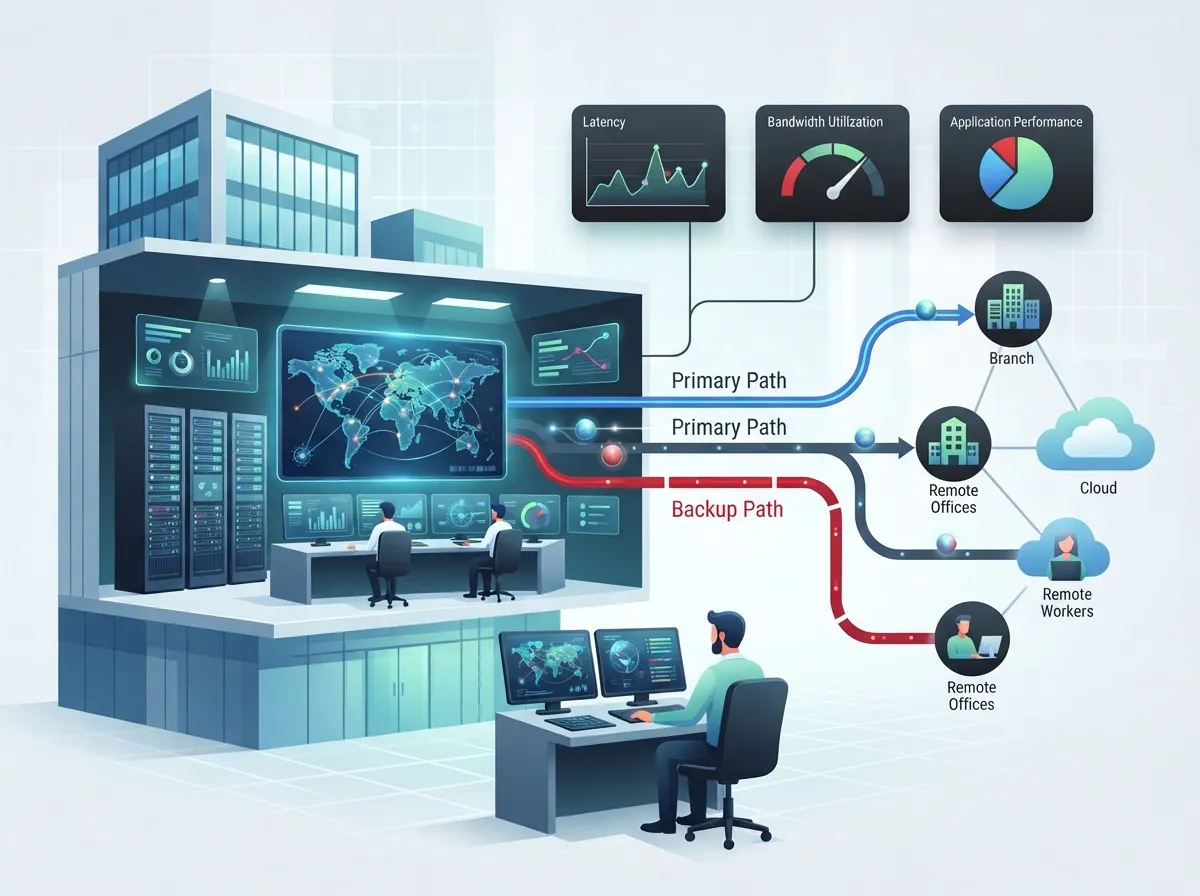
Let’s break it down into simple steps. Here is how a typical SD-WAN setup works:
- Edge devices are installed. Each location gets a small device (or software) that connects to your internet links.
- Policies are set centrally. You or your provider decide which apps matter most, such as VoIP, video, or your point-of-sale system.
- The network watches link quality. It keeps an eye on speed, delay, and packet loss across every connection.
- Traffic is steered automatically. If one link slows down, the system moves important traffic to a better one.
- Everything is monitored from one place. A central dashboard shows how each site is doing.
This is called application-aware routing, and it is one of the biggest reasons businesses look at SD-WAN. It means your network responds to what is happening right now, not what you guessed would happen when you first set it up.
What Features Do SD-WAN Services Usually Include?
Every provider packages things a little differently, but most SD-WAN services share a common set of capabilities. Here are the ones you will see most often:
- Centralized management: Configure and monitor every site from one screen.
- Application-aware routing: Send each type of traffic over the best available path.
- Quality of service (QoS): Prioritize voice and video so calls stay clear.
- Automatic failover: If one link drops, traffic shifts to another.
- Traffic segmentation: Keep guest Wi-Fi, payment systems, and office traffic separate.
- Performance visibility: See which sites and apps are having trouble.
These features add up to a network that is more flexible and easier to manage, especially when you have several offices, retail shops, or franchise locations to keep running smoothly.
Managed SD-WAN vs. DIY SD-WAN: Which Is Right for You?
This is one of the most common questions we hear, and it is a great one. With DIY SD-WAN, your own team buys the equipment, designs the policies, and handles troubleshooting. With managed SD-WAN, a telecom provider takes care of much of that work for you.
A 2025 Frost Radar report on managed SD-WAN in North America found that 92% of surveyed organizations prefer managed or co-managed SD-WAN. The report pointed to service level agreements, simpler vendor management, and faster restoration as reasons. Keep in mind that is a survey finding, not a rule for everyone, but it shows where many businesses are leaning.
| Factor | Managed SD-WAN | DIY SD-WAN |
|---|---|---|
| Setup and installation | Handled by the provider | Handled by your IT team |
| Monitoring | Often 24/7 by the provider | Your team monitors |
| Changes and updates | Requested through the provider | Done in-house |
| Internal skills needed | Lower | Higher |
| Vendor management | Simplified, fewer contacts | More vendors to juggle |
| Best fit | Lean IT teams, multi-site businesses | Large IT teams wanting full control |
If you do not have a big IT department, managed SD-WAN often feels like a relief. If you have a skilled team that loves tinkering, DIY may give you more control. There is no wrong answer, just the one that fits your people and your budget.
What Does a Managed SD-WAN Service Typically Cover?
Scope varies, so always ask for the details in writing. A managed SD-WAN offering from a telecom provider may include:
- Edge equipment and software
- Connectivity procurement (the internet circuits themselves)
- Installation and configuration
- 24/7 monitoring and troubleshooting
- Ongoing changes and policy updates
- Service level agreements (SLAs)
Here is a detail that trips people up: bandwidth may be bundled into one monthly charge, or it may be billed separately. Two quotes can look very different until you line up exactly what is included. That is why a side-by-side comparison matters so much.
What Are the Real Benefits of SD-WAN Services?
SD-WAN is not magic, but it can bring some very real wins when it is designed well. Here are the benefits businesses often look for:
- More flexible connectivity: Use a blend of fiber, broadband, and wireless instead of one rigid setup.
- Better application performance: Prioritize the apps your team depends on every day.
- Simpler multi-site operations: Manage many locations from a single dashboard.
- Less reliance on MPLS: Where lower-cost internet links are a good fit, you may not need as much expensive private circuit capacity.
- Stronger resilience: Automatic failover helps keep sites online when a link has trouble.
A quick and honest note: savings and performance depend on your current network, circuit prices, application needs, and how the service is designed. Anyone promising guaranteed savings without looking at your setup is skipping an important step. If you want to dig deeper into the upside, our post on 6 SD-WAN benefits every business owner should know goes into more detail.
Can SD-WAN Improve VoIP, Video, and Cloud Apps?
It can help, and this is a big reason many Tampa businesses explore it. Voice and video calls are sensitive to delay and dropped packets. With QoS and application-aware routing, SD-WAN can give those calls priority and move them to a healthier link when needed.
That said, SD-WAN works best when the underlying connections are solid. If your internet links are weak, software alone cannot fix everything. If you are planning a phone upgrade, it is worth checking out what internet speed you need for VoIP in Tampa and how a cloud-based phone system fits into the bigger picture.
Is SD-WAN a Complete Security Solution?
Here is where we want to be extra clear, because it is a common mix-up. SD-WAN is not automatically a complete cybersecurity solution. Some services include security features, while others offer them as add-ons or expect you to supply them separately.
Before you sign, ask exactly which of these are included and who is responsible for each:
- Encryption of traffic between sites
- Next-generation firewall
- Intrusion prevention
- Network segmentation
- Cloud-delivered security tools
Getting this wrong can leave gaps you did not know you had. If security is a top concern, our guide on how to choose a data security service for business telecom is a helpful companion read.
SD-WAN vs. SASE: What Is the Difference?
You may see the term SASE (secure access service edge) pop up during your research. SD-WAN and SASE are related, but they are not the same thing. SD-WAN is the networking piece. SASE combines SD-WAN with cloud-delivered security services, such as secure web gateways and zero-trust network access.
In other words, SD-WAN can be the networking foundation for SASE. When you compare offers, confirm whether you are being quoted SD-WAN alone or a broader SASE package, because the price and the protection can look very different.
SD-WAN vs. Traditional WAN and MPLS
Traditional WANs rely heavily on private circuits like MPLS, which are known for reliability but can be pricey and slower to deploy. SD-WAN gives you more choices and more control. Many businesses use a hybrid approach, keeping some MPLS where it makes sense and adding internet links alongside it.
| Feature | Traditional WAN / MPLS | SD-WAN |
|---|---|---|
| Connection types | Mostly private circuits | Broadband, fiber, MPLS, LTE, 5G |
| Traffic routing | Fixed paths | Dynamic, policy-based |
| Management | Often site by site | Centralized |
| Deployment speed | Can be slow | Often faster |
| Cost flexibility | Less flexible | More options, depends on design |
If you are weighing the two, take a look at SD-WAN vs. MPLS: what Tampa businesses need to know and SD-WAN vs. traditional WAN for a closer comparison.
Who Benefits Most From SD-WAN Services?
SD-WAN is not for everyone, and that is okay. It tends to shine for:
- Franchise operators with several locations that all need consistent, secure connections.
- Mid-sized enterprises with branch offices, cloud tools, and growing remote teams.
- IT managers who want one dashboard and fewer vendors to chase.
- Office managers who just want the internet and phones to work without constant drama.
- Growing small businesses adding a second or third site.
If you only have one small office with a simple setup, a solid business internet connection may be all you need. In that case, our guide to high-speed internet for business tips is a better starting point.
What Should You Compare When Choosing an SD-WAN Provider?
Choosing a provider can feel overwhelming, so here is a simple checklist. Ask every provider these questions and compare the answers side by side:
- What exactly is included? Equipment, bandwidth, installation, monitoring, and support.
- Is bandwidth bundled or billed separately? This can change your real monthly cost.
- What are the SLAs? Look at uptime, response times, and restoration targets.
- What security features come standard? Know what is included, optional, or missing.
- Is it SD-WAN only or part of SASE? Make sure you are comparing apples to apples.
- How are changes handled? Find out how fast requests are completed and who does them.
- What are the contract terms? Check length, renewal terms, and early termination fees.
- Can they support your underlay links? Confirm they can work with fiber, broadband, and wireless options at your addresses.
That last point is a big one. SD-WAN is only as good as the connections underneath it. Our posts on how to choose SD-WAN solutions for Tampa Bay businesses and how to choose a managed service provider for your business telecom can help you sort through the options.
How Big Is the SD-WAN Market, and Why Does It Matter?
Growth tells us something about where networking is headed. MarketsandMarkets estimates the SD-WAN market at USD 27.34 billion in 2026, with a forecast of USD 71.42 billion by 2032, which is a 17.4% compound annual growth rate. These are analyst estimates, not audited totals, but they point to a clear trend: more and more businesses are moving toward software-defined networking.
For you, that means more provider choices, more features, and, sometimes, more confusion. Having a guide who knows the landscape can save you time and money.
Why Work With a Single Point of Contact?
Here is where we can help. Ideal Solutions Provider is a Tampa-based telecom and IT partner with more than 24 years of experience and relationships with 35+ vetted suppliers. Instead of calling five different carriers and decoding five different quotes, you get one friendly team that compares options, reviews your current setup, and recommends what fits your business, not a sales quota.
That same team handles business network solutions, business high speed internet services, structured cabling services, VoIP, and security, so everything works together. Good structured cabling inside your building matters just as much as the connections coming into it. And if you are comparing carriers, it helps to understand how each Internet Service Provider handles business circuits and support.
Curious how we work day to day? You can see more on our YouTube channel or follow along on Facebook.
Ready to Find the Right SD-WAN Setup?
SD-WAN services can make your network more flexible, more resilient, and easier to manage, especially if you run multiple locations or depend on cloud apps and VoIP. The key is a design that matches your real needs, a clear understanding of what is included, and honest answers about security and pricing.
If you would like a second set of eyes on your current setup, we would love to help. Contact us for a free consultation, or call us to talk it through. We will review what you have, compare options across our vetted suppliers, and show you where you might be overpaying or underperforming. No pressure, just helpful answers from a team that genuinely enjoys making telecom simpler.
FAQs
Q: What are SD-WAN services for businesses?
A: SD-WAN services use smart software to connect your business sites, cloud apps, and users over connections like broadband, fiber, MPLS, and wireless. The software picks the best path for each type of traffic, so important things like calls and cloud tools run more smoothly. Many telecom providers offer it as a managed service with equipment, monitoring, and support.
Q: Can SD-WAN reduce business network costs?
A: It can, especially if lower-cost internet links can replace some expensive private circuits. But savings really depend on your current network, circuit prices, and how the service is designed. A friendly side-by-side review of your setup is the best way to know what is realistic for you.
Q: Does SD-WAN improve VoIP, video conferencing, and cloud application performance?
A: Yes, it often can. Features like application-aware routing and quality of service give voice and video priority and move them to healthier links when needed. Just remember that SD-WAN works best on top of solid internet connections, so the underlying links still matter.
Q: What is the difference between SD-WAN and SASE?
A: SD-WAN is the networking piece that connects your sites and users. SASE combines SD-WAN with cloud-delivered security tools like secure web gateways and zero-trust network access. They are related but not interchangeable, so always check which one a provider is quoting.
Q: What security features should a business SD-WAN service include?
A: Look for encryption, firewall capabilities, intrusion prevention, network segmentation, and cloud security options. SD-WAN is not automatically a full security solution, so ask exactly what is included, what is optional, and who is responsible for each piece.





