

Key Takeaways
-
Published 2026 small-business fiber plans typically run about $50 to $150 per month, but these are indicative ranges and the real price depends on your exact service address.
-
Always get an itemized quote listing monthly, one-time, equipment, taxes, and static IP charges, since the advertised monthly rate often excludes installation and fees.
-
Compare the full contract cost (monthly rate times term length plus one-time fees) and check the post-promotion renewal rate, which can be far higher than the introductory price.
-
Standard shared business fiber suits most small offices, while Dedicated Internet Access (DIA) with reserved bandwidth and stronger uptime guarantees can cost substantially more and is usually custom-quoted.
-
Compare service terms such as uptime commitments, repair response times, and support hours alongside price, since a cheaper plan with slow repairs can cost more during an outage.
-
Confirm whether a plan offers symmetrical speeds (matching upload and download), which matters for cloud backups, video calls, and large file transfers.
Shopping for fiber for your office can feel a bit like ordering coffee in a foreign language. Everyone quotes a different number, and none of them seem to mean the same thing. Good news: once you know what drives business fiber internet pricing, the whole process gets much easier.
In 2026, published small-business fiber plans run from about $50 to $150 per month. Dedicated Internet Access (DIA) can cost far more. But the advertised monthly price is only part of the story. Installation, equipment, contract length, and renewal rates all shape what you really pay.
This guide walks you through typical price ranges, the hidden line items, and a simple way to compare quotes. Whether you run a single Tampa storefront or a multi-site franchise, you will leave with a clear plan. Think of it as a friendly chat with someone who has seen a lot of fiber quotes.

How Much Does Business Fiber Internet Cost in 2026?
Here is the short answer. Standard business fiber for small offices typically lands between $50 and $150 per month. Entry-level plans sit near the bottom of that range. Gigabit plans sit near the top. Treat these as indicative ranges, not guaranteed quotes.
Several published 2026 examples show how wide the spread can be:
| Example Plan | Speed | Published Monthly Price |
|---|---|---|
| AT&T Business Fiber | 300 Mbps | $60 |
| AT&T Business Fiber | 1 Gbps | $140 |
| Google Fiber Business | 1 Gbps | $100 |
| Verizon Fios Business | 1 Gbps | $144 |
| Frontier Business Fiber 500 | 500 Mbps | $49.99 (offer conditions apply) |
Please remember that these are advertised examples. Prices and eligibility vary by address, and promotions change often. Always confirm the current price, eligibility, and contract terms directly with the provider before you decide.
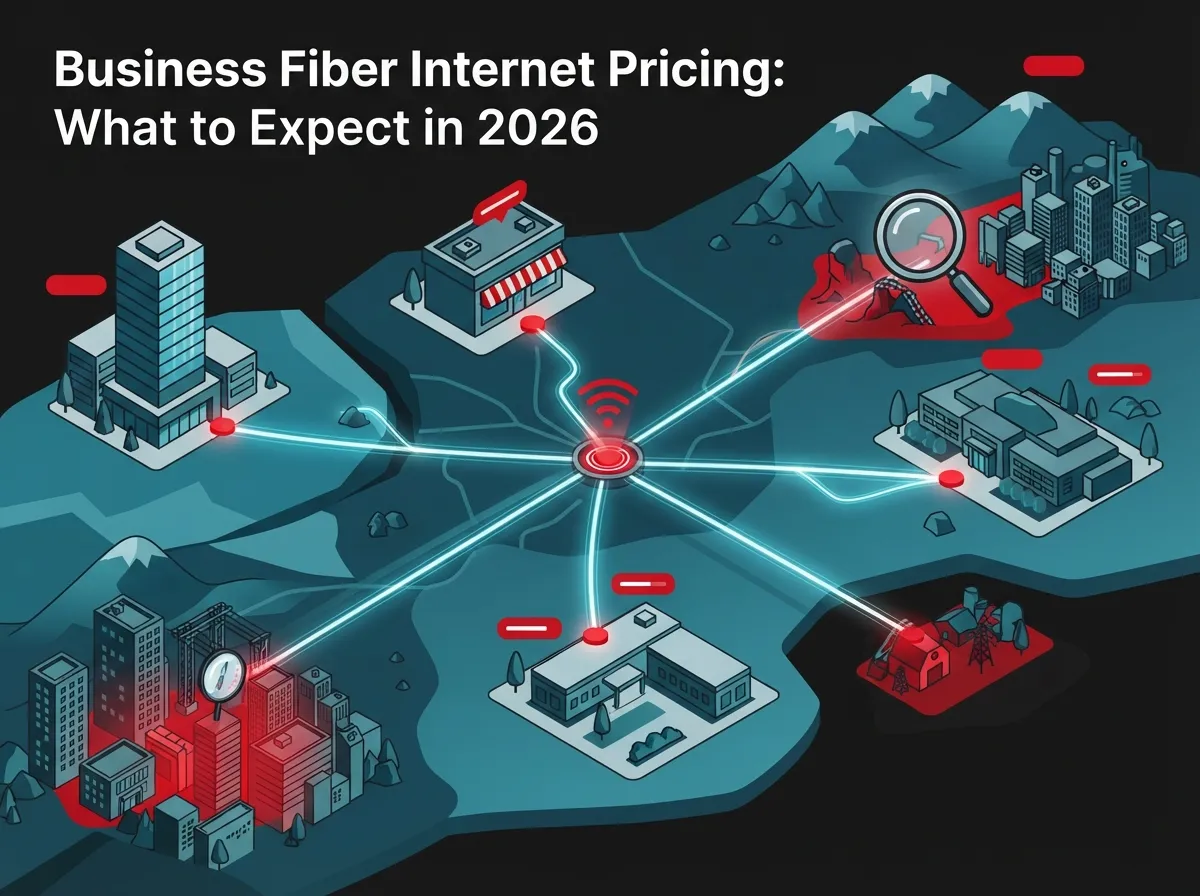
Why Your Address Changes Everything
Here is the part that surprises many owners. Business fiber pricing depends heavily on your service address. A price you see online is not a universal quote.
Why does location matter so much? Three reasons:
- Provider footprints differ. Not every carrier has fiber on every street.
- Speed tiers vary. One building may offer gigabit while the next block tops out lower.
- Fiber may not reach your building yet. If the line stops at the street, someone has to pay for construction.
That last point can swing a quote by a lot. A building that is already lit with fiber is a quick, low-cost install. A building that needs new construction can add significant one-time charges.
The good news is that you do not have to guess. You can find business internet providers by address and see what is truly available at your door before you fall in love with any one price.
Standard Business Fiber vs. Dedicated Internet Access
This is where pricing really splits. Standard business fiber and Dedicated Internet Access (DIA) are two different products, even though both ride on fiber.
Standard (Shared-Access) Business Fiber
This is the plan most small offices buy. It is fast and fairly affordable. Some plans offer symmetrical speeds, meaning upload matches download, but you should confirm that in the plan terms. It is a great fit for cloud apps, video calls, and cloud backups.
Dedicated Internet Access (DIA)
DIA gives you bandwidth reserved for your business. It usually comes with stronger service commitments, such as uptime guarantees and faster repair response. It is typically custom-quoted and can cost substantially more than standard fiber.
A 2026 enterprise-fiber article cited a Lightyear DIA dataset with median 36-month monthly recurring charges of roughly:
- $492 per month for 100 Mbps
- $901 per month for 1 Gbps
- $1,987 per month for 10 Gbps
Those are dataset benchmarks, not quotes. Location and construction needs can move DIA pricing a lot. If you want a deeper look, our guide on dedicated internet access pricing breaks it down further, and this explainer on dedicated vs. shared fiber can help you choose.
The Hidden Costs Behind the Monthly Price
A low monthly number looks lovely on a flyer. But the total cost of business fiber can include more than that one line. Ask every provider to itemize recurring and one-time charges.
Watch for these common extras:
- Installation or construction fees. These may be waived, reduced, or very high depending on your building.
- Equipment. Routers, modems, or an optical network terminal may be included or rented.
- Managed router service. Some providers charge extra to manage the device for you.
- Static IP addresses. Handy for hosting, VPNs, and some phone systems, but often an added monthly fee.
- Taxes and fees. These can add a noticeable bump to your bill.
None of these are scary on their own. They just need to be visible. A quote that hides them is not really a quote.
Contracts, Promotions, and the Renewal Rate Trap
Here is a mistake we see often. A business signs up for a great introductory price, then gets a shock a year later.
Contract length, promotions, and discounts all affect the effective price. Autopay or paperless-billing discounts, bundled mobile service, and price-lock guarantees can lower what you pay. But the post-promotion rate is the number that matters long term.
Before you sign, ask these questions:
- What is the price after the promotion ends?
- How long is the contract term?
- Is there an early termination fee?
- Does the price lock for the full term?
- Which discounts depend on autopay or bundles?
Then do some simple math. Multiply the monthly price by the contract length, add one-time fees, and compare the full-term total across quotes. It is a small step that saves a lot of headaches. Our rundown of smart steps for switching telecom providers covers this in more detail.
Speed, Symmetry, and What You Actually Need
More speed costs more, so it pays to size your plan honestly. Many small offices do just fine on a mid-tier plan. Heavy cloud users and video-intensive teams may want gigabit.
One feature worth understanding is symmetrical speed. Some business fiber plans offer equal upload and download speeds, which helps with cloud backups, video calls, large file transfers, and hosting. Always confirm the exact speed and whether it is symmetrical in the plan terms. If this is new to you, read what symmetrical business internet is and whether you need it.
Your other tech matters too. Cloud security cameras and VoIP phones both lean on a steady connection. If cameras are in your plans, this guide to internet speeds your cloud cameras actually need will help you avoid overpaying or underbuying.
How to Compare Business Fiber Quotes Step by Step
Comparing quotes does not have to be painful. Use this simple process to line them up side by side.
- Confirm availability. Check which providers have fiber at your exact address.
- Match the speed. Compare plans at the same download and upload speeds.
- Ask for an itemized quote. Get monthly, one-time, equipment, and static IP charges in writing.
- Check the contract. Note term length, renewal pricing, and cancellation fees.
- Compare service terms. Look at uptime commitments, repair response, support hours, and service credits.
- Calculate the full-term cost. Add everything up over the whole contract.
Notice that step five is about service, not price. A cheaper plan with slow repair times can cost you more during an outage than you saved in a year. Uptime commitments, repair response, and backup connectivity differ between standard fiber and enterprise offerings. If downtime would hurt, consider automatic internet failover as a safety net.
Is Dedicated Fiber Worth the Extra Money?
It depends on what a bad day costs you. If your team lives in the cloud, runs voice and video all day, or hosts customer-facing systems, an outage can cost far more than the price gap between standard and dedicated service.
Dedicated fiber may be worth it when:
- Downtime directly costs you sales or patient or client trust.
- You need guaranteed bandwidth, not shared capacity.
- You want stronger written service-level commitments.
- You connect multiple locations or run hosted systems.
Standard business fiber may be plenty when you have a small team, a lighter workload, and some tolerance for the occasional hiccup. For Tampa-area owners weighing this exact choice, these guides on dedicated fiber for small businesses in Tampa and choosing the right fiber internet for your business are good next reads.
Tips for Small Businesses, IT Teams, and Franchises
Different businesses care about different things, so here is a quick cheat sheet.
Small Business Owners and Office Managers
Focus on a clear, itemized price and a plan that matches your real usage. Avoid paying for speed you will never touch. Ask who you call when something breaks.
IT Managers and Mid-Sized Enterprises
Dig into service-level terms, static IP options, and how the circuit fits your wider network. Fiber is only one layer. Your structured cabling inside the building needs to keep up, or you will bottleneck a fast connection. Read about gigabit cabling capabilities to make sure your wiring is ready.
Franchise Operators
Pricing varies by address, so every location may quote differently. Standardizing across sites takes extra legwork. A partner who can shop many carriers at once can save serious time. See our take on multi-location telecom solutions for ideas.
How Ideal Solutions Provider Can Help
Comparing fiber quotes carrier by carrier takes time most owners do not have. That is where a single point of contact helps. Ideal Solutions Provider is a Tampa-based telecom and IT partner with more than 24 years of experience and relationships with 35+ vetted suppliers.
Instead of pushing one carrier, the team compares options across providers, audits your current setup, and lays out side-by-side comparisons so you can see where you may be overpaying. They also handle installation and ongoing support, so you are not juggling vendors. You can explore their business high speed internet services to see what is possible, or read 12 ways to find the best business internet deal in Tampa for more savings ideas.
For a quick look at how fiber compares with other connection types, the general idea of an Internet Service Provider is a handy starting point, and you can follow along with our YouTube channel for practical telecom tips.
Final Thoughts: Price Is Just the Starting Point
Business fiber internet pricing is not one number. It is a mix of your address, your speed, your contract, and the service promises behind the plan. Standard fiber often lands between $50 and $150 per month, while DIA is custom-quoted and can run much higher.
The smartest move is to compare the full contract cost, not just the headline rate. Ask for itemized quotes, check renewal pricing, and weigh service terms alongside price. Do that, and you will make a choice you feel good about for years.
Ready to see real numbers for your address? Contact our team for a free review of your current setup, or call us at 813-388-4935 and we will walk you through your options in plain English.
FAQs
Q: How much does business fiber internet cost per month?
A: Published small-business fiber plans in 2026 typically range from about $50 to $150 per month, from entry-level to gigabit speeds. Your real price depends on your address, the provider, promotions, and contract terms, so treat that range as a guide and not a guaranteed quote.
Q: What is the difference between business fiber and Dedicated Internet Access (DIA)?
A: Standard business fiber uses shared-access capacity and is usually priced as a set plan. DIA gives you reserved bandwidth with stronger service commitments, and it is typically custom-quoted at a much higher price. If an outage would cost your business a lot, DIA may be worth the extra.
Q: Are installation, equipment, and static IPs included in business fiber pricing?
A: Not always, and that is why itemized quotes matter. Installation or construction, routers, managed router service, static IPs, taxes, and fees may all be added on top of the monthly rate. Ask each provider to list recurring and one-time charges in writing.
Q: How should I compare business fiber quotes from different providers?
A: Match the speeds first, then compare the full-term cost, including one-time fees, equipment, and the post-promotion rate. Also look at uptime commitments, repair response, and support availability. A slightly higher price with better service can save you money during an outage.
Q: Is business fiber internet symmetrical?
A: Many business fiber plans offer symmetrical speeds, meaning upload matches download, which helps with video calls, cloud backups, and file transfers. This is not guaranteed on every plan, so confirm the exact speeds in the plan terms before you sign.





