
Key Takeaways
-
Private business networks come in three main forms: private WAN (MPLS, VPN, SD-WAN), private cellular (LTE/5G) for a defined site, or a hybrid combining both to fit your needs.
-
A private network is not automatically secure: MPLS isolates traffic but does not encrypt it, so add encryption, access controls, segmentation, monitoring, and redundancy on purpose.
-
Match the option to your situation: internet plus VPN suits budget-minded small businesses, MPLS suits multi-site steady performance, SD-WAN suits growing multi-location firms, and private LTE/5G suits campuses and warehouses.
-
Start planning by listing sites, users, and must-run apps, then set uptime and speed goals, check data regulations, map coverage needs, and plan for growth before choosing technology.
-
Do not overlook the foundation: structured cabling and a solid internet provider determine how well any private network performs and scales.
-
Compare total cost of ownership, including installation, monthly service, equipment, monitoring, and break-fix support, since hidden costs often drive budgets more than the headline price.
Picture this: your Tampa office, your warehouse across town, and your new location in another state all need to share files, phone calls, and security video without a hiccup. Meanwhile, your team is asking why video calls keep freezing. Sound familiar? You are not alone, and there is a friendly fix to explore.
A private business network is a controlled connectivity environment that links your company’s sites, people, apps, and devices. In business telecom, it is not one single product. It is an umbrella term that can mean a private wide-area network (WAN), a private cellular network, or a smart mix of both. The right choice depends on where you operate, what you run, and how much risk you can handle.
In this guide, we will break down the options in plain English, compare them side by side, and help you figure out what fits your business. No jargon overload, promise.

What Is a Private Business Network, Really?
Think of the public internet like a busy highway. Anyone can use it, and traffic can get messy. A private business network is more like a dedicated lane built just for your company’s traffic. You get more control over how data moves, who can get on, and how well your important apps perform.
In business telecom, a private business network usually falls into one of three buckets:
- A private WAN: Connects your offices, data centers, and remote sites using technologies like MPLS, encrypted VPNs, or SD-WAN.
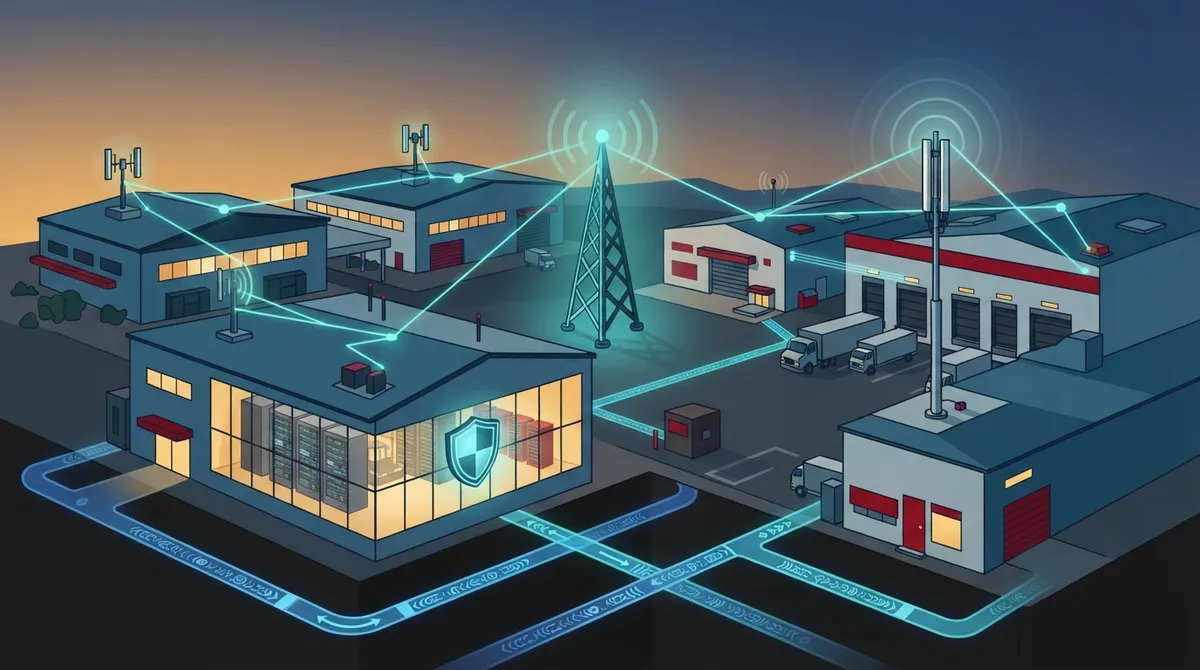
- A private cellular network: Uses private LTE or 5G to cover a defined site such as a campus, factory, or warehouse.
- A hybrid design: Combines private connectivity with managed security, often layering several link types together.
Here is a key point that surprises many people. “Private” does not automatically mean “secure.” A private link can keep your traffic off the public internet, but it still needs strong security around it. We will get to that shortly.
Why Do Businesses Build Private Networks?
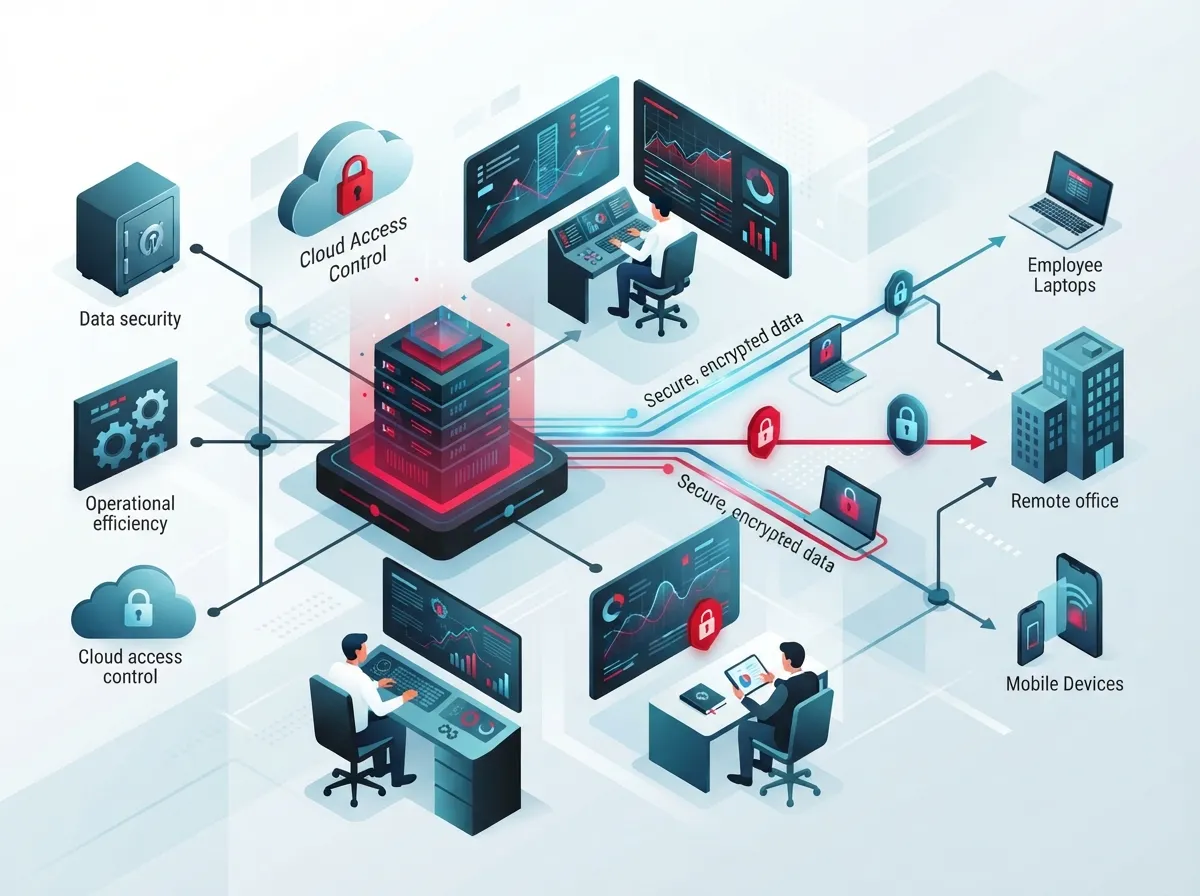
Businesses choose private networks for a few friendly, practical reasons. Most come down to control, performance, and peace of mind.
- Better control: You decide how traffic is routed, who gets access, and which apps get priority.
- Steady performance: Voice and video calls, cloud apps, and point-of-sale systems run smoother when they have a protected path.
- Local coverage: Private cellular can reach places where Wi-Fi struggles, like big warehouses or outdoor yards.
- Support for connected equipment: Sensors, scanners, cameras, and machines stay linked reliably.
These benefits depend on good design, solid coverage, clear service-level agreements, and ongoing management. A network is only as good as the plan behind it.
Your Main Options: MPLS, VPN, SD-WAN, and Private LTE/5G
Let us walk through the common building blocks. You can use one, or blend several.
MPLS
MPLS is a carrier-managed private connection between your sites. It keeps your traffic separate from the public internet and can prioritize voice and video. One important note: MPLS isolates traffic, but it does not encrypt it by default. If you need encryption, you add it on top. If you want to dig deeper, our guide on what MPLS is and how it works for business explains it clearly.
Business Internet with Encrypted VPNs
A VPN creates an encrypted tunnel across regular business internet. It is often the most budget-friendly way to link sites. It works well for smaller setups, though performance depends on the quality of the internet connection underneath.
SD-WAN
SD-WAN is a software layer that steers your traffic across multiple links, such as broadband, MPLS, and LTE or 5G, based on the rules you set. It can even keep MPLS as one of its underlying connections. If you are curious, read what SD-WAN services are and whether your business needs them.
Private LTE/5G
A private LTE or 5G network uses dedicated or locally controlled cellular infrastructure to connect devices within a defined area. This is different from simply using a public mobile carrier. Typical settings include factories, campuses, warehouses, transport hubs, mines, and utilities.
Private WAN vs. Private Cellular: What Is the Difference?
These two solve related, but different, problems. A private WAN links distant locations. A private LTE/5G network provides wireless coverage inside a site or defined area. Many businesses use both, for example by backhauling a private cellular site over SD-WAN or MPLS.
| Option | Best For | Key Strength | Watch Out For |
|---|---|---|---|
| MPLS | Multi-site firms needing steady voice and apps | Predictable performance and traffic isolation | Not encrypted by default; can cost more |
| Internet + VPN | Small businesses and budget-minded teams | Low cost, quick to set up | Quality depends on the underlying internet |
| SD-WAN | Growing, multi-location businesses | Flexible traffic steering across many links | Needs good policy design and monitoring |
| Private LTE/5G | Campuses, warehouses, factories, mines | Wide, controlled wireless coverage on site | Needs planning, spectrum, and expertise |
Notice there is no single winner. The best private business network often combines pieces. That is why a custom plan beats a one-size-fits-all package.
How Big Is the Private Cellular Trend?
Private cellular is growing, but the numbers vary a lot depending on who is counting. Here is a quick, attributed look so you can see the range.
- GSA’s Q4 2025 snapshot, summarized by Current Analysis in March 2026, tracked more than 2,000 customers of GSA member companies with private 4G/5G networks by the end of 2025, across 84 countries. That is a tracker of member-company customers, not a census of every network.
- The same snapshot reported LTE still made up 51% of the installed private cellular base, so older and newer technology are living side by side.
- Berg Insight estimated about 6,500 private LTE/5G networks worldwide at the end of 2025, excluding proofs of concept, and valued the solutions market at roughly US$2.4 billion.
- Omdia figures cited in an HCLTech report put live private LTE/5G deployments at 18,285 at the end of 2025, with a forecast of 44,210 by 2030.
Why the big gaps? Different analysts define “private network” differently and measure different things. So always check the publisher, date, definition, and forecast period before leaning on any single number. GSA’s February 2026 summary also noted manufacturing as the largest deployment sector, with education and mining close behind.
Is a Private Business Network Secure?
It can be, but only when security is designed in on purpose. A private connection is not a magic shield. Here is what a solid setup should cover:
- Encryption: Protect data in motion, especially over MPLS, which does not encrypt by itself.
- Identity and access controls: Make sure only the right people and devices can connect.
- Segmentation: Separate sensitive systems, like payment or patient data, from everyday traffic.
- Firewalls and monitoring: Watch for strange activity and respond quickly.
- Redundancy: Add backup links so one cut cable does not take you offline.
- Incident response: Have a clear plan for what happens if something goes wrong.
If you want help picking protection that fits, see our guide on how to choose a data security service for business telecom.
How to Plan Your Private Business Network
The best designs start with business needs, not technology buzzwords. Here is a simple path you can follow.
- List your sites and users. Count locations, team members, remote workers, and devices.
- Name your must-run apps. Voice, video, cloud software, point-of-sale, cameras, and access control all have different needs.
- Set uptime and speed goals. Decide how much downtime your business can truly handle.
- Check data and regulatory rules. Healthcare, finance, and government work often have strict requirements.
- Map your coverage needs. Do you need strong wireless in a yard, plant, or large warehouse?
- Plan for growth and budget. Build something that scales without a costly redo.
This is also where a network infrastructure audit can save you from guessing. Knowing what you already have makes every next decision easier.
Do Not Forget the Foundation: Cabling and Internet
Here is something folks sometimes overlook. Even the fanciest private network sits on top of physical cabling and a solid internet connection. If the foundation is shaky, the whole house wobbles.
Good structured cabling keeps your wired network tidy, fast, and ready to grow. If you are weighing materials, our breakdown of copper vs. fiber structured cabling can help you choose.
On the connection side, your Internet Service Provider choice matters just as much. For ideas, check out what to look for in a business internet provider. Dedicated links can also give you steadier performance, and dedicated internet in Tampa is worth a look if uptime is a priority.
What Does a Private Business Network Cost?
Honest answer: it depends. Cost swings with the number of sites, the link types, the equipment, the level of monitoring, and the support you want. An internet-plus-VPN setup usually costs less than MPLS. SD-WAN adds software and management. A private LTE/5G build adds radio equipment, planning, and spectrum considerations.
Rather than chase a single price, focus on total value. Ask about installation, monthly service, equipment, monitoring, and what happens when something breaks. Hidden costs are the real budget busters.
Who Benefits Most From a Private Business Network?
A private network is not just for giant corporations. Here is how it can help different teams:
- Small business owners: A well-planned VPN or SD-WAN setup can link a couple of sites affordably while keeping phones and apps steady.
- Mid-sized companies: Growing firms often blend SD-WAN, dedicated internet, and security tools for steady performance across locations.
- IT managers: A single partner for cabling, networking, and security means fewer vendors to chase.
- Office managers: Reliable connections keep phones, printers, and cameras running without daily fire drills.
- Franchise operators: Multi-location owners get consistent, scalable connectivity from site to site.
If you run several locations, multi-location telecom solutions can make life much simpler.
Why Work With One Telecom Partner?
Juggling many vendors for circuits, phones, cabling, and cameras gets old fast. When something breaks, everyone points at everyone else. A single point of contact keeps things friendly and clear.
Ideal Solutions Provider is a Tampa-based telecom and IT partner with over 24 years of experience and relationships with 35+ vetted suppliers. They handle consultation, installation, and ongoing support for VoIP phone systems, high-speed internet, structured cabling, networking, cloud security cameras, and access control. You can read more about the benefits of this approach in why Tampa Bay businesses need one telecom partner.
Putting It All Together
A private business network does not have to feel overwhelming. Start with what your business truly needs, pick the building blocks that fit, and add security and backup plans along the way. For many companies, that means a blend of SD-WAN, solid cabling, dedicated internet, and strong protection. For sites with big wireless demands, private LTE or 5G can fill the gaps.
The goal is simple: dependable connections that let your team do their best work without thinking about the network at all.
Ready to explore your options? Contact us for a free consultation, or call us to talk through your setup. You can also follow along with tips and updates on YouTube. We would love to help you build a private business network that fits like a glove.
FAQs
Q: What is the difference between a private network and a VPN?
A: A VPN is a way to encrypt traffic as it travels across the public internet, while a private network is a broader setup that can use dedicated links like MPLS or private cellular. A VPN can actually be one piece of a private business network. Think of a VPN as one tool and the private network as the whole toolbox.
Q: Is MPLS or SD-WAN better for a business network?
A: Neither wins every time, and that is okay! MPLS offers steady, carrier-managed performance, while SD-WAN adds flexibility by steering traffic across several links, even keeping MPLS as one of them. Many businesses blend both, so the best pick depends on your sites, apps, and budget.
Q: What is a private 5G or LTE network, and when does a business need one?
A: It is a dedicated or locally controlled cellular network that covers a defined area like a factory, campus, or warehouse. Businesses usually need one when Wi-Fi cannot cover large spaces well or when connected equipment needs steady, controlled wireless service. It is different from simply using a public mobile carrier.
Q: Can a business network combine broadband, MPLS, and 5G?
A: Absolutely! SD-WAN can steer traffic across broadband, MPLS, and LTE or 5G links based on the rules you set. This gives you backup options and better performance, since traffic can shift if one link slows down.
Q: How do I choose a business telecom provider for a private network?
A: Look for a partner who starts with your business needs, offers several technology options, and provides clear support after installation. A provider with many vetted supplier relationships can compare choices for you instead of pushing a single product. Ask about security, backup links, and what ongoing support looks like.





