
Key Takeaways
-
Cloud VoIP phone systems typically cost $10–$40 per user per month, with many small businesses landing near $20–$25, while on-premises PBX systems can require $5,000–$20,000+ upfront plus ongoing maintenance.
-
Compare total cost of ownership over your contract term, not just the monthly price: multiply users by monthly cost by months, then add setup, phone hardware, network upgrades, add-ons, and taxes.
-
Watch for hidden fees such as taxes and regulatory charges, international or metered calling, toll-free number usage, extra numbers, hardware leases, and early termination charges.
-
Desk phones cost about $50–$300 each, but softphone apps can eliminate handset purchases for some team members, and annual billing can lower per-user rates at the cost of a longer commitment.
Let’s be honest. Asking “how much does a business phone system cost” is a bit like asking how much a car costs. The answer is, “It depends!” But don’t worry. We’re going to break it down in plain English so you can plan your budget with confidence.
In 2026, most small businesses can get a solid cloud phone system for about $10 to $40 per user each month. Older on-site systems often cost thousands of dollars upfront. The price you pay depends on how many people you have, which features you want, and how you set it all up.
Whether you run a small shop in Tampa, manage an office, or oversee several franchise locations, this guide walks you through nine real cost factors. By the end, you’ll know what to expect, what to ask, and where hidden fees like to hide. Grab a coffee and let’s dive in!
1. The Quick Answer: A Typical Price Range
Here’s the short version for anyone in a hurry. Most businesses land in one of two camps: cloud-based VoIP or an on-site system, often called a PBX.
Cloud VoIP usually runs about $10 to $40 per user per month. Many small businesses end up near $20 to $25 per user. An on-site PBX can need $5,000 to $20,000 or more for hardware and installation, plus monthly line and support costs.
| System Type | Upfront Cost | Ongoing Cost |
|---|---|---|
| Cloud VoIP | Low to moderate (phones, setup) | $10–$40 per user/month |
| On-premises PBX | $5,000–$20,000+ | $35–$70 per line/month, plus $1,000–$3,000/year maintenance |
Keep in mind that these are planning numbers. Real prices change by provider, contract length, and features. Always confirm current pricing before you sign anything.
2. Cloud VoIP vs. On-Premises: The Biggest Price Driver
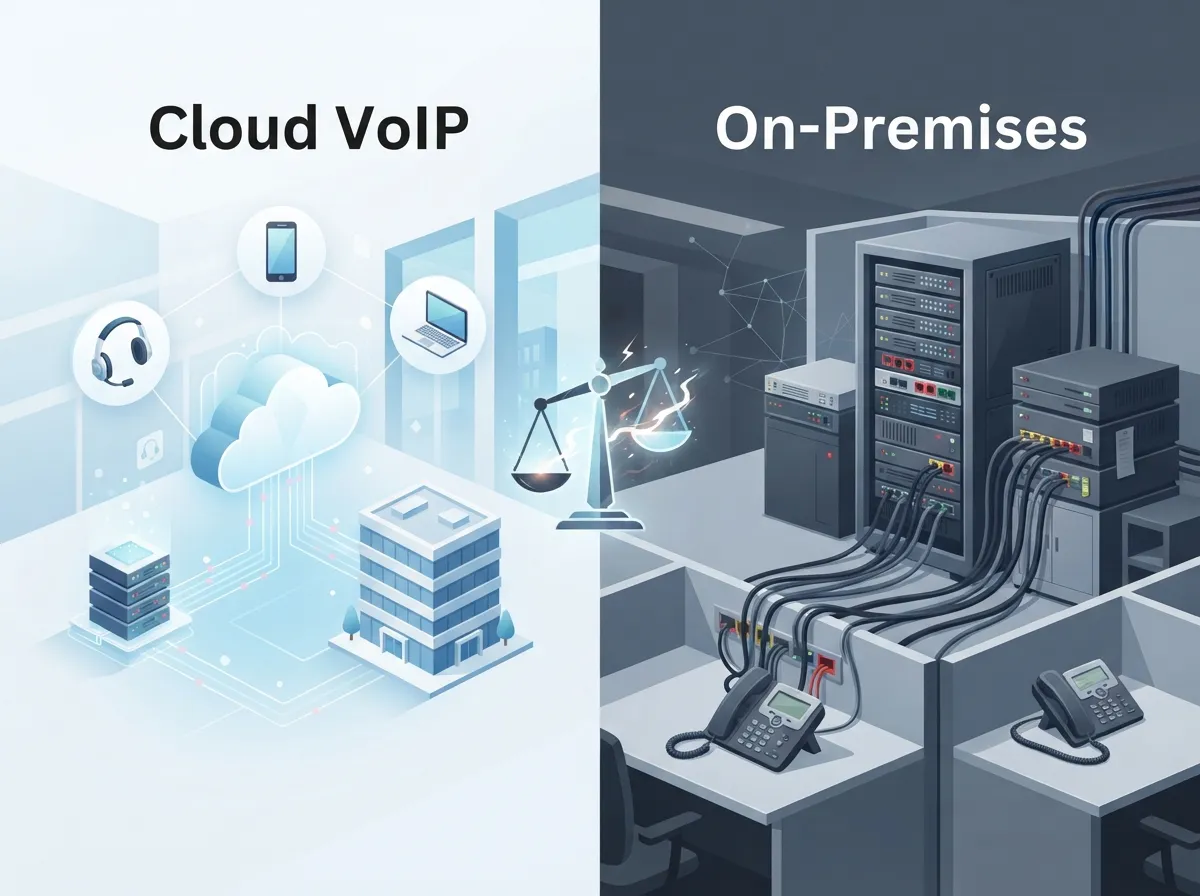
The first big decision shapes your whole budget. Do you want a cloud-hosted system or one that lives in a closet at your office?
Cloud systems run over the internet. The provider handles the heavy lifting, so you skip most of the big equipment costs. On-site systems put the hardware in your building, which means you buy it, house it, and maintain it.
If you’re curious how the two compare beyond price, our guide on the 6 key differences between VoIP and traditional phone systems is a friendly next read.
Why Many Businesses Pick Cloud
- Lower upfront spending
- Easy to add or remove users
- Works from the office, home, or on the road
- Updates and support often come with the plan
3. Your Number of Users or Lines
Most cloud providers charge per user. That means your bill grows as your team grows. Some charge per line, per device, or per concurrent call, so always check how your provider counts.
Here’s a simple example. If you have 15 employees and pay $22 per user each month, your recurring cost is about $330 monthly. Over a year, that’s $3,960 before extras.
This is great news for small teams, because you only pay for what you need. And if you’re a franchise operator with many sites, per-user pricing makes it easier to scale without a big new equipment purchase each time.
4. Plan Tiers: Basic, Mid-Level, and Advanced
Cloud phone plans often come in tiers. The more you add, the more you pay. Here’s a handy snapshot:
| Tier | Typical Price (per user/month) | What You Often Get |
|---|---|---|
| Entry-level | $10–$20 | Basic calling, voicemail, call routing |
| Mid-tier | $20–$30 | Unlimited domestic calling, texting, integrations, call recording |
| Advanced | $30–$40+ | Full unified communications, video, advanced analytics |
Published vendor prices show this range in action. For example, Zoom Phone listed U.S. and Canada plans at $12 monthly for metered service or $18 for unlimited, with lower rates on annual billing. RingCentral’s RingEX Core was listed from $30 monthly, or $20 with annual billing. Plans change often, so double-check current vendor pages.
Not sure which tier fits? Our post on 9 VoIP phone system features every business needs in 2026 can help you decide what’s worth paying for.
5. Desk Phones and Hardware Costs
Here’s a cost that surprises many people: the phones themselves. Physical desk phones typically cost about $50 to $300 each, depending on the model and features.
The good news? Many cloud systems also offer softphone apps for your computer or mobile device. That can mean no handset purchase at all for some team members.
- Basic desk phone: around $50–$100
- Mid-range phone with color screen: around $100–$200
- Executive or conference phone: $200–$300 and up
For a 15-person office buying mid-range phones at $150 each, that’s roughly $2,250 upfront. Some providers lease hardware instead, which spreads the cost into your monthly bill.
6. Setup, Installation, and Number Porting
A straightforward cloud setup can have little or no setup fee. But “straightforward” isn’t always the case. Real projects often include:
- Configuring your call flows and auto attendant
- Moving (porting) your existing phone numbers
- Setting up phones and user accounts
- Training your team
- Testing before go-live
Managed implementation can add to your upfront budget, but it also saves headaches. Wondering what the process looks like? Check out how cloud phone system installation works for Tampa businesses, or see how to keep your phone number when switching to VoIP.
7. Network and Cabling Readiness
Your phone system is only as good as the network under it. If your internet is slow or your wiring is old, calls can sound choppy no matter how fancy your plan is.
Before you buy, ask yourself two questions. Is my internet fast and stable enough? Is my office wiring ready for phones and other devices?
You might need an internet upgrade, a better router, or new cabling. Good structured cabling keeps everything tidy and reliable. Our guide on what internet speed you need for VoIP in Tampa is a helpful starting point, and you can learn more about professional structured cabling services for Tampa businesses too.
These upgrades are optional for some offices and essential for others. Either way, budget a little room for them.
8. Hidden Fees and Add-Ons to Watch For
The monthly price on a sales page isn’t always your final bill. A few extras can sneak in. Keep an eye out for:
- Taxes and regulatory fees
- International or metered calling
- Toll-free number usage
- Extra phone numbers
- Premium features like advanced analytics
- Hardware leases
- Contract or early termination charges
Annual billing can lower your advertised per-user rate. The trade-off is a longer commitment or a bigger upfront payment. That’s not bad, but it’s smart to know before you click “agree.”
Want to dodge costly missteps? Read about 15 cloud phone system mistakes Tampa small businesses make and 5 hosted PBX mistakes to avoid.
9. Total Cost of Ownership: The Number That Really Matters
Here’s the secret pros use: don’t compare monthly prices alone. Compare the total cost over your contract term. This is called total cost of ownership, and it gives you the real picture.
Use this simple formula:
- Multiply the monthly license cost by users and by months
- Add setup and installation fees
- Add phone hardware
- Add network or cabling upgrades
- Add add-ons, usage charges, and support
- Add taxes and fees
Let’s try a quick example. Say you have 10 users on a $25 plan for 36 months. That’s $9,000 in licenses. Add $1,500 in phones and $500 in setup, and you’re at about $11,000 over three years. That works out to around $305 per month all-in, which is a much better number to budget with than the sticker price.
Also confirm whether you’re paying per user, per line, per device, or per concurrent call. It makes a big difference when you compare quotes side by side.
Which Option Fits Your Business?
Every team is a little different, so here’s a quick way to think about it.
Small Business Owners
A mid-tier cloud plan with softphone apps is often a sweet spot. You get the features you need without a big equipment bill.
Office Managers and IT Managers
Focus on reliability, support, and network readiness. A provider that handles installation and ongoing help can save you serious time.
Franchise Operators and Growing Companies
Look for scalable per-user pricing and consistent service across sites. Cloud systems make adding a new location much simpler.
If you want help comparing real options, take a look at how much a VoIP phone system costs for a Tampa business and our list of 8 affordable VoIP phone services for Tampa businesses in 2026.
Ready to Get a Real Price?
Phone pricing can feel confusing, and that’s totally normal. The good news is you don’t have to figure it out alone. Ideal Solutions Provider is a Tampa-based telecom and IT partner with over 24 years of experience and relationships with 35+ vetted suppliers. We compare options for you, audit your current setup, and look for savings without the sales pressure.
Curious what your business could save? Contact us for a free consultation, or call us at 813-388-4935. You can also explore our cloud based phone systems to see what’s possible. We’d love to help you find a system that fits your team and your budget!
FAQs
Q: How much does a business phone system cost per user per month?
A: Most cloud VoIP plans run about $10 to $40 per user each month, and many small businesses land near $20 to $25. Entry-level plans start around $10 to $20, while advanced plans with video and analytics can reach $30 to $40 or more.
Q: Is a cloud phone system cheaper than a traditional PBX?
A: Usually, yes, at least upfront! A traditional on-site PBX can need $5,000 to $20,000 or more for hardware and installation, plus monthly line and maintenance costs. Cloud systems skip most of that big equipment spend, though you should still compare the total cost over your contract.
Q: What extra costs should I budget for besides the monthly fee?
A: Plan for desk phones ($50 to $300 each), setup and number porting, possible network or cabling upgrades, taxes and regulatory fees, and any add-ons like toll-free usage or extra numbers. Adding these up gives you a much more accurate picture than the advertised price alone.
Q: Does annual billing lower my business phone system cost?
A: It often does. Annual billing can bring the per-user rate down, like going from $30 to $20 on some plans. Just remember it usually means a longer commitment or paying more upfront, so make sure the plan truly fits your team first.





