Key Takeaways
-
Cat6A copper cabling combined with fiber optic backbone cabling is the best solution for most Tampa businesses, providing 10 Gbps speeds, 100-meter range, and future-proofing for growing networks.
-
Tampa’s heat and humidity require outdoor-rated or plenum-rated cables in specific areas; using incorrect cable types violates fire codes and causes premature failure.
-
Installation quality matters as much as cable type—professional testing, certification, proper terminations, and clear labeling are essential for network reliability and maintainability.
-
Structured cabling systems that integrate internet, VoIP, security cameras, and access control on one organized plan save money and prevent tangled, difficult-to-maintain installations.
-
Fiber optic backbone cabling is necessary for multi-floor buildings and inter-building connections, offering massive data capacity and immunity to electromagnetic interference over long distances.
-
Cat5e cabling is outdated and cannot support modern business demands like VoIP systems, cloud applications, and video conferencing; upgrading to Cat6 or Cat6A provides noticeable performance improvements.
If you’re setting up or upgrading your business network in Tampa, Florida, you’ve probably asked yourself: what is the best cabling for a business network in Tampa Florida? It’s a great question, and the answer matters more than most people realize. The right cabling is the backbone of everything — your VoIP phones, wireless access points, security cameras, and cloud-connected workstations all depend on it. Pick the wrong type, and you’ll be dealing with slow speeds, dropped calls, and costly rewiring down the road. Pick the right type, and your network hums along quietly for years. This guide breaks down your 10 best cabling options and what each one means for your Tampa business. Whether you’re a small business owner, an IT manager, or a franchise operator with multiple locations, this list will help you make a confident, informed decision.
Why Cabling Matters More Than You Think
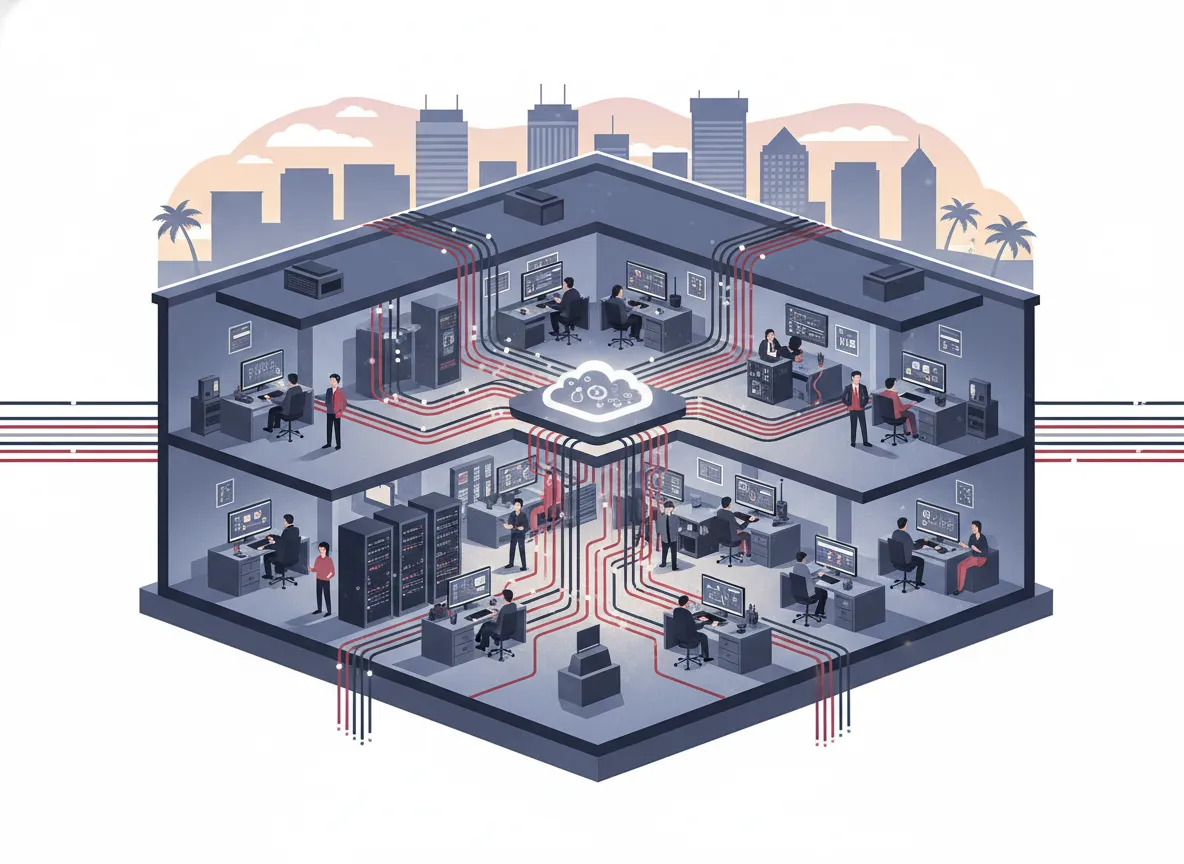
Most business owners focus on internet plans and phone systems — but cabling is what ties it all together. Think of it like the plumbing in your building. You don’t see it, but when it’s done right, everything flows. When it’s done wrong, nothing works. Structured cabling is the professional standard for business networks because it keeps everything organized, scalable, and easy to maintain. Tampa businesses also face a unique challenge: heat and humidity can affect low-quality cable installations over time. That’s another reason to invest in the right materials from the start.
Before we dive into the list, here’s a quick snapshot of the main cabling types used in Tampa business networks:
| Cable Type | Max Speed | Max Distance | Best For |
|---|---|---|---|
| Cat5e | 1 Gbps | 100m | Small offices, budget builds |
| Cat6 | 10 Gbps (short runs) | 55m at 10G | Mid-size offices |
| Cat6A | 10 Gbps | 100m | Enterprise, future-proofing |
| Fiber Optic | 100 Gbps+ | Miles | Backbone, multi-floor, long runs |
The 10 Best Cabling Options for Tampa Business Networks
1. Cat6A Copper Cabling
Cat6A is the gold standard for modern business copper cabling. It supports 10 Gbps speeds over a full 100 meters, making it the strongest all-around copper choice for most Tampa offices. It handles VoIP phones, wireless access points, and workstations without breaking a sweat. If you’re building or renovating an office space in 2026, Cat6A is the smart default. You can learn more about why this matters on our structured cabling services page.
2. Fiber Optic Backbone Cabling
Fiber optic cabling is the best choice for your network’s backbone — the main arteries that connect floors, server rooms, and data closets. It carries massive amounts of data over long distances without signal loss. Tampa commercial buildings with multiple floors almost always benefit from fiber between floors. It’s also immune to electromagnetic interference, which is a real plus in busy office environments. Check out our dedicated resource on fiber optic cabling services for commercial buildings in Tampa for a deeper dive.
3. Structured Cabling Systems
This isn’t a single cable type — it’s an organized approach to installing all your cables. A structured cabling system bundles everything together in a clean, labeled, and documented way. It makes troubleshooting easy, moves and adds fast, and your office looking professional. Every serious business network in Tampa should be built on a structured cabling foundation. Our blog post on professional structured cabling services for Tampa businesses covers what this looks like in practice.
4. Cat6 Cabling
Cat6 is still a solid option for smaller offices or budget-sensitive projects. It supports 10 Gbps on short runs (up to 55 meters) and 1 Gbps on full 100-meter runs. It’s widely available, affordable, and works well for most standard office setups. If you’re not planning to push heavy data loads and your runs are short, Cat6 gets the job done. Read our detailed breakdown on why CAT6 cabling is a smart choice for Tampa businesses.
5. Low-Voltage Integrated Cabling
Low-voltage cabling covers more than just internet drops. It includes runs for VoIP phones, IP security cameras, access control systems, and wireless access points. When you integrate all of these on one structured cabling plan, you save money and avoid a tangled mess of separate wiring projects. Tampa businesses with cloud security cameras or access control systems especially benefit from this approach. You can explore our cloud video security and cloud-based access control services to see how cabling fits into the bigger picture.
6. Single-Mode Fiber Optic Cabling
Single-mode fiber is designed for long-distance runs — think between buildings, across a campus, or from your server room to a remote network closet. It uses a smaller core and can carry signals for miles without degradation. For multi-building Tampa business campuses or franchise locations with interconnected buildings, single-mode fiber is the right call. It’s more expensive upfront, but the performance and longevity make it worth every penny.
7. Multi-Mode Fiber Optic Cabling
Multi-mode fiber is a more affordable fiber option that works well for shorter runs — typically within a building or between floors. It supports very high speeds over distances up to a few hundred meters. Many Tampa commercial buildings use multi-mode fiber for their vertical backbone and single-mode fiber for inter-building connections. It’s a practical, cost-effective choice for growing businesses that want fiber performance without the full single-mode price tag.
8. Cat5e Cabling (Upgrade Path)
Cat5e is an older standard, but it’s still in place in many Tampa offices. It supports 1 Gbps over 100 meters, which is fine for basic office use. The question isn’t whether Cat5e works today — it’s whether it’ll keep up as your business grows. If you’re currently running Cat5e, it may be time to plan an upgrade. Our article on the key differences between CAT5e and CAT6 cabling for Tampa businesses will help you decide when to make the move.
9. Plenum-Rated Cabling
Plenum-rated cable is required in certain areas of commercial buildings — specifically in air-handling spaces above drop ceilings or below raised floors. Tampa building codes and fire safety standards often require plenum cable in these zones. Using the wrong cable type in a plenum space isn’t just a code violation — it’s a fire hazard. Always work with a qualified contractor who knows local codes inside and out.
10. Outdoor-Rated and Direct-Burial Cabling
Tampa’s heat, humidity, and occasional severe weather mean outdoor cabling needs special protection. Outdoor-rated or direct-burial cables have UV-resistant jackets and waterproofing that standard indoor cables lack. If you’re connecting buildings, running cable along exterior walls, or burying cable underground on your property, you need outdoor-rated options. Skipping this step leads to cable failure — sometimes in the middle of a workday storm.
Comparing the Top Choices Side by Side
| Cable Type | Cost Level | Future-Proof? | Recommended For |
|---|---|---|---|
| Cat6A | Medium | Yes | Most Tampa office builds |
| Fiber Optic (Backbone) | Medium-High | Yes | Multi-floor, high-bandwidth needs |
| Cat6 | Low-Medium | Partially | Smaller offices, budget builds |
| Cat5e | Low | No | Legacy/temporary use only |
| Single-Mode Fiber | High | Yes | Long-distance, campus connections |
| Multi-Mode Fiber | Medium | Yes | In-building backbone |
What to Look for in a Tampa Cabling Contractor
Choosing the right cable type is only half the battle. The installation quality matters just as much. A poorly installed Cat6A network will underperform a well-installed Cat6 network every single time. Here’s what to look for when hiring a commercial cabling contractor in Tampa:
- Proper testing and certification — Every cable run should be tested and documented after installation.
- Clean terminations and patch panels — Sloppy terminations cause signal loss and connection failures.
- Labeling and documentation — Every port, panel, and run should be clearly labeled.
- Cable management — Organized cable runs are easier to maintain and expand later.
- Knowledge of local codes — Your contractor should know Tampa building and fire codes for plenum and low-voltage work.
For more guidance on finding the right installer, check out our post on 6 signs you found the best structured cabling contractor in Tampa. You can also read about why hiring a commercial network cabling contractor in Tampa is worth the investment.
How Cabling Fits Into Your Broader Telecom Setup
Your cabling doesn’t exist in isolation. It connects directly to your internet service, your VoIP phone system, your security cameras, and your wireless network. When all of these are planned together, you get a clean, efficient infrastructure that’s easy to manage and expand. That’s the approach that Ideal Solutions Provider takes with every client — treating cabling, internet, phones, and security as one integrated system rather than separate projects.
Here’s a look at how different parts of your telecom setup rely on quality cabling:
- VoIP Phone Systems — Need reliable Cat6 or Cat6A drops at each desk. Learn more at our cloud-based phone systems page.
- High-Speed Internet — Requires proper cabling from your demarc point to your router and switches. See our business high-speed internet services.
- Wireless Access Points — Each AP needs a dedicated Cat6A drop for full performance.
- IP Security Cameras — Run on low-voltage cabling, ideally integrated into your structured cabling plan.
- Access Control Systems — Require dedicated low-voltage runs to each door reader and control panel.
- Networking Equipment — Switches, routers, and patch panels need organized cabling to function at their best. Visit our business network solutions page for details.
Questions to Ask Before You Start a Cabling Project
Before you sign a contract with any cabling installer in Tampa, ask these questions to make sure you’re getting what your business actually needs:
- Will you test and certify every cable run after installation?
- What cable categories do you recommend for our specific use case?
- Are you familiar with plenum requirements for our building type?
- Will you provide as-built documentation and labeling?
- Can you handle fiber optic backbone installation if needed?
Not sure where to start? Our detailed guide on how to plan network cabling installation in Tampa Bay walks you through the process step by step. You can also see whether DIY vs. professional structured cabling is the right call for your Tampa office.
Signs Your Current Cabling Needs an Upgrade
Not sure if your existing cabling is holding you back? Watch for these warning signs:
- Frequent dropped calls or choppy VoIP audio
- Slow network speeds despite a fast internet plan
- Intermittent connection drops at specific workstations
- Cables that are unlabeled, tangled, or visibly damaged
- Cat5e cabling that can’t support your growing team
- Security cameras or access control systems that lose connection
If any of these sound familiar, it might be time to schedule a cabling assessment. Our post on 9 signs your Tampa business needs structured cabling now covers every red flag in detail. You can also explore structured cabling installation companies in Tampa FL to find the right partner for your upgrade.
Cabling Standards and Compliance in Tampa
| Standard/Code | What It Covers | Why It Matters |
|---|---|---|
| TIA-568 | Commercial building cabling specs | Ensures consistent, tested performance |
| NEC Article 800 | Communications wiring in buildings | Fire safety and code compliance |
| Plenum Rating (CMP) | Cable in air-handling spaces | Required in many Tampa commercial spaces |
| ANSI/TIA-942 | Data center cabling standards | Important for server rooms and data closets |
Following these standards isn’t just about compliance — it’s about protecting your investment. Cables installed to proper standards last longer, perform better, and are much easier to troubleshoot. Working with a certified installer ensures your project meets every requirement. Follow us on Facebook, Instagram, and YouTube for tips, updates, and real project examples from the Tampa Bay area.
The Bottom Line: What Is the Best Cabling for a Business Network in Tampa Florida?
For most Tampa businesses in 2026, the answer is a structured cabling system built around Cat6A copper runs at each endpoint, with fiber optic backbone cabling where bandwidth demands, distances, or future growth require it. Cat6A gives you the speed, reliability, and future-proofing that modern business networks need. Fiber handles the heavy lifting on your backbone. Together, they form a network infrastructure that will serve your business for years to come.
Don’t forget that the installation quality, labeling, testing, and documentation matter just as much as the cable type you choose. A well-planned, professionally installed structured cabling system will always outperform a cobbled-together network — no matter what cables are in the wall. If you’re ready to get it done right the first time, reach out to our team at Ideal Solutions Provider for a free consultation. We’ll review your current setup, identify what needs to change, and give you a clear plan forward — no pressure, no jargon, just honest advice from people who’ve been doing this for over 24 years. Or if you prefer, just give us a call at 813-388-4935 and let’s talk through your options today.
FAQs
Q: What is the best type of network cabling for a small business in Tampa?
A: For most small Tampa businesses, Cat6A is the best all-around choice — it’s fast, reliable, and future-proof without breaking the bank. If you’re on a tighter budget and your office is small, Cat6 is still a solid option that handles everyday business tasks just fine.
Q: When should a Tampa business use fiber optic cabling instead of copper?
A: Fiber optic cabling is the go-to choice when you need to connect multiple floors, link separate buildings, or support very high bandwidth demands like large file transfers or video surveillance systems. It’s also a great call when you’re planning for significant growth and want a backbone that won’t need replacing anytime soon.
Q: Does Tampa’s heat and humidity affect business network cabling?
A: Yes, it absolutely can — especially for outdoor or improperly installed cabling. Tampa’s climate means you should always use outdoor-rated or plenum-rated cables in the right environments, and work with a contractor who understands local conditions. Quality materials and proper installation go a long way toward keeping your network running through Florida’s heat and storm seasons.
Q: Can my existing Cat5e cabling support modern business internet speeds?
A: Cat5e can handle 1 Gbps connections, which is enough for basic office use, but it won’t support the faster speeds many Tampa businesses need in 2026. If you’re running VoIP systems, cloud applications, or lots of video conferencing, upgrading to Cat6 or Cat6A will make a noticeable difference in performance.
Q: What does a professional structured cabling installation include?
A: A professional structured cabling job covers everything from planning and cable runs to terminations, patch panels, labeling, cable management, and post-installation testing. A good Tampa cabling contractor will also give you as-built documentation so you always know what’s in your walls and where everything connects.