Key Takeaways
-
Cat6 cabling costs $125-$300 per drop and Cat6A costs $175-$325+ per drop in 2026; always request itemized bids from multiple contractors since final price depends heavily on building layout and quote scope.
-
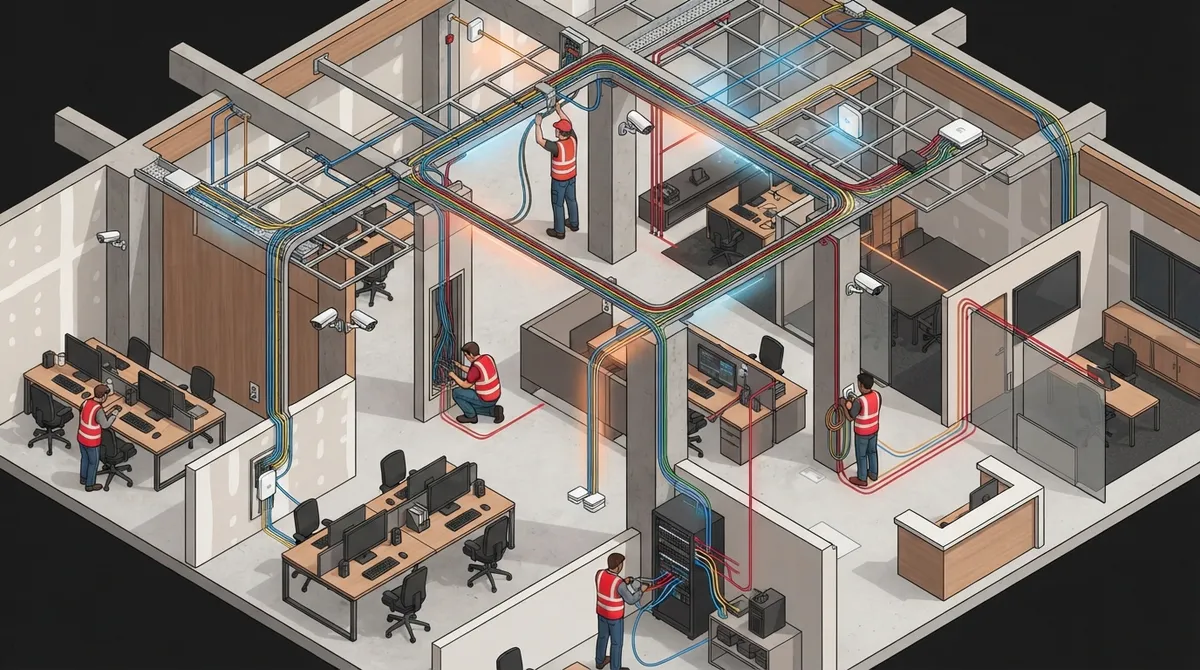
New construction cabling is 20-40% cheaper per drop than retrofit work because walls remain open; plan your cabling during the design phase to avoid costly rewiring after occupancy.
-
Request itemized bids covering all 12 cost areas including testing, labeling, firestopping, documentation, and telecom room equipment; comparing per-drop prices alone can hide significant scope gaps.
-
Budget for non-desk devices like cameras, access points, and door readers, and add 10-20% extra drops for growth; adding outlets during initial installation costs far less than retrofitting later.
-
Labor represents a major cost component at $55-$95/hour; smooth open spaces install faster than complex buildings with hard ceilings, concrete, or long cable runs requiring extra hours.
-
Fiber backbone projects range from $2,000-$80,000 depending on distance and scope for multi-floor offices; telecom room equipment, pathways, and firestopping are often overlooked but essential budget line items.
Moving into a new office is exciting. There is paint to pick, desks to order, and a coffee machine to argue about. But one thing often sneaks up on people: the cabling expenses for a new office. Those hidden wires behind the walls power your internet, phones, Wi-Fi, and cameras, so they deserve a spot in your budget from day one.
The good news? You can plan for these costs without stress. In 2026, published installer estimates put standard Cat6 at roughly $125 to $300 per drop, and Cat6A at roughly $175 to $325 or more. These are planning ranges, not promises. Your final price depends on your building, your layout, and what your quote includes.
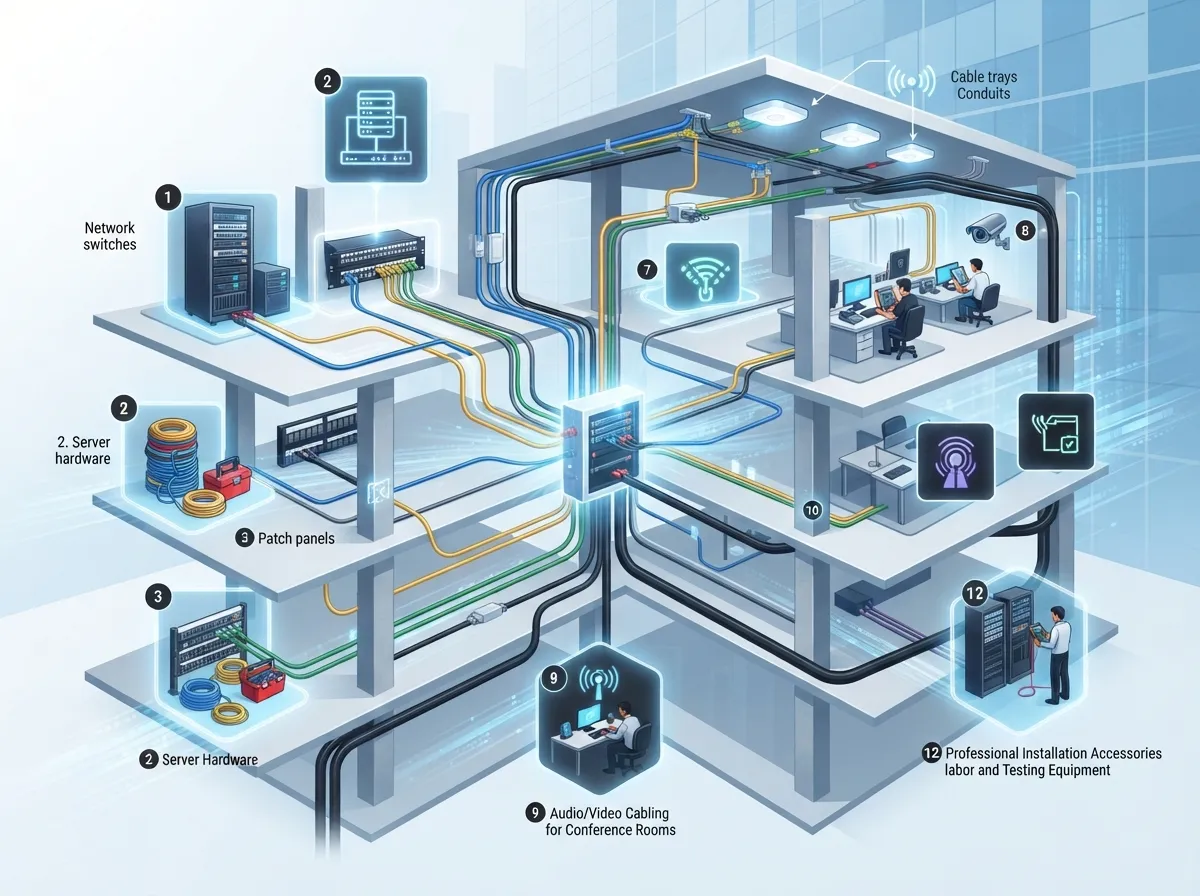
Below, we walk through 12 real cost items so you can build a smart budget and compare bids with confidence. Whether you run a small Tampa shop or manage a growing team, this list will help you ask better questions and avoid surprises.
What Counts as Cabling Expenses for a New Office?
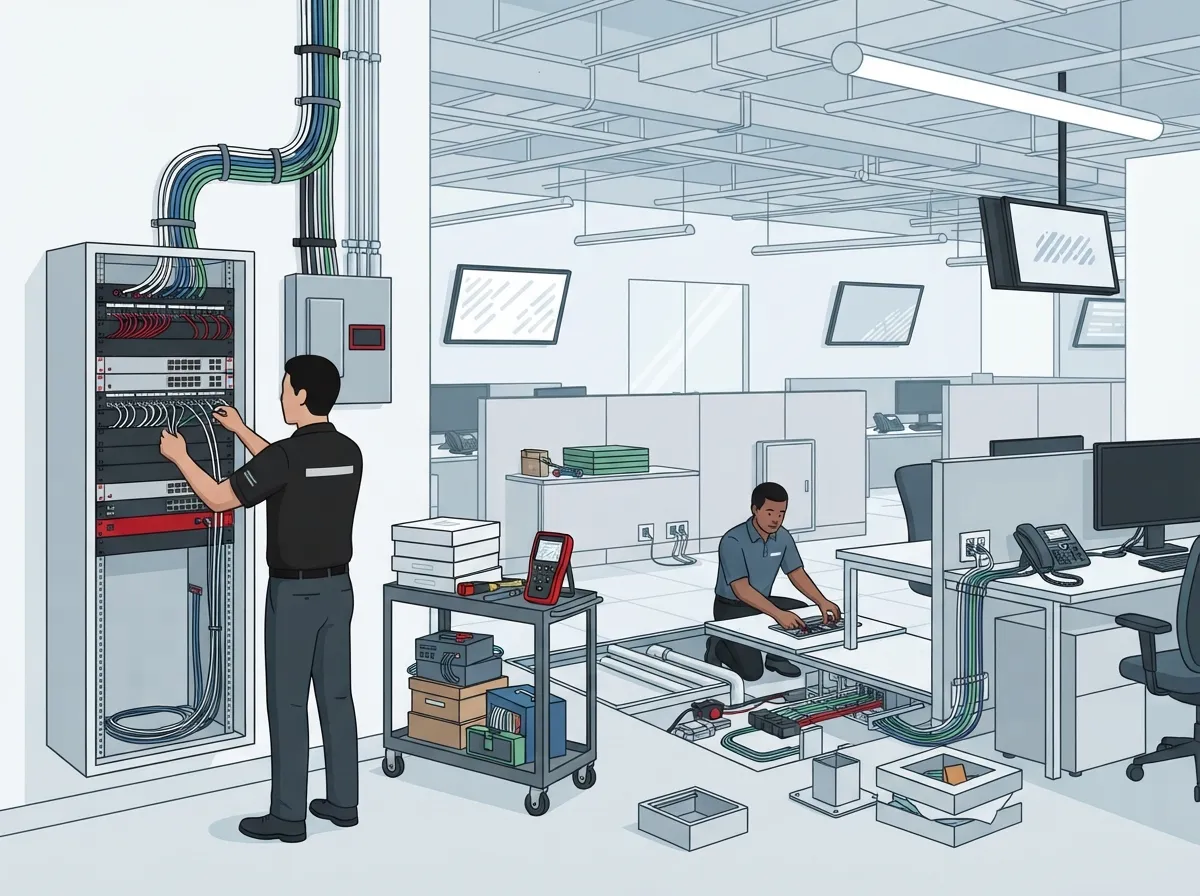
In business telecom, cabling expenses mean the full cost of an installed structured cabling system. That includes copper runs to desks and devices, fiber or copper backbone between rooms, terminations, patch panels, testing, and the pathways that hold it all.
A “drop” is one cable run ending at a network connection point. A wall plate with two separate cables is usually two drops. Always ask your contractor how they define a drop, and whether the price covers both ends, labeling, and testing.
The 12 Cabling Costs to Budget For
1. Cat6 Network Drops
Cat6 is the go-to choice for most offices. It handles everyday work like email, video calls, cloud apps, and VoIP with ease. Expect roughly $125 to $300 per installed drop for early budgeting. One 2025 guide reports about $200 per Cat6 drop as a common midpoint.
Want to learn more about this cable type? Our post on 14 Cat6 cabling facts every business owner should know is a handy read.
2. Cat6A Network Drops
Cat6A costs more, often $175 to $325 or more per drop. It supports 10 Gb/s over the full 100 meter channel and handles higher power for PoE devices. It also tends to last longer as your needs grow.
But do not assume the highest category is always needed. Match the cable to your network design. If you are weighing the two, see how to choose between Cat6 and Cat6A for your office.
| Cable Type | Typical Installed Cost Per Drop | Best For |
|---|---|---|
| Cat6 | $125 to $300 | Standard desks, phones, printers |
| Cat6A | $175 to $325 or more | 10 Gb/s needs, high PoE, long-term growth |
These are indicative contractor ranges, not a national price list. Geography and scope change them.
3. Labor Costs
Labor is a big slice of any cabling bill. One 2025 budgeting article reports technician rates of about $55 to $95 per hour, with roughly $30 to $70 of labor per cable under its stated assumptions. Your local market, site access, and crew speed all play a part.
A smooth, open space means faster work. A tricky building means more hours.
4. Telecom Room Equipment
Your cables need a home. Racks, patch panels, cable management, and power gear all add to the total. Many people forget this line item because it is not a “cable.” But without a tidy telecom room, even great cabling becomes a mess.
Size the room for today and tomorrow. Leaving space for growth is cheaper than rebuilding later.
5. Fiber Backbone
If your office has more than one telecom room, or spans several floors, you may need a fiber backbone. One 2025 guide reports fiber backbone projects ranging from $2,000 to $80,000 depending on distance, strand count, and scope. That is a wide range, so get this item quoted on its own.
Not sure when fiber makes sense? Read how to choose fiber cabling for your business network.
6. Pathways, Conduit, and Cable Tray
Cables need a safe path from room to room. Conduit, cable tray, J-hooks, and sleeves keep runs neat and protected. In some buildings, these pathways are already in place. In others, they are a major cost.
Ask your bidder whether pathway work is included or listed as an extra.
7. Firestopping and Permits
When cable passes through a fire-rated wall or floor, the opening must be sealed with firestop material. This is a safety rule, and it is not optional. Some areas also need permits for low-voltage work.
Skipping this line in a bid can lead to surprise charges. Make sure it is spelled out.
8. Testing, Certification, and Labeling
Good installers test every run and label both ends. Some also provide certification reports that prove each cable meets the standard. This step catches problems early, when they are cheap to fix.
It also makes life easier for your IT team later. When something breaks, a clear label saves hours.
9. Documentation and As-Built Drawings
As-built documentation shows where every cable actually ended up. It is a gift to future you. When you add a desk, move a wall, or change providers, these records keep the work fast and cheap.
Ask whether drawings and test reports come with your quote.
10. New Construction vs. Retrofit Premium
Where you install matters a lot. New construction is often cheaper per drop because walls and ceilings are still open. One installer article estimates new work can run about 20 to 40 percent less than retrofit work, and another reports roughly 30 to 40 percent savings. These are provider estimates, not guarantees.
Retrofit costs can rise with hard ceilings, occupied spaces, concrete, long routes, and after-hours work. If you are still in the planning stage, our guide on whether you need structured cabling for a new office buildout can help.
11. Drop Count and Volume Savings
The more drops you order, the lower the price per drop can go. One 2025 source estimates that growing a project from 50 to 200 drops may cut per-drop pricing by 12 to 18 percent through better labor and purchasing efficiency. Your results will vary by design and contractor.
Plan your outlets around real endpoints, such as:
- Desks and workstations
- VoIP phones
- Wireless access points
- Conference rooms and displays
- Printers and copiers
- Security cameras and access control readers
Adding extra drops during the first install is usually far cheaper than adding them later.
12. Future Growth and Spare Capacity
Smart budgets include a little breathing room. Extra drops, spare conduit, and empty rack space cost little today and save a lot tomorrow. If your team may grow, or you plan to add cameras and door readers, build that in now.
Our post on how structured cabling supports VoIP and cameras shows why one solid system can serve many tools.
Quick Ways to Estimate Your Total Budget
Early on, you may not have a full design. A rough square-foot estimate can help. A 2025 source gives early-design ranges of about $1.90 to $3.50 per square foot for light office cabling. Treat that as a rough guide only, since outlet density and included scope change the math.
For a better estimate, follow these steps:
- Count your workstations, phones, access points, cameras, and other devices.
- Add spare drops for growth, often 10 to 20 percent more.
- Pick your cable type, Cat6 or Cat6A, for each area.
- Note any long runs, fiber needs, or hard-to-reach spaces.
- List the telecom room gear you will need.
- Request itemized bids from at least two or three contractors.
How to Compare Bids Fairly
A low per-drop price can hide a thin scope. One bid might include testing, labeling, and firestopping. Another might leave them out. Comparing numbers alone can mislead you.
Ask every bidder to itemize these items:
- Copper and fiber runs, with cable category
- Pathway work, such as conduit or tray
- Telecom room racks and patch panels
- Firestopping and permits
- Testing, certification, and labeling
- Documentation and as-built drawings
- Exclusions and change-order rates
Side-by-side, itemized bids make the real winner easy to spot. If you want help sorting through the options, our post on how to find a reliable structured cabling contractor walks through what to look for.
Common Mistakes That Raise Cabling Costs
A few small slip-ups can cost real money. Watch out for these:
- Planning too late. Cabling is cheapest before walls close.
- Skipping coordination. IT, facilities, and your electrical contractor should agree on outlet spots early.
- Buying on price alone. A cheap quote may leave out testing or documentation.
- Forgetting non-desk devices. Cameras, access points, and door readers all need drops.
- Ignoring growth. Too few drops means costly add-ons later.
For more on this topic, see our list of 12 structured cabling mistakes that hurt your business.
Why Cabling Is Worth the Investment
It can feel tempting to trim this part of the budget. But cabling is the foundation under everything else. Your Internet Service Provider connection, VoIP phones, Wi-Fi, and cloud tools all lean on it. Weak cabling can slow your whole team down, even with fast internet.
Done right, good cabling lasts for many years and supports upgrades without a rebuild. It is a one-time cost that pays back every single day.
Let One Partner Handle the Whole Project
Juggling separate vendors for cabling, internet, phones, and security is a headache. Ideal Solutions Provider brings 24 years of experience and 35+ vetted suppliers together under one point of contact. We help with planning, installation, and ongoing support, so your new office runs smoothly from the first day.
Follow along for tips on YouTube or connect with us on Facebook.
Conclusion
Cabling expenses for a new office do not have to be scary. Once you know the 12 cost areas, you can plan with confidence, ask sharp questions, and compare bids fairly. Remember that the numbers in this guide are planning ranges, so always get itemized quotes that match your scope.
Ready to build a smart cabling budget for your new space? Contact us for a free consultation, or call us to talk with a real person who will help you get it right the first time.
FAQs
Q: How much does it cost to cable a new office per network drop?
A: For early budgeting, published installer estimates put Cat6 at roughly $125 to $300 per drop and Cat6A at roughly $175 to $325 or more. Your final price depends on building access, run length, and what the quote includes. Always ask for an itemized bid.
Q: Is cabling cheaper in new construction than in an office retrofit?
A: Often, yes! Since walls and ceilings are still open, new construction can run about 20 to 40 percent less per drop, according to provider estimates. Retrofit work can cost more with hard ceilings, long routes, or after-hours labor.
Q: Does a cabling quote include testing, labeling, and patch panels?
A: Not always, and that is why you should ask. Some quotes bundle testing, labeling, and patch panel termination, while others list them as extras. Request an itemized bid so you can compare apples to apples.
Q: What extra costs should I plan for besides the cable itself?
A: Budget for telecom room racks and patch panels, conduit or cable tray, firestopping, permits, and any fiber backbone between rooms. Testing, certification, and documentation also add value. Planning these early helps you avoid surprise charges.
Q: How many network drops does a new office need?
A: Start with your real devices: desks, VoIP phones, Wi-Fi access points, printers, cameras, and door readers. Then add roughly 10 to 20 percent extra for growth. A little spare capacity now is much cheaper than rewiring later.