Key Takeaways
-
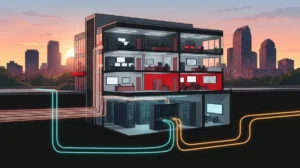
Structured cabling is essential for Tampa office buildouts because it serves as the organized foundation supporting data, voice, VoIP phones, wireless access points, security cameras, and access control systems from a single infrastructure.
-
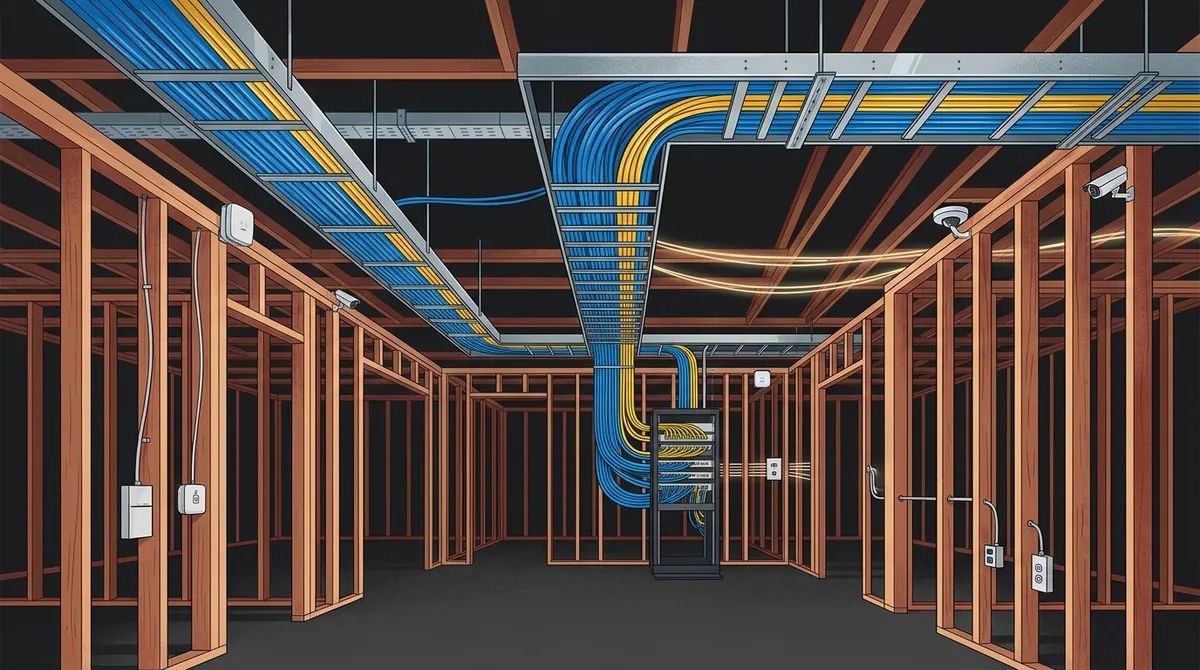
Install structured cabling during the planning and rough-in phases before walls close and ceilings go up; involve a contractor early to avoid costly and disruptive rewiring later in the buildout process.
-
Use Cat6 or Cat6A cabling for horizontal runs in most Tampa offices, with fiber backbones for multi-floor connections; Cat6A is best for larger or dense environments requiring 10 Gbps speeds over longer distances.
-
Professional installation with proper testing, certification, labeling, and documentation ensures code compliance, reliable performance, and fast troubleshooting—avoiding the hidden costs and risks of DIY cabling.
-
A well-designed structured cabling system future-proofs your office by supporting technology upgrades for 3-5 years and scales easily as your team grows without requiring complete infrastructure rewiring.
-
Choose a contractor with commercial buildout experience, multi-system knowledge, cable certification capability, and documented results—ideally one handling cabling, VoIP, internet, and security as a single coordinated point of contact.
You just signed the lease on a new Tampa office space. Exciting, right? But now comes the part that trips up a lot of business owners — figuring out what goes inside the walls before you move in. One question we hear all the time is: “Do I need structured cabling for a new office buildout in Tampa?” The short answer is yes, and it’s one of the smartest investments you can make before day one. Getting your cabling right from the start saves you money, headaches, and a whole lot of downtime down the road. Let’s walk through what structured cabling actually is, why it matters for your Tampa office buildout, and what you need to know before the first cable gets pulled.
What Is Structured Cabling, Exactly?
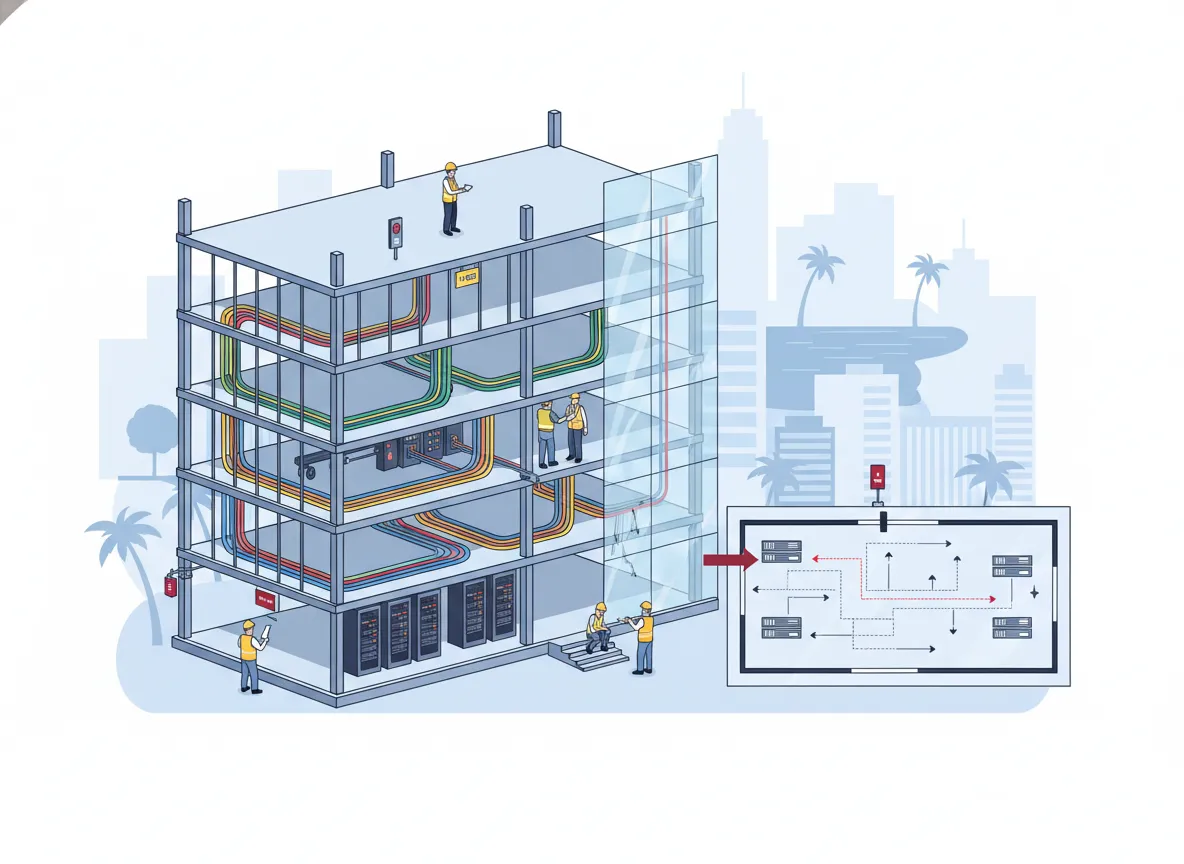
Think of structured cabling as the nervous system of your office. It’s a standardized system of cables, connectors, and hardware that carries data, voice, and other signals throughout your building. Instead of having a tangled mess of individual cables running to different devices, structured cabling organizes everything into a clean, logical system with a central hub.
This system supports a wide range of business technology from a single organized infrastructure. That means one well-planned installation can serve many different needs at once. Here’s what a typical structured cabling system supports:
- Data networking and internet connections
- VoIP phone systems
- Wireless access points and Wi-Fi
- Printers and shared devices
- Security cameras
- Badge readers and access control systems
For a deeper dive into how this fits into your overall office network, check out Ideal Solutions Provider’s structured cabling services page.
Why Structured Cabling Is the Right Move for Tampa Office Buildouts
Tampa’s commercial real estate market is booming in 2026. New tenant buildouts and office renovations are happening all across the Bay area. That makes this the perfect time to understand why structured cabling is the standard approach — not just a nice-to-have.
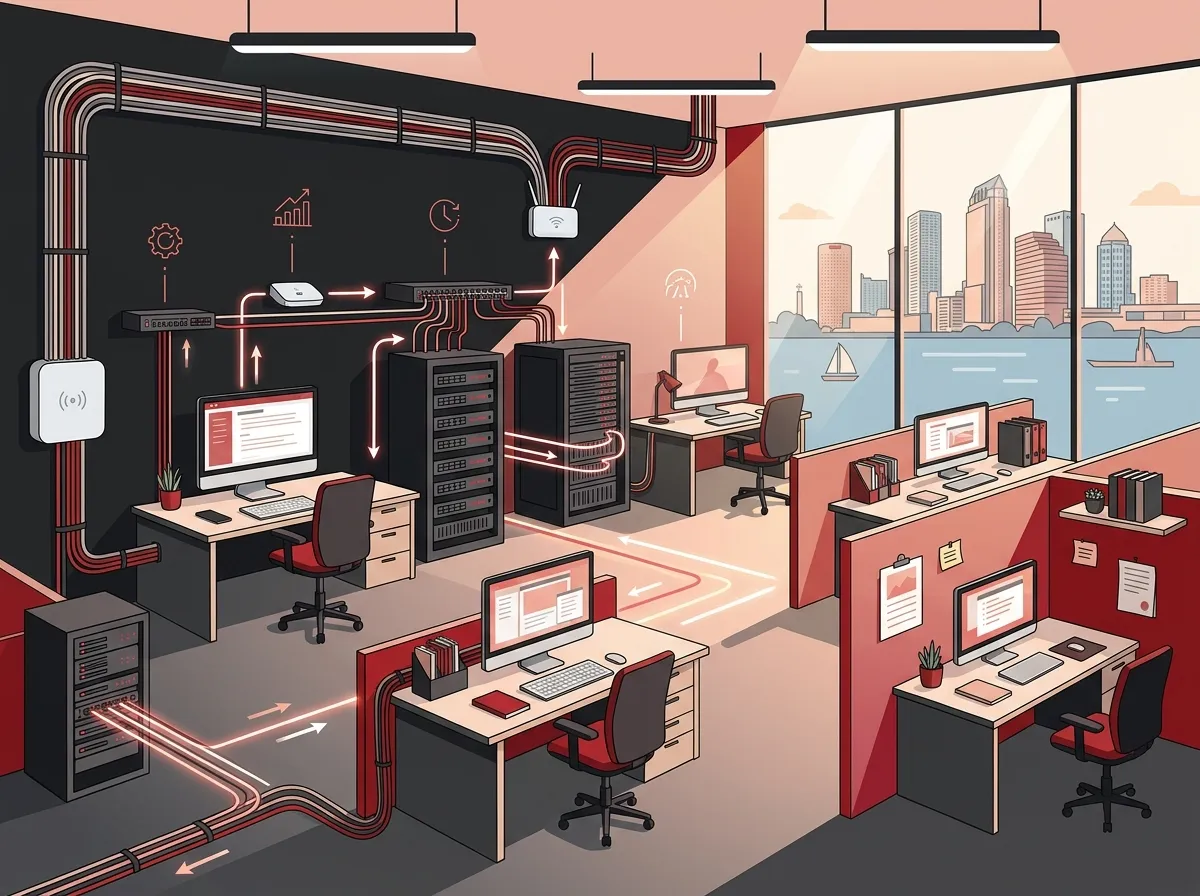
The biggest reason is organization. A structured system uses a star topology, meaning all cables run from individual devices back to a central distribution point (called an MDF or IDF closet). Everything is labeled, documented, and tested. That makes troubleshooting fast and expansion simple. Compare that to ad-hoc cabling, where tracing a problem can take hours.
Here’s a quick comparison to help you see the difference:
| Feature | Structured Cabling | Ad-Hoc / Unplanned Cabling |
|---|---|---|
| Organization | Clean, labeled, documented | Tangled, hard to trace |
| Scalability | Easy to add new devices or runs | Often requires full rewiring |
| Troubleshooting | Fast and simple | Time-consuming and frustrating |
| Reliability | Tested and certified | Inconsistent performance |
| Long-Term Cost | Lower — less rework needed | Higher — frequent fixes required |
For more on planning your network from the ground up, this article on how to plan network cabling installation in Tampa Bay is a great starting point.
What Type of Cabling Is Best for a Tampa Office?
This is one of the most common questions we hear. The right cable type depends on your office size, usage, and future plans. Here’s a simple breakdown of the most common options for commercial office buildouts in Tampa:
| Cable Type | Speed | Best For | Typical Use |
|---|---|---|---|
| Cat6 | Up to 10 Gbps (short runs) | Small to mid-size offices | Workstations, phones, access points |
| Cat6A | 10 Gbps (up to 100m) | Larger offices or dense environments | High-bandwidth workstations, cameras |
| Fiber Backbone | 100 Gbps+ | Multi-floor or multi-building | Connecting MDF to IDF closets |
Most Tampa office buildouts in 2026 use Cat6 or Cat6A as the horizontal cabling standard, with fiber used for backbone connections between closets or floors. Want to understand how Cat6 stacks up? Read 4 reasons CAT6 cabling is the smart choice for Tampa businesses and the key differences between CAT5e and CAT6 cabling.
When Should Structured Cabling Be Installed During a Buildout?
Timing is everything. The best time to involve a structured cabling contractor is before construction is complete — ideally during the planning phase. Here’s why: once the walls are closed up and the ceiling tiles are in, pulling cable becomes much more expensive and disruptive.
Here are the key stages when cabling work should happen:
- Planning phase: Work with your cabling contractor to map out closet locations, device placement, and pathway routing. This shapes the entire buildout.
- Rough-in phase: Conduit, pathways, and pull strings are installed while walls and ceilings are still open. Cable trays and J-hooks go in here.
- Cable pull phase: Actual cable runs are pulled through pathways to each device location (workstation, phone, camera, access point, etc.).
- Termination and testing phase: Cables are terminated on patch panels, jacks are installed at wall plates, and every run is tested and certified.
- Documentation phase: All cable runs are labeled, mapped, and documented for future reference and support.
Getting a cabling contractor involved early can also help coordinate with your general contractor, electrician, and other trades — which keeps the project moving smoothly.
What Systems Connect to Your Structured Cabling?
One of the best things about a well-designed structured cabling system is its versatility. In a typical Tampa office buildout, your cabling infrastructure can support all of the following business systems:
- VoIP phone systems: Your cloud-based phone system needs reliable data connections at each desk or handset location.
- High-speed internet: Wired connections to workstations deliver faster, more reliable speeds than Wi-Fi alone. Learn more about business high-speed internet services that pair well with structured cabling.
- Wireless access points: Wi-Fi access points need wired backhaul connections to deliver strong, consistent wireless coverage across your office.
- Cloud security cameras: IP cameras connect over your cabling infrastructure. Explore how cloud video security integrates with your network.
- Access control systems: Door badge readers and electronic locks connect via low-voltage cabling. See how cloud-based access control works in commercial environments.
- Printers and shared devices: Networked printers and copiers need stable wired connections for reliable performance.
This multi-system approach is exactly why structured cabling is worth planning carefully. One infrastructure, many uses.
Installation Best Practices for Commercial Office Cabling
Not all cabling jobs are created equal. Proper installation really matters — both for performance and for code compliance. Here’s what a quality structured cabling installation should always include:
- Supported pathways: Cables should run through cable trays, conduit, or J-hooks — never draped loosely across ceilings or tied to sprinkler pipes.
- Separation from electrical lines: Data cables must maintain proper distance from electrical lines to avoid interference and comply with code.
- Patch panel terminations: All cable runs should terminate on patch panels in the MDF/IDF closet — not left loose or bundled in ceilings.
- Testing and certification: Every run should be tested with a cable certifier to verify it meets performance standards. This protects you if issues arise later.
- Labeling and documentation: Every cable, port, and patch panel position should be clearly labeled and documented. This saves hours of troubleshooting down the road.
Want to know more about what professional cabling looks like? Read professional structured cabling services for Tampa businesses and 6 signs you found the best structured cabling contractor in Tampa.
You can also check out real examples and explainer videos on the Ideal Solutions Provider videos page or follow along on YouTube for helpful content about business telecom solutions.
How to Choose a Structured Cabling Contractor in Tampa
Tampa has no shortage of low-voltage contractors. But choosing the right one for your office buildout makes a big difference in the final result. Here’s what to look for:
- Commercial experience: Look for a contractor with a track record in office buildouts and tenant improvements — not just residential work.
- Knowledge of multiple systems: A good contractor understands how cabling supports VoIP, networking, cameras, and access control together.
- Code awareness: They should understand local building codes and low-voltage installation requirements for commercial properties.
- Testing and certification: They should use cable certification equipment and provide test results as part of the job.
- Documentation: Ask if they provide labeled diagrams and port maps as a project deliverable.
- Single point of contact: The best partners handle cabling alongside your other telecom needs, so nothing falls through the cracks.
That last point is where Ideal Solutions Provider truly shines. With over 24 years of experience, they serve as a single point of contact for cabling, VoIP, internet, networking, cameras, and access control — so your entire office buildout is coordinated by one trusted team. You can also connect with their community on Facebook and Instagram to see recent project highlights and client stories.
Not sure if your current setup needs help? Read 9 signs your Tampa business needs structured cabling now for a helpful checklist.
DIY vs. Professional Cabling: What’s the Risk?
Some business owners consider pulling their own cable to save money. It’s understandable — budgets are tight during a buildout. But DIY cabling in a commercial setting comes with real risks:
| Risk Factor | DIY Cabling | Professional Installation |
|---|---|---|
| Code compliance | High risk of violations | Installed to code |
| Performance | Inconsistent, untested | Certified and tested |
| Safety | Risk of improper separation from electrical | Proper pathways and clearances |
| Future support | Hard to troubleshoot without documentation | Labeled, mapped, easy to support |
| Long-term cost | Often costs more to fix later | Done right the first time |
For an honest breakdown of this decision, read DIY vs. professional cabling: which is right for Tampa offices?. The bottom line? For a commercial buildout, professional installation is almost always the smarter long-term choice.
Future-Proofing Your Tampa Office with the Right Cabling
Technology changes fast. The office you’re building today needs to support the tools you’ll be using three to five years from now. Structured cabling is built with that in mind. Cat6A, for example, supports 10 Gbps speeds — more than enough headroom for future networking demands, higher-resolution cameras, or more devices on the network.
Planning your closet layout with room to grow, using quality cable that exceeds current minimums, and keeping a clean documentation map all help ensure your infrastructure grows with your business. That’s true future-proofing. If you want to learn more about making smart internet infrastructure decisions alongside your cabling, check out business network solutions and fiber optic cabling services for commercial buildings in Tampa.
Conclusion: Set Your Tampa Office Up for Success
So, do you need structured cabling for a new office buildout in Tampa? Absolutely. It’s the foundation that everything else — your phones, internet, Wi-Fi, cameras, and access control — is built on. Getting it right from the start means less downtime, easier support, and a network that grows with your business. The key is involving the right contractor early, choosing the right cable type, and making sure everything is tested, labeled, and documented before you move in.
If you’re planning an office buildout in the Tampa Bay area and want expert guidance from a team that handles everything under one roof, we’d love to help. Reach out to our team today for a free consultation, or give us a call at 813-388-4935. Let’s build something great together.
FAQs
Q: Do I really need structured cabling for a small Tampa office?
A: Yes, even small offices benefit from structured cabling! It keeps your network organized, makes troubleshooting easy, and means you won’t need a costly rewire when your team grows. Think of it as starting on the right foot — it pays off quickly.
Q: What is the difference between Cat6, Cat6A, and fiber for an office buildout?
A: Cat6 is great for most small to mid-size Tampa offices and supports speeds up to 10 Gbps on short runs. Cat6A handles 10 Gbps over longer distances and works well in denser environments. Fiber is used for backbone connections between floors or buildings where you need high-speed, long-distance links.
Q: When should I hire a structured cabling contractor during a Tampa office buildout?
A: The earlier the better! Getting your cabling contractor involved during the planning phase — before walls close and ceilings go in — saves you money and headaches. Early involvement lets them map out closet locations, device placements, and pathways before construction locks them in.
Q: How much does structured cabling cost for a new office buildout in Tampa?
A: Costs vary based on office size, cable type, number of drops, and project complexity. The best way to get an accurate number is to request a free consultation and walkthrough with a local structured cabling contractor who can assess your specific space and needs.
Q: Can structured cabling support both my phone system and security cameras?
A: Absolutely — that’s one of the best things about it! A properly designed structured cabling system can support VoIP phones, internet, Wi-Fi access points, security cameras, badge readers, and printers all from the same organized infrastructure. One system, many uses.