
Key Takeaways
-
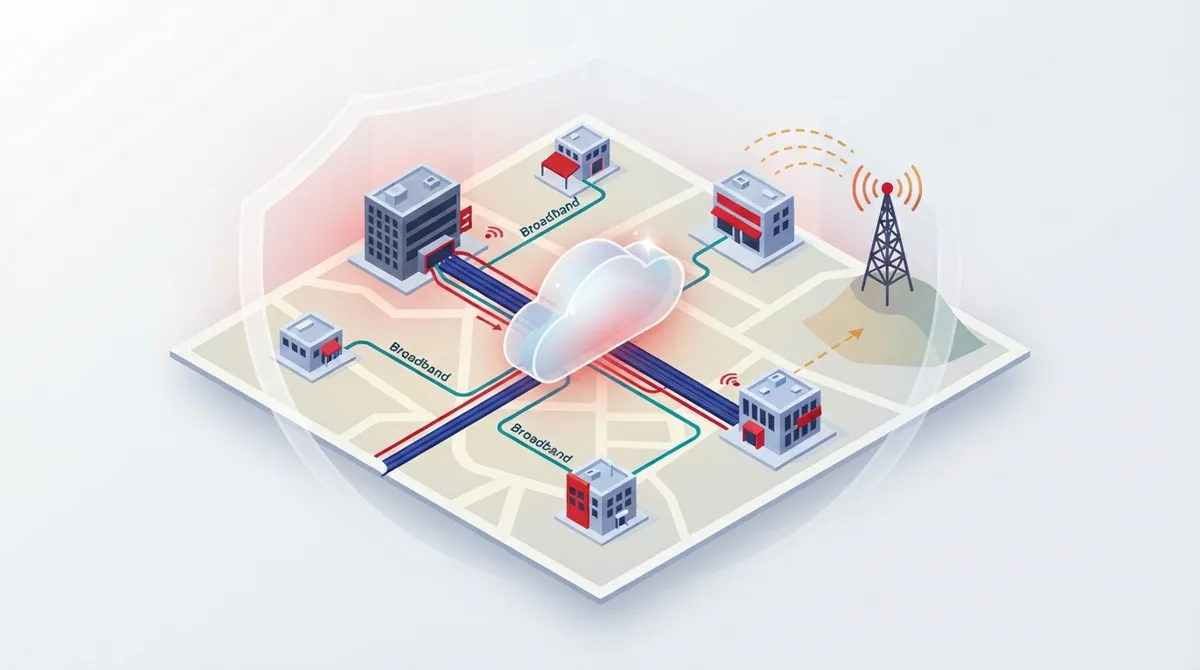
Map every site, key cloud app, and voice or video need before choosing a WAN, since the right design depends on how each location actually uses the network.
-
A WAN is the connection between sites and the cloud, while SD-WAN is the software layer that steers traffic across those links using central policies.
-
Most businesses combine connection types, such as dedicated fiber for main offices, broadband for smaller sites, and LTE or 5G for backup, to balance cost and reliability.
-
Hybrid designs that keep MPLS for latency-sensitive or critical sites and use broadband or wireless for general traffic are a common, practical middle ground.
-
Build security into the WAN from the start, including encryption, segmentation, firewalls at each site, and protection for internet-bound traffic.
-
Choose a managed, co-managed, or self-run support model that matches your IT team's capacity, and compare total cost including equipment, installs, and support, not just circuit fees.
Running a business across more than one location sounds exciting until the network gets in the way. Maybe your Tampa office loads files in a snap, but your second site crawls. Maybe video calls freeze every Monday morning. Or maybe your team spends more time chasing three different providers than doing real work. If any of that sounds familiar, you’re in good company, and the fix usually starts with the right wide area network solutions.
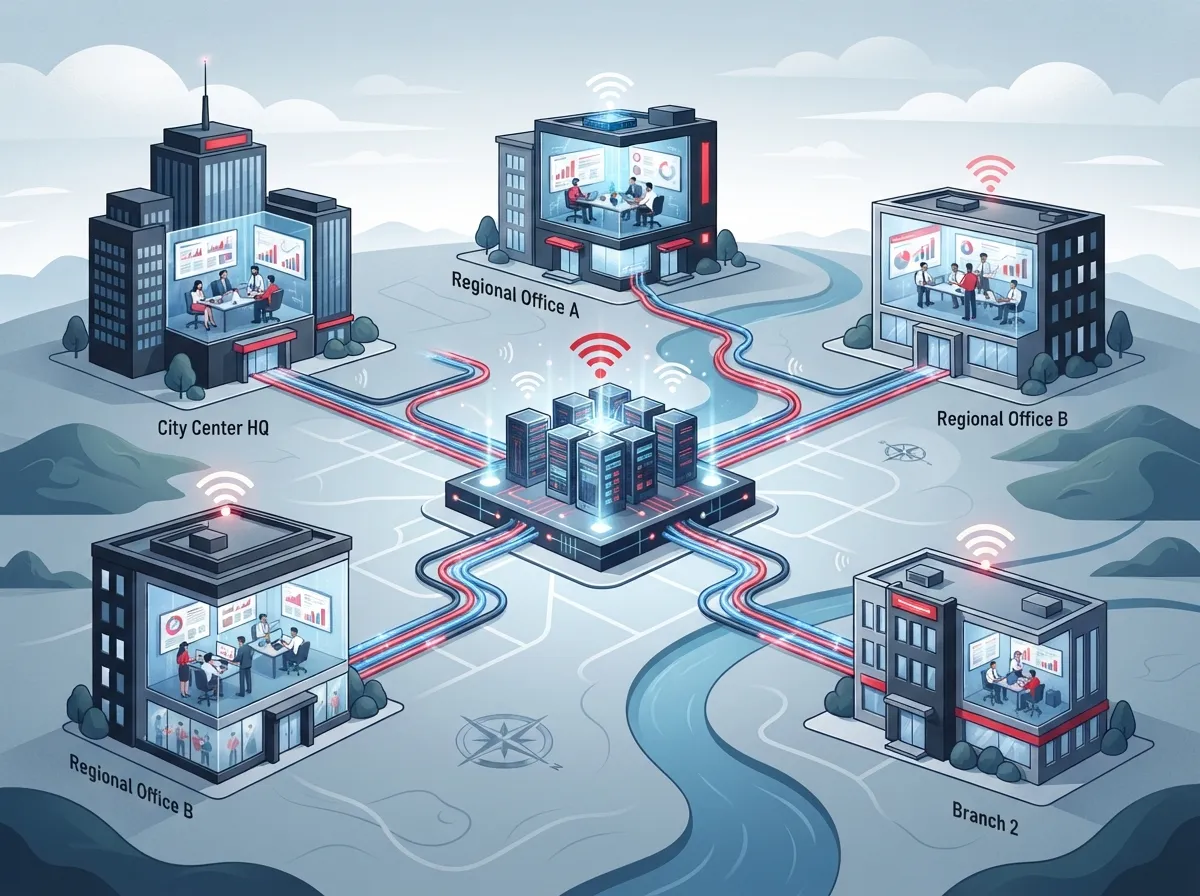
A wide area network, or WAN, ties your offices, data centers, cloud tools, and remote workers into one connected system. The best setups feel invisible. Calls are clear, files open fast, and nobody thinks about the network at all.
In this friendly guide, we’ll walk through what WAN solutions are, the main connection types, how SD-WAN and security fit in, and how to pick a design that matches your budget and goals. Let’s make this simple.

What Are Wide Area Network Solutions?
Wide area network solutions are the circuits, equipment, software, and support that connect your business sites across long distances. Think of your local office network (a LAN) as the hallways inside a building. A WAN is the highway system that links all your buildings together, plus the cloud apps your team uses every day.
A business telecom provider can supply the access lines, network services, equipment, monitoring, and help desk that make up a WAN. That’s a lot of moving parts, which is why many growing companies lean on a single partner instead of juggling several vendors.
WAN vs. LAN vs. SD-WAN
These terms get mixed up a lot, so here’s a quick breakdown.
| Term | What It Means | Where It Lives |
|---|---|---|
| LAN | Local area network that connects devices inside one building | Single office or site |
| WAN | Wide area network that connects multiple sites, cloud, and users | Across cities, states, or the country |
| SD-WAN | Software layer that manages WAN traffic with central policies | On top of your existing WAN links |
In short, a WAN is the connection. SD-WAN is the smart traffic manager that helps you use those connections better.
Why Multi-Site Businesses Need a Strong WAN
More of your daily work now happens in the cloud. One 2026 AvidThink report says enterprises have shifted 70 to 80 percent of workloads to SaaS and public cloud. That figure comes from the report itself and won’t match every company, but the trend is clear. Your network is no longer just office-to-office. It’s office-to-cloud, home-to-cloud, and everything in between.
A weak WAN shows up in everyday ways:
- Choppy VoIP calls and frozen video meetings
- Slow access to shared files and business apps
- Security gaps between sites
- Surprise outages with no clear owner to call
- High bills from circuits you no longer need
If you run a franchise, a clinic group, or a growing mid-sized company, these problems multiply with every new site. A well-planned WAN keeps each location running at the same high standard.
Common WAN Connection Options
There’s no single best connection. Most businesses mix and match to balance speed, reliability, coverage, and cost. Here are the main choices.
Dedicated Fiber and Dedicated Internet Access
Dedicated internet access gives your site its own line with a committed level of service. It’s a strong pick for locations that rely on voice, video, and cloud tools all day. If you’d like to go deeper on this option, our post on dedicated fiber internet explains who benefits most.
Business Broadband
Cable and fiber broadband are budget-friendly and widely available. They work well for smaller sites and as backup links. Speeds are shared, so performance can shift during busy hours. Check out our guide on fiber vs. cable business internet to compare them side by side.
MPLS
MPLS is a private network service that carries traffic along set paths. It’s known for steady performance with voice and other time-sensitive traffic. Some companies keep MPLS for critical sites. We cover the basics in What Is MPLS and How Does It Work for Business?
Wireless: LTE and 5G
Wireless links are handy for fast site launches, pop-up locations, and backup. They’re often used as a safety net when a main line goes down. Our look at fiber vs. 5G shows where each shines.
| Connection Type | Best For | Watch Out For |
|---|---|---|
| Dedicated fiber / DIA | Main offices, heavy cloud and voice use | Higher cost and install timelines |
| Business broadband | Small sites, backup links | Shared speeds at peak times |
| MPLS | Latency-sensitive, critical traffic | Cost and limited flexibility |
| LTE / 5G | Fast launches, failover | Coverage and data limits vary |
Availability and performance change from one address to the next. That’s why checking each location matters. Our tip on finding business internet providers by address can save you a lot of guesswork.
How SD-WAN Fits Into Modern WAN Solutions
SD-WAN uses software and central policies to steer your traffic across all available links. Instead of sending everything down one expensive pipe, it can look at each app and pick a good path based on link conditions and your priorities. Voice might take the cleanest route, while a big file backup uses a cheaper one.
What SD-WAN Can Do for You
- Send cloud-bound traffic straight to the internet instead of looping through a central office
- Switch to a backup link when the main one slows or fails
- Give your IT team one dashboard to manage every site
- Make it easier to add new locations quickly
Adoption is growing. An Omdia white paper from 2026 reports that 65 percent of large enterprises use SASE and/or SD-WAN, with meaningful adoption defined as deployments covering more than one-tenth of sites. Keep in mind that’s a vendor-hosted finding, so treat it as a helpful signal rather than a universal number.
Want the full picture? Read What Are SD-WAN Services and Does Your Business Need Them? and our comparison of SD-WAN vs. traditional WAN.
Is SD-WAN a Replacement for MPLS?
Not always. Many businesses go hybrid. They keep MPLS for a few latency-sensitive or critical sites and use broadband or wireless for general traffic. The right mix depends on your apps, your sites, and your service-level needs. For a deeper look, see 3 Key Differences in SD-WAN vs MPLS for 2026.
Don’t Forget WAN Security
Here’s something many owners miss. WAN security isn’t a feature you tack on at the end. It’s part of the design from day one. When more traffic heads straight to the internet, you need protection built into the path.
Ask about these items when you plan your WAN:
- Encryption for traffic moving between sites
- Segmentation, so one problem doesn’t spread everywhere
- Firewall and threat protection at each location
- Identity controls that decide who gets access to what
- A clear plan for securing internet-bound traffic
SD-WAN is often paired with SASE or security service edge tools that bring these protections into one cloud-based approach. If this part feels heavy, our guide on choosing network security services breaks it down in plain language.
Managed, Co-Managed, or Do It Yourself?
Once you pick your connections, you’ll decide who runs the network day to day. A managed WAN service can cover design, installation, setup, monitoring, troubleshooting, and ongoing tuning. A co-managed model splits the work between you and your provider. A customer-operated model keeps most tasks with your own team.
The AvidThink 2026 Enterprise Connectivity Report says mid-market respondents deliver about half of their SD-WAN deployments as managed services. That result is specific to that survey, but it hints at a real pattern. Many mid-sized teams don’t have time to watch a network around the clock.
| Model | Who Handles What | Good Fit For |
|---|---|---|
| Managed | Provider designs, monitors, and fixes | Lean IT teams, franchises, busy owners |
| Co-managed | Shared duties with clear boundaries | Teams that want control plus backup |
| Customer-operated | Your staff runs everything | Larger IT departments with deep skills |
If you’re weighing this choice, how to choose a managed service provider offers a handy checklist.
How to Choose the Right WAN for Your Business
Start with your business needs, not a product list. Here’s a simple path to follow.
- Map your locations. List every office, warehouse, store, and remote team, plus what’s available at each address.
- List your key apps. Note cloud tools, VoIP, video, and any systems that can’t tolerate delays.
- Set uptime goals. Decide how much downtime each site can handle and what backup you need.
- Estimate bandwidth and latency needs. Think about today’s use and where you’ll be in two years.
- Review security and compliance needs. Healthcare, finance, and legal firms often have extra rules.
- Decide on support. Pick the managed, co-managed, or self-run model that fits your team.
- Compare total cost. Look past the monthly circuit price and include equipment, installs, support, and growth.
Your cabling matters too. Even the best WAN feels slow if the wiring inside your building is weak. Our overview of structured cabling shows how a solid base supports everything above it. You can also read more on structured cabling for background.
What Do WAN Solutions Cost?
Honestly, it varies a lot. Price depends on the connection type, speed, number of sites, security features, and support level. Local availability changes pricing too. That’s why a quick online quote rarely tells the full story.
Market data adds another layer of confusion. Mordor Intelligence estimates the SD-WAN market at US$7.92 billion in 2025 and US$11.61 billion in 2026. MarketsandMarkets, on the other hand, estimates US$23.23 billion in 2025 and US$27.34 billion in 2026, with a forecast 17.4 percent compound annual growth rate through 2032. Those numbers don’t match because the firms define the market differently, so please don’t add them together. Use them as a sign that SD-WAN is growing, nothing more.
For your own budget, an audit is the best first step. You can also learn what to look for in our post on telecom expense audit wins.
Why a Single Telecom Partner Makes WAN Easier
Here’s where having a friendly expert in your corner really helps. Ideal Solutions Provider, a Tampa-based telecom and IT partner with more than 24 years of experience, works with 35+ vetted suppliers. That means they can compare fiber, broadband, SD-WAN, MPLS, and dedicated circuits side by side, then recommend what fits your sites instead of pushing one carrier.
Because they also handle VoIP phone systems, structured cabling, networking, cloud security cameras, and access control, your whole setup can be planned together. One point of contact. One plan. Fewer headaches. If you like that idea, read why Tampa Bay businesses need one telecom partner.
Multi-location owners can also explore multi-location telecom solutions for Florida firms, and local readers may enjoy 4 SD-WAN Solutions Tampa Bay Businesses Trust in 2026. You can also follow the team on YouTube for helpful tech tips.
Wrapping Up Your WAN Plan
The right wide area network solutions keep every site fast, secure, and easy to manage. Start with your locations and key apps, mix connection types to balance cost and reliability, add SD-WAN where it helps, and build in security from the start. Then choose the support model that lets you focus on running your business.
Not sure where to begin? Take a deep breath. You don’t have to figure it out alone. Contact us for a free consultation and we’ll review your current setup, spot savings, and map a WAN that fits your goals. Prefer to talk? Call us anytime.
FAQs
Q: What is a wide area network (WAN) for a business?
A: A WAN is the network that links your offices, data centers, cloud tools, and remote users across long distances. Think of it as the highway system that connects all your business locations. It can use fiber, broadband, MPLS, or wireless links.
Q: What is the difference between WAN, LAN, and SD-WAN?
A: A LAN connects devices inside one building, while a WAN connects many sites over long distances. SD-WAN is a software layer that sits on top of your WAN and steers traffic across the best available links. Together they help your network run smoothly.
Q: Is SD-WAN a replacement for MPLS, or can I use both?
A: You can absolutely use both. Many businesses build a hybrid WAN, keeping MPLS for a few critical or latency-sensitive sites and using broadband or wireless for everything else. The best mix depends on your apps, sites, and uptime needs.
Q: Which WAN connection is best for a business?
A: There’s no one-size-fits-all answer. Dedicated fiber suits busy main offices, broadband works well for smaller sites and backup, and 5G is great for quick launches and failover. Most businesses combine a few types to balance cost, speed, and reliability.
Q: What should I look for in a managed WAN provider?
A: Look for a provider that handles design, installation, monitoring, and ongoing support, and that can compare options from many carriers. Ask about security, response times, and who you call when something breaks. A single point of contact makes life much easier.





