

Key Takeaways
-
A headline per-user price is not a real quote; a tailored quote must reflect your team size, locations, features, hardware, and contract terms before you can compare providers fairly.
-
Ask every provider to itemize recurring monthly charges separately from one-time costs like desk phones, installation, and number porting, and confirm the total on your first invoice.
-
Hidden costs often include taxes, regulatory surcharges, emergency-calling fees, overage minutes, and early termination fees, so request each one listed clearly in writing.
-
Before requesting quotes, gather your user count and roles, locations, existing numbers, call volume, must-have features, hardware preferences, and internet readiness to keep quotes comparable.
-
Compare quotes using a three-year total cost rather than the monthly rate, since a low monthly price can hide heavy setup fees while a higher rate may include training and support.
-
Confirm in writing how 911 registered locations are set up and updated, since VoIP phones can move between sites and emergency-calling fees vary by provider.
Getting a business phone system quote should feel simple. You tell a provider what you need, and they tell you what it costs. In real life, it rarely works that way. One quote shows a low price per user. Another lists a dozen fees you never saw coming. A third is so vague you can’t tell what you’re buying.
If that sounds familiar, take a deep breath. You’re not alone, and you can fix it. A good quote is like a good recipe. It lists every ingredient, every step, and the final result. When you know what to look for, comparing offers gets much easier.
In this friendly guide, we’ll walk through what a business phone system quote is, what it should include, and how to compare offers side by side. We’ll also share a simple prep checklist so you get accurate numbers the first time. Whether you run a small shop, manage an office, or oversee several franchise locations, you’ll leave knowing exactly what to ask for.
What Is a Business Phone System Quote?
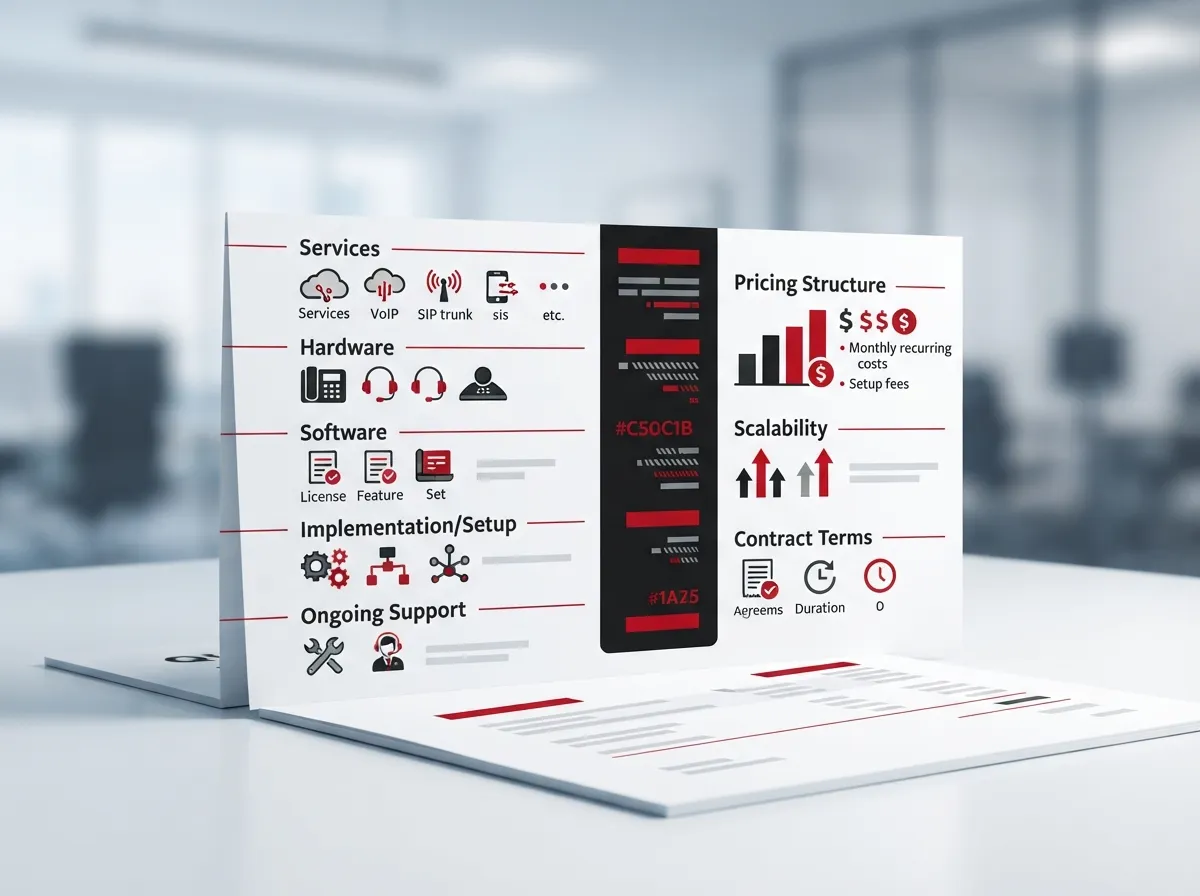
A business phone system quote is a custom estimate for your company’s voice service. Most often, that means cloud VoIP or a unified communications platform (UCaaS). The quote adds up your subscriptions, equipment, setup, calling, and support into one proposal.
Here’s the catch. A headline price like “$20 per user” is not a quote. It’s a starting point. A real business phone system quote reflects your team size, locations, features, and hardware. That’s why two providers can show the same per-user rate but land on very different totals.
Think of it this way. Public pricing helps you budget. A tailored quote tells you what you will actually pay.

How Much Does a Business Phone System Cost Per User?
Let’s start with the number everyone asks about. Cloud phone systems are usually priced per user, per month. Market comparisons published in 2026 show a wide range depending on the plan tier and billing term.
| Plan Level | Typical Monthly Cost Per User | What You Often Get |
|---|---|---|
| Entry | About $14–$20 (annual billing) | Calling, voicemail, basic auto-attendant, mobile app |
| Mid-tier | About $23–$35 | Call queues, analytics, more integrations, team messaging |
| Advanced | About $35–$75 | Contact center tools, deeper integrations, higher service levels |
One 2026 cost overview from Zoom puts basic business VoIP near $10 per user monthly, with advanced setups at $40 or more. Many small businesses land around $20 per user. These figures are examples, not promises. Your own business phone system quote will depend on the provider, the plan, and how long you commit.
Desk phones add cost too. Physical devices commonly run about $50 to $300 each. Softphone apps on computers and mobile phones can reduce that spending, though some teams still prefer a classic handset at the front desk.
What Drives the Price of Your Quote?
Several things shape the final number. Knowing them helps you spot a quote that’s too good to be true.
- Number of users and their roles. A receptionist, a sales rep, and a warehouse supervisor may need very different plans.
- Number of locations. More sites can mean more phone numbers, more devices, and more network planning.
- Call volume and destinations. Heavy outbound calling or international calls may add usage charges.
- Phone numbers. Toll-free lines, local numbers, and fax lines can each carry a monthly fee.
- Features. Auto-attendants, call queues, call recording, and integrations often cost extra on lower tiers.
- Hardware. Desk phones, conference phones, and headsets add one-time costs.
- Service levels and support. Premium support and uptime guarantees may change the price.
If you want help deciding which features are worth paying for, our guide on how to choose VoIP features that help your business grow breaks it down in plain language.
What Should Be Included in a Business Phone System Quote?
A strong business phone system quote is itemized. It separates what you pay every month from what you pay once. If a quote is a single lump sum, ask for a breakdown. Here is what a complete one should show.
Recurring Monthly Charges
- User licenses. The per-user or per-seat fee, along with the plan tier.
- Add-on features. Call recording, extra auto-attendants, analytics, or integrations.
- Phone numbers. Local, toll-free, and any additional lines.
- Usage charges. Metered minutes, international calling, or text messaging fees.
- Support or service-level fees. Any premium support package.
One-Time Costs
- Desk phones, headsets, and conference equipment
- Installation, onboarding, and training
- Number porting fees (moving your existing numbers)
- Network or cabling upgrades if needed
Taxes, Surcharges, and Terms
This is where surprise costs hide. Ask for taxes, regulatory surcharges, and emergency-calling fees to be listed clearly. Also confirm the contract length, renewal terms, and what happens if you add or remove users mid-term.
A quick tip: ask each provider, “Is this the total I will see on my first invoice?” Their answer tells you a lot.
What Information Do You Need Before Asking for a Quote?
The more you share upfront, the more accurate your quote will be. It also keeps every provider quoting the same scope, so you can compare fairly. Take ten minutes to gather these details.
- User count and roles. List how many people need a line, and who needs advanced features.
- Locations. Note every site, including remote and home workers.
- Existing phone numbers. Decide which ones you want to keep.
- Call patterns. Estimate daily call volume and busy times.
- Must-have features. Think auto-attendant, call queues, voicemail to email, or CRM integration.
- Hardware preferences. Desk phones, softphones, or a mix.
- Internet and network readiness. Know your current speed and equipment.
That last point matters more than most people expect. Cloud calling depends on a healthy connection. Our article on what internet speed you need for VoIP in Tampa is a handy reference before you request pricing.
Are Cloud Phone Systems Cheaper Than On-Premises Systems?
Often, yes, but not always. Cloud VoIP generally removes the need for a big on-site PBX box. That can reduce upfront equipment and maintenance costs. You also tend to get easier scaling when you add staff or open a new location.
Still, cloud isn’t magic. You’ll need a solid internet connection, good network gear, and power backup plans. On-premises and hybrid systems can bring extra costs for hardware, installation, upkeep, and support.
So compare total cost of ownership, not just the monthly subscription. If you’re weighing both options, hosted vs. on-premises business phone systems covers the tradeoffs in detail.
| Cost Area | Cloud VoIP | On-Premises PBX |
|---|---|---|
| Upfront equipment | Lower (phones only, if desired) | Higher (server, cards, phones) |
| Monthly fees | Per-user subscription | Lines, maintenance, support |
| Scaling | Add users quickly | May need new hardware |
| Maintenance | Handled by provider | Handled by you or a vendor |
| Network needs | Strong internet required | Less dependent on internet |
What Extra Fees Should You Watch For?
Hidden fees are the number one reason a quote feels misleading. They are not always shady. Some are simply charges that weren’t explained. Here are the ones to ask about.
- Number porting fees. Some providers charge to move your numbers over.
- Activation or setup fees. One-time charges to turn on your account.
- Regulatory and tax surcharges. These can add a noticeable percentage to your bill.
- Emergency-calling fees. Linked to 911 service and location registration.
- Overage or metered usage. Extra minutes beyond what’s included.
- Early termination fees. What you owe if you leave before the contract ends.
- Equipment financing or lease charges. Ask whether phones are bought or rented.
If you’re still weighing the full picture, 9 costs behind how much a business phone system costs is a great companion read.
Can You Keep Your Existing Phone Numbers?
Usually, yes. Your business numbers are valuable. Customers know them, and they’re printed on your signs, cards, and website. Moving them is called number porting.
In the United States, the FCC states that interconnected VoIP providers must comply with local number portability rules. In plain English, that means you generally have the right to keep your number when you switch. Still, timing and fees vary. Your quote should state clearly whether porting is included, what it costs, and how long it may take.
For a step-by-step look, read how to keep your phone number when switching to VoIP in Tampa.
How Does 911 Work With a Business VoIP System?
This one deserves a little extra attention. According to FCC consumer guidance, interconnected VoIP providers have 911 obligations. But VoIP can work differently from a traditional landline because a phone can be used from different locations.
That means you should confirm how emergency calling is set up on your quote. Ask these questions:
- How are registered locations entered and updated?
- What happens if someone moves a phone to a new desk or office?
- How do remote workers set their emergency address?
- Are there emergency-calling fees, and are they itemized?
It’s a small step that protects your people. A good provider will walk you through it without being asked.
How Do You Compare Business Phone System Quotes?
Once your quotes roll in, resist the urge to scan for the lowest number. Instead, line them up and compare apples to apples. Here’s a simple method that works.
- Match the scope. Make sure each quote covers the same users, locations, and features.
- Split recurring and one-time costs. Add each group separately.
- Add taxes and surcharges. Ask for estimates if they aren’t listed.
- Check the contract. Compare length, renewal, and exit terms.
- Review support. Look at hours, response times, and who installs and trains your team.
- Calculate a three-year total. This shows the real cost over time.
A lower monthly rate can hide a heavy setup fee. A higher rate might include installation, training, and great support. The three-year total keeps everything honest.
If you’re stuck choosing between providers, our post on 9 ways to compare telecom providers in Tampa offers more ideas.
Why Work With a Single Point of Contact?
Chasing quotes from five different companies is exhausting. Each one has its own forms, its own jargon, and its own idea of what you need. That’s especially tough for busy office managers and franchise operators juggling several sites.
An independent telecom partner can simplify the whole thing. At Ideal Solutions Provider, we’ve spent over 24 years helping businesses compare options across 35+ vetted suppliers. We review your current setup, line up side-by-side choices, and recommend what fits your needs rather than what meets a sales quota. Phones are just one piece. We also handle internet, structured cabling, networking, cloud security cameras, and access control, so everything works together.
That matters because your phone system depends on your network. If you’re curious how it all connects, why choose an all-in-one telecom solutions provider in Tampa explains the benefits.
Ready to Get an Accurate Quote?
A good business phone system quote is clear, itemized, and honest. It separates monthly and one-time costs, spells out fees, and explains contract terms and 911 setup. With a little prep and a consistent scope, you can compare offers with confidence instead of guesswork.
You don’t have to do it alone. If you’d like a free review of your current setup and a tailored estimate, contact our team or call us at 813-388-4935. We’ll help you find a phone system that fits your team and your budget. You can also explore our cloud based phone systems to see what’s possible.
For more on how providers deliver service, the Internet Service Provider overview is a helpful primer, and you can follow our updates on YouTube and Facebook.
FAQs
Q: How much does a business phone system cost per user?
A: Most cloud phone plans run from about $10 to $40 or more per user each month. Many small businesses land near $20. Your final price depends on the plan tier, features, and billing term, so a tailored quote is the best way to know for sure.
Q: What information do I need to get a business phone system quote?
A: Share your user count, locations, existing phone numbers, call patterns, must-have features, and hardware needs. Knowing your internet speed helps too. The more detail you give, the more accurate and comparable your quote will be.
Q: Can I keep my existing business phone numbers?
A: In most cases, yes. VoIP providers in the U.S. must follow local number portability rules, so you can usually move your numbers when you switch. Ask your provider about porting fees and timing before you sign.
Q: Do business VoIP systems support 911?
A: Yes, interconnected VoIP providers have 911 obligations. Since VoIP phones can be used from different places, confirm how registered locations are set up and updated. Good providers will explain this clearly in your quote.
Q: What extra fees should I look for in a business phone quote?
A: Watch for setup fees, number porting charges, taxes and regulatory surcharges, emergency-calling fees, usage overages, and early termination fees. Ask for every charge to be itemized so there are no surprises on your first bill.





